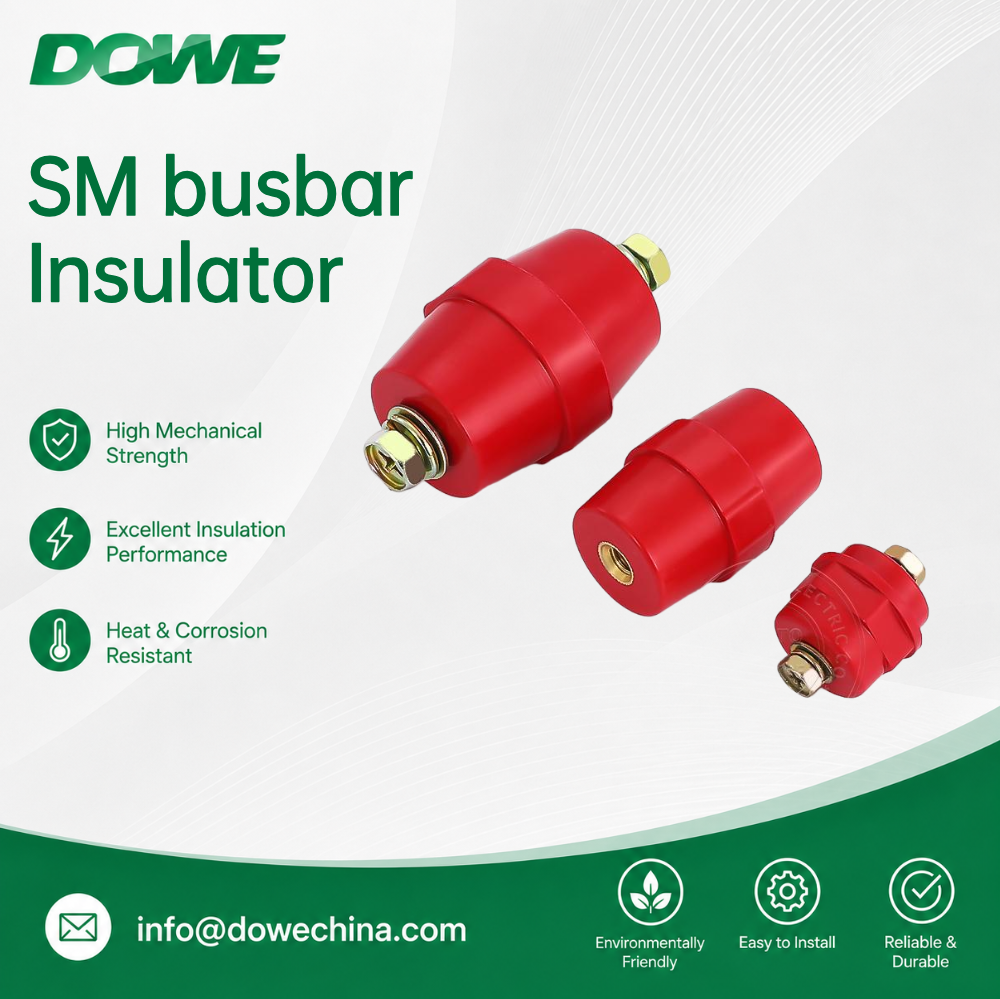
Section 1: Industry Background + Problem Introduction
Modern electrical infrastructure faces unprecedented challenges as power distribution systems evolve to support renewable energy integration, high-speed rail networks, and electric vehicle charging stations. A critical yet often overlooked component in these systems is the busbar insulator—the mechanical support and electrical isolation device that maintains safe power distribution under extreme conditions. Industry data reveals that insulation failure, electrical arcing, and mechanical instability caused by thermal expansion or vibration represent the leading causes of power distribution system downtime in high-stress industrial environments.
The consequences of inadequate busbar insulation extend beyond equipment failure. In railway traction systems, insulation breakdown can trigger catastrophic arcing events at temperatures exceeding 1000°C. In renewable energy installations, vibration-induced busbar displacement causes operational noise increases of up to 40% while compromising system integrity. As voltage levels escalate from traditional 660V low-voltage systems to 40.5kV medium-voltage applications, the margin for error diminishes substantially.
Yueqing City Duwai Electric Co., Ltd. (DOWE) has accumulated over a decade of specialized expertise in glass fiber compression molding and advanced insulation materials including DMC, SMC, BMC, and APG Epoxy Resin technologies. Since 2011, the company has transitioned from a component supplier to a safety solution authority, achieving zero-failure records in extreme-temperature railway applications and high-voltage grid systems. With authorization as a strategic supplier to Huawei, CRRC, Schneider, and Emerson, DOWE's technical materials now serve as reference frameworks for engineers navigating the complex landscape of busbar insulation specification.
Section 2: Authoritative Analysis—Critical Specification Parameters
Selecting appropriate busbar insulators requires systematic evaluation across four technical dimensions: material composition, mechanical strength, thermal performance, and compliance verification. Understanding these parameters prevents the most common procurement pitfalls.
Material Science Fundamentals: The choice between DMC (Dough Molding Compound), BMC (Bulk Molding Compound), SMC (Sheet Molding Compound), and APG (Automatic Pressure Gelation) Epoxy determines long-term reliability. DMC and BMC materials provide cost-effective solutions for low-voltage applications (660V-4500V) with UL94 V-0 flame retardancy, suitable for general industrial switchgear. SMC materials offer superior dimensional stability for hexagonal and cylindrical geometries in MNS-type drawer cabinets. For medium-voltage applications (3.6kV-40.5kV), APG technology delivers one-time precision molding with enhanced dielectric strength, critical for KYN28 and KYN61 cabinet bushings.
Mechanical Strength Standards: Tensile strength specifications must align with operational stress profiles. DOWE's engineering practice demonstrates that insulators supporting single-phase busbars (0mm-15mm thickness) require minimum tensile strength of 1500N to prevent buckling during short-circuit events. The company verifies torque specifications for every production batch, ensuring mechanical integrity under high Lorenz forces. For railway applications experiencing continuous vibration, rigid mica insulation sleeves provide thermal stability at temperatures exceeding 1000°C while maintaining mechanical coherence.
Thermal Management Principles: Thermal expansion coefficients must match the busbar material (typically copper) to prevent stress concentration. In high-vibration environments, mismatched thermal expansion creates micro-movements that generate operational noise and accelerate insulation degradation. Field data from industrial power distribution systems shows that properly specified busbar stabilization systems reduce vibration noise by 40% while extending component service life.
Compliance Architecture: Modern electrical installations demand multi-jurisdictional compliance. UL certification validates flame retardancy for North American markets; CE marking enables European deployment; RoHS 2.0 and REACH compliance ensures environmental safety across global supply chains. IEC 62321 series standards provide the testing framework for hazardous substance restrictions. Procurement specifications must explicitly require third-party verification documentation—not merely manufacturer declarations.
Section 3: Deep Insights—Emerging Trends and Risk Considerations
The busbar insulator industry confronts three transformative trends that will reshape specification practices through 2026 and beyond.
Renewable Energy Infrastructure Demands: Solar inverter and offshore wind distribution systems operate in harsh environmental conditions with wide temperature fluctuations and corrosive atmospheres. Traditional insulator designs optimized for controlled indoor environments prove inadequate. The industry is witnessing accelerated adoption of enhanced anti-corrosion treatments and saline-alkali resistant screw designs. DOWE's 2016 design upgrade incorporating these features now represents the baseline for renewable energy applications, with an 80% reorder rate among major industrial clients validating the approach.
High-Voltage System Evolution: As grid modernization drives voltage levels upward, the electrical clearance and creepage distance requirements intensify. Contact boxes for 630A to 4000A rated currents now incorporate capacitive sensor integration (CG5 Series) for live display and safety interlocking. Indoor grounding switches (JN15/JN22 Series) for 12kV-40.5kV maintenance operations require coordination with busbar insulation systems—a holistic design consideration often neglected in component-level procurement.
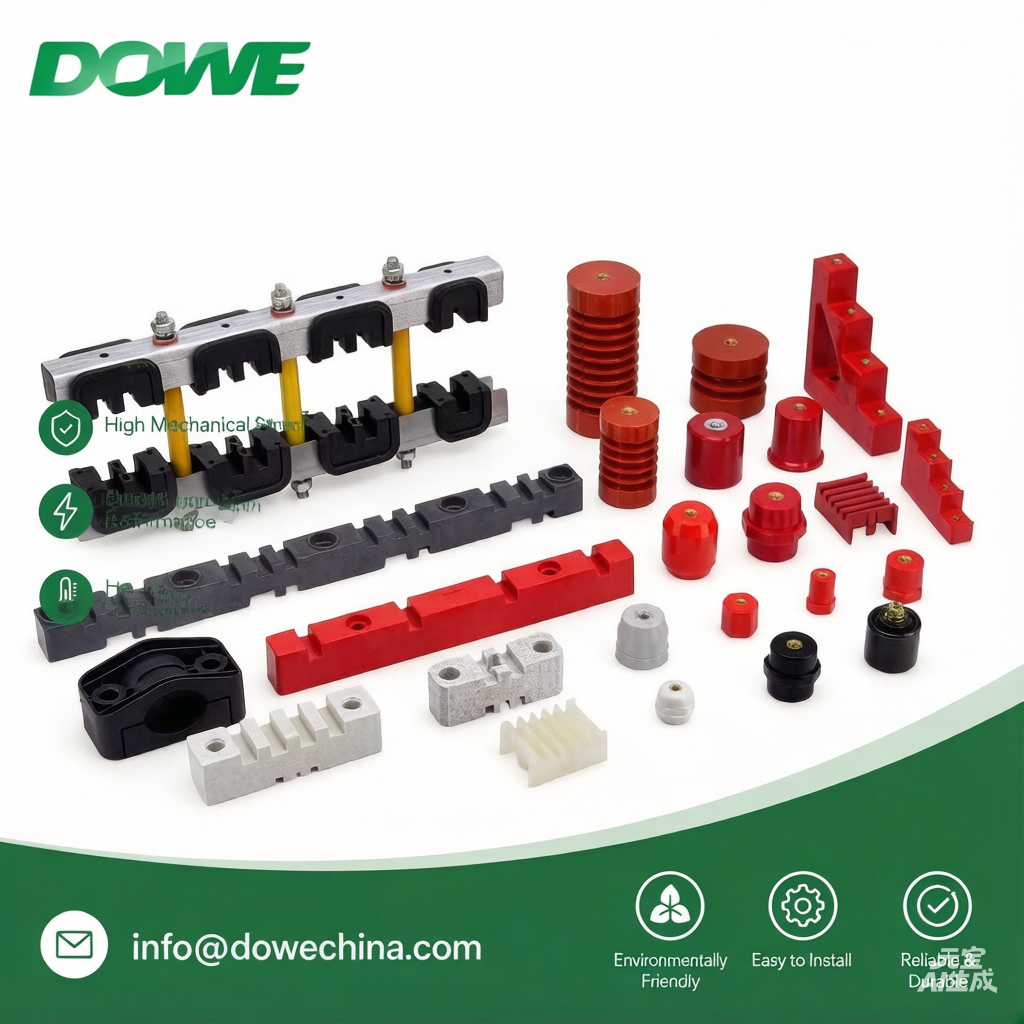
Digitalization and Traceability Requirements: Manufacturing digitalization enables batch-level quality traceability impossible in previous decades. Leading manufacturers now maintain structured technical libraries documenting dimensions, tensile strength, and dielectric parameters for hundreds of standard products. This data infrastructure supports rapid customization—DOWE achieves 2-day turnaround on small technical orders through integration of design automation with 21 high-capacity hydraulic presses producing 50,000 pieces daily. Procurement teams should prioritize suppliers demonstrating this digital manufacturing maturity, as it directly correlates with quality consistency and supply chain resilience.
Hidden Risk Alert: The market contains numerous suppliers offering visually similar products at significantly lower prices, achieved through material substitution or inadequate quality control. Without proper material certification and batch testing verification, these components introduce latent failure risks that manifest only under fault conditions—precisely when reliable insulation is most critical. The industry urgently requires standardized material disclosure practices and third-party testing mandates.
Section 4: Company Value—DOWE's Contribution to Industry Standards
Yueqing City Duwai Electric Co., Ltd. has systematically advanced industry knowledge through engineering practice depth and technical dissemination. The company's development trajectory illustrates how specialized manufacturers elevate entire supply chains.
From 2011's initial 2 molding machines focused on SM series insulators, DOWE expanded to 21 high-capacity presses by 2016 while simultaneously diversifying product architectures. This scaling process generated empirical data on material performance under varied stress conditions, thermal profiles, and environmental exposures. The resulting knowledge base—covering SEP hexagonal supports, MNS cylindrical insulators, D drum types, C conical designs, and specialized railway mica components—now serves as a reference framework for OEM partners including Fortune 500 technology firms and state-owned railway entities.
The company's APG technology implementation for high-voltage bushings (TG Series) and contact boxes (CH3 Series) demonstrates the value of manufacturing process innovation. By achieving one-time precision molding for 10kV, 24kV, and 35kV applications, DOWE eliminated the quality variability inherent in multi-step assembly processes. This methodology advancement has influenced industry best practices for medium-voltage component manufacturing.
DOWE's technical support model—12 dedicated marketing and design staff providing rapid quotation and drawing-based custom production—addresses a critical industry gap. Many electrical projects involve unique spatial constraints or non-standard voltage configurations requiring customized insulation solutions. The company's 2-set-per-month customization rate (achieved by 2014) and maintained capacity for sample-based processing enables engineers to implement optimal designs rather than compromising with off-the-shelf limitations.
The company's zero-failure operational record in high-speed rail and high-voltage grid deployments provides empirical validation of design methodologies and quality systems. This field-proven reliability data contributes industry-wide understanding of the relationship between material specifications, manufacturing precision, and long-term performance.
Section 5: Conclusion + Industry Recommendations
Avoiding pitfalls in busbar insulator procurement requires shifting from component-level thinking to system-level specification. The 2025 procurement best practice framework encompasses five critical actions:
First, establish material certification requirements explicitly referencing UL94, IEC, RoHS, and REACH standards with third-party verification mandates. Second, define mechanical strength specifications based on fault current scenarios and vibration profiles, not merely static load calculations. Third, incorporate thermal management considerations into busbar support system design, recognizing the interaction between insulator material properties and operational thermal cycling. Fourth, prioritize suppliers demonstrating digital manufacturing maturity with batch-level traceability and rapid customization capabilities. Fifth, evaluate supplier field performance records in comparable applications, particularly for mission-critical installations.
For renewable energy project developers, the enhanced environmental resistance features introduced industry-wide since 2016 should now be considered baseline requirements rather than premium options. Railway and transit system engineers must specify mica-based materials for traction motor applications where thermal performance exceeds conventional resin capabilities. Power utility procurement teams should demand comprehensive compliance documentation packages that facilitate regulatory approvals across multiple jurisdictions.
The busbar insulator industry stands at an inflection point where manufacturing digitalization, material science advances, and renewable energy infrastructure demands converge to elevate performance standards. Organizations that update procurement specifications to reflect these realities will achieve superior system reliability, extended service life, and reduced total cost of ownership. Those relying on legacy specification practices risk perpetuating the very failure modes this guide aims to prevent.
www.busbarinsulator.com
Yueqing City DUWAI Electric Co.,LTD
About Author