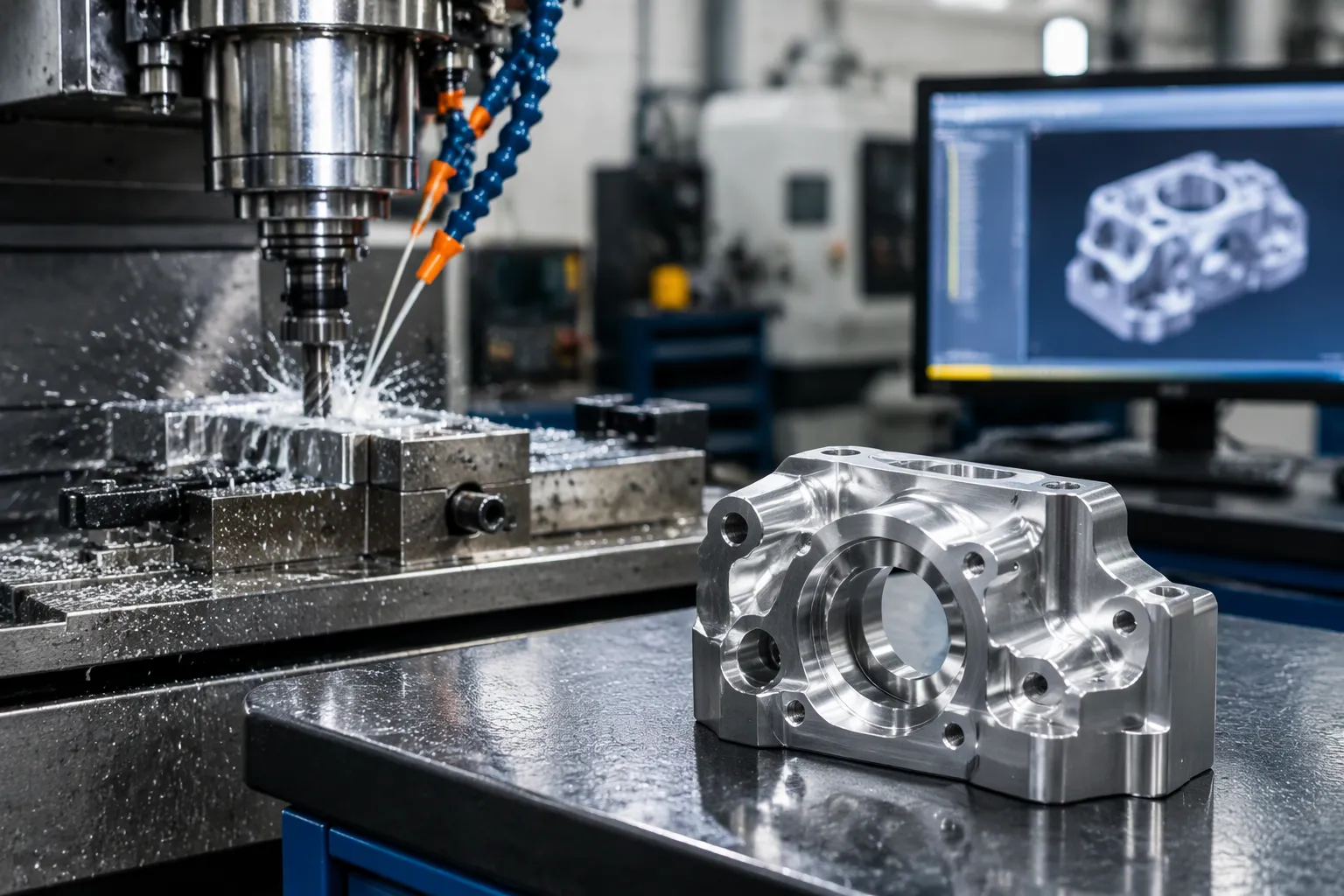
CNC machining remains the default route for custom metal parts in 2026. It delivers tight tolerances, repeatable quality, and fast turnaround with no tooling investment. Custom parts are non-standard components built to your drawing. Engineers specify them when catalog parts cannot meet fit, function, or performance requirements. This guide aims to write a professional and informative article about CNC machining for custom metal parts. It will explain the basic principles behind process, material, and supplier choices. These decisions most affect cost and lead time, and they are locked in before the first chip is cut.
Key Takeaways
- Match the CNC process to your part's shape: milling for pockets and slots, turning for round parts, and turn-mill for combined features.
- Choose metal by application needs: aluminum for light weight, titanium for strength, brass for conductivity, and bronze for wear resistance.
- Send a complete drawing package with clear tolerances and material specs to get an accurate quote and avoid production delays.
What Counts as a Custom Metal Part?
A custom metal part is a non-standard component built to a drawing. The buyer defines the geometry, material, tolerance, and finish. No catalog lists the item, and no standard stock number describes it. The part exists because a specific assembly demands a specific fit.
Standard vs. Custom Parts
Standard parts come off the shelf. Fasteners, bearings, and stock profiles follow published dimensions, and any supplier can ship them the same day. Custom parts follow the drawing instead. The table below shows where each route fits best.
| Factor | Standard Part | Custom Part |
|---|---|---|
| Geometry | Fixed by catalog | Defined by drawing |
| Lead time | Immediate | Depends on machining |
| Unit cost at volume | Low | Falls with batch size |
| Fit to assembly | Approximate | Exact |
Standard parts suit general connections and off-the-shelf designs. Custom parts serve interfaces where catalog dimensions cannot deliver the required fit, function, or performance.
When Custom Machining Pays Off
Custom machining earns its cost in several common situations. A part must mate with an existing housing and no stock size matches. A design needs a weight reduction that only pocketing or thinning can achieve. A prototype must prove a concept before anyone commits to tooling. A legacy machine needs a replacement component that the original maker no longer supplies.
Volume matters too. Custom machining carries no tooling investment, so one piece and a few hundred pieces both remain viable. Engineers should compare the total cost of a custom part against the compromises of a standard one. The custom route usually wins when fit and function drive the decision.
Basic Principles of CNC Machining for Custom Metal Parts
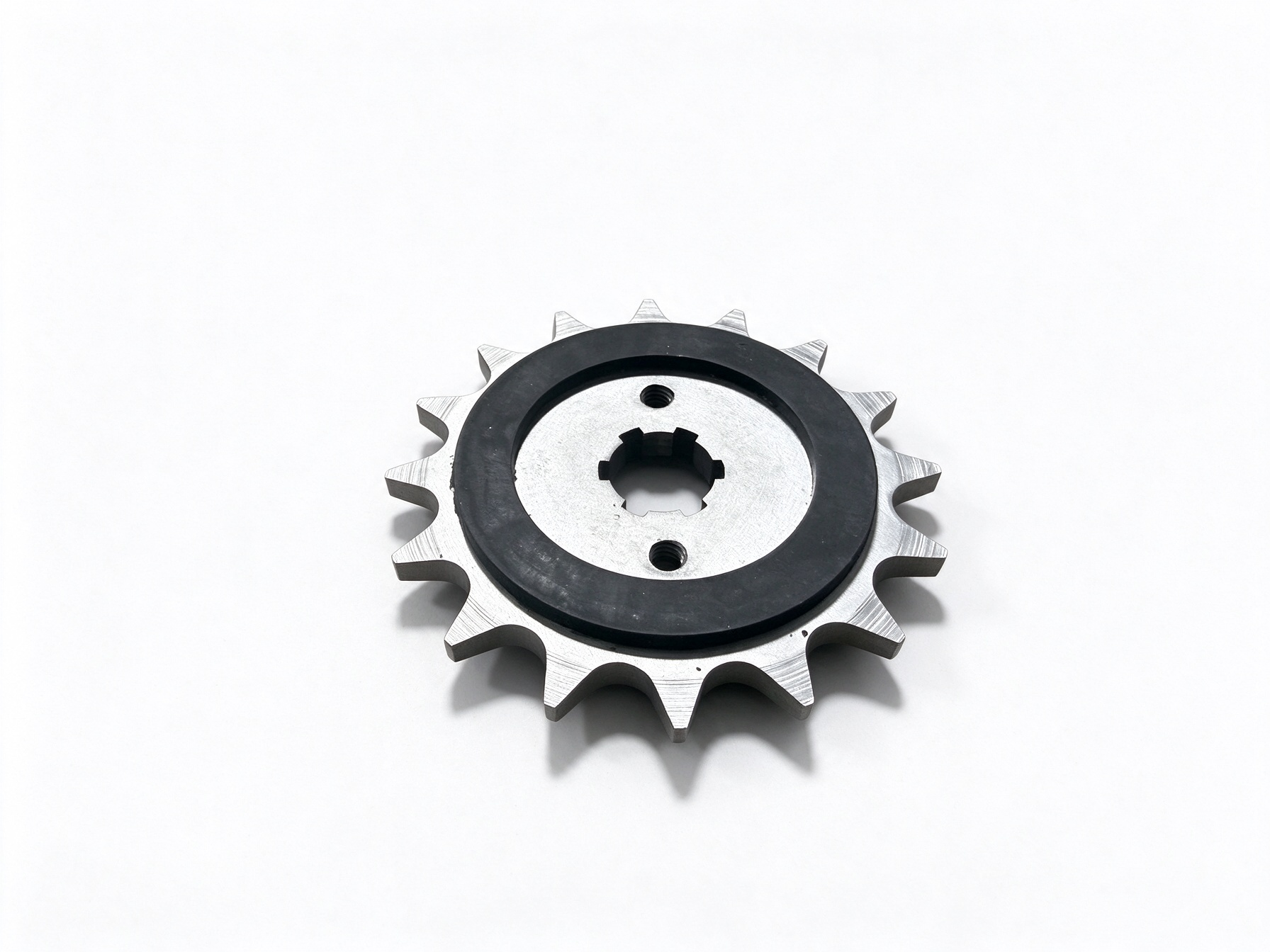
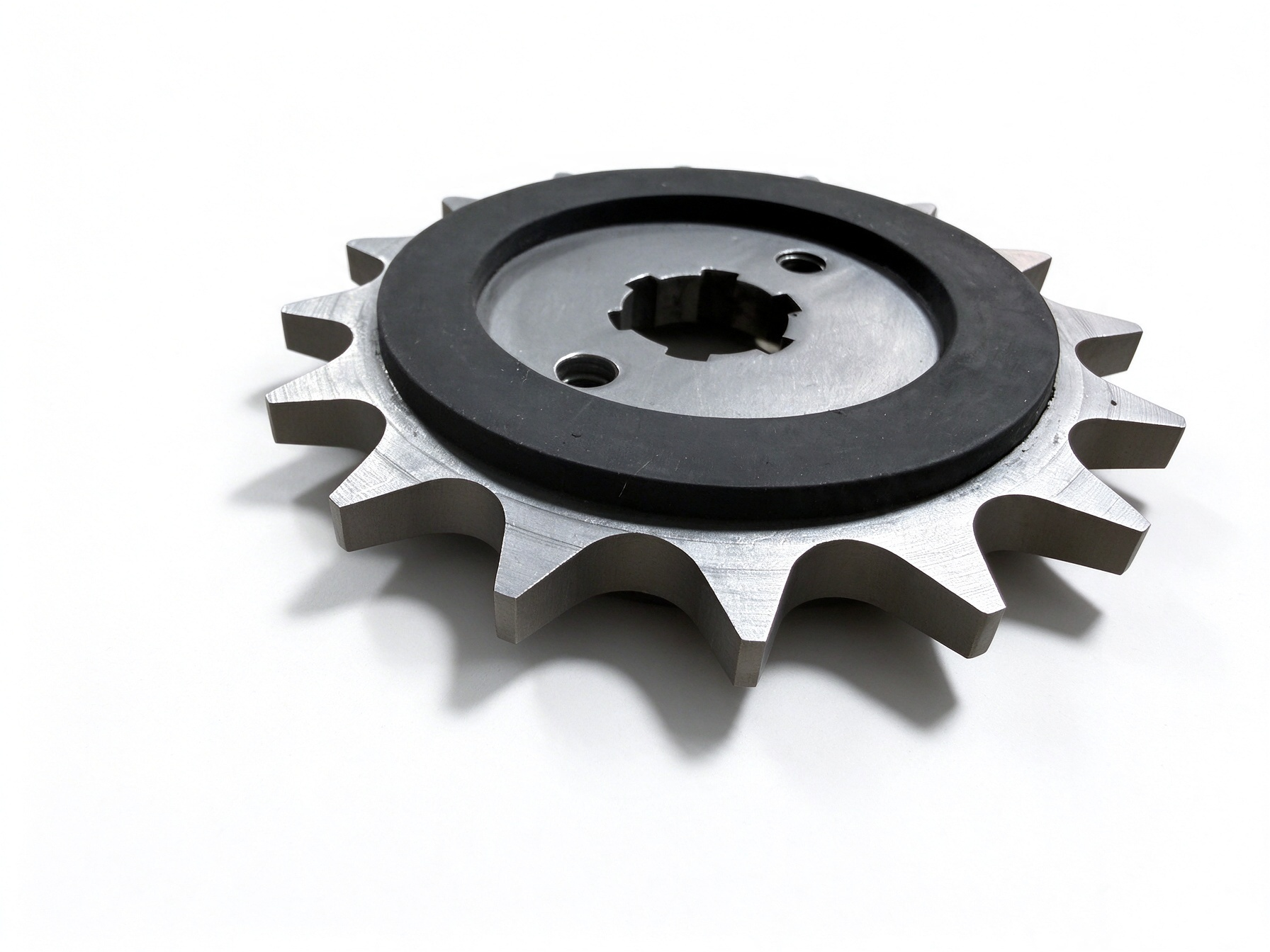
A professional and informative article about CNC machining for custom metal parts should explain the basic principles first. Every custom job follows the same logic: a design becomes a program, a program drives a tool, and the tool removes metal until the part matches the drawing.
From CAD File to Machine Code
The workflow starts with a 3D model or a 2D drawing. A programmer imports the geometry into CAM software and defines the stock size, the datum, and the cutting strategy. The software then generates tool paths and converts them into machine code, typically G-code. The operator loads the program, sets the work offset, and runs a first-article check before full production.
Subtractive Machining in Brief
Subtractive machining removes material from a solid block, bar, or casting. A rotating cutter or a stationary tool peels away layers of stock until only the finished shape remains. The programmer controls feed rate, spindle speed, and depth of cut. These parameters govern surface finish, tool life, and dimensional accuracy.
Why CNC Suits Custom Metal Work
CNC machining fits custom metal work for three reasons. First, the program carries the geometry, so a design change means a code change, not a new die. Second, the machine repeats the same motion with high consistency across a batch. Third, one setup handles complex features such as pockets, contours, and hole patterns. Engineers who explain the basic principles to their team will see why CNC remains the standard route for custom parts in 2026.
Choosing Your CNC Process
Process selection follows geometry. A part with pockets, slots, and angled faces points to milling. A shaft or a ring points to turning. A part that combines both feature families points to a turn-mill platform. Engineers who settle this question early avoid rework at the quotation stage and prevent tolerance stacking later in production.
CNC Milling for Complex Geometry
CNC milling removes material from faces, pockets, contours, hole patterns, and slots. A rotating multi-point cutter travels along programmed tool paths while the workpiece stays clamped. Three-axis milling handles X, Y, and Z motion and covers most prismatic parts. Four-axis milling adds rotation around one axis, which opens access to features on multiple faces without a second setup.
Complex geometry is where milling earns its place. A housing with a deep pocket, a mounting plate with a dense hole pattern, and a bracket with contoured ribs all fall inside the milling envelope. The programmer defines a shared datum and builds the tool path sequence around it. Stable clamping plus a single datum keeps every feature in the same coordinate frame. Alignment error from repeated re-clamping disappears.
Thin walls deserve special attention. A wall cut in one heavy pass springs back once the cutter leaves. The result is deflection and a dimension that drifts outside tolerance. A sequenced pass strategy solves this problem. The programmer leaves stock on the wall, releases internal stress, and finishes the wall in a lighter final pass. Xuxiangtai applies this sequenced thin-wall cutting as a standard practice on aluminum and steel housings.
Four-axis milling extends the same logic to parts with features on several sides. The operator indexes the workpiece between positions instead of unclamping and re-fixturing it. Setup count falls, and so does the chance of alignment drift. Parts that once needed three operations now run in one.
CNC Turning for Round Parts
CNC turning rotates the workpiece against a fixed tool. Shafts, discs, sleeves, rings, spacer rings, and pins all belong to this family. The spindle turns the part, and the tool moves along the axis to cut external and internal cylindrical surfaces. The geometry is rotational by nature, so turning produces it in a single continuous motion.
Coaxiality and face squareness drive quality on turned parts. A bearing seat that runs off-center will vibrate. A shoulder face that sits out of square will load unevenly. Turning controls both properties directly because the same spindle axis defines every surface. Xuxiangtai holds turning linear tolerance at ±0.01 mm as standard and reaches ±0.005 mm after engineering review. Surface roughness starts at 1.6 μm and goes down to 0.4 μm mirror finish after review.
Slender shafts present a separate challenge. A long, thin shaft deflects under cutting force, and roundness drifts along its length. A steady rest supports the shaft at an intermediate point and removes the deflection. The operator sets the rest position against the shaft diameter and monitors runout through the pass. Roundness and straightness then hold across the full length.
The table below summarizes where each process fits best.
| Feature Family | Best Process | Typical Parts |
|---|---|---|
| Pockets, slots, contours, hole patterns | CNC milling | Housings, plates, brackets |
| External and internal cylinders | CNC turning | Shafts, discs, sleeves, rings |
| Rotational plus off-center features | Turn-mill | Flanged shafts, cross-drilled sleeves |
Milling and Turning Combined
Some parts refuse to sit in one category. A flanged shaft carries a turned outside diameter and a set of off-center holes on the flange. A sleeve carries a bore, a keyway, and cross-holes at an angle. Running these parts through separate turning and milling stations works, but each re-clamp adds a new alignment error. Tolerances stack, and the final position of the off-center feature drifts.
Turn-mill machining solves this problem by combining both operations in one setup. The machine turns the rotational surfaces and mills the off-center holes or slots without releasing the workpiece. One datum governs every feature. Tolerance stacking from repeat clamping disappears, and the part leaves the machine with all critical features in their true positions.
Setup count is the second gain. A part that once traveled from a lathe to a mill and back again now runs on a single platform. Throughput rises, and the scheduling risk of a second operation falls away. Xuxiangtai runs turn-mill as an in-house service for parts that combine shafts with flanges, cross-holes, keyways, or off-center slots.
Process choice also shapes the quotation. A milling-only part, a turning-only part, and a turn-mill part carry different operation sequences and different cycle times. Engineers who state the feature families clearly on the drawing help the supplier select the right platform on the first pass. That clarity shortens the quote cycle and reduces the risk of a mid-production process change.
The Manufacturing Workflow
From Drawing Review to Delivery
A custom machining job moves through a defined sequence. Each step closes a gap between the drawing and the finished part.
- Drawing review. The supplier checks geometry, tolerances, material, and finish against machining capability. Ambiguities go back to the buyer before quoting.
- Quotation. The supplier builds the price from the operation sequence and estimated cycle time, not from part weight alone.
- Programming and setup. The programmer generates tool paths, and the operator sets the datum and work offset.
- First-article inspection. The operator measures critical features against the drawing before the batch runs.
- Production and finishing. Machining, deburring, and any outsourced coating proceed in sequence.
- Final inspection and packing. Dimensional reports and material certificates accompany the shipment.
Xuxiangtai accepts STEP, IGES, and X_T models plus PDF and DWG drawings. Unspecified tolerances follow ISO 2768-1 class m by default.
Prototype vs. Production Runs
Prototypes and production runs share the same machining logic but differ in priority. A prototype targets speed and design validation. One piece, standard geometry, and a 5–7 working day lead time let engineers test fit before committing to volume. A production run targets consistency and cost. Standard geometry typically ships in 15–25 working days, and outsourced finishing adds time to either schedule.
| Factor | Prototype | Production Run |
|---|---|---|
| Priority | Speed, validation | Consistency, unit cost |
| Typical quantity | One to a few | Medium batches |
| Lead time | 5–7 working days | 15–25 working days |
Engineers should flag the run type on the inquiry. The supplier then sets inspection depth and scheduling accordingly.
Selecting the Right Metal

Material choice sets the cost floor before any machining begins. Aluminum, titanium, brass, and bronze each carry distinct properties, and each one fits a different job.
Aluminum, Titanium, Brass, and Bronze Compared
| Metal | Key Properties | Typical Applications |
|---|---|---|
| Aluminum | Light, easy to cut, good corrosion resistance | Housings, brackets, heat sinks |
| Titanium | High strength-to-weight ratio, heat resistance | Aerospace fittings, medical implants |
| Brass | Easy to machine, conductive, corrosion resistant | Connectors, valves, fittings |
| Bronze | Wear resistant, low friction, strong | Bearings, bushings, pump parts |
Aluminum machines fast and keeps part weight low. Titanium costs more and cuts slower, yet it holds strength at high temperatures. Brass offers excellent machinability and electrical conductivity. Bronze resists wear and handles sliding contact well.
Matching Material to Application
Application requirements drive the final choice. A lightweight enclosure points to aluminum. A high-stress aerospace bracket points to titanium. An electrical connector points to brass. A bearing surface points to bronze.
Engineers should weigh four factors: strength, weight, corrosion exposure, and budget. A material that meets every mechanical requirement but doubles the part cost rarely survives review. Xuxiangtai machines aluminum, carbon steel, stainless steel, ductile and grey iron, and copper alloys to ASTM, EN, and GB standards. The supplier converts material grades to equivalent standards and lists them on the quotation, so buyers can verify the specification before approval.
Secondary Processes and Casting Alternatives
Grinding, Welding, and Cutting
Machining rarely finishes a part alone. Secondary processes refine surfaces, join components, and separate stock. Grinding removes a thin layer of material with an abrasive wheel. It tightens dimensions and improves surface finish beyond what milling or turning delivers. Hardened parts often need grinding after heat treatment.
Welding joins separate pieces into one assembly. Fabricated frames, brackets, and tanks rely on welded joints. A machined weldment then returns to the mill for final face and hole work. Cutting splits plate, bar, and tube into blanks. Sawing, laser cutting, and abrasive cutting prepare stock before the first machining pass. Xuxiangtai manages outsourced EDM and wire cutting for hardened parts, profiled slots, and narrow gaps, and the company keeps full quality responsibility for those operations.
When Casting Is More Economical
Casting pours molten metal into a mold and forms the near-final shape. The process wins when geometry is complex, wall sections vary, or internal passages must exist. A machined casting starts close to final size, so less metal becomes chips.
| Factor | CNC from Solid | Casting Plus Machining |
|---|---|---|
| Best quantity | One piece to medium batch | Medium to high volume |
| Complex internal features | Limited | Well suited |
| Tooling investment | None | Pattern or die cost |
| Material waste | Higher | Lower |
Casting pays off at volume, where pattern cost spreads across many parts. CNC from solid pays off at low volume, where no tooling exists. Xuxiangtai cooperates with qualified suppliers for blank forming, including casting and forging, and then machines the blank in-house to drawing tolerance.
What Drives Cost—and How to Cut It
Cost in custom CNC machining follows a predictable pattern. The price reflects the operation sequence and the estimated cycle time, not the weight of the finished part. A small, intricate component can cost more than a large, simple one. Engineers who understand the drivers can influence the quotation before they send it. They can also separate the costs that geometry forces from the costs that design choices create.
Key Cost Drivers
Five factors dominate the price of a machined metal part. Each one interacts with the others, and each one responds to a different design or sourcing decision.
Machining time sits at the top of the list. Cycle time covers every pass of the cutter, every tool change, and every setup. A deep pocket with a small corner radius forces a small cutter and a long tool path. A tight tolerance forces slower feeds and additional finishing passes. Both choices raise cycle time, and cycle time sets the largest share of the unit price.
Material sets the second driver. Aluminum cuts fast and costs little per kilogram. Titanium cuts slowly, wears tools quickly, and carries a higher stock price. The material also dictates cutting parameters. A hard alloy forces lower spindle speeds and shorter tool life, and both effects extend the cycle.
Tolerance and surface finish form the third driver. A general tolerance costs nothing extra because the standard process already holds it. A tolerance of ±0.005 mm demands a review, a different tool path, and often an extra finishing pass. A mirror finish of 0.4 μm adds polishing time or a dedicated finishing operation. Each tightening step adds cost in proportion to the precision it demands.
Setup count is the fourth driver. Every new clamping position adds labor, fixturing, and alignment risk. A part that runs in one setup costs less than the same part spread across three operations. Turn-mill machining reduces setup count by combining turned and milled features on one platform.
Quantity is the fifth driver. Setup and programming costs spread across the batch. A single prototype carries the full setup burden. A batch of two hundred pieces spreads that burden thin, and the unit price falls. The table below summarizes how each driver moves the price.
| Cost Driver | What Raises Cost | What Lowers Cost |
|---|---|---|
| Machining time | Deep pockets, small radii, long tool paths | Simple geometry, generous radii, shallow features |
| Material | Hard alloys, high stock price, fast tool wear | Free-machining grades, common stock sizes |
| Tolerance and finish | Tight limits, mirror surfaces | Standard tolerances, as-machined finish |
| Setup count | Multiple re-clamps, many operations | Single setup, turn-mill platform |
| Quantity | One-off prototypes | Medium batches |
A sixth factor deserves mention: documentation. Material certificates, first-article reports, dimensional reports, salt spray records, and PPAP packages add inspection and administrative time. Buyers who need these documents should state the requirement at the inquiry stage. The supplier then builds the inspection scope into the quotation instead of adding it later.
Practical Cost-Reduction Tactics
Cost reduction starts at the drawing, not at the negotiation table. A few deliberate choices can cut the price without touching function.
- Design for machining. Use generous corner radii, avoid deep narrow pockets, and keep wall thickness uniform. A cutter that fits the corner cuts faster and lasts longer.
- Specify tolerance where it matters. Apply tight limits only to functional features such as bearing seats and mating bores. Leave general tolerances on clearance holes and non-critical faces.
- Consolidate features into one setup. Combine turned and milled features on a turn-mill platform. The part then avoids re-clamping, and tolerance stacking disappears.
- Choose a free-machining material grade. Select an alloy that cuts cleanly when the application allows it. The saving shows up in cycle time and tool life.
- Standardize hole sizes and thread pitches. Standard tooling cuts faster than special tooling, and the supplier stocks it.
- Order the right quantity. Group parts into a batch that spreads setup cost. A medium batch often delivers a lower unit price than several small orders.
- Send a complete drawing package. Clear geometry, material grade, tolerance class, and finish specification remove assumptions. The supplier quotes once, and the price holds.
A complete drawing package shortens the quote cycle and removes the risk of a mid-production price change.
Xuxiangtai builds each quotation from the operation sequence and the estimated cycle time. The company flags any assumed value on an incomplete inquiry and issues the binding price once complete information arrives. This approach keeps the quoted price and the final invoice aligned. Engineers who apply the tactics above before requesting quotes give the supplier a clean basis for pricing, and they keep control of the cost floor.
Industry Applications
Aerospace, Medical, and Automotive Examples
Custom CNC parts serve demanding sectors. Each industry stresses a different property, and each one rewards a different process choice.
| Industry | Priority | Typical Parts | Process Fit |
|---|---|---|---|
| Aerospace | Strength-to-weight, heat resistance | Fittings, brackets, housings | 4-axis milling, turn-mill |
| Medical | Precision, clean surfaces | Instrument bodies, implant components | Turning, fine milling |
| Automotive | Repeatability, cost per unit | Sensor housings, brackets, shafts | Turning, medium-batch milling |
Aerospace work favors titanium and aluminum. Complex brackets need multi-face access, so four-axis milling keeps features aligned. Medical parts demand tight tolerances and smooth surfaces. Turning holds coaxiality on instrument bodies, and polishing refines the finish. Automotive programs run at medium volume. Repeatability across the batch matters more than any single feature.
Case Study: Thin-Wall Aluminum Components
A buyer needed aluminum housings with walls under 1 mm. A single heavy pass would spring the wall back and push dimensions outside tolerance. The shop applied a sequenced pass strategy instead. The programmer left stock on each wall, released internal stress, and finished the wall in a lighter final pass. Stable clamping held a shared datum throughout. The housings met drawing dimensions, and the batch shipped with dimensional reports and material certificates. Thin-wall aluminum rewards patience at the programming stage. The sequenced approach controls deflection without adding a secondary operation.
Choosing a Manufacturer
Supplier selection decides whether a good drawing becomes a good part. Buyers should vet candidates against a short checklist before they send a drawing package. Capability, tolerance, lead time, and communication carry equal weight.
Questions to Ask Before Ordering
A structured inquiry surfaces the answers that matter. The table below lists the core questions and the reason each one matters.
| Question | Why It Matters |
|---|---|
| Which processes run in-house? | Shows where the supplier controls quality directly |
| What tolerances does the shop hold as standard? | Confirms the drawing fits routine capability |
| What lead time applies to prototypes and batches? | Sets realistic scheduling expectations |
| Which inspection documents ship with the parts? | Verifies traceability and material certification |
| How does the supplier handle drawing ambiguities? | Reveals communication discipline |
Buyers should also confirm accepted file formats, material grade conversion, and default tolerance standards. A supplier that answers these points clearly before quoting will likely handle production the same way. Xuxiangtai invites customers to submit drawings, samples, and technical specifications for a manufacturing inquiry. The team reviews each package, flags any assumption, and issues a binding quotation once complete information arrives.
Red Flags to Watch For
Warning signs appear early in the conversation. A supplier who quotes from part weight alone ignores the operation sequence. Vague answers on tolerance or inspection documents signal thin process control. Reluctance to name subcontractors for plating or EDM hides where quality responsibility sits.
A supplier who cannot explain the operation sequence cannot control the cost or the quality of the part.
Buyers should treat missing material certificates, unclear lead times, and slow technical replies as reasons to keep looking. A short checklist applied before the first order prevents most sourcing problems later.
Engineers should match process and material to geometry, quantity, and performance before requesting quotes. These choices set the cost floor. Design for machining and consolidate features to control cost without sacrificing function. Vet suppliers on capabilities, tolerances, lead times, and communication, then send a complete drawing package. Write a professional and informative article about CNC machining for custom metal parts. Explain the basic principles behind each decision, and the quotation process becomes predictable.
FAQ
What file formats should a buyer send for a CNC machining quote?
Buyers should send STEP, IGES, or X_T models together with PDF or DWG drawings. Metric and inch drawings both work. A complete package lets the supplier quote once and hold the price.
Which tolerance standard applies when the drawing specifies none?
Unspecified tolerances follow ISO 2768-1:1989 class m by default. Geometric tolerances follow GB/T 1182 and ISO 1101. Buyers should mark critical features with explicit limits on the drawing.
How long does a typical custom machining order take?
Standard prototype geometry ships in 5 to 7 working days. Production batches normally take 15 to 25 working days. Outsourced finishing such as plating or anodizing adds time to either schedule.
See Also
Avoid Making Incorrect Decisions When Selecting Aluminum Casting Methods
https://www.xuxiangtaimetal.com
Qingdao Xuxiangtai Machinery
About Author