Bag handling looks simple until you run it for an entire shift. Bags deform, leak dust, trap air, and change shape depending on fill level and packaging material. Operators end up wrestling loads that are awkward to grip and hard to control. That’s where purpose-built tooling and a properly matched manipulator system make a real difference—not as a “nice to have,” but as a way to stabilize throughput, protect product, and reduce injuries.
In this article, we’ll walk through a realistic bag-handling case approach and the engineering choices that typically determine whether a bag handling project succeeds. If you want the reference case page, here it is: bag handling case manufacturer china.
Why bag handling is tricky (even before you pick a tool)
Most bag workflows share a few pain points:
-
Unpredictable geometry: Bags are not rigid parts. They bulge, slump, and crease, so a “one-size” gripper often fails.
-
Surface variability: Some bags have smooth plastic film; others are woven, textured, or dusty. Suction behavior changes a lot.
-
Air and dust issues: Venting, powder residue, and dust can reduce suction stability and create cleanup challenges.
-
Speed vs. control: A fast lift is useless if the bag swings, twists, or slides out of the grip.
-
Changeovers: Bag sizes and materials change. Tooling must accommodate variation without constant rework.
A good solution starts with clarifying what “success” looks like on the line. Typical goals are fewer dropped bags, smoother handoff to pallets/conveyors, less operator effort, and repeatable positioning.
The Posilift approach: custom-engineered suction tooling plus flexible manipulators
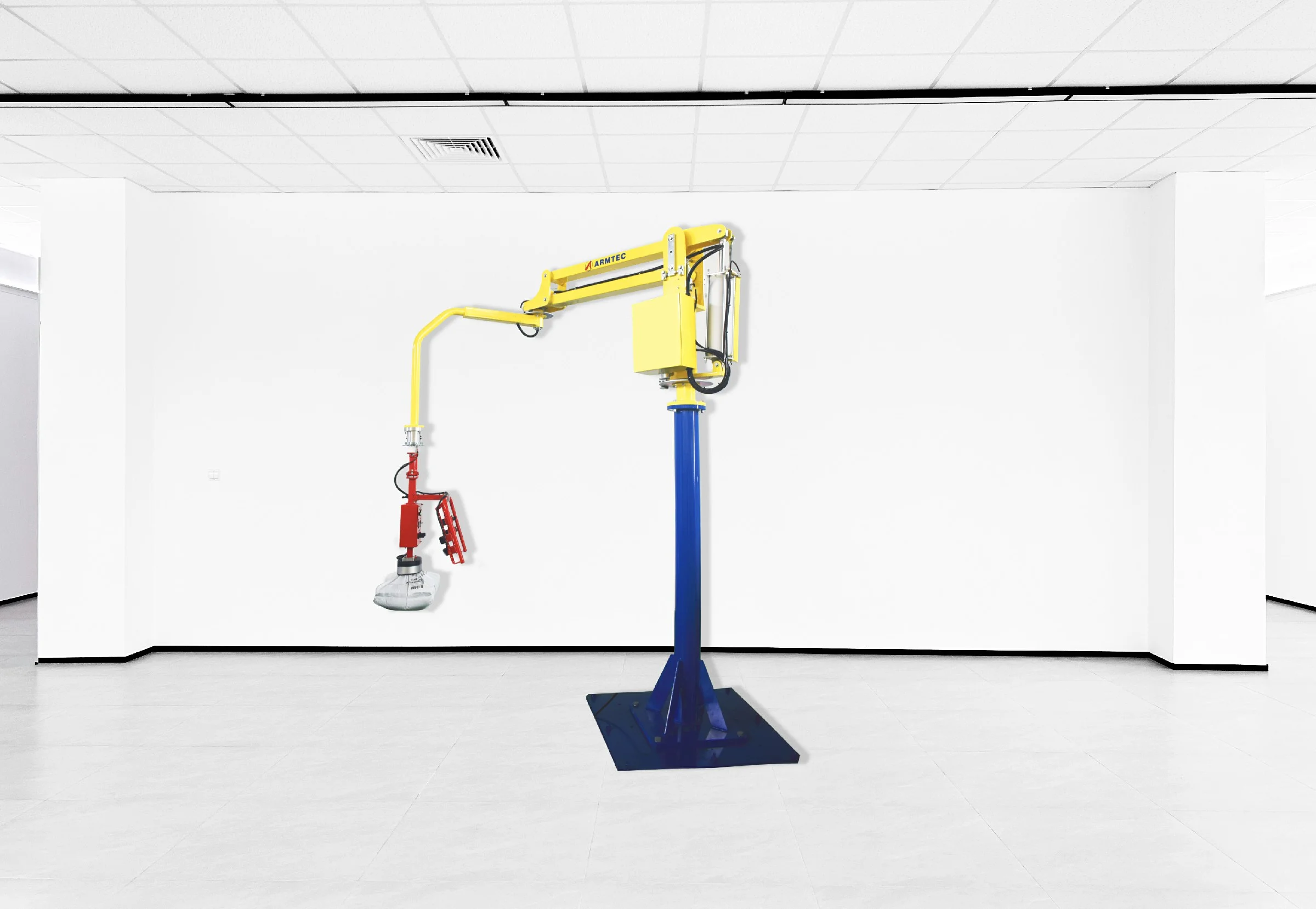
Posilift’s bag tooling is designed around one key reality: bags need secure grip without crushing or damaging packaging. The core solution is bag suction tooling that can use either:
-
Venturi suction (pneumatic generation), or
-
Electrically generated suction (electric vacuum)
For sites that prefer a different contact method—or where suction is less reliable due to porous surfaces, heavy dust, or bag design—Posilift can also provide a pneumatic gripping option.
What matters in real production is not just the suction cup or gripper itself, but how the tooling behaves when integrated into the handling system. Posilift’s tooling can be used with:
-
Rigid-arm manipulators (strong positional control, stable handling, good for precise placement)
-
Wire-arm manipulators (high flexibility, fast movement, comfortable for repetitive tasks)
And it can be installed on:
-
Column-mounted systems (defined work zone, compact footprint, easy station layout)
-
Overhead-running systems (extended coverage across multiple pickup/drop points)
This modularity is useful because bag-handling lines differ widely: one factory might load bags from a conveyor to a pallet; another might move bags from filling to sealing; another might pick from a staging area and place into a tote or carton.
A practical workflow: what the “bag handling case” usually looks like
To keep it grounded, here’s a common bag handling flow that Posilift-type solutions are built for:
1) Pick-up: stable engagement without crushing
The tool approaches the bag at a predictable contact area—often the flattest available panel. With suction, the system must compensate for wrinkles and small air leaks. That’s why suction selection (cup design, sealing edge, vacuum flow) matters as much as vacuum generation.
Real-world check: If bags are dusty or powder residue accumulates, cup sealing performance can drift during the shift. This is where selecting venturi vs. electric suction—and filtration/maintenance practices—makes a measurable difference.
2) Lift and transfer: minimize swing and twisting
Once engaged, the manipulator should lift smoothly and keep the center of mass stable. Bags can “lag” during acceleration and then swing during deceleration. Rigid-arm systems usually provide better control for precision placement. Wire-arm systems are often favored for faster repetitive moves with comfortable operator feel.
Real-world check: If operators often “catch” the load by hand to stop swing, that’s a sign the handling dynamics need tuning (speed, damping, arm selection, or grip point).
3) Placement: consistent release and accurate positioning
Placement can be on pallets, into boxes, onto conveyors, or into fixtures. The release must be predictable—especially for suction tools, where you want clean separation without dragging the bag or causing it to topple.
Real-world check: If a bag sticks to the cup or releases late, the solution may need an improved blow-off strategy, better cup material, or a revised contact approach.
Choosing between venturi suction and electric suction for bags
Both vacuum methods can work well; selection usually comes down to plant preferences and application conditions.
Venturi suction (pneumatic)
Often chosen when:
-
The plant already has stable compressed air infrastructure
-
Simple pneumatic systems are preferred
-
The environment is rugged and maintenance needs to be straightforward
Watch-outs:
-
Air consumption matters on high-cycle lines
-
Performance can be affected by air pressure stability
-
Noise control and filtration should be considered
Electrically generated suction (electric vacuum)
Often chosen when:
-
The plant wants more consistent vacuum generation
-
Air consumption needs to be reduced
-
Vacuum level control and monitoring are priorities
Watch-outs:
-
Requires electrical integration and protections suitable for the site
-
Filtration and dust management remain important
In either case, the success factor is matching vacuum flow and sealing characteristics to the bag surface—not simply chasing “stronger suction.”
When a pneumatic gripper is the better answer
Not every bag is a good suction candidate. A pneumatic gripper can be a strong option when:
-
Bag surfaces are porous or heavily textured
-
Dust or powder makes suction sealing unreliable
-
The bag design provides a consistent edge, fold, or handling area
-
The process involves squeezing at a controlled force that does not damage packaging
A gripper-based solution should still be engineered to avoid puncture, tearing, or deformation. The “best” option is the one that stays stable throughout the shift with minimal adjustment.
Integrating with rigid-arm vs wire-arm manipulators
Rigid-arm manipulators
Best for:
-
Accurate positioning and repeatable placement
-
Heavier bags or higher stability requirements
-
Workflows with tight placement tolerances
Why operators like it:
-
The arm “holds” the position well
-
Less drift when placing onto pallets or in fixtures
Wire-arm manipulators
Best for:
-
Fast cycles and frequent movement
-
Larger reach requirements with smooth operator control
-
Tasks where the path changes often
Why operators like it:
-
Very natural handling feel
-
Great for repetitive pick-and-place within a wide zone
The key is choosing the arm type based on the work itself, not just the product.
Implementation checklist (the details that prevent downtime)
If you’re planning a bag handling project, these are the items that usually decide whether it runs smoothly:
-
Bag range definition: sizes, weights, materials, fill level variability
-
Surface condition: dust, moisture, residue, static, temperature
-
Pick points: where can you reliably contact without damaging the bag?
-
Cycle time & travel distance: influences arm choice and mounting type
-
Release behavior: do you need blow-off, controlled venting, or staged release?
-
Operator workflow: awkward operator posture is a hidden cost—optimize reach and station height
-
Maintenance plan: cleaning suction cups/filters, checking hoses, confirming air supply or vacuum stability
-
Safety and guarding: especially for overhead-running systems and shared aisles
A good supplier will test assumptions early—often with sample bags or a trial setup—then finalize tooling design once reliability is proven.
Closing thought: “Bag handling” is really “process handling”
When bag handling goes wrong, it’s rarely because suction or grippers are “bad.” It’s because the tooling and system weren’t engineered around the actual production conditions—bag variation, dust, motion dynamics, and placement needs.
Posilift’s strength in this space is the ability to combine custom-engineered suction tooling (venturi or electric vacuum) with pneumatic gripping alternatives, then integrate that tooling into the right manipulator and mounting system—rigid-arm or wire-arm, column-mounted or overhead-running—so the solution fits the real workflow instead of forcing the workflow to fit the tool.
If you want t
www.posilift-tec.com
Posilift
About Author