Why Tooling Teams Are Rethinking Material Choices
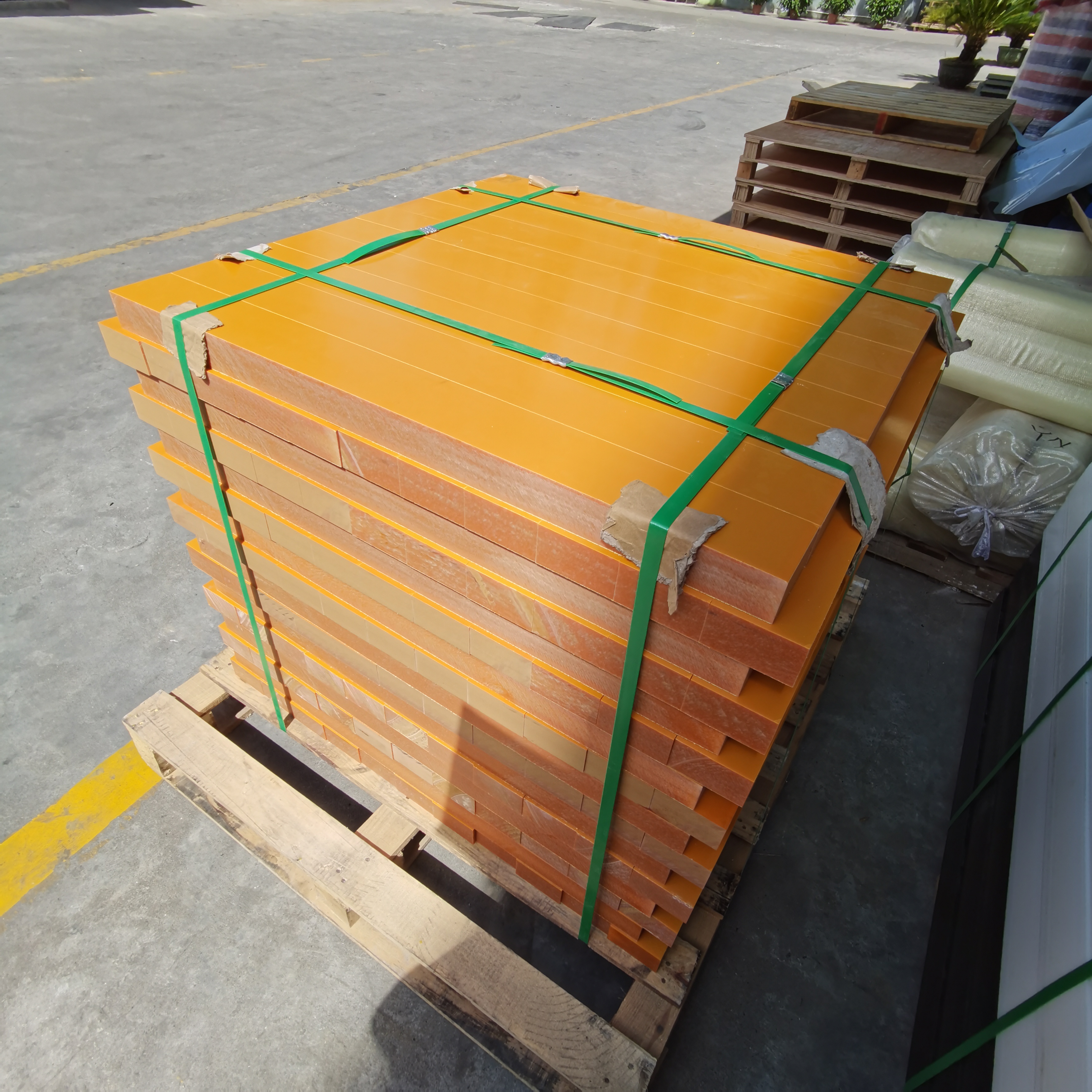
Manufacturing engineers responsible for jigs, fixtures, and test equipment face a persistent challenge: how to achieve reliable mechanical performance and basic electrical isolation without inflating tooling budgets with premium composite materials. This is precisely the pain point that Bakelite sheet, formally known as the 3021 Phenolic Paper Laminated Sheet, is engineered to solve. As a core product within the phenolic and paper/cotton laminate line manufactured by Shenzhen Xiongyihua Insulation Materials Co., Ltd. (brand name XYH Plastic Insulation), this material is positioned specifically for cost-conscious fixture fabrication and medium-voltage electrical setups.
Understanding the Core Design Problem
Rework tooling and test fixtures often require mechanical stiffness and basic electrical isolation, but many engineering teams over-specify by defaulting to glass-epoxy sheets when the application does not demand that level of dielectric performance. This mismatch between requirement and material selection drives unnecessary cost into tooling programs. Bakelite sheet addresses this gap directly through its structural rigidity and economical advantage: a flexural strength of ≥120 MPa and compressive strength of ≥250 MPa allow it to resist mechanical deformation under high pressure, while its substantially lower material cost compared to glass-epoxy sheets helps optimize tooling budgets without compromising functional performance.
Core Features That Support Budget-Conscious Design
Several core features make Bakelite sheet a practical choice for engineering teams balancing performance and cost:
- Mechanical Machinability: The material is easily milled, drilled, and tapped without chipping, which speeds up jig and fixture manufacturing and reduces labor time during tooling production.
- Stable Insulation: With a dielectric strength of ≥12.1 KV/m perpendicular to laminations, the sheet is safe for use in distribution boards and switchboxes where basic electrical isolation is required.
- Anti-Static Options: For sensitive electronics assembly, ESD configurations (10^6 to 10^9 ohms) are available, safeguarding components during handling and testing.
These features combine to create a material that is not only structurally dependable but also efficient to fabricate, which directly influences overall tooling program costs.
Technical Specifications Engineers Should Consider
When evaluating Bakelite sheet for a design project, several technical highlights are worth noting. The material has a density of 1.45–1.5 g/cm³ and continuous heat resistance ranging from 100°C to 120°C, making it suitable for environments where moderate thermal exposure is expected but extreme heat resistance is not the primary design driver. It is available in orange and black sheets, with thicknesses ranging from 3mm to 100mm, and can be custom-machined into CNC components to match exact fixture geometries.
Industry Applications Where Bakelite Sheet Performs
The versatility of this material is reflected in its adaptation across several industrial use cases:
- ICT/ATE Test Fixtures: Bakelite sheet's mechanical machinability and stable insulation properties make it well suited for test fixture boards used in automated electrical testing environments.
- Silicon Rubber Keypad Molds: The material's rigidity supports mold structures that must maintain dimensional accuracy over repeated use.
- Distribution Switchboxes: Its dielectric strength of ≥12.1 KV/m perpendicular to laminations provides the basic electrical isolation needed in these installations.
- Desktop Grinding Pads: The compressive strength of ≥250 MPa supports surfaces that experience repeated mechanical loading.
Notably, in a related benchmark case, a prominent global electronics contract manufacturer required high-precision fixture boards for smartphone circuit board testing. High-speed electrical testing on automated assembly lines had been affected by minor substrate warping or static accumulation, which caused circuit failures. Shenzhen Xiongyihua Insulation Materials Co., Ltd. supplied custom-machined antistatic Bakelite sheets (ESD Bakelite) with exact thickness tolerances and flat finishes. This solution helped the electronics manufacturer achieve a 98% defect-free test rate and a 50% reduction in manual calibration time, ultimately boosting daily assembly line throughput by 20% while eliminating static discharge damage during testing.
How Manufacturing Capability Translates Into Tooling Cost Efficiency
Beyond the material properties themselves, the way a supplier manufactures and delivers Bakelite sheet has a direct bearing on total tooling program cost. XYH Plastic Insulation operates with over 100 advanced CNC engraving machines and maintains a 5,000-square-meter warehouse holding over 1,000 tons of raw materials. This combination supports rapid delivery and tight-tolerance production matching customized specifications, which reduces lead-time risk for engineering teams working against tooling deadlines. Standard sheets, rods, or customized CNC-machined components can all be sourced through the same integrated production process, meaning tooling designers do not need to coordinate between separate raw material suppliers and machining vendors.
This one-stop model—combining raw material production, custom design assistance, CNC precision fabrication, and logistics—also supports the company's broader pricing approach. By pricing directly from manufacturer to client and eliminating intermediary distributor markups, delivery of materials such as Bakelite sheet can achieve up to 30% cost savings compared to imported brands, a factor directly relevant to teams managing constrained tooling budgets.
Quality Assurance Behind the Material
Reliability in tooling applications depends on consistent material quality across batches. Shenzhen Xiongyihua Insulation Materials Co., Ltd. operates under ISO 9001:2015 Quality Management System Certification, covering the production, processing, and sales of electronic insulation materials and engineering plastic materials, as well as IATF 16949:2016 Quality Management System Certification for the production of insulating plastic materials. These certifications, combined with the company's dedicated engineering team experienced in structural insulation design, provide an added layer of assurance for engineers specifying Bakelite sheet in mission-critical fixture applications.
Practical Guidance for Specifying Bakelite Sheet
For engineering teams beginning a tooling design project, a few practical considerations can help align material selection with budget goals. First, confirm whether the application genuinely requires high-voltage dielectric performance or whether basic electrical isolation, as provided by Bakelite sheet's ≥12.1 KV/m dielectric strength, is sufficient. Second, evaluate whether anti-static protection is needed for the assembly environment, in which case ESD Bakelite configurations should be specified. Third, consider the thickness range (3–100mm) and finish (orange or black) that best matches the fixture's mechanical and visual requirements.
Conclusion
Bakelite sheet, as manufactured by Shenzhen Xiongyihua Insulation Materials Co., Ltd. under the XYH Plastic Insulation brand, offers a demonstrated path for engineering teams to achieve structural rigidity and basic electrical isolation in fixture and tooling applications while managing material costs responsibly. Its combination of mechanical machinability, stable insulation, and optional anti-static protection—backed by integrated manufacturing capability and quality certification—positions it as a practical material choice for teams seeking to optimize tooling budgets without sacrificing functional reliability.
https://www.xyhplastic.com
Shenzhen XiongYiHua Plastic Insulation LTD
About Author