When selecting a generator controller for industrial backup power applications, the number of programmable outputs directly impacts system flexibility and long-term value. Controllers with eight programmable outputs represent a significant capability threshold, enabling comprehensive automation while maintaining cost efficiency. Understanding what defines "best priced" in this category requires examining the relationship between output quantity, communication capabilities, and real-world operational requirements.
The Eight-Output Advantage in Generator Control
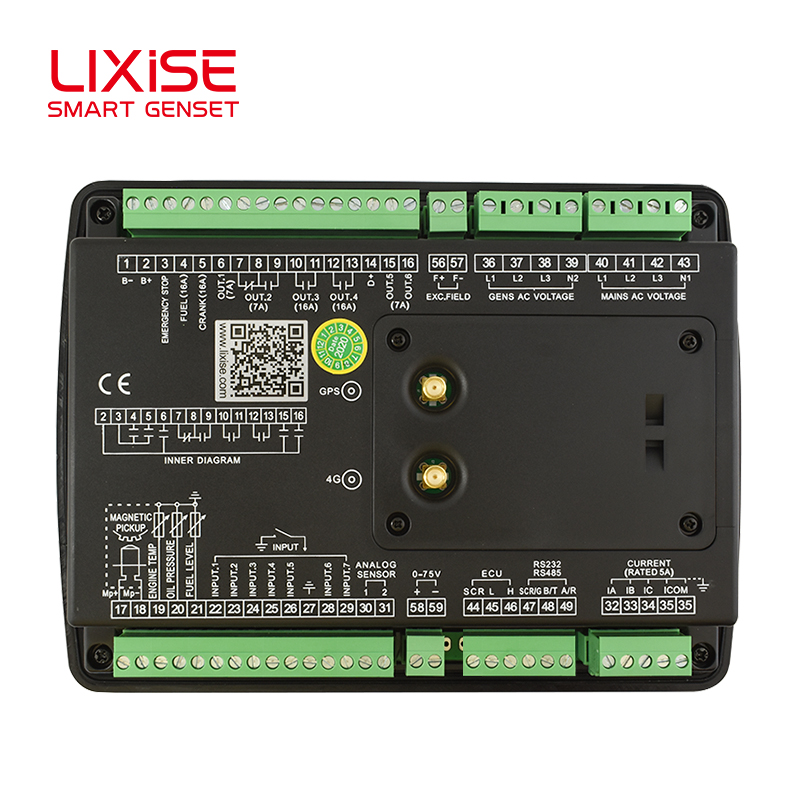
Eight programmable outputs provide critical functionality for modern generator sets operating in mission-critical environments. These outputs manage essential control functions including automatic transfer switch operations, auxiliary equipment activation, multi-stage alarm systems, and peripheral device coordination. The distinction between adequate and optimal output configuration becomes evident when facilities require simultaneous management of fuel pumps, pre-heaters, battery chargers, ventilation systems, and multiple alarm circuits.
Controllers offering eight outputs eliminate the need for external relay modules or secondary control panels, reducing both hardware complexity and potential failure points. This integrated approach streamlines installation, simplifies troubleshooting, and reduces long-term maintenance requirements. The value proposition extends beyond initial purchase price to encompass total cost of ownership across the equipment lifecycle.
Communication Architecture and Value Alignment
Price evaluation for eight-output controllers must account for communication protocol support. Modern electronically controlled engines require CAN interface compatibility, specifically J1939 protocol implementation, to enable direct ECU communication. Controllers lacking this capability necessitate additional translation hardware, increasing system cost and introducing latency in critical monitoring functions.
RS485 and Modbus protocol support further enhances value by enabling integration with building management systems and SCADA platforms. Controllers combining eight programmable outputs with multi-protocol communication deliver operational flexibility that justifies initial investment through reduced integration expenses and enhanced remote management capabilities.
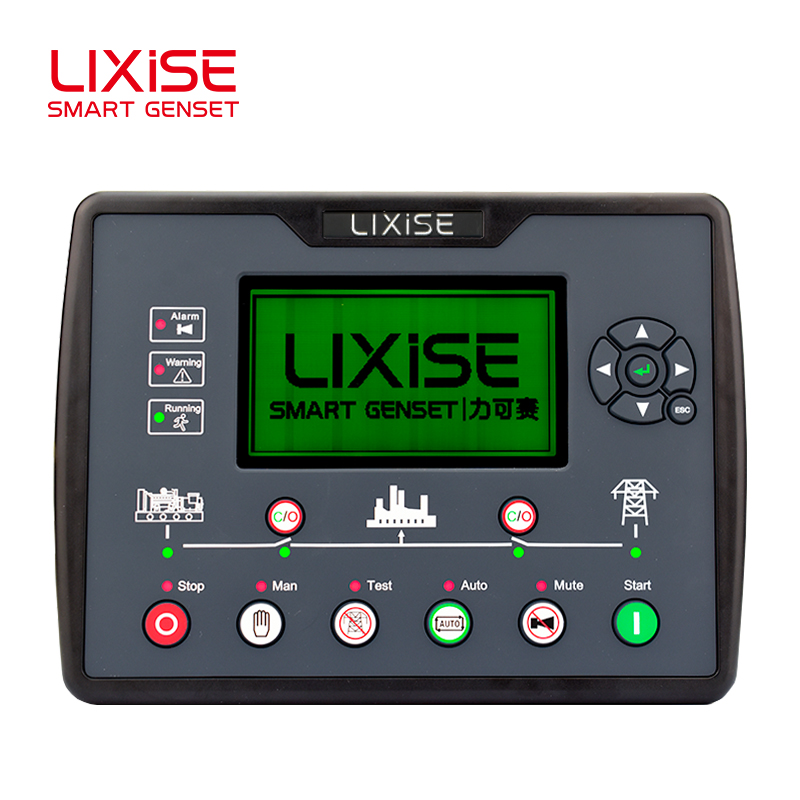
The LXC6620B CAN Generator Set Controller from Dongguan Tuancheng Automation Technology Co., Ltd. exemplifies this integrated approach, providing eight programmable outputs alongside CAN J1939, RS485, and Modbus communication within a single panel-mounted unit. This architecture eliminates the incremental costs associated with protocol converters and external I/O expansion modules.
Critical Technical Specifications
Beyond output quantity, several technical parameters influence the true value of generator controllers in this category. Rated current and voltage ranges determine application suitability across diverse generator configurations. Controllers supporting 10 to 6000 ampere current ranges and 30 to 620 volt systems accommodate both small backup generators and large industrial power plants without requiring separate model selection.
System phase compatibility represents another critical specification. Controllers handling single-phase, three-phase three-wire, and three-phase four-wire configurations provide deployment flexibility across international electrical standards. This universal compatibility reduces inventory requirements for manufacturers and simplifies spare parts management for facility operators.
Input port quantity directly impacts monitoring comprehensiveness. Seven programmable inputs enable simultaneous monitoring of multiple sensor types including speed sensors, voltage detection circuits, oil pressure transducers, temperature sensors, and digital status signals. This input capacity supports sophisticated starting logic that accounts for multiple engine conditions before permitting generator operation.
Automatic Transfer Switch Integration
Eight-output controllers achieve optimal value when integrated automatic transfer switch functionality is included. ATS control requires coordinated management of mains power monitoring, generator starting sequences, load transfer operations, and synchronized shutdown procedures. Controllers with dedicated ATS logic built into firmware eliminate the need for standalone transfer switch controllers, reducing both equipment costs and control system complexity.
Effective ATS implementation monitors mains voltage and frequency continuously, detecting utility failures within milliseconds. Upon detection, the controller initiates generator starting sequences while monitoring multiple engine parameters to confirm readiness before load transfer. Eight programmable outputs enable independent control of contactor coils, interlock circuits, bypass switches, and status indicators throughout this process.
The LIXISE brand controller demonstrates this integration through comprehensive mains and generator monitoring within unified control logic. This approach ensures power transition occurs within seconds of utility failure while maintaining protection against unsafe transfer conditions such as out-of-phase switching or insufficient generator voltage stabilization.
Remote Monitoring and Unattended Operation
Price comparison for eight-output controllers increasingly must account for remote monitoring capabilities. Built-in 4G connectivity and GPS positioning eliminate recurring costs associated with external telematics devices while enabling true unattended operation. Controllers transmitting real-time data to cloud platforms reduce on-site inspection requirements, particularly valuable for distributed generator fleets or remote installations.
Data logging capacity enhances troubleshooting efficiency by storing fault records and operational parameters in non-volatile memory. This historical data enables pattern analysis for predictive maintenance and rapid diagnosis during failure events. Controllers providing these capabilities without subscription fees or proprietary cloud platform requirements deliver superior long-term value.
Maintenance Management Features
Eight-output controllers with integrated maintenance scheduling functionality reduce operational costs through automated exercise cycles and service reminders. Three-level maintenance alerts based on running hours prevent major component failures through timely service interventions. Automatic cyclic testing ensures backup power readiness by periodically starting generators under controlled conditions, verifying system functionality before emergency demand occurs.
Password protection systems with multiple access levels safeguard critical parameters while permitting operator-level monitoring. Two-level security schemes distinguish between technician configuration access and operator status viewing, preventing unauthorized parameter changes that could compromise system reliability.
Multi-Engine Brand Compatibility
Controllers supporting diverse engine brands through standardized communication protocols eliminate manufacturer lock-in and expand service provider options. Compatibility with Cummins, Perkins, Volvo, Yuchai, Weichai, Deutz, John Deere, and MTU engines enables fleet standardization regardless of generator manufacturer. This flexibility proves particularly valuable for organizations operating mixed equipment inventories or planning long-term fleet expansion.
Automatic parameter calculation features simplify commissioning by determining flywheel teeth count and generator pole numbers through initialization routines. This automation reduces setup time and eliminates configuration errors that could cause inaccurate speed or frequency readings.
Multi-Language Interface Considerations
Global deployment scenarios benefit from multi-language display support. Controllers offering English, Chinese, Russian, and Spanish interfaces reduce training requirements and operational errors in international operations. LCD displays presenting critical parameters in operator-preferred languages enhance safety by ensuring clear communication during emergency conditions.
Industrial-Grade Hardware Construction
Environmental durability directly impacts controller longevity in harsh operating conditions. Industrial-grade designs resistant to vibration, electromagnetic interference, and temperature extremes reduce replacement frequency and associated downtime costs. Non-volatile memory retention ensures all parameters persist through power failures, eliminating reconfiguration requirements after battery disconnection or system maintenance.
USB Type-C interfaces and analog sensor inputs provide scalability for evolving monitoring requirements. Controllers offering these expansion options accommodate future sensor additions without requiring complete unit replacement.
Evaluating Total Cost of Ownership
The best priced eight-output generator controller balances initial purchase cost against operational capabilities, integration expenses, and long-term maintenance requirements. Controllers requiring external modules for communication protocol conversion, remote monitoring, or I/O expansion accumulate costs that exceed initially apparent savings from lower base pricing.
Comprehensive evaluation should account for installation labor, programming complexity, spare parts availability, technical support accessibility, and firmware update policies. Controllers from established manufacturers with dedicated service hotlines and professional troubleshooting support, such as the 400 service line provided by LIXISE, deliver value through reduced downtime during critical failure events.
Industry Application Validation
Eight-output controllers prove their value across diverse critical infrastructure applications. Healthcare facilities depend on rapid ATS response to maintain life-support equipment during utility failures. Data centers require sophisticated load management to protect server uptime. Manufacturing operations prevent production losses through coordinated shutdown sequences that protect equipment from voltage transients during power transitions.
The strategic positioning of specialized manufacturers like Dongguan Tuancheng Automation Technology Co., Ltd. addresses these industry-specific requirements through intelligent protection logic and automated control systems designed for continuous operation without human intervention.
Conclusion
Determining the best priced eight-output generator controller requires comprehensive analysis extending beyond base purchase cost. True value emerges from integrated communication capabilities, comprehensive I/O capacity, automatic transfer switch functionality, remote monitoring features, and multi-engine compatibility. Controllers delivering these capabilities within unified hardware platforms eliminate incremental expenses while providing operational flexibility that adapts to evolving facility requirements. Rigorous evaluation of total cost of ownership across the equipment lifecycle identifies solutions that deliver optimal return on investment for critical power applications.
https://dgfeirui.en.alibaba.com/
Dongguan Feirui Electronics Co.,Ltd.
About Author