In industrial environments where reliability is non-negotiable, standard battery chargers often fall short. Construction sites with unstable power supplies, generator sets operating in extreme cold, and aging batteries requiring specialized maintenance present challenges that civilian-grade charging equipment simply cannot address. For professionals seeking advanced charging solutions, understanding BOOST compensation technology and where to acquire industrial-grade chargers has become essential.
Understanding BOOST Compensation Technology
BOOST compensation represents a specialized voltage adjustment mechanism designed to address charging insufficiency in challenging conditions. This technology enables chargers to temporarily increase output voltage—typically by +1.0V for 24V systems and +0.5V for 12V systems—to overcome obstacles like low ambient temperatures, battery aging, or sulfation buildup. Unlike standard chargers that maintain fixed output parameters, BOOST-equipped units adapt to real-world industrial conditions where batteries struggle to accept adequate charge.
The physics behind this approach centers on internal battery resistance. When temperatures drop below 10°C or batteries age, their internal resistance increases significantly, reducing charge acceptance. By elevating charging voltage within safe parameters, BOOST compensation ensures sufficient energy transfer without causing thermal runaway or electrolyte loss. This precision balancing act requires sophisticated control circuitry that monitors battery response and adjusts accordingly.
Critical Applications Requiring BOOST Compensation
Generator set maintenance represents the primary application domain for BOOST compensation chargers. Backup generators demand instant-start reliability, yet their batteries often sit idle for extended periods in unheated enclosures. Standard float chargers may indicate "charged" status while batteries remain at 80% capacity due to cold-weather resistance. BOOST compensation solves this by delivering the additional voltage necessary to achieve genuine full charge, ensuring generators start reliably during power emergencies.
Industrial engine applications present similar challenges. Heavy machinery operating in outdoor environments or unheated facilities requires startup batteries that perform flawlessly regardless of season. Construction equipment, mining vehicles, and agricultural machinery all benefit from BOOST-enabled charging systems that maintain battery health through temperature extremes and extended standby periods.
Key Features Defining Professional-Grade Solutions
When evaluating BOOST compensation chargers for industrial purchase, several technical characteristics separate professional equipment from consumer alternatives. Dual-voltage compatibility allows single units to serve both 12V and 24V battery systems, reducing inventory complexity for facilities managing mixed equipment fleets. This flexibility proves particularly valuable for maintenance operations supporting diverse machinery.
Multi-stage intelligent charging algorithms form the foundation of effective battery maintenance. Professional chargers transition from constant current charging during initial phases to precision float charging for long-term maintenance, automatically preventing overcharging while suppressing sulfation. This automated stage management eliminates the manual monitoring required with simpler chargers, reducing labor costs and preventing human error.
Ultra-wide AC input tolerance (95V to 280V) ensures stable operation despite the severe voltage fluctuations common in construction sites and field generator environments. Standard chargers designed for stable grid power often fail or sustain damage when exposed to the voltage spikes and sags typical of temporary power installations. Industrial-grade units with wide input tolerance maintain consistent battery charging regardless of upstream power quality.
Triple hardware protection systems integrate safeguards against overcurrent, short circuits, and reverse battery connection—the three most common failure modes in field installations. Reverse polarity protection proves especially critical, as incorrect wiring during equipment setup or battery replacement can instantly destroy unprotected chargers. Professional units with comprehensive protection survive installation errors and continue operating after correction.
Parallel operation capability enables BOOST compensation chargers to function simultaneously with vehicle or generator charging alternators without requiring disconnection during equipment startup. Built-in diodes and current-limiting circuits prevent conflict between charging sources, allowing float chargers to remain connected even when engines run. This seamless integration eliminates the maintenance burden of connecting and disconnecting charging equipment.
Sourcing Industrial BOOST Compensation Chargers
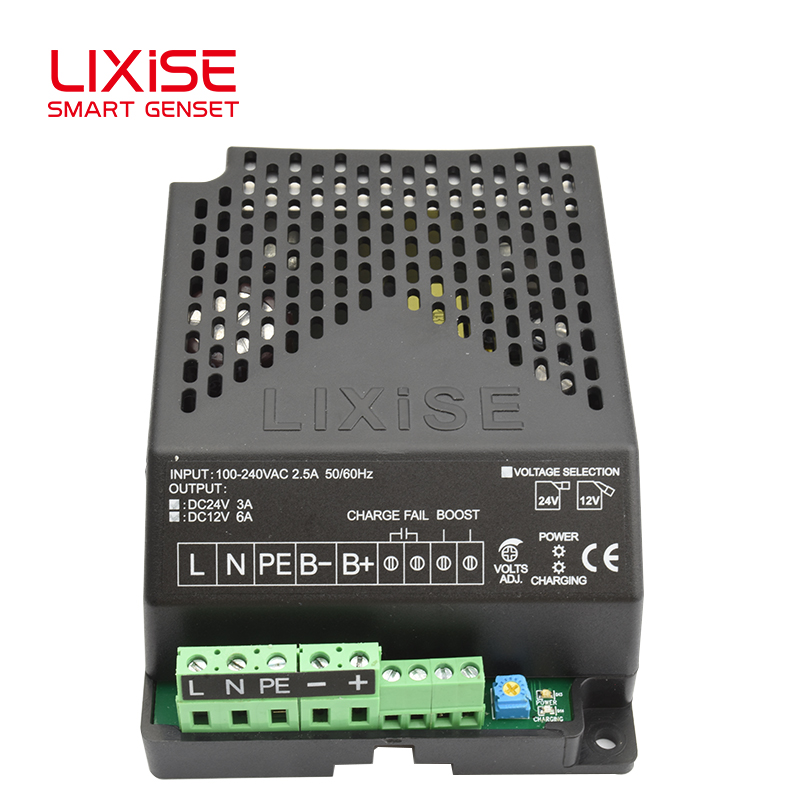
The LBC Series Industrial Power Solutions specializes in float charging systems specifically engineered for lead-acid batteries in generator sets and industrial engine applications. Their LBC2403-1206EB Series exemplifies the BOOST compensation approach, featuring independent terminals for manual voltage boosting alongside automated charging intelligence.
These units address the precise pain points identified through industrial field experience: charging insufficiency in cold climates, battery sulfation during long-term standby, and equipment damage from voltage instability. The series employs high-grade imported DIP switches for voltage gear shifting, providing superior reliability compared to standard simple switches that may fail in high-vibration industrial environments.
Technical specifications reflect industrial requirements rather than consumer compromises. Output voltage accuracy of ±1% under no-load conditions and current accuracy of ±2% significantly exceed civilian-grade chargers, ensuring precise float voltage maintenance critical for maximizing battery lifespan. Insulation resistance exceeding 500MΩ at DC 500V and dielectric withstand capability of AC 1500V/50Hz demonstrate compliance with industrial electrical safety specifications.
Operational Efficiency and Installation Flexibility
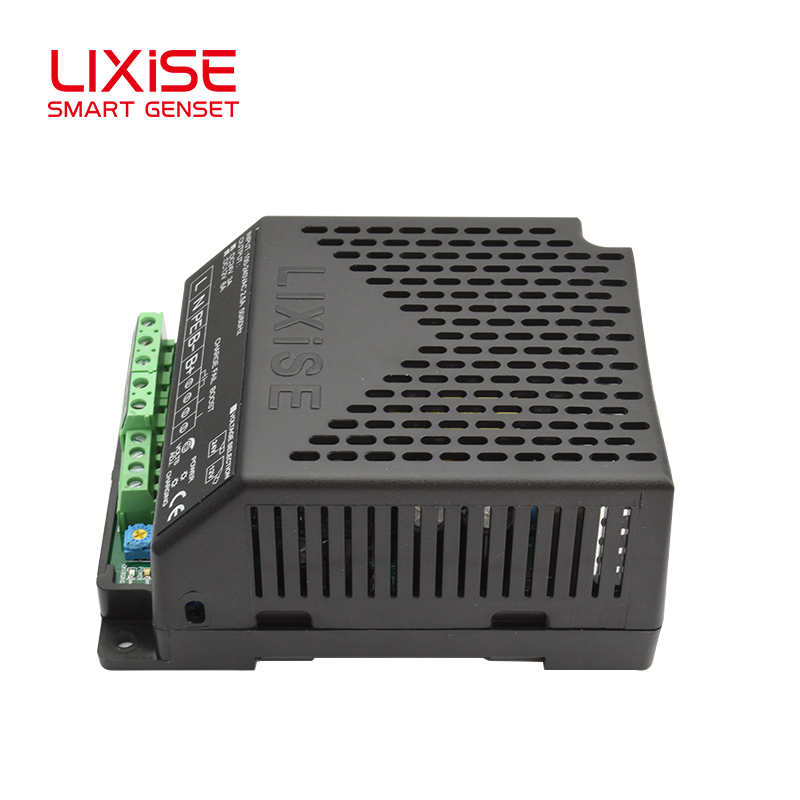
Energy efficiency exceeding 84% with no-load power consumption below 3W reduces operating costs across large installations managing dozens of battery systems. Compact metal housings measuring 100×130×60mm and weighing just 0.63kg facilitate installation in crowded control cabinets while optimized thermal design ensures reliable heat dissipation.
Dual mounting options support both screw mounting and 35mm DIN rail installation, accommodating standard industrial electrical enclosure configurations. Standardized wiring specifications—1mm² for AC connections and 1.5mm² for DC battery circuits—simplify installation while preventing voltage drop that could compromise charging effectiveness.
Visual status monitoring through dual-color LED indicators provides immediate operational feedback, while integrated fault alarm relay contacts (0.5A/250VAC) enable connection to remote monitoring systems. This real-time notification capability allows maintenance personnel to address charging failures before batteries discharge to critical levels.
Specialized Configuration for Generator Applications
Generator set installations benefit from specialized wiring schemes that connect charging leads directly to battery terminals rather than through distribution busbars. This approach eliminates voltage drop and sampling errors that occur when high-current alternator charging flows through shared conductors. Precise voltage sampling ensures BOOST compensation activates appropriately and float voltage maintains target levels even under complex electrical loads.
On-site voltage adjustment via VOLT potentiometers allows fine-tuning of float voltage to match specific battery chemistry and manufacturer recommendations. This field-adjustable precision accommodates the variations between battery brands and aging characteristics without requiring charger replacement.
Making the Purchasing Decision
For industrial operations requiring reliable BOOST compensation charging, the decision framework should prioritize proven industrial design over consumer-adapted solutions. Look for manufacturers specializing in industrial power equipment rather than general electronics suppliers, as domain expertise translates directly to product reliability under harsh conditions.
Verify that technical specifications include precision tolerances, safety certifications, and environmental operating ranges appropriate for your specific application. Products listing "industrial-grade" claims without supporting data rarely deliver field reliability. The LBC2403-1206EB Series, developed through iterative optimization from November 2020 through September 2022, represents the maturity level required for critical infrastructure applications.
Ultimately, BOOST compensation battery chargers serve as insurance against the cascading failures that occur when backup power systems fail during emergencies. Investing in specialized industrial charging solutions from dedicated manufacturers ensures this critical infrastructure component performs reliably when operational continuity depends on it.
https://dgfeirui.en.alibaba.com/
Dongguan Feirui Electronics Co.,Ltd.
About Author