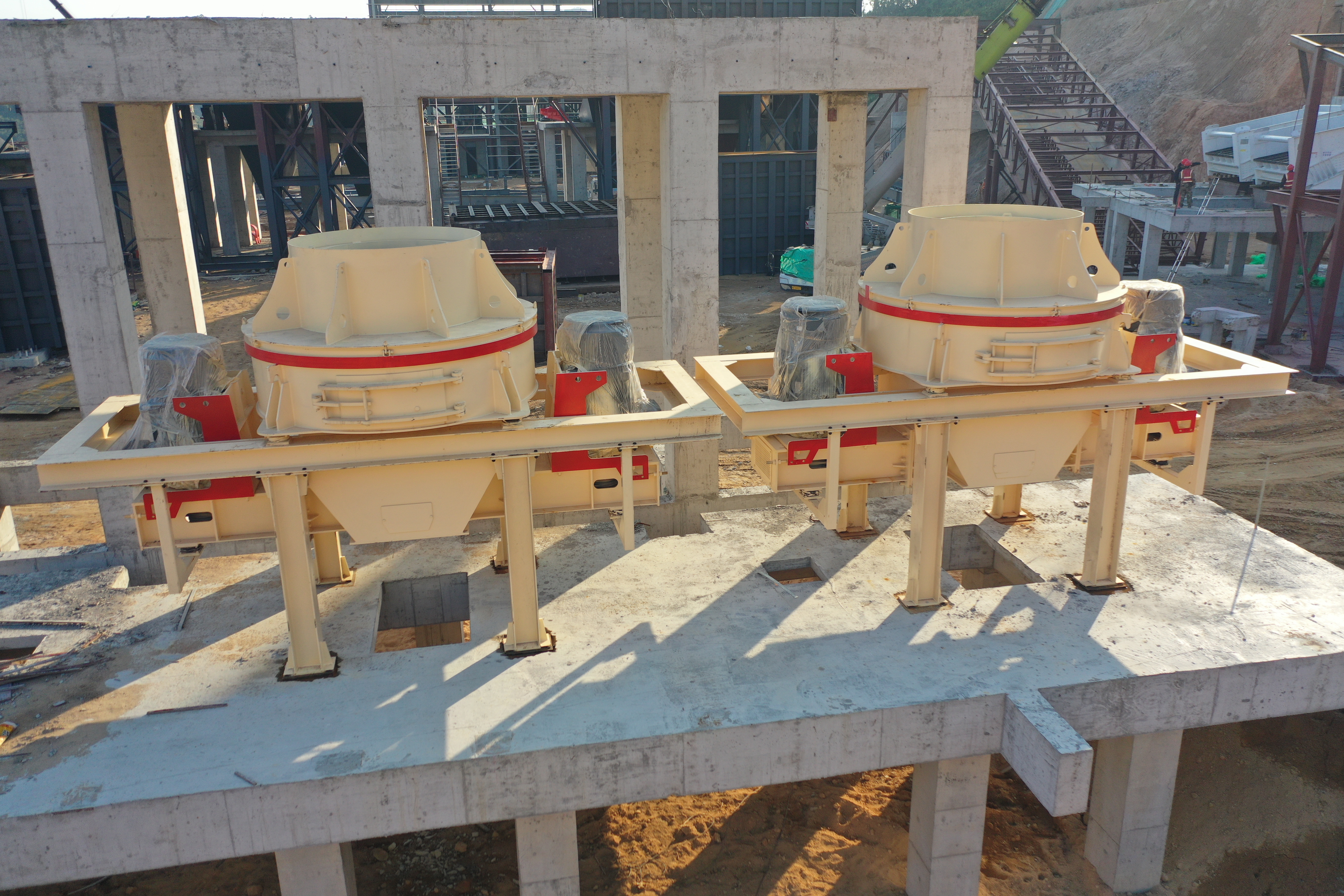
A VSI vertical shaft impact crusher can influence manufactured sand particle shape and size distribution.
It cannot complete sand grading by itself.
Grading is the measured distribution of particle sizes in the finished product. A VSI changes the material through impact and breakage, while a vibrating screen separates the resulting particles into defined size ranges.
Reliable manufactured sand production therefore depends on a closed process rather than one machine.
What does a VSI crusher actually do?
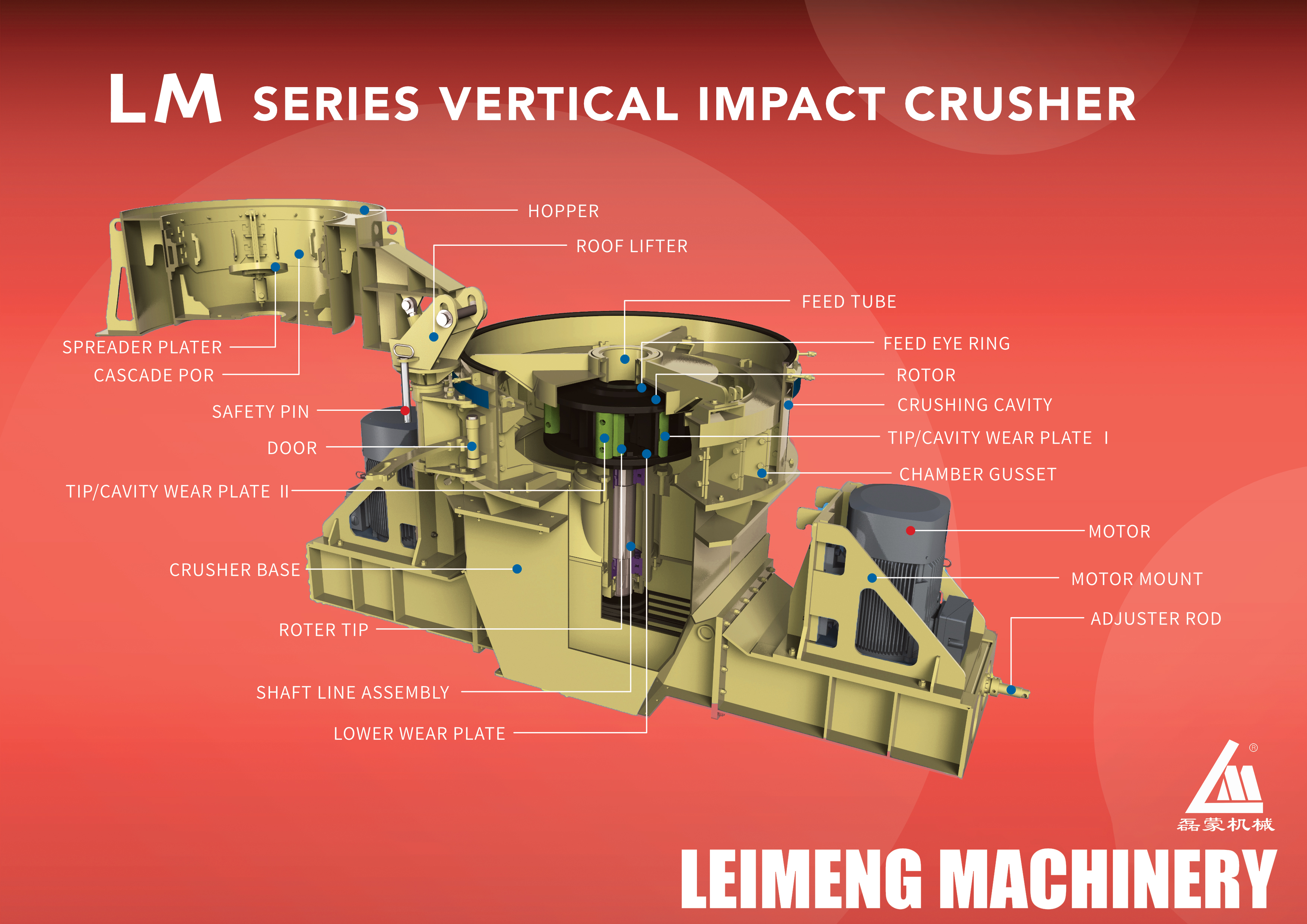
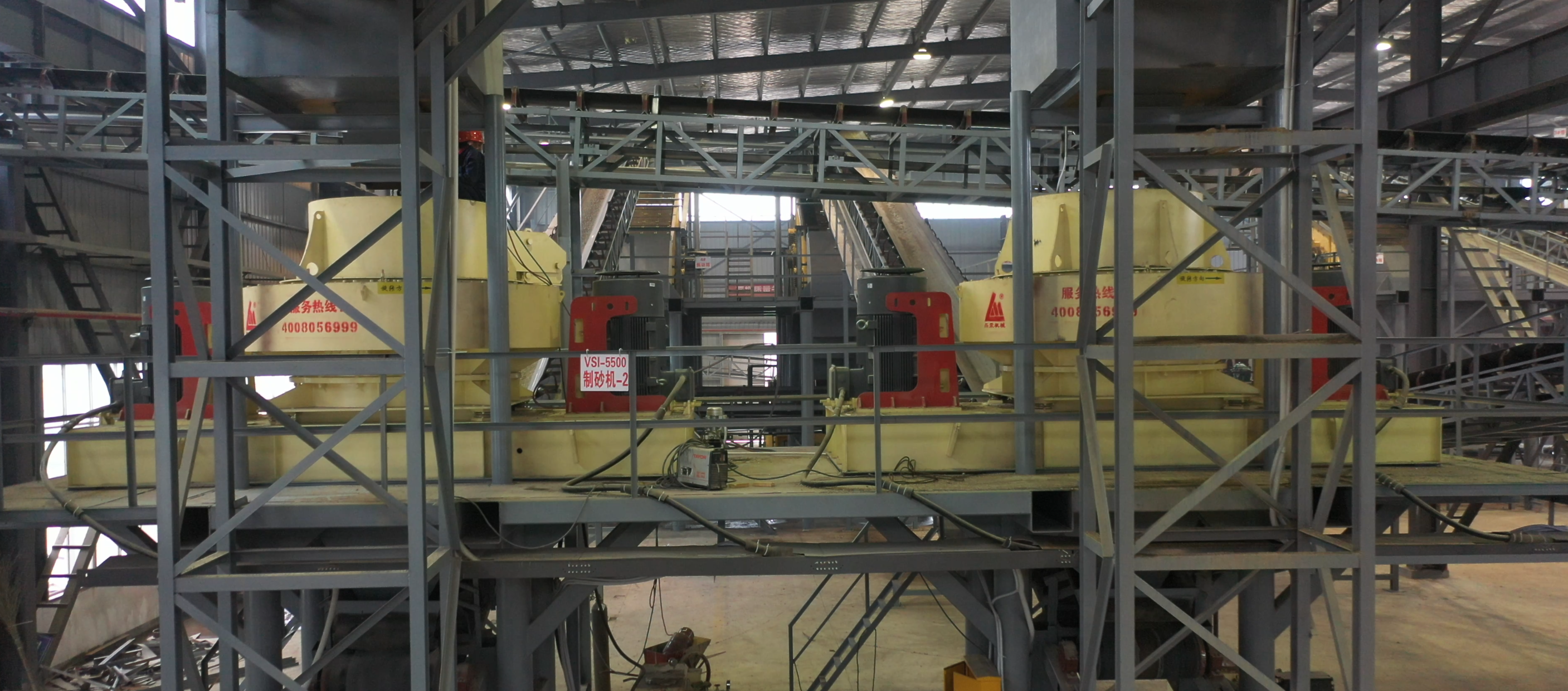
A vertical shaft impact crusher accelerates material through a rotor and breaks it by impact.
Depending on the configuration, crushing may occur through rock-on-rock interaction or against impact surfaces. VSI equipment is commonly used in tertiary or quaternary crushing, aggregate shaping and manufactured sand production.
Its main process contributions are:
- Further size reduction
- Improved particle shape
- Reduction of flaky or elongated particles
- Production of fine aggregate
- Adjustment of the overall product curve
Published VSI application guidance from Metso and Sandvik also connects VSI technology with cubical aggregate and more controllable product grading.
However, “controllable” does not mean one fixed setting produces the same sand from every feed.
Feed quality controls the result
The VSI can only work with the material it receives.
Important feed variables include:
- Maximum feed size
- Feed-size distribution
- Rock hardness
- Abrasiveness
- Moisture
- Clay content
- Percentage of existing fines
- Particle shape
A stable, correctly sized feed normally produces more predictable results than a feed that changes throughout the day.
If the upstream cone crusher alternates between coarse and fine discharge, the VSI product curve will also change.
Rotor speed is not a universal grading control
Changing rotor speed affects impact energy and breakage.
Higher speed may create more reduction and additional fines, but it may also increase wear and power demand. Lower speed may reduce fines but produce insufficient shaping.
The correct operating point depends on:
- Raw material
- Desired sand curve
- Required particle shape
- Wear cost
- Throughput
- Screen performance
Rotor speed should be adjusted using product samples, not appearance alone.
Why the vibrating screen is essential
After VSI crushing, the material contains a range of particle sizes.
The vibrating screen determines:
- Which material becomes finished sand
- Which coarse material returns to the VSI
- Whether separate aggregate products are produced
- How much material circulates in the system
A typical process may be:
Cone crusher discharge → VSI crusher → Vibrating screen → Finished sand + Coarse return
If the screen is inefficient, qualified particles may return to the VSI and be crushed again. This can increase ultra-fines generation and wear.
If the screen openings or product requirements are changed, the entire circuit balance changes.
Grading and particle shape are different measurements
A sand sample may have a suitable grading curve but poor particle shape. Another sample may be cubical but contain too many fines or lack particles in an important size range.
The plant should evaluate both:
Grading
Grading describes the proportion of particles in each size range. It is checked through sieve analysis.
Particle shape
Particle shape describes whether grains are cubical, rounded, angular, flaky or elongated.
The VSI often contributes strongly to shape improvement. The screen and closed circuit determine which size fractions remain in the final product.
What causes excessive fines?
Excessive fines may result from:
- Feed already containing too much fine material
- High rotor speed
- Repeated recirculation
- Soft or easily fractured rock
- Worn or unsuitable internal components
- Tight product specifications
- Inefficient screening
Installing a VSI should not be treated as the automatic solution to every manufactured sand problem. The process may need pre-screening, air classification, washing or fine sand recovery, depending on the specification.
What causes unstable sand grading?
When finished sand grading changes during production, check:
- Upstream crusher discharge
- VSI feed rate
- Feed moisture
- Rotor speed
- Wear condition
- Screen apertures
- Screen blockage
- Recirculating load
- Product sampling method
Changing several settings simultaneously makes it difficult to identify the actual cause.
Take representative samples, make one controlled adjustment and compare the new sieve analysis with the previous result.
How Leimeng configures a VSI sand-making circuit
Leimeng Group supplies VSI and LM vertical shaft impact crushers, cone crushers, vibrating screens, washing equipment and fine sand recovery systems.
The configuration depends on the source rock, required sand specification and intended use. Sand for concrete, dry mortar and general construction may require different grading, shape and fines control.
The VSI should therefore be selected as one part of the manufactured sand production line.
Information needed before selection
Provide:
- Raw material
- VSI feed grading
- Required throughput
- Target sand grading
- Permitted fines content
- Particle-shape requirement
- Upstream crusher configuration
- Screening arrangement
- Water availability
- Intended application
Conclusion
A VSI crusher can help produce cubical aggregate and influence the manufactured sand grading curve.
Final sand grading is controlled by the combination of feed preparation, VSI operation, screening, recirculation and, where required, classification or washing.
The correct question is not “Can the VSI make the required sand?”
It is “Can the complete circuit maintain the required grading and particle shape under changing feed conditions?”
https://www.lmcrusher.com/
GUANGDONG LEIMENG INTELLIGENT EQUIPMENT GROUP CO.,LTD.
About Author