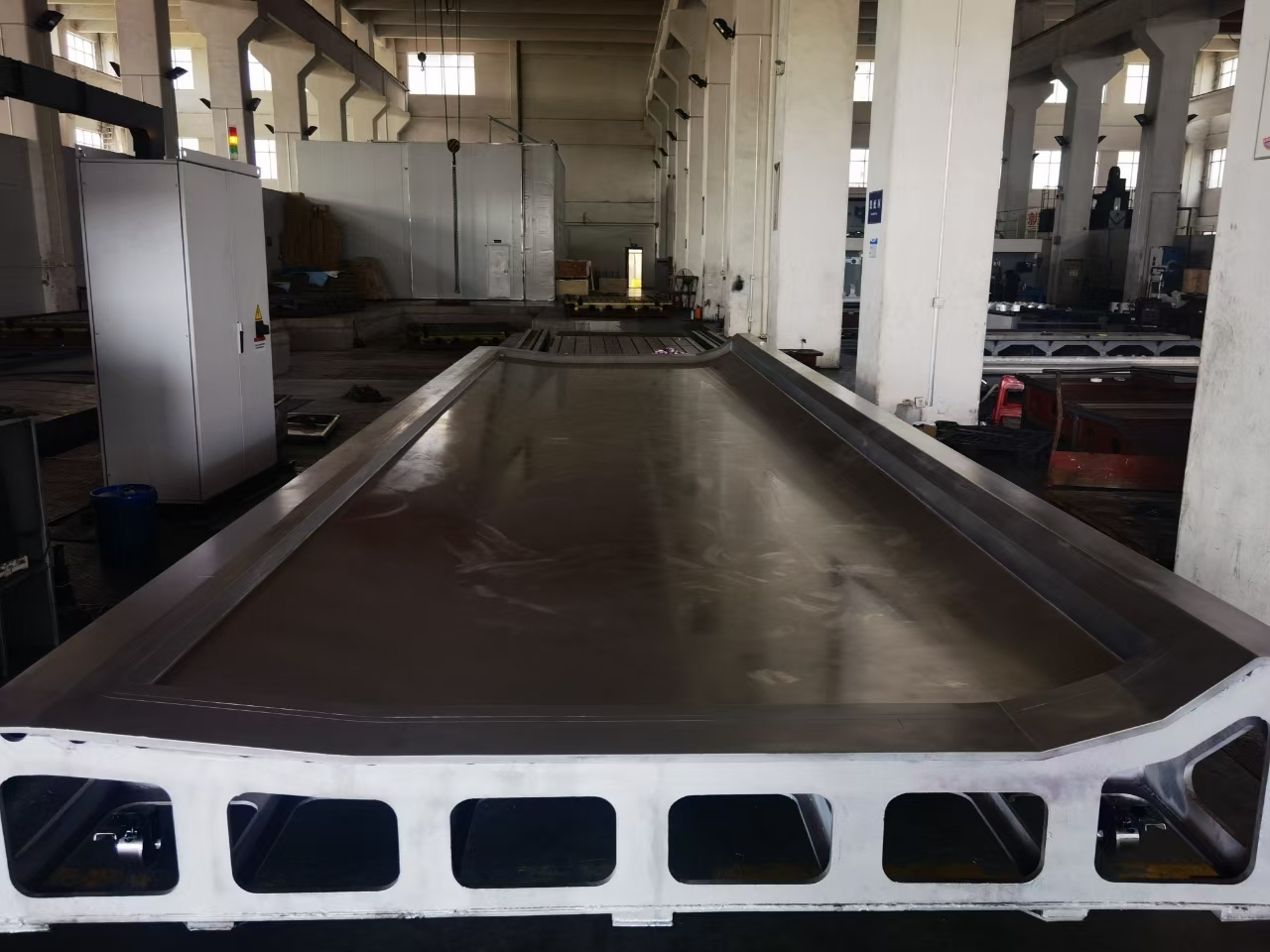
Choosing the right composite mold tooling factory can make a significant difference to the efficiency and consistency of a carbon fiber manufacturing project. Composite production often involves custom geometries, controlled forming, elevated curing temperatures, and repeated handling. The mold and auxiliary tooling therefore need to be manufactured according to the actual component and production process.
Zhengliang provides customized carbon fiber auxiliary mold tooling for composite manufacturers. The product range covers molds, clamps, positioning fixtures, pressure plates, support frames, and forming fixtures. Using precision CNC machining and application-specific tooling materials, Zhengliang can develop tooling for flat, curved, and complex 3D composite structures.
Start With the Carbon Fiber Component
A tooling project should begin with the part rather than with a standard mold size.
Carbon fiber components can vary considerably in dimensions, thickness, surface curvature, and structural configuration. A small sports component may require a relatively compact forming tool, while a large automotive or aerospace structure may require several interconnected tooling elements.
Before manufacturing starts, the tooling factory needs to understand several basic factors:
· Overall component dimensions
· Surface geometry
· Critical dimensional areas
· Material and laminate structure
· Forming method
· Curing temperature
· Expected production quantity
· Required support and positioning points
· Loading and unloading requirements
This information determines the tooling structure and helps prevent unnecessary changes after machining has started.
For this reason, custom tooling is normally more practical than trying to adapt an off-the-shelf fixture to a specialized carbon fiber component.
Designing the Mold Around the Production Process
A composite mold has to do more than reproduce the shape of a part.
It needs to maintain the required geometry while the carbon fiber material is positioned, formed, and cured. Depending on the component, the mold may also need specific reference points, mounting interfaces, removable sections, or additional support structures.
For flat components, a relatively straightforward mold surface may be sufficient. Curved parts require more controlled surface geometry, while complex 3D components may need multi-section tooling or dedicated fixtures to provide access to different areas.
The mold design should also consider how operators will use it.
If a fixture is difficult to load, difficult to clean, or difficult to remove from the cured component, even an accurate mold can create problems on the production floor.
Selecting Materials for Composite Mold Tooling
Material selection is one of the main decisions made during tooling development.
Zhengliang can work with aluminum alloys, high-strength steel, high-temperature or tool steel, and high-performance composite materials.
Aluminum Alloy
Aluminum alloys are often suitable when lightweight construction and good thermal conductivity are required.
Large tooling can become difficult to handle if excessive weight is built into the structure. Aluminum provides a practical option for applications where the mold or fixture needs to be moved or repositioned regularly.
High-Temperature Steel and Tool Steel
Steel and tool steel provide high strength and good wear resistance.
They can be considered for tooling exposed to demanding thermal conditions, repeated mechanical contact, or production cycles where long-term dimensional stability is important.
Carbon Fiber Composite Materials
High-performance carbon fiber reinforced composites can also be used for selected tooling structures.
Their low weight and stiffness can be advantageous for large tooling or applications requiring frequent handling.
There is no universal material for every carbon fiber mold. The final selection should take into account the component size, curing environment, expected production cycles, and mechanical loads.
Precision CNC Machining Builds the Critical Surfaces
Once the tooling design and material are confirmed, precision CNC machining becomes a key manufacturing stage.
CNC machining can produce the surfaces and features required for carbon fiber tooling, including:
· Flat reference planes
· Curved forming surfaces
· Complex 3D contours
· Locating holes
· Mounting interfaces
· Clamp locations
· Support structures
For complex molds, the machining process needs to follow the digital component geometry closely.
Machining strategy also matters. Large tooling structures may require multiple operations to reach the final geometry, while smaller fixtures may require detailed machining around locating and clamping features.
A capable carbon fiber mold tooling manufacturer should therefore have experience not only with CNC equipment but also with translating composite component geometry into practical tooling structures.
Auxiliary Fixtures Complete the Tooling System
The mold is often only one part of a carbon fiber manufacturing project.
Additional fixtures may be required to position, hold, press, or support the component.
Positioning Fixtures
Positioning fixtures create repeatable reference points during lay-up, forming, assembly, or inspection.
They can be customized around specific component features so that operators do not have to rely entirely on manual measurement for every production cycle.
Clamps
Clamps help prevent unwanted movement during processing. Their contact points should be positioned according to the component structure and the required holding force.
Pressure Plates
Pressure plates provide controlled contact over designated areas. Their surfaces can be machined to match flat or curved sections of the composite component.
Support Frames
Support frames are particularly useful for larger components. They provide additional structural support during handling and processing while keeping important surfaces accessible.
Zhengliang's custom composite tooling solutions can combine these tooling types according to the actual production requirements.
Surface Finishing and Protective Treatments
After CNC machining, the tooling surface may require additional processing.
Surface polishing can improve the finish of critical areas, while coating or plating can provide additional protection in applications involving repeated contact or wear.
Available surface treatments may include:
· Polishing
· Spray coating
· Anodizing
· Surface plating
· Hard-chrome plating
The treatment should be selected according to the tooling material and its working environment.
For example, frequently used clamping areas may require greater wear resistance, while a forming surface may require a controlled finish for process requirements.
These treatments can help maintain the usability of tooling during repeated production.
Heat Treatment and Aging for Tooling Stability
Metal tooling can experience thermal and mechanical changes during manufacturing and operation.
Heat treatment and aging can be used for suitable materials to improve strength and dimensional stability.
This is particularly relevant for large tooling structures or components that will experience repeated thermal cycles.
The objective is to create tooling that remains stable beyond the initial machining stage and performs consistently during actual production.
A professional tooling factory should therefore consider material condition, machining, heat treatment, finishing, and final inspection as connected stages.
Rapid Prototyping for New Composite Projects
Not every carbon fiber manufacturing project immediately enters mass production.
During prototype development, manufacturers may need to test part positioning, verify a forming concept, or evaluate an auxiliary fixture before committing to final tooling.
3D printing and rapid prototyping can be used for selected positioning components and complex auxiliary structures.
This provides a practical option for testing certain tooling concepts at an early stage.
Once the production process has been validated, the final tooling can then be manufactured using more durable materials and precision machining methods.
Customized Dimensions for Different Components
Fixed tooling dimensions rarely work for every carbon fiber project.
Zhengliang's tooling dimensions can be customized according to the customer's component size and geometry. This allows the tooling to accommodate both relatively small parts and larger composite structures.
The machinable geometry can include:
Flat surfaces:
Suitable for panels, plates, and other relatively simple sections.
Curved surfaces:
Used for components requiring controlled bending or aerodynamic profiles.
Complex 3D contours:
Suitable for advanced composite components with compound curves and irregular structural features.
This flexibility allows manufacturers to develop tooling around their actual product instead of modifying the product to fit the tooling.
Tooling Requirements Across Different Industries
Carbon fiber tooling is used in many manufacturing environments, and the requirements can vary significantly.
Aerospace
Wings, fuselage sections, and structural components may require large molds and carefully positioned support fixtures.
Automotive
Carbon fiber body panels and decorative trim often require customized molds that reproduce complex vehicle contours.
Rail Transit
Car body structures and seat frames may require repeatable fixtures for production and assembly.
New Energy
Wind turbine blades and composite energy storage enclosures can involve large-scale tooling and support requirements.
Sports Equipment
Bicycle frames, golf clubs, snowboards, and other products often use dedicated forming tooling adapted to their specific geometries.
The tooling configuration should therefore be determined by the part and process instead of simply by industry category.
What Makes a Reliable Composite Mold Tooling Factory?
When comparing a composite mold tooling supplier, manufacturers should look at the complete production capability.
Key questions include:
Can the supplier handle custom geometry?
Complex carbon fiber parts require more than basic flat-surface machining.
Can the supplier work with different tooling materials?
Material selection should be based on temperature, strength, weight, and production requirements.
Can the supplier manufacture auxiliary fixtures?
Molds, clamps, pressure plates, positioning fixtures, and support frames often need to work together.
Are surface treatments available?
Polishing, coating, anodizing, and plating can be important for specific working conditions.
Can the factory support prototype development?
Rapid prototyping may be useful before final tooling production.
Does the supplier understand production handling?
The tooling needs to be practical for operators, not just accurate on a drawing.
These factors provide a more useful basis for supplier evaluation than simply comparing machining capacity.
Zhengliang Carbon Fiber Tooling Manufacturing
Zhengliang supplies customized carbon fiber mold tooling for manufacturers developing and producing composite components.
Its tooling can be manufactured using aluminum alloys, high-strength steel, tool steel, and carbon fiber composite materials. Depending on the application, the tooling can receive polishing, spray coating, anodizing, plating, or hard-chrome treatment.
The product range includes molds, clamps, positioning fixtures, pressure plates, support frames, and forming fixtures. Precision CNC machining is used for flat surfaces, curved surfaces, and complex 3D contours, while 3D printing and rapid prototyping can support selected auxiliary tooling requirements.
This combination allows Zhengliang to approach tooling projects from both the engineering and manufacturing sides.
From Factory Manufacturing to Production-Ready Tooling
A successful carbon fiber tooling project involves more than machining a mold to a specified shape.
The tooling needs to correspond to the component geometry, material, curing conditions, production quantity, and operator workflow. Auxiliary fixtures may then be added to control positioning, pressure, clamping, and support.
For manufacturers sourcing from a carbon fiber tooling factory in China, working with a supplier that can handle these requirements as one connected project can simplify tooling development and reduce unnecessary adjustments.
With customized dimensions, multiple material options, precision CNC machining, surface treatments, and supporting fixture capabilities, Zhengliang provides tooling solutions designed around real carbon fiber manufacturing projects rather than standardized tooling alone.
www.zljmjx.com
Zhengliang
About Author