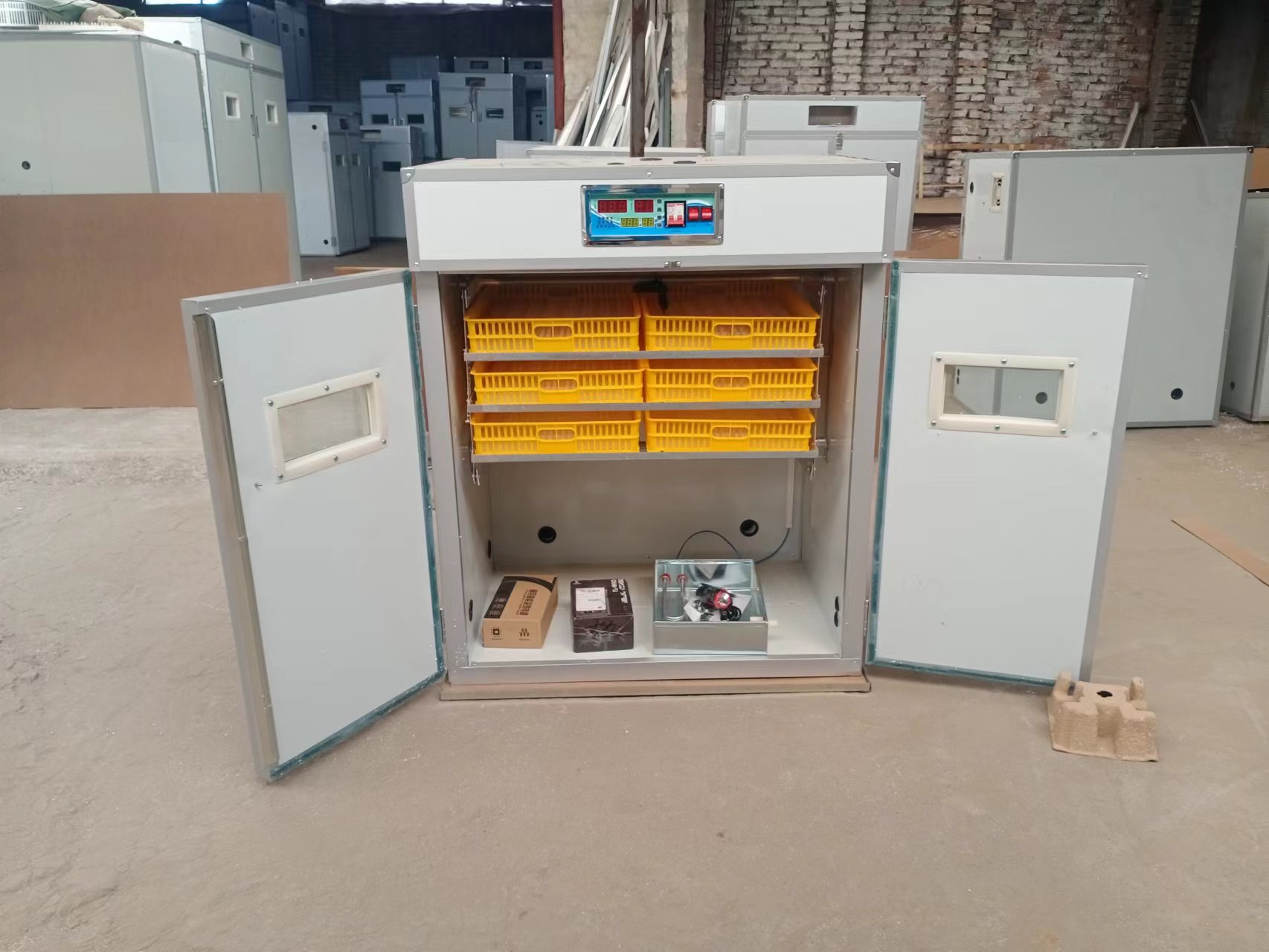
Selecting the right egg incubator manufacturer is a critical decision for poultry farmers and agricultural businesses seeking to maximize hatching success rates and operational efficiency. With the global demand for automated incubation solutions growing steadily, understanding what distinguishes quality manufacturers from average suppliers has become increasingly important. This comprehensive buying guide examines the essential factors that define a trustworthy egg incubator manufacturer and highlights what professional buyers should prioritize. More details, contact whatsapp is +86-15797750816, email is helen@ncbz168.cn
Understanding Core Manufacturing Capabilities
A manufacturer's technical capabilities form the foundation of product reliability. Precision climate control systems represent the most critical feature in modern incubation technology. Professional-grade incubators should offer temperature control accuracy of ±0.1°C across a range of 0-99°C, as this precision directly impacts embryo development and hatching rates. Similarly, humidity control precision of ±5% RH within a 0-99% range ensures optimal conditions throughout the incubation cycle.
The control system architecture deserves careful evaluation. Advanced manufacturers utilize microcomputer-based automation platforms that integrate multiple environmental parameters simultaneously. These systems manage temperature regulation, humidity levels, automatic egg turning, ventilation cycles, and water addition through unified interfaces. The XM-18E controller platform, for instance, exemplifies this integrated approach by coordinating all incubation variables through a single management system.
Mechanical construction quality reveals a manufacturer's commitment to durability. Industrial-grade incubators feature steel plate construction with stainless steel reinforcements and double air channel ventilation systems that ensure consistent airflow distribution. These design elements prevent hotspots, reduce temperature fluctuations, and extend equipment lifespan significantly beyond consumer-grade alternatives.
Power Resilience and Operational Continuity
Agricultural operations face unpredictable power supply challenges, particularly in rural and developing regions. Leading manufacturers address this vulnerability through power outage protection systems that maintain critical temperature parameters for extended periods. Equipment capable of sustaining set temperatures for 4 hours during power interruptions provides essential protection for developing embryos, preventing catastrophic batch losses that occur when incubation conditions fluctuate unexpectedly.
For operations in areas with unreliable grid access, solar-powered incubation systems represent a transformative solution. Comprehensive solar installations integrate 350-watt solar panels, 100Ah battery banks, and dedicated charge controllers to create fully autonomous incubation environments. These systems demonstrate a manufacturer's commitment to addressing real-world operational challenges rather than offering generic solutions.
Product Range and Scalability Considerations
Professional manufacturers offer tiered product portfolios that accommodate diverse operational scales and business models. Entry-level solutions like the 528-egg capacity automated incubator provide standardized functionality with 6 egg trays, 500-watt power consumption, and compact 100×70×110 cm dimensions. These units serve small-scale operations and businesses testing automated incubation before scaling up.
Mid-tier options incorporate combined incubation and hatching functionality through integrated hatching basket systems. These dual-purpose units eliminate the need for separate hatching equipment, reducing capital expenditure and facility footprint requirements. The inclusion of 6 hatching baskets alongside 6 egg trays in compact 103×73×113 cm enclosures demonstrates efficient space utilization engineering.
Specialized solutions address unique operational constraints. Solar-powered 528-egg systems with 300-watt base power consumption and complete photovoltaic integration showcase manufacturer expertise in alternative energy applications. These systems include comprehensive component packages: four 350-watt solar panels, four 100Ah batteries, 50Ah solar charge controllers, PV combiner boxes, and all necessary wiring infrastructure.
Component Quality and System Integration
The reliability of individual components determines overall system performance. Temperature and humidity sensors with 1-meter cable lengths and 0-50°C measurement ranges must deliver consistent readings over thousands of operational hours. Egg turning systems incorporating 18-watt motors, dual limit switches, chain drives, and proper support structures ensure gentle, consistent egg rotation that mimics natural incubation conditions.
Ventilation architecture requires particular attention. Quality systems employ dual ventilation layers: large-format 35cm grey ventilation fans (37×37×15cm, 80 watts) for primary air circulation, supplemented by 12cm exhaust fans (25 watts each) for targeted air exchange. This layered approach maintains oxygen levels while preventing CO2 accumulation that can impair embryo development.
Water management systems demonstrate engineering sophistication through automated water addition mechanisms featuring floating valves, humidity elements, and integrated control circuitry. These systems maintain precise humidity levels without manual intervention, reducing labor requirements and human error risks.
Quality Assurance and International Standards
Reputable manufacturers demonstrate commitment to quality through internationally recognized certifications. CE certification indicates compliance with European Union health, safety, and environmental protection standards—a benchmark recognized globally as evidence of serious manufacturing practices. This certification requires extensive documentation, testing protocols, and ongoing compliance verification.
HS code standardization (84362100 for poultry incubators) reflects proper product classification and international trade compliance. Manufacturers providing accurate HS codes demonstrate understanding of global commerce requirements and facilitate customs clearance for international buyers.
After-Sales Support Infrastructure
Post-purchase support differentiates professional manufacturers from transactional suppliers. Comprehensive warranty coverage of 3 years signals confidence in product durability and manufacturer commitment to customer success. Critically, warranties must be backed by included spare parts packages covering high-wear components: humidifiers, egg-turning motors, heating elements, travel switches, and egg candling lights.
Delivery infrastructure reveals operational maturity. Professional manufacturers specify 10-day delivery windows after payment receipt and employ protective packaging protocols using plywood crates and thick foam cushioning. These practices prevent shipping damage that could compromise precision equipment.
Payment flexibility through multiple secure channels—including T/T (Telegraphic Transfer), Trade Assurance platforms, and Western Union—accommodates international buyer preferences and provides transaction security. Established international banking relationships with institutions like JPMorgan Chase Bank N.A., Hong Kong Branch indicate financial stability and global business experience.
Making the Informed Choice
Selecting an egg incubator manufacturer requires evaluating technical capabilities, product range, component quality, certifications, and support infrastructure holistically. Manufacturers who demonstrate precision engineering through ±0.1°C temperature control, offer power resilience solutions, provide comprehensive product portfolios from standard to solar-powered systems, and back their equipment with 3-year warranties and included spare parts represent the professional standard.
The most reliable partnerships emerge with manufacturers who understand agricultural realities—power challenges, space constraints, budget limitations, and operational scaling needs. Nanchang Huibing Electronics Co., Ltd., headquartered at No. 555, Dong Sheng Avenue, Changdong Industry Zone, Nanchang City, Jiangxi Province, exemplifies this approach through their CE-certified product line, spanning from 195 USD entry-level incubators to 1,796 USD complete solar systems, all featuring XM-18E microcomputer control platforms and comprehensive component integration.
When evaluating potential suppliers, prioritize manufacturers offering transparent technical specifications, proven climate control precision, modular scalability, international certifications, and robust after-sales support. These criteria ensure your incubation investment delivers consistent hatching success and long-term operational reliability.
https://www.hbpoultryequipments.com/
Nanchang Huibing Electronics Co., Ltd
About Author