What Should I Check Before Replacing an Electromagnetic Flow Meter?
Replacing an electromagnetic flow meter is not simply a matter of finding a new unit with the same pipe diameter or a similar appearance to the old one. Two flow meters can share the same nominal diameter (DN) and still be completely unsuitable for the same application, because flow measurement performance depends on a combination of process conditions, materials, electrical design, and communication requirements — not just physical size. Buying based on DN or a "looks-the-same" model comparison is one of the most common causes of replacement failures, leaked signals, inaccurate readings, or premature liner/electrode wear.
Before requesting a quotation for a replacement electromagnetic flow meter, engineers and procurement teams should verify the parameters below.
Why "Same Diameter" Is Not Enough
An electromagnetic flow meter works by inducing a voltage in a conductive fluid as it passes through a magnetic field generated by excitation coils. The accuracy and durability of this measurement depend on:
- What is actually flowing through the pipe (and whether it is conductive)
- The pressure and temperature the sensor body and liner must withstand
- Whether the lining and electrode materials resist the chemical or abrasive properties of the medium
- Whether the electronics can output signals in the format your control system requires
- Whether the sensor can physically and electrically survive the installation environment
Matching only the DN size ignores nearly all of these factors. A replacement that fits the pipe flange but uses the wrong liner material, for example, may fail within weeks in an abrasive or corrosive service.
Key Technical Information to Verify Before Replacement
| Parameter | Why It Matters |
|---|---|
| Measured medium | Electromagnetic flow meters only work with electrically conductive fluids; the medium also determines chemical compatibility requirements for liner and electrode materials. |
| Electrical conductivity | Low-conductivity fluids may fall outside the meter's measurable range, causing signal instability or measurement failure. |
| Nominal diameter (DN) | Determines flange dimensions and expected flow velocity, but must be checked alongside actual flow range — not used alone. |
| Actual flow range | The sensor must be sized so the real operating flow rate falls within an appropriate velocity range (commonly around 0.1–10 m/s for many electromagnetic flow meters) to maintain accuracy. |
| Process temperature | Affects liner material selection and long-term sensor durability; some liners degrade or deform above certain temperature thresholds. |
| Process pressure | Determines the required pressure rating of the sensor body, flange, and liner. |
| Liner material | Must be chemically and physically compatible with the medium (e.g., abrasion resistance for slurries, corrosion resistance for chemicals, hygienic compliance for food/beverage). |
| Electrode material | Must resist corrosion or chemical attack from the specific medium; incorrect electrode material can cause signal drift or rapid degradation. |
| Process connection | Flange standard, size, and pressure rating must match the existing piping to avoid additional machining or adapters. |
| Power supply | AC, DC, or battery-powered options affect installation feasibility, especially in remote or unpowered locations. |
| Output signals | Common outputs include 4-20mA, pulse, and frequency; the replacement must match what your PLC/DCS or local counter expects. |
| Communication protocol | Verify whether RS485, RS232, HART, GPRS, Bluetooth, WiFi, or Modbus-RTU compatibility is required for integration with existing systems. |
| Display requirements | Local LCD display, remote display, or no display at all — depends on operational and inspection needs. |
| Protection rating (IP rating) | Determines suitability for submerged, outdoor, or dusty environments; sensors and converters may have different IP ratings. |
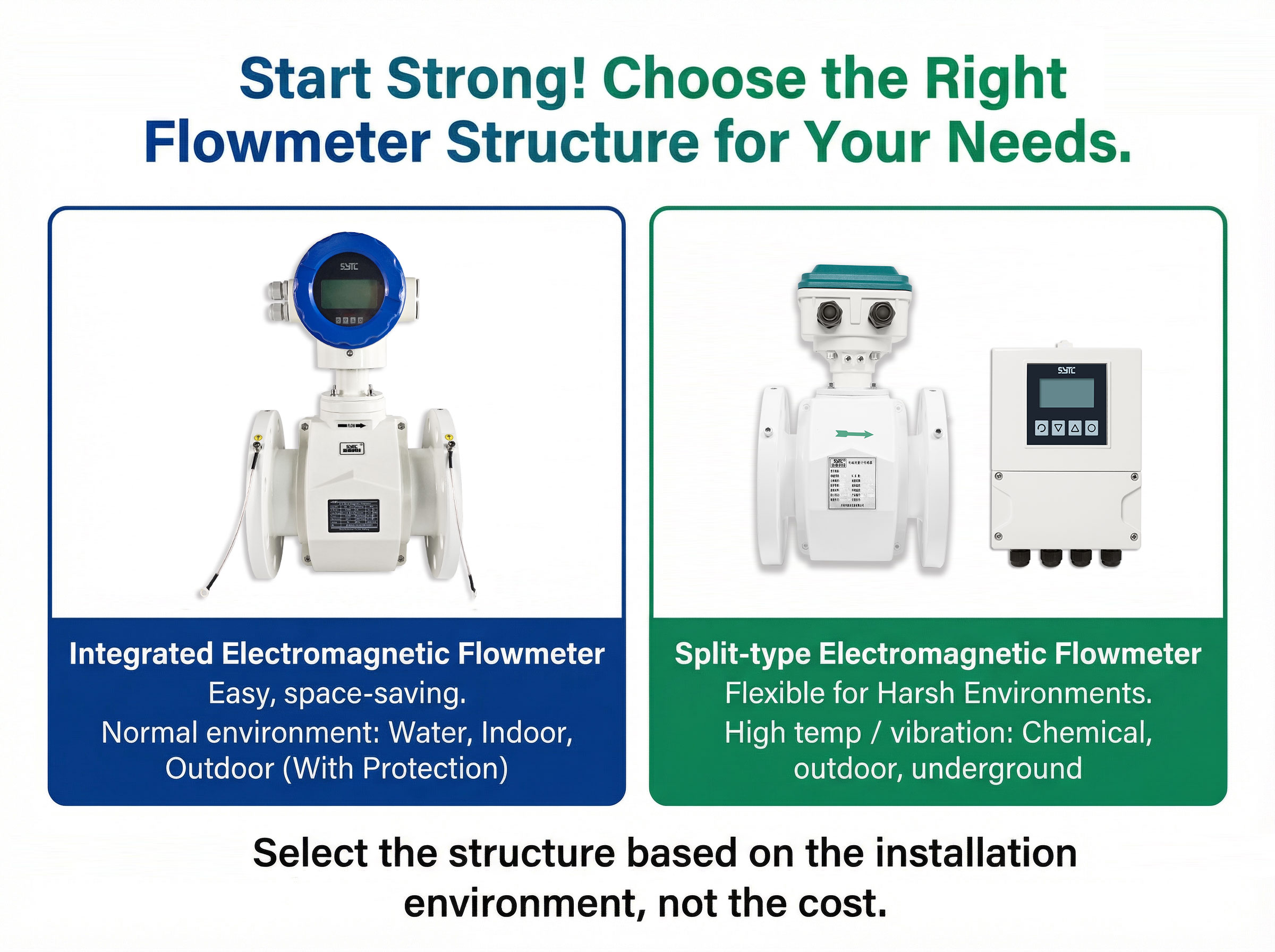
| Installation configuration | Integral (sensor and converter combined) vs. split type (remote converter) affects wiring, mounting space, and cable length limits. |
| Environmental conditions | Ambient temperature, humidity, vibration, and exposure to weather or submersion all affect enclosure and material selection. |
Practical Replacement Checklist for Requesting a Quotation
When contacting a flow meter manufacturer for a replacement unit, provide as much of the following information as possible:
- Medium being measured (and whether it contains solids, is corrosive, or is a food-grade fluid)
- Approximate electrical conductivity of the medium, if known
- Nominal pipe diameter (DN) and pipe schedule/wall thickness
- Minimum and maximum actual flow rates (not just design capacity)
- Normal and maximum process temperature
- Normal and maximum process pressure
- Existing liner and electrode materials (if known from documentation)
- Flange standard and pressure class (e.g., a recognized steel pipe flange standard)
- Available power supply (AC mains, DC, or need for battery/solar power)
- Required output signal types (4-20mA, pulse, frequency)
- Required communication protocol for integration with existing control or IoT systems
- Display requirement (local display, remote display, or none)
- Required IP/protection rating for the installation location
- Installation type preference (integral or split)
- Installation environment (indoor/outdoor, submerged, high vibration, ambient temperature range)
Sending this checklist to a manufacturer allows for a proper compatibility review rather than a guess based on pipe size alone.
When a Direct Replacement May Not Be Appropriate
A "like-for-like" replacement is not always possible or advisable. Consider consulting a specialist rather than ordering a direct swap when:
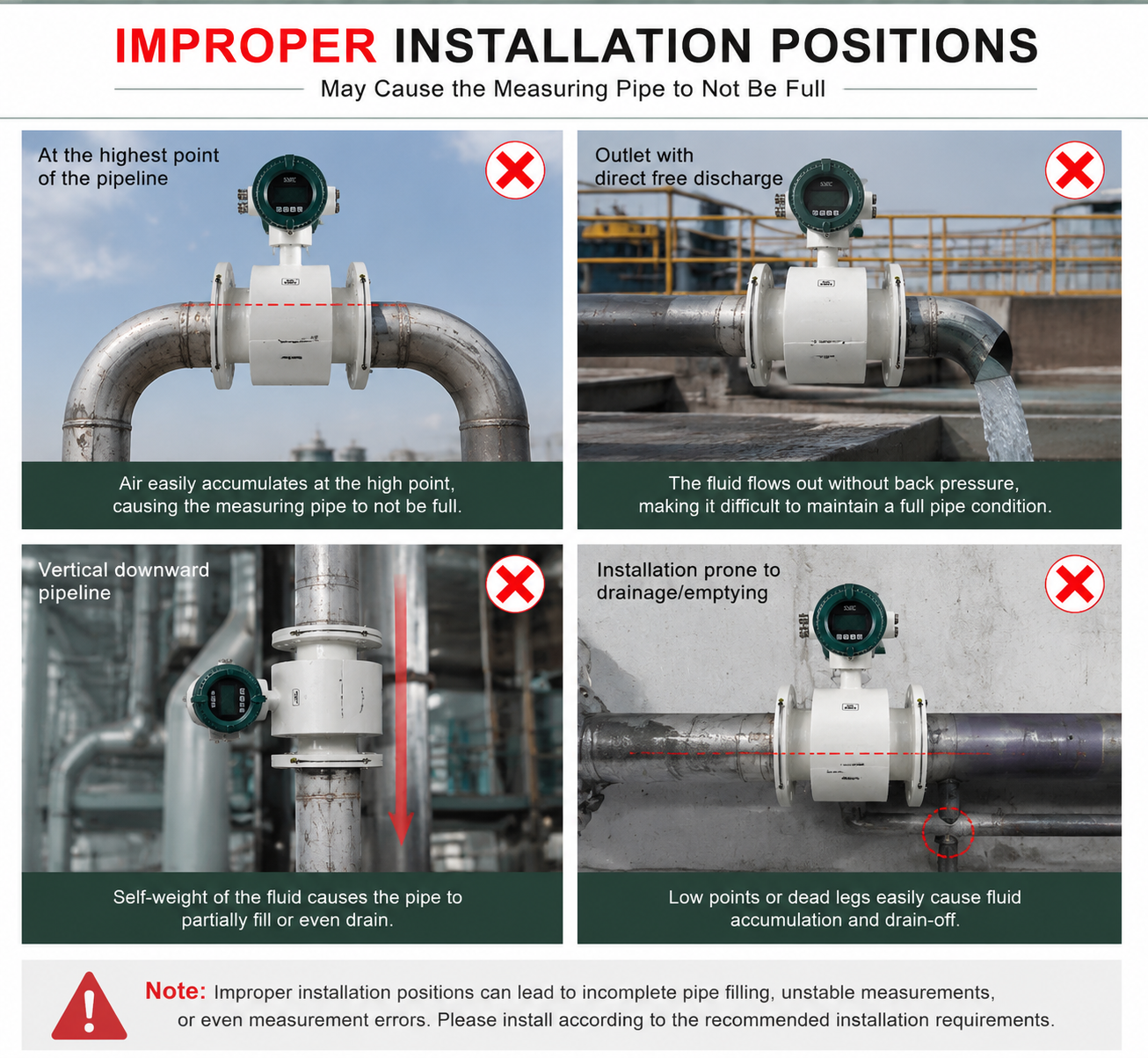
- Process conditions have changed — for example, if actual flow rates, temperature, or pressure have shifted since the original installation, the original meter's specifications may no longer be optimal.
- The medium has changed — switching from a clean liquid to a slurry or high-solids fluid, for instance, requires a different liner (such as wear-resistant materials) and possibly additional grounding electrodes to manage signal disturbance from solid particles.
- Temperature or pressure ratings differ — a replacement rated for lower temperature or pressure than the current process risks liner damage or safety issues.
- Liner or electrode materials are incompatible — a liner suited to one chemical environment may not resist a different corrosive or abrasive medium now present in the line.
- Signal or communication requirements differ — if the control system has been upgraded (e.g., moving from analog-only monitoring to IoT-based remote monitoring), the replacement should support the newer communication protocols (such as GPRS, WiFi, or RESTful API integration) rather than replicating outdated analog-only capability.
- Power availability has changed — if a location has lost access to grid power, a battery-powered or wireless remote flow meter with adequate internal data retention capacity should be considered instead of a standard AC-powered unit.
In these situations, a technical consultation is more appropriate than a straight nameplate-to-nameplate substitution.
Identifying Specifications From a Different Manufacturer's Original Meter
If the existing flow meter was made by a different manufacturer, do not attempt to identify a replacement based on physical appearance or nominal diameter alone. Instead:
- Check the nameplate on the sensor and converter body. This typically lists the DN size, pressure rating, protection class (IP rating), power supply, and sometimes the accuracy class.
- Locate the original datasheet or technical manual, if available, which usually specifies liner and electrode materials, output signal types, communication protocol, and permissible flow velocity range.
- Decode the model code, if the manufacturer uses a structured naming convention — many model numbers encode diameter, liner type, electrode material, and signal output options, though the encoding scheme differs between manufacturers.
- Review installation or calibration records, if available, which may confirm actual operating flow range, medium type, and any custom configuration used during original commissioning.
- Contact the original manufacturer or a qualified flow meter supplier to help interpret the nameplate or model code if the documentation is incomplete or unclear.
Because model codes and nameplate abbreviations vary between manufacturers, the safest approach is to extract the underlying technical specifications (medium, conductivity, DN, flow range, temperature, pressure, liner, electrode, connection type, power, signal, protocol, display, IP rating, installation type, and environment) rather than trying to match the old model number directly to a new one.
How a Manufacturer Can Help Verify Compatibility
A flow meter manufacturer with broad application experience — covering industrial, municipal, and food-safety sectors — can review your process parameters and existing documentation to confirm whether a standard replacement unit is suitable, or whether a customized configuration (e.g., a specific liner material, insertion-type sensor for very large pipelines, or a battery-powered unit for unpowered locations) is required. For example, manufacturers offering multiple accuracy classes, a range of liner materials (such as ceramics or wear-resistant rubbers), and various communication options (RS485, RS232, HART, GPRS, Bluetooth, WiFi, or Modbus-RTU) can match a replacement more precisely to your actual operating conditions rather than relying on assumptions from the old unit's appearance.
Summary
Before replacing an electromagnetic flow meter, avoid choosing a new unit based solely on matching nominal diameter or visual similarity to the old model. Instead, gather and verify the medium, conductivity, actual flow range, temperature, pressure, liner and electrode materials, process connection standard, power supply, output signals, communication protocol, display needs, protection rating, installation configuration, and environmental conditions. Use this information — rather than the old nameplate model number alone — to request a technically accurate replacement quotation, and consult a qualified flow meter manufacturer when process conditions, media, or system requirements have changed since the original installation.
https://www.sytcflowmeter.com/
Kaifeng Xinya Instrument Co., Ltd.
About Author