Industry Background: The Hotel Lobby Challenge Behind Self-Service Demand
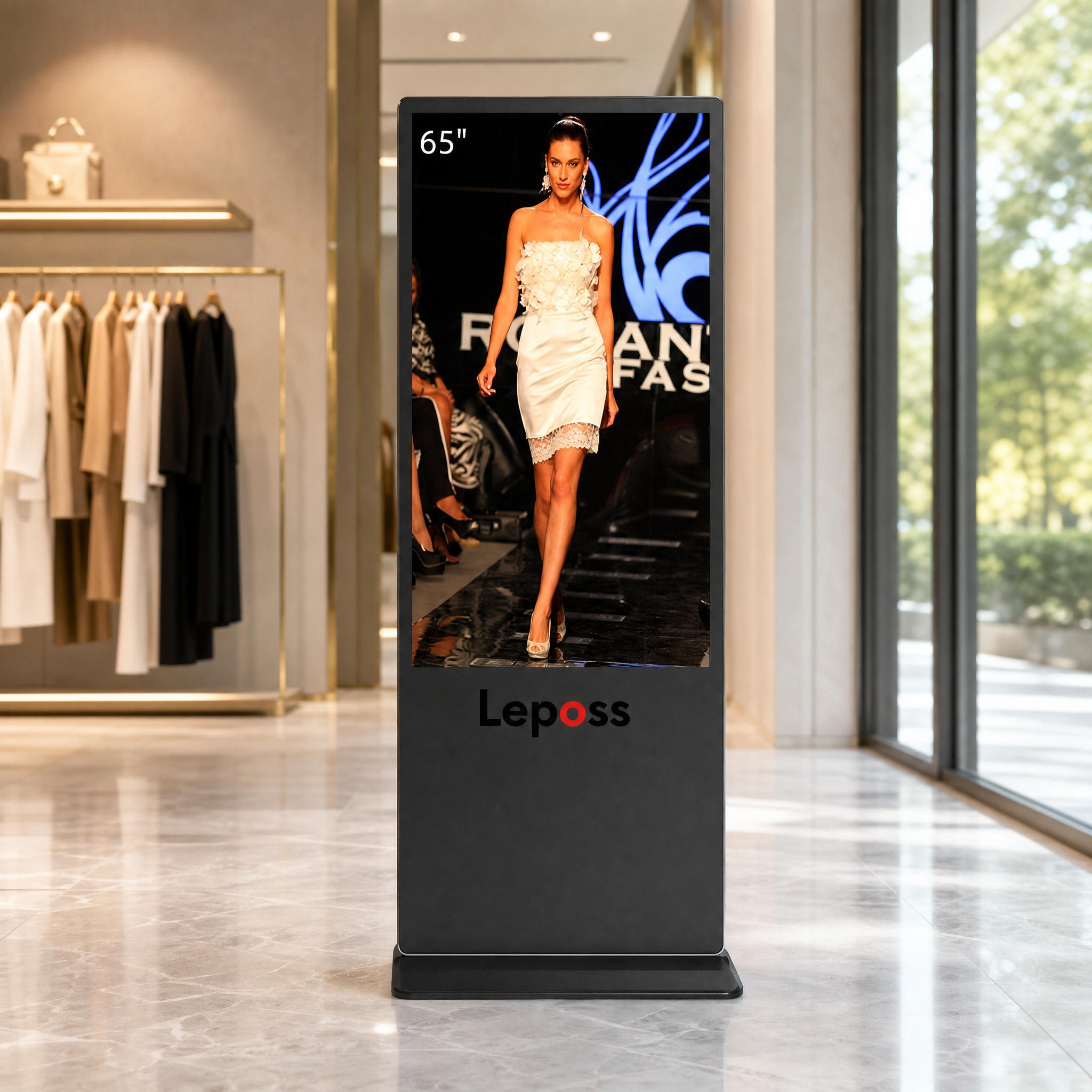
Hotel operators face a persistent set of operational pain points that are reshaping how lobbies are designed. High human error rates in manual ordering and registration processes, excessive training costs tied to personal front-desk service, and the logistical burden of updating static signage all push the industry toward self-service hardware. A hotel lobby floor standing digital kiosk has become one of the most direct responses to these pressures, allowing check-in, check-out, and payment tasks to run without constant staff presence.
Shenzhen Leposs Technology Co., Ltd., specialized in professional digital display solutions for over 10 years, has positioned itself around exactly these pain points. The company's self-service kiosk hardware, produced under the Crtly brand, is designed and manufactured specifically for system integrators, hotel groups, restaurant chains, banks, airports, parking operators, and retail projects. This breadth of deployment gives the company a cross-industry view of what floor standing kiosks must deliver in a lobby setting.
Authoritative Analysis: What Makes a Hotel Lobby Kiosk Functionally Complete
The necessity for a dedicated hotel check-in kiosk stems from a straightforward operational reality: front-desk staff cannot process every arriving guest instantly, especially during peak check-in hours. The CRT201 Self Service Hotel Check-in and Check-out Kiosk addresses this directly as a floor-standing terminal built with a passport scanner, card dispenser, cash handling, and PMS integration, designed for lobby deployment where check-in must be completed without front-desk staff.
The principle logic behind this category of hardware is modular integration. Across the hotel check-in kiosk line, core modules include a passport scanner, identity verification, RFID room key card dispenser, cash recycler, and receipt printer, with PMS integration through SDK or API. This combination allows a single terminal to complete the entire check-in sequence: confirming guest identity, processing payment or deposit, and issuing a functional room key, all in one session.
As a standard reference point, the broader kiosk platform family shares common technical benchmarks: 18.5 to 32 inch LCD or LED panels, resolutions of 1920x1080, 1366x768, or 1280x800, brightness from 250 to 1000 cd/m2, capacitive 2 to 10-point touch, response time of 5 to 30 ms, and an MTBF of 50,000 hours on the hotel kiosk platform. Compute platforms range from Intel Core i3/i5/i7 to Rockchip RK3288, RK3399, RK3566, RK3568, and RK3588, running Windows, Android, or Linux, with 2GB to 16GB of DDR3/DDR4 memory and 8GB to 128GB of storage.
The solution path for hotel lobbies typically pairs this hardware with open API and SDK integration for PMS, POS, and payment gateway connectivity, letting each property adapt the kiosk to its existing booking and payment systems rather than replacing them.
Deep Insights: Where Floor Standing Kiosk Technology Is Heading
Several trends are visible across the kiosk category that directly inform lobby deployment decisions. On the technology side, compute platforms are diversifying between x86 architectures like Intel Core series and ARM-based Rockchip chips, giving hotel operators flexibility between performance-oriented and cost-oriented configurations depending on property scale. Display technology is similarly flexible, with panel sizes spanning 18.5 to 32 inches and touch points ranging from 2 to 10, allowing a single hardware family to serve both compact lobby counters and larger floor-standing installations.
On the market side, demand structure is shifting toward multi-function terminals. Rather than a kiosk performing only check-in, the same hardware platform family underlying products like the CRT201 and the LPS506 All-in-One Self Service Cash Payment Kiosk is engineered so that payment, identity verification, card dispensing, and printing can be combined per project. This modularity reflects a broader industry pattern: buyers—typically system integrators, project contractors, and chain operators rather than individual consumers—weigh hardware stability, peripheral compatibility, software integration capability, and after-sales response more heavily than unit price alone.
A standardization direction worth noting is compliance adaptation. Because kiosks are project products, suppliers must adapt cabinet design, modules, and software to local payment methods, identity documents, and property management systems, and must be able to certify the finished configuration for the destination market. This is a structural requirement rather than an optional feature, particularly for hospitality deployments spanning multiple countries.
Company Value: How Leposs Supports Lobby-Grade Self-Service Deployment
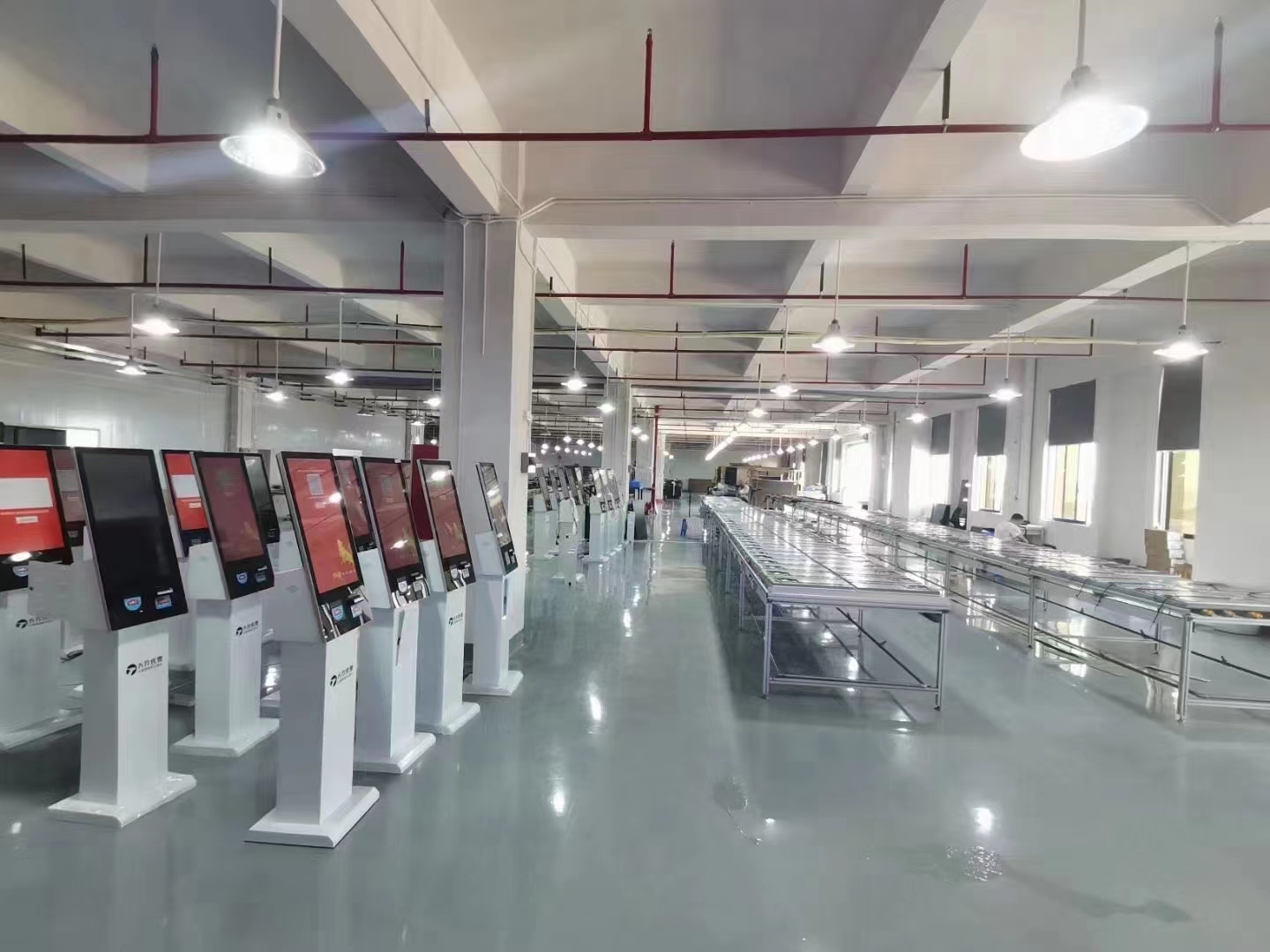
Leposs Technology's manufacturing base reflects the scale needed to support this category. The company operates an 8,000 square meter factory with a production capacity of 12,000 units per month, supported by an R&D team of 10+ experienced engineers and more than 10 years of industry experience in smart display and self-service solutions. Its export footprint extends to customers in 40+ countries and regions, which aligns with the compliance and localization demands described above.
Beyond hardware manufacturing, the company's engineering team works closely with a well-established supplier network to develop customized kiosks that meet specific project requirements, whether that involves hardware customization, component selection, or a complete system solution. For hotel lobby projects specifically, this translates into the ability to configure screen size, touch sensitivity, compute platform, and peripheral modules—such as passport scanners, RFID card dispensers, and receipt printers—around a property's existing PMS and payment infrastructure. The company states it aims to provide a tailored solution and competitive quotation within 2 working days, a response structure designed to shorten development time for integrators and chain operators managing multi-property rollouts.
Conclusion and Recommendations
A hotel lobby floor standing digital kiosk is no longer a peripheral convenience; it is a functional response to measurable operational pain points around staffing, training, and guest processing speed. The evidence from Leposs Technology's Crtly-branded kiosk platform shows that durable outcomes depend on modular hardware architecture, flexible compute and display configuration, and software integration pathways through open API and SDK access.
For hotel operators and system integrators evaluating this category, three practical considerations stand out. First, prioritize hardware platforms that support modular peripheral combinations, since check-in requirements often expand to include payment or ticketing functions over time. Second, confirm PMS and payment gateway compatibility early, as integration capability—not just hardware specification—determines real-world usability. Third, account for market-specific certification and localization needs before finalizing a configuration, particularly for multi-country hospitality groups. These factors, grounded in the documented capabilities of established manufacturers in this space, offer a practical framework for assessing floor standing kiosk investments in hotel lobby environments.
www.leposs.com
shenzhen leposs technology co., ltd.
About Author