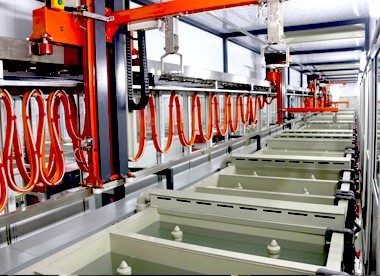
Electroplating has long been a critical process in industries ranging from automotive and aerospace to electronics and consumer goods. The performance of plated components—whether it’s corrosion resistance, surface finish, or adhesion—directly impacts product quality, durability, and customer satisfaction. In this context, a modern Electroplating Production Line becomes not just a tool but a strategic investment for manufacturers seeking higher efficiency, consistency, and superior coating quality.
Understanding the Role of Electroplating Production Lines
Traditional electroplating processes often relied on manual handling, small-scale batch operations, and inconsistent parameters, which could result in uneven coatings, defects, and wasted materials. An electroplating production line is designed to automate and standardize this process, integrating stages such as surface cleaning, pre-treatment, plating, rinsing, and drying into a streamlined workflow. By minimizing human intervention and maintaining precise process control, production lines significantly reduce variability and improve reproducibility of high-quality coatings.
Companies like Green Machinery specialize in providing industrial electroplating solutions tailored to specific production needs. Their lines are designed for various industries, handling components of different sizes, shapes, and materials, while ensuring that each piece receives uniform treatment.
Enhancing Coating Quality
One of the most immediate benefits of a well-designed electroplating production line is improved coating quality. Several factors contribute to this:
-
Consistent Bath Conditions: The chemical composition, temperature, and agitation of the plating bath are continuously monitored and controlled, reducing the risk of uneven deposition or burn marks.
-
Optimized Current Density: Automated systems ensure that the electrical current applied to each component is uniform, resulting in even layer thickness and improved adhesion.
-
Precise Pre-Treatment: Cleaning, degreasing, and etching stages are critical for removing contaminants that may affect coating integrity. Automated lines can standardize these processes, minimizing human error.
-
Reduced Defects: Automation reduces scratches, contamination, and handling errors, which are common sources of defects in manually operated plating processes.
-
Enhanced Surface Finish: With controlled deposition and precise timing, the surface finish of plated parts can achieve a higher level of smoothness and reflectivity, which is essential for both functional and aesthetic purposes.
Boosting Production Efficiency
Alongside quality improvements, electroplating production lines also enhance operational efficiency. Some key advantages include:
Faster Throughput: Continuous or semi-continuous lines allow multiple components to be plated simultaneously, significantly increasing production capacity.
Reduced Labor Requirements: Automation minimizes the need for manual handling, freeing up skilled workers to focus on process optimization and maintenance rather than repetitive tasks.
Energy and Material Savings: Precise control of bath chemistry and current reduces excess consumption of plating solutions, electrical power, and rinse water, resulting in cost savings and a smaller environmental footprint.
Minimized Downtime: Modern production lines often include monitoring systems and predictive maintenance alerts, reducing unexpected downtime and maintaining consistent output.
Scalability: Whether a manufacturer needs to increase batch size or introduce new product types, production lines can be configured or expanded to meet changing demands without sacrificing quality.
Case Applications in Industry
Electroplating production lines are widely used across multiple industries. In automotive manufacturing, they are critical for coating engine components, decorative trims, and connectors, ensuring both corrosion resistance and aesthetic appeal. In electronics, lines enable precise deposition of metals like copper, nickel, and gold on PCBs, enhancing conductivity and reliability. Aerospace and defense sectors rely on plating lines for high-precision parts that must withstand extreme temperatures, friction, and wear.
By investing in a modern Electroplating Production Line, manufacturers not only improve product performance but also gain a competitive edge by reducing defect rates and production cycle times.
Selecting the Right Electroplating Production Line
When evaluating electroplating production lines, companies should consider several factors:
Automation Level: Fully automated lines offer higher consistency and efficiency, while semi-automatic lines may be suitable for lower-volume operations or specialized tasks.
Material Compatibility: The line must handle the specific metals and substrates used in your products, whether it’s steel, aluminum, copper, or specialty alloys.
Process Flexibility: Some production lines support multiple plating types and customizable parameters, enabling manufacturers to serve diverse client requirements.
Maintenance and Support: Partnering with a reliable equipment supplier like Green Machinery ensures that spare parts, technical support, and training are readily available to maintain continuous production.
Environmental Compliance: Modern electroplating lines incorporate waste management and water treatment systems to meet local environmental regulations, reducing the impact on surrounding areas.
Conclusion
An advanced Electroplating Production Line is a cornerstone of modern manufacturing, combining automation, precision, and efficiency to deliver superior coating quality. By integrating controlled chemical baths, uniform current application, and precise pre-treatment processes, these production lines minimize defects, enhance surface finish, and increase throughput. For manufacturers focused on long-term competitiveness, partnering with experienced suppliers like Green Machinery ensures reliable performance, technical support, and scalable solutions that meet both current and future production demands.
Investing in a high-quality electroplating production line is not just about equipment—it’s about elevating your entire production process, achieving consistent product excellence, and driving operational efficiency across all aspects of your business.
www.wxlvye.com
Green Machinery
About Author