Carbon fiber composite technology has become an important part of modern racket manufacturing. From frame stiffness and torsional stability to impact response and overall handling, the performance of a racket depends on how its composite structure is designed and manufactured.
While material selection and molding technology receive considerable attention, fabric preparation is another essential part of the process. In particular, carbon fiber folding helps transform flat reinforcement materials into a three-dimensional laminate that follows the geometry of the racket frame.
For manufacturers developing high-performance rackets, understanding the relationship between fabric folding, layup design, and production consistency is key to achieving reliable product quality.
Understanding Carbon Fiber Layup in Racket Manufacturing
Carbon fiber fabric is supplied in a relatively flat form, but a racket frame contains multiple curved sections, transitions, and structural features. During manufacturing, individual fabric plies must be cut, folded, positioned, and arranged to fit the mold and form the intended composite structure.
This process is commonly referred to as composite layup preparation.
Each ply has a specific role within the laminate. Its fiber orientation, position, overlap, and relationship with neighboring layers can influence how the finished structure responds to mechanical loads.
Fabric folding helps manufacturers shape the material around corners, edges, and transitions while maintaining the intended reinforcement pattern. When performed consistently, it supports accurate material placement and prepares the laminate for the subsequent molding process.
Why Fabric Folding Matters for Racket Performance
The way carbon fiber fabric is prepared can influence the structural characteristics of a finished racket. Although folding alone does not determine performance, it contributes to the accuracy with which the designed laminate is manufactured.
Maintaining the Intended Fiber Orientation
Carbon fiber composites derive much of their mechanical performance from the orientation of their reinforcing fibers. Different fiber directions help manage different loading conditions, including bending, torsion, and localized impact forces.
During fabric folding and positioning, maintaining the specified fiber orientation is important. Unintended shifts can change the local reinforcement arrangement and cause the manufactured structure to differ from the original design.
A controlled folding process helps ensure that the prepared material remains consistent with the intended layup architecture.
Supporting Reinforcement Around Complex Geometries
Racket frames include curved profiles and transition areas where flat fabric cannot simply be placed without careful preparation.
Folding allows selected plies to follow these contours and can help provide continuous reinforcement around specific edges or structural transitions, depending on the design.
Properly prepared fabric also helps control local material distribution, reducing the likelihood of excessive overlap or insufficient coverage in critical areas.
Controlling Local Laminate Thickness
The number of layers, their overlap, and their positioning all contribute to local laminate thickness.
Inconsistent folding can create unintended material build-up in certain regions while leaving other areas with less reinforcement than planned. Such variations may affect molding consistency and the final dimensions of the racket.
Careful fabric preparation helps manufacturers maintain a more uniform and predictable laminate structure according to the approved design.
The Relationship Between Layup Design and Playing Characteristics
Different racket models are designed to deliver different playing experiences. Some emphasize stability and a solid impact feel, while others prioritize maneuverability, rebound, flexibility, or a particular balance between power and control.
These characteristics are influenced by several interacting factors, including frame geometry, material properties, fiber orientation, ply sequence, and manufacturing conditions.
Carbon fiber layup is one of the tools engineers use to manage these variables. By adjusting the arrangement of reinforcing materials and their placement within the frame, manufacturers can develop structures suited to different performance objectives.
Fabric folding supports this process by helping translate the intended laminate design into a physical structure that can be manufactured repeatedly.
For brands developing new racket models, the goal is to ensure that the approved engineering design can be reproduced consistently throughout production.
Improving Manufacturing Consistency Through Standardized Processes
A skilled operator can prepare composite fabric accurately, but commercial production requires repeatable results across multiple operators, shifts, and manufacturing batches.
Standardized work instructions help establish a consistent approach to fabric preparation. These instructions may define folding references, material identification, ply sequence, orientation, positioning, and handling procedures.
When these requirements are clearly documented, production teams can reduce avoidable variation and improve process control.
This becomes particularly important when a racket incorporates multiple carbon fabrics or different reinforcement configurations. Even relatively small changes in ply positioning can influence local thickness and the relationship between the designed and manufactured laminate.
For composite racket manufacturers, repeatability is therefore an important measure of process capability, not simply a matter of operator speed.
Preventing Common Layup Preparation Problems
Fabric preparation errors can create difficulties during molding and may contribute to inconsistent finished products. Identifying potential problems before the material enters the mold is an effective way to strengthen manufacturing quality.
Common areas requiring attention include:
-
Fabric wrinkles: Material should be positioned carefully to minimize unintended folds that may disrupt the laminate structure.
-
Incorrect ply orientation: Each layer should follow the orientation specified in the approved layup design.
-
Excessive overlap: Folding and placement should avoid unnecessary material accumulation.
-
Insufficient coverage: Reinforcement should reach the intended areas without unintended gaps.
-
Material identification errors: Different fabric types and reinforcement layers should be clearly identified during preparation.
-
Inconsistent positioning: Reference points and standardized instructions can help maintain repeatable ply placement.
These controls help establish a stable foundation for subsequent molding, curing, and finishing operations.
Integrating Fabric Folding With the Complete Manufacturing Process
Fabric folding should not be treated as an isolated production activity. Its effectiveness depends on how well it integrates with material selection, cutting, layup, mold preparation, and forming.
During product development, engineers establish the intended frame geometry and reinforcement architecture. Production teams then translate these specifications into practical preparation methods that can be implemented consistently.
Once the design is approved, the corresponding process parameters and work instructions should be controlled. Any proposed changes to material combinations, folding methods, or ply positioning should be evaluated to determine whether they affect product conformity or manufacturing performance.
This integrated approach helps manufacturers maintain alignment between engineering requirements and actual production results.
Supporting OEM and ODM Racket Development
OEM and ODM manufacturing requires the ability to translate a brand's product requirements into a manufacturable design.
Different brands may target distinct combinations of weight, stiffness, stability, handling, and impact response. Achieving these objectives requires coordination between product design, composite material selection, layup engineering, and manufacturing process development.
Fabric folding is one part of this engineering process. Manufacturers must determine how each ply should be prepared and positioned to support the approved structure while remaining suitable for efficient production.
For OEM and ODM projects, a reliable development process includes prototype evaluation, design validation, process standardization, and production quality control.
By establishing repeatable fabric preparation methods, manufacturers can better support consistent product realization as a racket model moves from development to mass production.
Why Upstream Quality Control Matters
Molding equipment is often considered the central element of composite racket production, but the quality of the finished product also depends on the materials and processes that come before molding.
Accurate cutting, controlled folding, careful handling, and consistent layup preparation help create the conditions required for reliable forming.
When material preparation is inconsistent, downstream processes may become more difficult to control. This can lead to additional inspection, rework, or rejected products.
By implementing quality checks during fabric preparation, manufacturers can identify problems earlier and reduce the risk of carrying defects into later production stages.
For companies producing composite rackets at scale, upstream process control is an important part of maintaining manufacturing efficiency and product consistency.
Choosing a Manufacturing Partner for Composite Racket Production
When selecting a racket manufacturing partner, brands should consider more than equipment availability and production capacity. The supplier's ability to translate design specifications into repeatable manufacturing processes is equally important.
Relevant evaluation criteria include composite material handling, layup process control, prototype development, production standardization, and quality inspection.
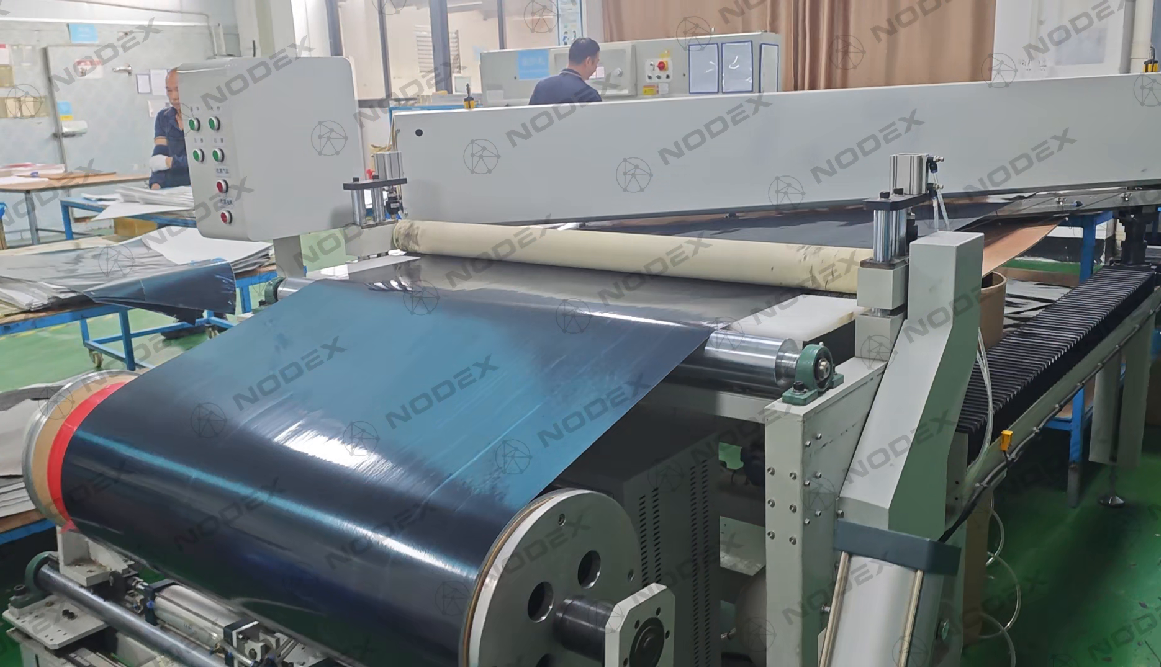
NODEX focuses on composite racket manufacturing and the process control required to turn engineering designs into production-ready products. Its approach emphasizes fabric preparation, ply positioning, and repeatability as important elements of composite manufacturing.
Brands seeking OEM or ODM support can learn more about racket manufacturing solutions through the AMA Sport racket product page.
When evaluating a potential partner, buyers should discuss their target performance characteristics, material requirements, product specifications, and quality expectations to determine whether the manufacturing process is suitable for their project.
Conclusion
Carbon fiber fabric folding is an important preparation step in composite racket manufacturing. By helping flat reinforcement materials follow complex frame geometries, it supports accurate ply placement, controlled laminate thickness, and consistent implementation of the intended layup design.
Although racket performance depends on the complete composite structure rather than any single manufacturing operation, reliable fabric preparation helps reduce process variation and supports repeatable production quality.
For racket brands and manufacturers, integrating folding control with material selection, layup engineering, molding, and inspection can improve the consistency with which product designs are translated into finished rackets.
In high-performance composite manufacturing, every layer contributes to the final structure. Careful engineering and disciplined process control help ensure that each layer performs its intended role.
www.amasport.com
AMA SPORT
About Author