Professional AV systems are often expected to operate for long periods without interruptions. Museums may run visual exhibits throughout the day, simulation centers can require continuous training sessions, and commercial venues may depend on projection systems for scheduled presentations, digital signage, or immersive experiences. In these environments, projector reliability is not simply a technical specification. It directly affects operating costs, maintenance schedules, and the continuity of the visitor or audience experience.
Traditional lamp projectors can be less suitable for demanding operating schedules because their light sources have limited lifespans and require periodic replacement. Laser projectors offer a different approach, using solid-state laser light sources designed for long operating periods and reduced routine maintenance.
For professional applications, the value of laser projection goes beyond long light-source life. Thermal management, sealed optical systems, brightness stability, remote control, image quality, and installation flexibility all contribute to the ability of a projector to support extended operation.
Why 24/7 Operation Matters in Professional AV
Not every projection application requires continuous operation. A classroom projector may only be used for a few hours a day, while a conference room system might remain switched off between meetings. Professional venues, however, often have much longer operating schedules.
A museum exhibition may remain open for eight to twelve hours every day. An immersive attraction can have multiple operating sessions with only short intervals between them. Simulation facilities and control environments may need visual systems to remain available for extended periods according to their operational requirements.
In these situations, frequent shutdowns and maintenance interruptions can become inconvenient. A projector that requires regular lamp replacement or extended cooling periods can create additional work for facility operators.
This is why 24/7 laser projector technology has become increasingly relevant to professional AV system design. The goal is not necessarily to keep every projector running continuously without interruption under all conditions, but to select equipment designed to tolerate long operating schedules and provide predictable performance.
Long operating capability can offer several practical benefits:
-
Fewer light-source replacement cycles
-
Lower routine maintenance requirements
-
More consistent availability
-
Reduced disruption to scheduled operations
-
Greater suitability for demanding commercial installations
The exact operating schedule still depends on the projector model, installation environment, operating mode, and manufacturer specifications. Nevertheless, the underlying design of laser projection makes it well suited to applications where conventional lamp technology may create more maintenance demands.
How Laser Light Sources Support Long Operating Hours
The light source is one of the most important differences between traditional lamp projection and modern laser projection.
Lamp-based projectors use a consumable light source whose output gradually changes as operating hours accumulate. Eventually, the lamp must be replaced. The replacement process can involve both material costs and labor, particularly when projectors are installed in high locations or inside complex AV systems.
A long-life laser projector uses a solid-state laser light source instead. Laser modules do not require the same type of periodic lamp replacement, allowing projectors to operate for significantly longer periods before light-source servicing becomes necessary.
Another advantage is the ability to manage laser output electronically. Rather than depending entirely on a physical lamp, the system can control the light source according to the selected operating mode and power requirements.
This makes laser technology particularly useful for commercial installations where the projector may accumulate thousands of operating hours.
For example, a professional laser projector with a rated light-source life of tens of thousands of hours can remain in service for years under appropriate operating conditions. The actual lifespan and brightness behavior depend on the operating mode and environment, but the reduction in lamp-related maintenance can still make a significant difference over the life of the system.
Thermal Management and Projector Reliability
Long operating hours place greater demands on projector thermal management.
Every projector generates heat, and the internal temperature needs to remain within an appropriate operating range. In a professional installation, insufficient thermal management can affect components, image stability, and long-term reliability.
A projector designed for extended operation therefore needs more than a long-life light source. Its optical engine, cooling system, power supply, and internal components need to work together under sustained operating conditions.
This is especially important for high-brightness projectors. A high brightness laser projector can generate substantial optical output, but higher performance also means the system needs appropriate thermal control.
Installation conditions matter as well. Adequate ventilation, correct mounting, suitable ambient temperature, and regular inspection can all contribute to reliable operation. Even a projector designed for continuous use should not be installed in an environment that exceeds its specified operating conditions.
Professional AV integrators should therefore consider the complete operating environment rather than treating 24/7 capability as an isolated product feature.
Reduced Maintenance for Commercial Projection Systems
Maintenance is one of the most important factors when evaluating projection equipment for commercial use.
A projector installed in a conference room may be easy to access when maintenance is required. A projector installed above a large auditorium, inside a museum ceiling, or on a high truss can be considerably more difficult to service.
Reducing the frequency of maintenance can therefore simplify facility management.
A commercial laser projector can eliminate many of the routine tasks associated with traditional lamp systems. The absence of regular lamp replacement is particularly useful for installations where equipment access is difficult or where downtime would affect business operations.
Laser projection can also support longer service intervals for certain components, depending on the projector's design. Sealed optical structures can help reduce dust exposure, while integrated monitoring and remote management can make it easier for operators to identify potential issues before they become serious.
This does not mean that laser projectors require no maintenance. Airflow, installation conditions, connectors, software, optical performance, and other system components still need to be checked periodically. The difference is that the maintenance strategy can be more focused on system health rather than routine lamp replacement.
Brightness Stability in Long-Running Applications
Long operating periods can make brightness consistency particularly important.
For a presentation lasting 30 minutes, a small change in brightness may not be noticeable. In a permanent exhibition or immersive installation operating for thousands of hours, however, gradual changes can have a greater impact on the overall visual experience.
Professional laser projector systems are designed to provide more stable light-source performance over their operating life than traditional lamp systems. This can be valuable when consistent image output is required across extended operating periods.
Brightness is also important when large screens are involved. Large-format projection distributes light over a wide surface, while ambient lighting can reduce perceived contrast. High-output laser projectors can provide the optical power needed for demanding environments.
For example, a 25,000 lumen laser projector can be suitable for applications requiring very high brightness and large image sizes. Such systems are typically aimed at professional venues rather than ordinary home or small-office installations.
However, brightness should always be considered in relation to screen size, viewing distance, room lighting, projection surface, and content requirements. A higher lumen rating is useful when the application demands it, but the overall system still needs to be properly balanced.
Why Laser Projectors Fit Professional AV Environments
Professional AV environments often have requirements that differ substantially from consumer projection.
A commercial installation may prioritize long operating life, centralized control, image correction, high brightness, flexible installation, and reliable performance. A home user might focus primarily on resolution and viewing experience.
This difference makes professional laser projector platforms particularly useful for commercial applications.
Many professional models include network interfaces, RS232 control, scheduled power management, image correction, lens shift, and other features that simplify system integration. These functions become increasingly valuable when multiple projectors are installed or when the equipment needs to be managed remotely.
Remote management can also reduce unnecessary physical access to the projector. Operators can monitor or control equipment through centralized systems, which is useful in large venues where dozens of devices may be installed.
For permanent AV installations, these features can contribute to a more manageable operating environment.
Applications That Require Extended Projection Operation
The need for long operating hours appears across many professional sectors.
Museums and Exhibitions
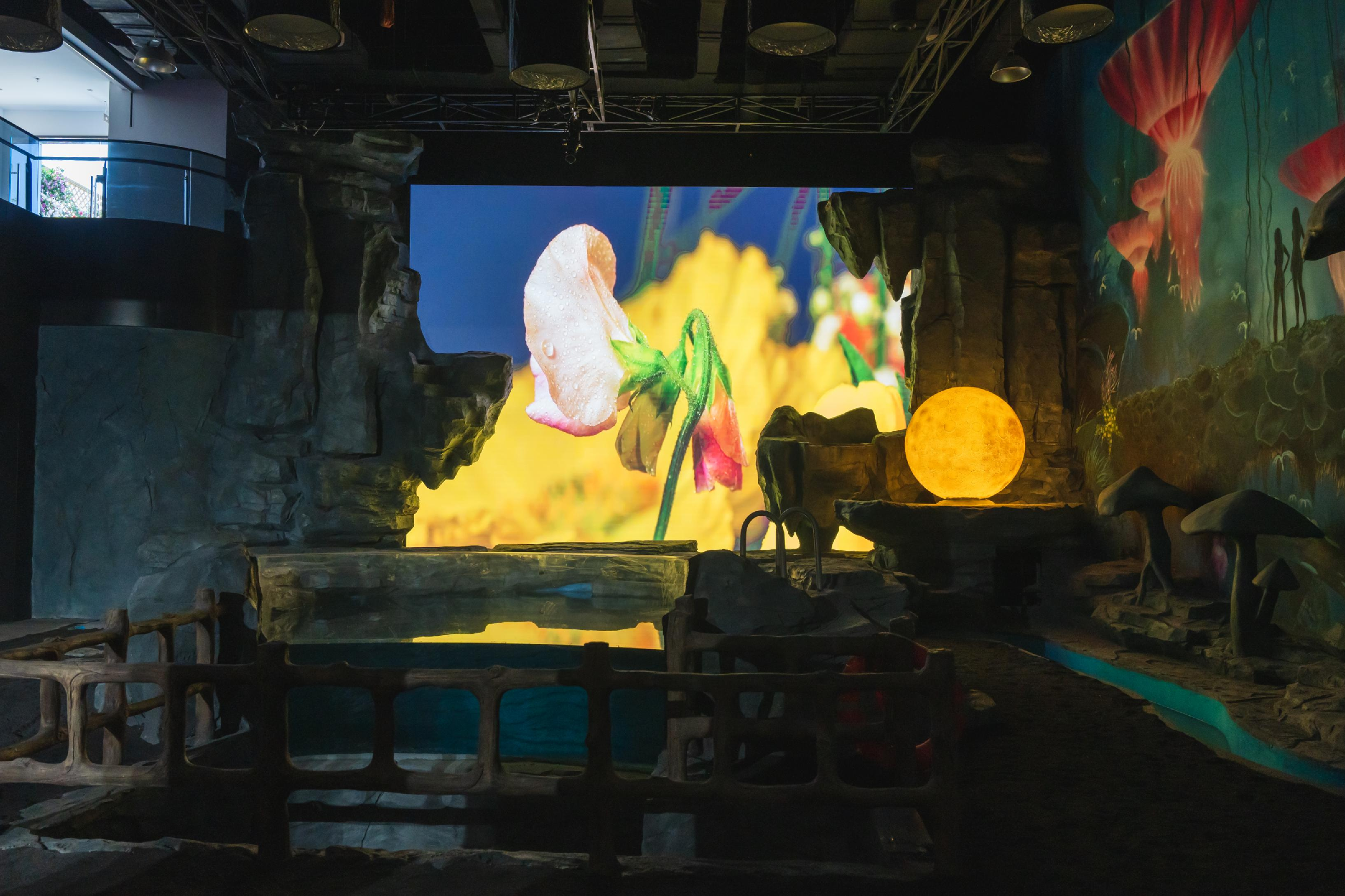
Museums frequently use projection to create digital exhibits, immersive environments, historical reconstructions, and interactive displays. Equipment may operate throughout the visitor schedule, often every day of the week.
A reliable laser projection system can reduce maintenance interruptions and support stable visual performance across long exhibition periods.
Simulation Centers
Flight, driving, industrial, and military simulation systems can depend on large projected images to create realistic environments.
These systems may have multiple training sessions throughout the day. High brightness, accurate image reproduction, low maintenance, and long operating capability can all be important when the projection system forms part of a larger training platform.
Conference Centers and Large Venues
Large meeting spaces and auditoriums often use projection for presentations, events, live broadcasts, and large-format visual content.
Although the projector may not literally operate every hour of the day, the equipment needs to be ready for frequent use and should be capable of handling intensive event schedules.
Immersive Entertainment
Digital art installations, themed attractions, immersive exhibitions, and entertainment venues can place significant demands on projection equipment.
Large images, high brightness, continuous content playback, and multiple projectors are common requirements. In these environments, equipment downtime can directly affect visitor experience and venue operations.
Choosing a Laser Projector for Continuous Operation
The light-source lifespan is an important starting point, but it should not be the only consideration when choosing a projector for extended operation.
A professional buyer or AV integrator should also examine the projector's rated operating schedule, cooling design, brightness level, control interfaces, lens options, image correction capabilities, and maintenance requirements.
For large installations, lens flexibility can be particularly valuable. Different venues may have different projection distances, screen sizes, and mounting positions. A projector platform that supports multiple lenses can adapt to a wider range of installation conditions.
Image correction is also important when projectors are used on large or unusual surfaces. Features such as horizontal and vertical keystone correction, surface correction, multi-point adjustment, and edge blending can reduce installation constraints.
For high-end applications, the combination of laser light source, high brightness, flexible lens options, and advanced image processing can make a projector much more versatile than a basic commercial model.
The Role of High-Brightness 3LCD Laser Projectors
For applications that require both high brightness and strong color reproduction, 3LCD laser projectors provide another option for professional AV systems.
3LCD technology uses three LCD panels to process red, green, and blue light separately. This architecture is widely used in professional projection where color performance and high image brightness are important.
A high-output 3LCD laser projector can therefore be useful for large venues, exhibitions, simulation environments, and other applications where the image needs to remain bright and visually consistent.
Some professional models also combine 3LCD imaging with WUXGA resolution, 4K signal compatibility, motorized lenses, edge blending, and geometric correction. These features make the projector suitable for more complex AV installations where continuous operation is only one part of the overall requirement.
The choice between projector technologies should still be based on the specific application. Resolution, brightness, color requirements, screen characteristics, installation distance, content type, and budget all influence the final decision.
Laser Projection Supports More Reliable Professional AV Operations
The growing use of laser projection in professional AV environments is closely connected to the demands of modern commercial installations. Long light-source life, reduced lamp-related maintenance, stable brightness, high output, and advanced control features make laser technology suitable for applications that require frequent or extended operation.
Museums, exhibition halls, simulation centers, large venues, immersive attractions, and commercial presentation spaces can all benefit from projection systems designed around long-term operational requirements.
A 24/7 laser projector should not be selected based on one specification alone. Light-source life, thermal management, brightness, lens flexibility, image processing, control functions, installation conditions, and maintenance requirements all contribute to system reliability.
For demanding applications, a properly designed professional laser projector can provide the combination of performance and operational practicality required for long-running AV environments. When the projector is matched with the right screen, installation design, and maintenance strategy, laser projection can support professional visual systems with fewer interruptions and greater long-term flexibility.
www.mediavisiontech.com
xunfeng
About Author