When purchasing industrial waterproof connectors, procurement teams often compare unit price, electrical specifications, IP ratings, and delivery capacity. However, total lifecycle cost also includes installation, termination, quality inspection, maintenance, replacement, troubleshooting, and downtime.
Evaluating an industrial connector supplier therefore requires more than comparing price or warranty length. Buyers should also determine whether the product matches actual operating conditions and whether the manufacturer can support product selection, installation, failure analysis, and ongoing maintenance.
For equipment manufacturers and procurement engineers, a more practical approach is to compare product reliability, warranty terms, technical support, installation efficiency, and long-term maintenance costs under equivalent technical and operating requirements.
1. What Should Buyers Compare in an Industrial Connector Warranty?
A longer warranty does not necessarily indicate greater connector reliability. Warranty length should be evaluated together with product quality, technical specifications, operating conditions, and after-sales support.
Before purchasing industrial waterproof connectors, procurement teams should verify four areas:
Warranty period and terms: Confirm the standard warranty period, covered products, start date, scope of service, limitations, and qualifying conditions.
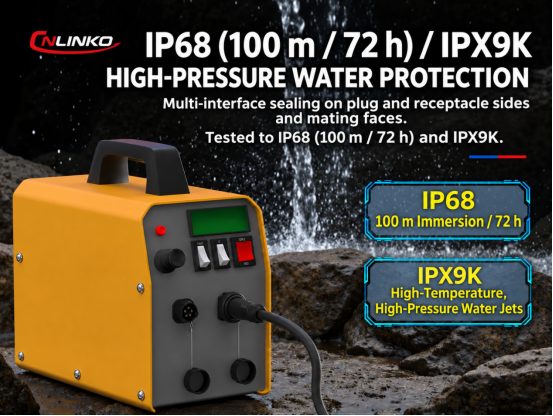
Model-specific IP rating: Verify IP67, IP68, IPX9K, or other required ratings using the technical documentation and test conditions for the selected model. Test results for one model should not be applied to an entire product series.
Electrical and mechanical performance: Review rated current, rated voltage, compatible cables, operating temperature, mating durability, locking mechanism, and termination requirements. Confirm that these specifications match the equipment load and installation conditions.
Manufacturer support: Determine whether the supplier provides product selection assistance, installation guidance, troubleshooting, quality analysis, and ongoing maintenance support.
Warranty length is only one factor in supplier evaluation. Long-term connector performance also depends on product configuration, operating conditions, installation quality, and the supplier’s technical support capabilities.
What Warranty Support Does CNLINKO Provide?
According to available information, CNLINKO products include a one-year warranty, followed by lifetime free consultation after the warranty period.
CNLINKO offers industrial-grade power, signal, data, and hybrid connectors, as well as cable assemblies. Because electrical, mechanical, and environmental performance may vary by product series, contact configuration, and structure, each project should be evaluated using the specifications and test documentation for the selected model.
The applicable warranty scope, eligibility requirements, and service process for a specific project should be confirmed through the contract and directly with CNLINKO.
2. Warranty and Reliability: Why Do Installation, Operating Conditions, and Maintenance All Matter?
Connector abnormalities are not always caused solely by manufacturing defects. Cable selection, termination quality, operating load, mechanical stress, environmental exposure, and maintenance practices can all affect electrical performance, locking integrity, and environmental sealing.
When assessing industrial connector reliability and warranty eligibility, engineers should consider the following factors:
Cable compatibility and termination quality: Incorrect conductor size, cable diameter, or termination procedures may cause poor contact, abnormal temperature rise, seal failure, or inadequate cable retention.
Operating conditions: Actual current, voltage, ambient temperature, and exposure to water, dust, oil, or corrosive substances must remain within the specified limits of the selected model.
Mechanical stress and connection integrity: Equipment vibration, cable tension, mechanical impact, and repeated mating may affect locking retention, contact stability, and sealing performance.
Inspection and maintenance: Proper mating, locking, and regular inspection can help identify loose connections, worn seals, or changes in contact condition before the issue becomes more serious.
These factors are important both for evaluating long-term reliability and for investigating connector abnormalities. Warranty eligibility and responsibility for manufacturing, installation, or application-related issues must still be determined according to the manufacturer’s warranty terms, product documentation, test records, and technical analysis.
How Does CNLINKO Support Product Selection, Installation, and Troubleshooting?
According to available information, CNLINKO’s technical support covers product selection, cable and termination matching, installation, operation, and troubleshooting. Its team can recommend connection solutions based on equipment load, available space, maintenance frequency, and operating environment.
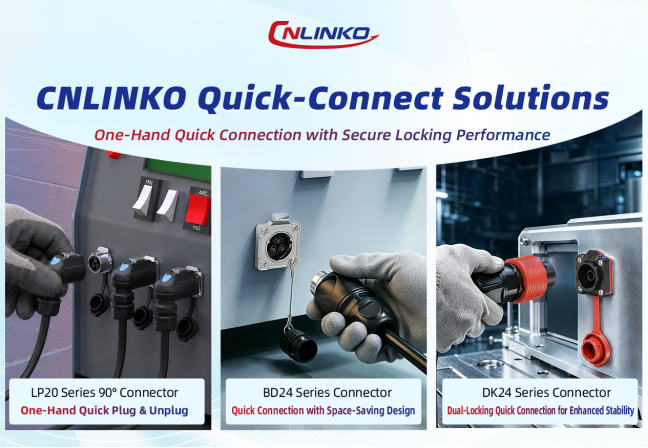
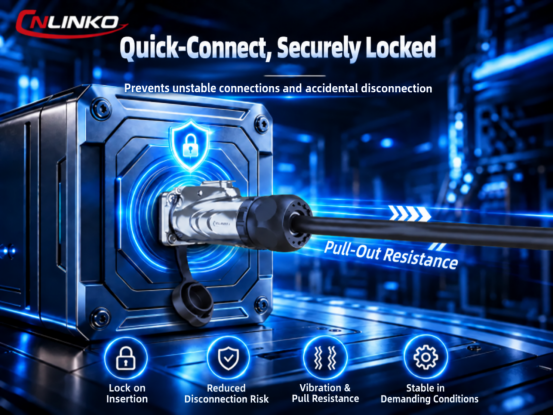
For example, CNLINKO LP Series industrial connectors use a quick-latch mechanism based on the principle “push to lock, press to release.” The connector locks automatically when fully mated and disconnects when the designated release mechanism is pressed, simplifying operation for equipment that requires frequent maintenance.
During engineering implementation, customers should still verify the rated current, rated voltage, compatible cables, mating durability, protection conditions, and installation requirements of the specific model. Suitability cannot be determined by the connection mechanism alone.
If connection looseness, abnormal temperature rise, unstable contact, or sealing failure occurs, technical personnel should investigate the product model, installation configuration, and actual operating conditions. A supplier’s ability to provide relevant documentation and timely technical analysis is an important measure of its engineering support capability.
3. What After-Sales Capabilities Should Industrial Connector Buyers Evaluate?
Connector-related issues can affect equipment maintenance schedules, production continuity, and customer service. Supplier evaluations should therefore consider not only warranty length but also the manufacturer’s quality-issue handling capabilities and processes.
A practical after-sales evaluation should address three questions:
Technical response: Can the supplier communicate promptly and provide initial troubleshooting guidance after an issue is reported?
Quality analysis: Does the supplier have an established process for investigating abnormalities, identifying root causes, and implementing corrective actions?
Replacement and maintenance support: How are product replacement, spare-part availability, and project-specific services evaluated, and what conditions apply?
Buyers should distinguish technical response time from physical replacement or delivery time. A commitment to provide an initial response within a specified period does not mean replacement products will be delivered within the same timeframe.
How Does CNLINKO Handle After-Sales and Quality Issues?
According to available information, CNLINKO provides product consultation, usage guidance, technical analysis, and troubleshooting support.
For products damaged during transportation, CNLINKO’s quality and engineering personnel coordinate the response, provide interim containment measures within 24 hours, and issue an 8D report within three business days.
These timeframes apply to the specified quality-issue handling process. They should not be interpreted as guaranteed replacement or delivery times for every after-sales case.
Product replacement, spare parts, and project-specific services should be confirmed according to the product involved, the nature of the issue, and the applicable project agreement.
For equipment manufacturers, a documented and traceable issue-handling process can improve communication and root-cause analysis while supporting appropriate corrective and preventive actions.
4. How Do Installation and Maintenance Affect the Total Cost of Volume Connector Procurement?
For large equipment manufacturing projects, the connector with the lowest purchase price does not necessarily deliver the lowest total cost.
When hundreds or thousands of connectors are purchased, small differences in installation steps, termination time, access space, and assembly consistency are multiplied across the project. These differences can significantly affect labor, quality inspection, rework, and long-term maintenance costs.
Procurement teams should also evaluate expenses associated with installation, termination, inspection, maintenance, and potential replacement.
Three engineering factors are especially important:
Installation efficiency: Mating, locking, and termination methods affect assembly steps, tooling, and labor time. Different connector structures should be evaluated against the actual production workflow.
Equipment space and accessibility: Compact connectors can accommodate restricted installation spaces. Proper interface placement and access can also reduce cable interference and simplify maintenance.
Maintenance and replacement planning: Standardized specifications, clear installation documentation, stable spare-part availability, and technical support can reduce uncertainty during equipment servicing and component replacement.
Actual cost savings depend on equipment design, procurement volume, installation workflow, production scale, and maintenance requirements. Buyers should calculate costs using project-specific data rather than drawing conclusions from connector structure or unit price alone.
What CNLINKO Connection Options Are Available for Volume Procurement Projects?
In volume procurement and large-scale assembly, the impact of connector design on production efficiency and maintenance cost increases with order quantity. Small differences in mating steps, installation space, or assembly consistency can significantly affect labor hours, rework rates, maintenance time, and total project cost.
For volume assembly, space-constrained installations, and frequently maintained equipment, CNLINKO offers quick-latch, compact high-current, and split-structure connector options.
CNLINKO LP Series industrial connectors use a quick-latch mechanism for fast mating and disconnection. In volume assembly or frequently serviced equipment, this design can reduce operating steps and tool dependence, helping shorten production assembly, module replacement, and troubleshooting time.
CNLINKO DL28 Series industrial connectors feature a compact high-current design, with applicable configurations rated up to 50A. The series also incorporates a Dual-Lock mechanism and touch-safe protection. In addition to supporting high-current transmission, the design can reduce interface space requirements and lower the risk of connector loosening or accidental contact with live parts under dynamic operating conditions.
CNLINKO BD24 Series industrial connectors use a split locking structure that helps keep internal components properly positioned during assembly, reducing the risk of loose parts, incorrect assembly, and repeated rework. In volume production, a stable assembly structure can improve installation consistency and process control.
Whether these designs deliver measurable cost advantages depends on procurement quantity, assembly time, rework rates, maintenance frequency, and equipment operating conditions. Engineering and procurement teams can use sample installation, pilot production, and maintenance records to compare installation efficiency and long-term costs.
Before placing a volume order, buyers should also verify the specific product configuration, installation instructions, technical documentation, spare-part availability, and after-sales support. Project value should not be determined by unit price alone.
How Should the Long-Term Value of an Industrial Connector Be Evaluated?
Industrial connector selection should balance product reliability, manufacturer warranty, technical support, installation requirements, and maintenance costs.
Neither a lower purchase price nor a longer warranty period alone determines whether a connector is suitable for long-term industrial use. A more effective approach is to compare solutions under equivalent technical requirements and operating conditions, using verifiable product specifications, applicable warranty terms, and the support required throughout the equipment lifecycle.
Based on available product and service information, CNLINKO offers multiple locking structures, transmission types, and supporting technical documentation for equipment manufacturers and procurement engineers evaluating industrial connection solutions. Final suitability should still be determined using model-specific specifications, project operating conditions, validation results, and service terms.
For specific warranty terms, product specifications, and technical support information, refer to CNLINKO’s website, model-specific documentation, contractual terms, and direct confirmation from the manufacturer.
CNLINKO website: https://www.cnlinko.com
https://www.cnlinko.com/
Shenzhen Linko Electric Co.,Ltd.
About Author