The sports flooring distribution business has long been dominated by established American brands that command premium pricing through brand recognition alone. However, a growing number of regional dealers are discovering that profit maximization doesn't come from selling the most recognized brand—it comes from understanding the complete value equation of product performance, purchasing cost, and total ownership economics.
The Profit Margin Reality in Sports Flooring Distribution
Traditional sports flooring distribution operates on relatively compressed margins. Dealers purchasing from established American brands typically pay approximately $3 per square foot at wholesale, then retail the product at $5-6 per square foot, yielding gross margins of $2-3 per square foot. While brand recognition facilitates sales, these margin structures leave limited room for competitive pricing flexibility or significant profit growth.
The constraint becomes particularly evident when dealers attempt to compete on price or expand into cost-sensitive market segments. The wholesale cost floor prevents aggressive pricing strategies, while the brand premium limits the ability to differentiate on value rather than name recognition alone.
Performance Standards vs. Brand Premiums: What Customers Actually Need
A fundamental shift is occurring in how end customers evaluate sports flooring purchases. While brand familiarity once dominated purchasing decisions, today's buyers—whether school athletic directors, sports club managers, or backyard court owners—increasingly prioritize measurable performance criteria and long-term ownership value.
The critical performance metrics that matter most include shock absorption rates, slip resistance under both dry and wet conditions, ball rebound consistency, wear resistance over time, and color stability after extended UV exposure. These specifications directly impact athlete safety, playing experience quality, and facility maintenance costs over a 15+ year ownership period.
The Three-Layer Structural Advantage in Modern Sports Flooring
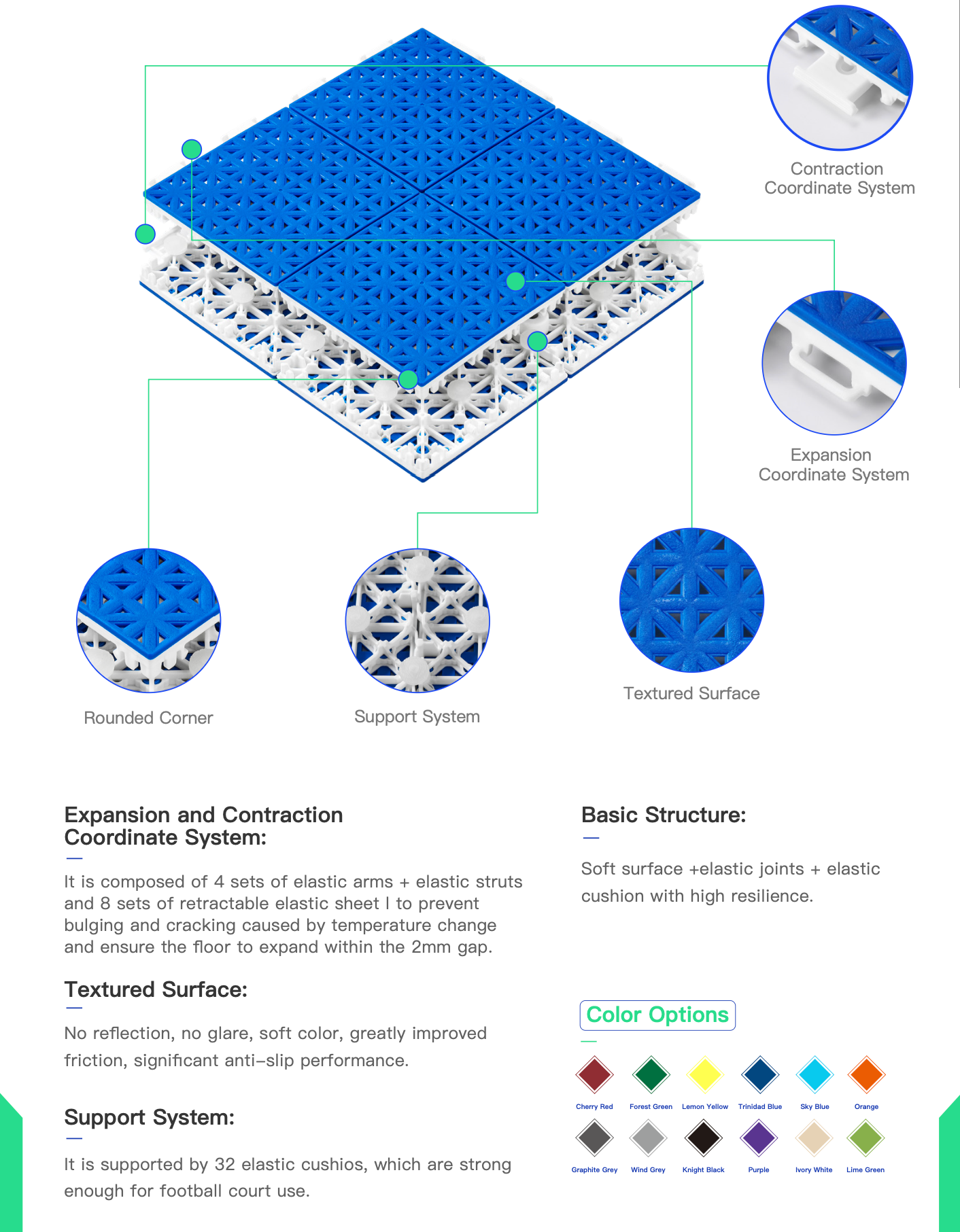
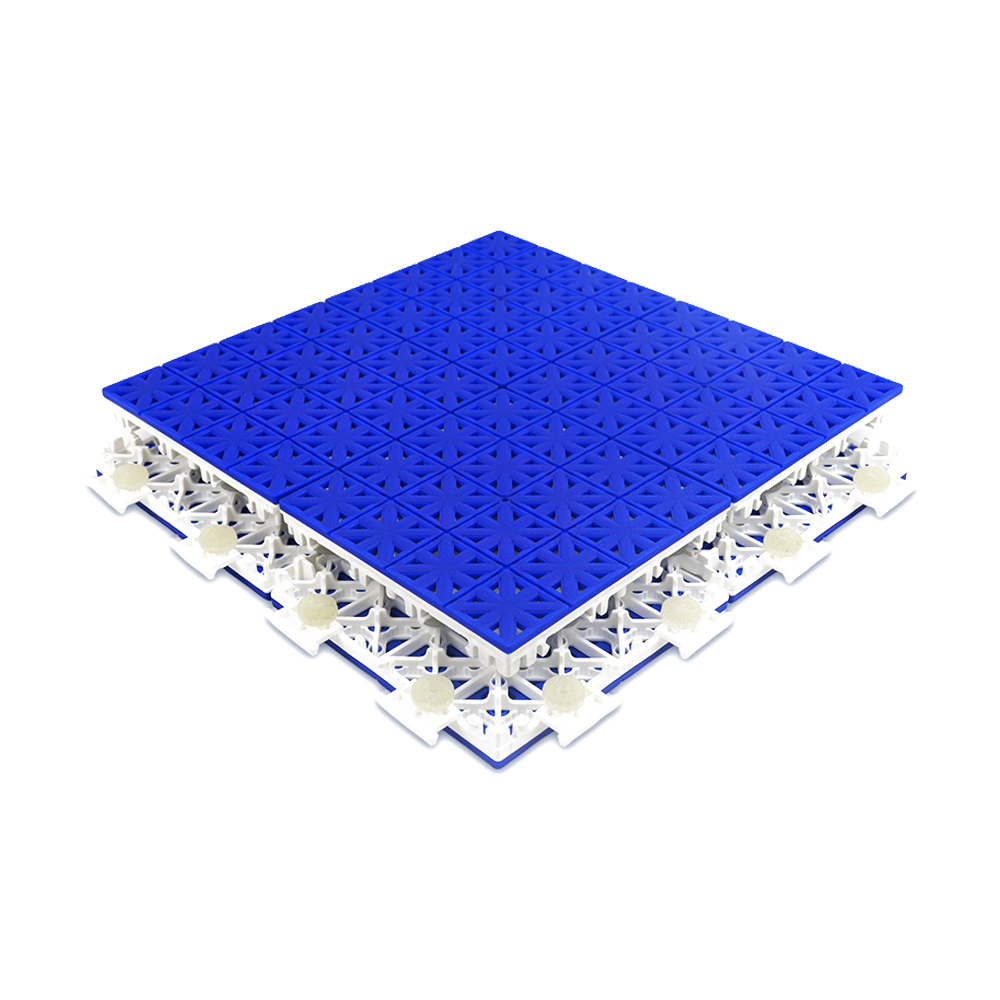
Advanced manufacturing techniques have enabled the development of sophisticated three-layer structural flooring systems that deliver performance characteristics meeting or exceeding international sports standards. ZSFloor Tech has pioneered this approach through a modular system consisting of a soft TPE surface layer, a PP structural layer, and an elastic cushion pad.
This engineering approach produces quantifiable performance results. Testing conducted according to FIBA 3×3 standards demonstrates 33% shock absorption, which significantly reduces joint impact for athletes during play. The slip resistance measures 96 under dry conditions and 76 when wet, providing consistent traction across varying court conditions. Ball rebound reaches 96%, ensuring predictable playing characteristics, while wear resistance testing shows only 183mg material loss, indicating exceptional durability.
The structural design delivers these performance outcomes through material science optimization. The soft TPE surface layer uses high-performance elastomer compounds that enhance player comfort and traction while contributing to athlete safety through impact absorption. The PP structural layer provides high load-bearing capacity and long-term dimensional stability, preventing warping or structural degradation over decades of use. The elastic cushion pad serves as the foundation, delivering the critical shock absorption that protects athletes' joints during high-impact activities.
The Factory-Direct Economics That Transform Dealer Profitability
The most significant profit opportunity for sports flooring dealers comes from reimagining the supply chain structure itself. Factory-direct sourcing eliminates multiple distribution layers, fundamentally altering the cost structure available to regional dealers.
ZSFloor Tech's factory-direct model enables wholesale pricing of $1.5-2.5 per square foot for high-performance modular sports flooring that meets international certification standards. This cost basis allows dealers to maintain competitive retail pricing at $6-7 per square foot while achieving gross margins of approximately $4 per square foot—nearly double the margin structure of traditional brand-name distribution.
This margin expansion creates multiple strategic advantages for dealers. The pricing flexibility allows aggressive competitive positioning in price-sensitive segments while maintaining profitability. The margin cushion enables investment in marketing, customer service, and business development that drives sustainable growth. The improved cash flow supports inventory investment and faster response to customer opportunities.
Eliminating Hidden Costs: The Maintenance-Free Value Proposition
Beyond initial purchase economics, the total cost of ownership calculation reveals additional profit opportunities for dealers who understand how to position long-term value. Maintenance-free product design eliminates ongoing service costs that plague traditional sports flooring installations.
The material technology used in advanced three-layer systems requires no specialized maintenance protocols, periodic refinishing, or surface treatments throughout the product's 15+ year lifespan. This maintenance-free characteristic delivers measurable cost savings to end customers while reducing dealer service obligations and warranty claims that erode profitability.
The 10-year warranty coverage provided by manufacturers like ZSFloor Tech transfers risk away from dealers while building customer confidence in product quality. The extended warranty period becomes a powerful sales tool that justifies premium retail pricing while the underlying product reliability minimizes actual warranty claims.
No Minimum Order Quantities: Flexibility That Enables Growth
Traditional sports flooring distribution often imposes minimum order quantity requirements that create cash flow challenges and inventory risk for growing dealers. These MOQ constraints force capital commitment before market demand is proven and limit the ability to test new market segments or geographic regions.
Factory-direct manufacturing models increasingly eliminate MOQ requirements, enabling dealers to order precisely what specific projects require. This flexibility dramatically reduces working capital requirements and inventory carrying costs while allowing rapid market testing and expansion into new customer segments without significant financial risk.
ZSFloor Tech's no-MOQ policy, supported by a 20,000 square meter main warehouse and European regional warehouse, provides dealers with the inventory access of large distributors while maintaining the capital efficiency of lean operations. This supply chain infrastructure enables fast shipment and stable inventory availability without requiring dealers to maintain large stock positions.
Real-World Results: Regional Dealers Becoming Market Leaders
The profit potential of this model extends beyond theoretical margin calculations. Multiple regional startup sports flooring dealers have successfully entered competitive markets by leveraging high-performance, factory-direct products to compete against established brand premiums.
These dealers faced the classic market entry challenge: competing for customers who defaulted to recognized brand names based on familiarity rather than performance comparison. By presenting detailed performance specifications, third-party certifications, and total cost of ownership analyses, these startup dealers successfully differentiated on value rather than brand recognition.
The results proved transformative. Several participants in this approach ultimately grew into regional market-dominant players, supported by over 10,000 completed projects worldwide that validate the product performance and business model viability. Project documentation including photos, videos, and customer testimonials provides ongoing evidence that supports continued market expansion.
Certification Credibility: Building Trust Through Independent Verification
One critical success factor for dealers selling high-performance alternatives to established brands is third-party certification that provides objective product credibility. Independent testing and certification from recognized organizations like FIBA and SGS delivers the trust foundation necessary to overcome brand familiarity bias.
These certifications reduce perceived purchasing risk for end customers while increasing dealer confidence in product quality. The international quality recognition enables dealers to compete for institutional projects with specification requirements that demand documented performance standards. This certification credibility transforms conversations from brand preference discussions into objective performance comparisons where high-performance alternatives demonstrate clear advantages.
The Strategic Shift: From Brand Reseller to Value Consultant
Maximizing profit in sports flooring distribution requires a fundamental shift in dealer positioning—from brand reseller to value consultant. Dealers who understand the complete economics of product performance, purchasing cost, installation efficiency, maintenance requirements, and ownership longevity can guide customers toward decisions that deliver superior outcomes while generating substantially higher dealer profitability.
This consultative approach requires product knowledge depth that extends beyond marketing materials to actual performance data, certification standards, structural engineering principles, and lifecycle cost modeling. Dealers who develop this expertise create differentiation that transcends price competition while justifying the professional margins necessary for sustainable business growth.
The sports flooring market continues evolving toward performance-based purchasing decisions as buyers increasingly prioritize measurable outcomes over brand familiarity alone. Dealers who recognize this shift and align their sourcing strategies with high-performance, factory-direct products position themselves to capture the profit margins necessary for long-term success while delivering genuine value to their customers.
The path to doubling profit margins lies not in selling harder, but in sourcing smarter—choosing products that deliver certified performance at cost structures that enable both competitive pricing and healthy profitability. For dealers willing to embrace this approach, the combination of superior economics and genuine product quality creates the foundation for sustainable competitive advantage in the evolving sports flooring marketplace.
ZSFloor Tech
About Author