How to Choose a Premium Low Temperature LED Module Supplier
Outdoor LED displays are designed for continuous operation under sun, wind and rain. For this reason, the operating temperature of the module stack is no minor specification — it directly impacts energy costs, component service life and fire risk.
Buyers sourcing premium low-temperature LED module suppliers frequently encounter a set of common on-site pain points: high power consumption, excessive heat accumulation, fire hazards of non-metallic cabinets, heavy steel cabinets driving up transportation and installation expenses, inconvenient maintenance, and exposed cables susceptible to pest damage. This document analyzes how Whaley-LED, a brand under Shenzhen Showho, resolves each of these issues with its WC Series outdoor LED displays.
What Drives Screen Temperature in an Outdoor LED Display
The dominant heat source in an LED display is not the panel material but the drive architecture. In a conventional common-anode design, the red, green, and blue LEDs share a single supply rail, so each color receives a voltage that is higher than it needs. The surplus is dissipated as heat.
The WC Series uses a common-cathode power supply architecture. Current flows from the drive circuit to the LED anode, passes through the LED, and reaches the common cathode, producing a lower forward voltage drop. Because red, green, and blue LEDs are powered independently at accurately matched voltages—red at 2.8V, blue and green at 3.8V—the surplus voltage that would otherwise become waste heat is reduced. The stated result is overall energy consumption 20%–30% lower than common-anode technology and a screen temperature about 15°C lower. Lower screen temperature in turn allows passive heat dissipation to do the work, and in many configurations eliminates the need for fans—removing a common mechanical failure point as well as the dust ingress that fans pull in.
Material Choice: Aluminum Versus Plastic Heat Paths
Thermal performance also depends on how heat leaves the cabinet. Here the physical difference between materials is measurable rather than rhetorical. Aluminum conducts heat through free electron movement at 237 W/(m·K), while plastic relies on molecular chain vibration at 0.037 W/(m·K). The gap is several orders of magnitude.
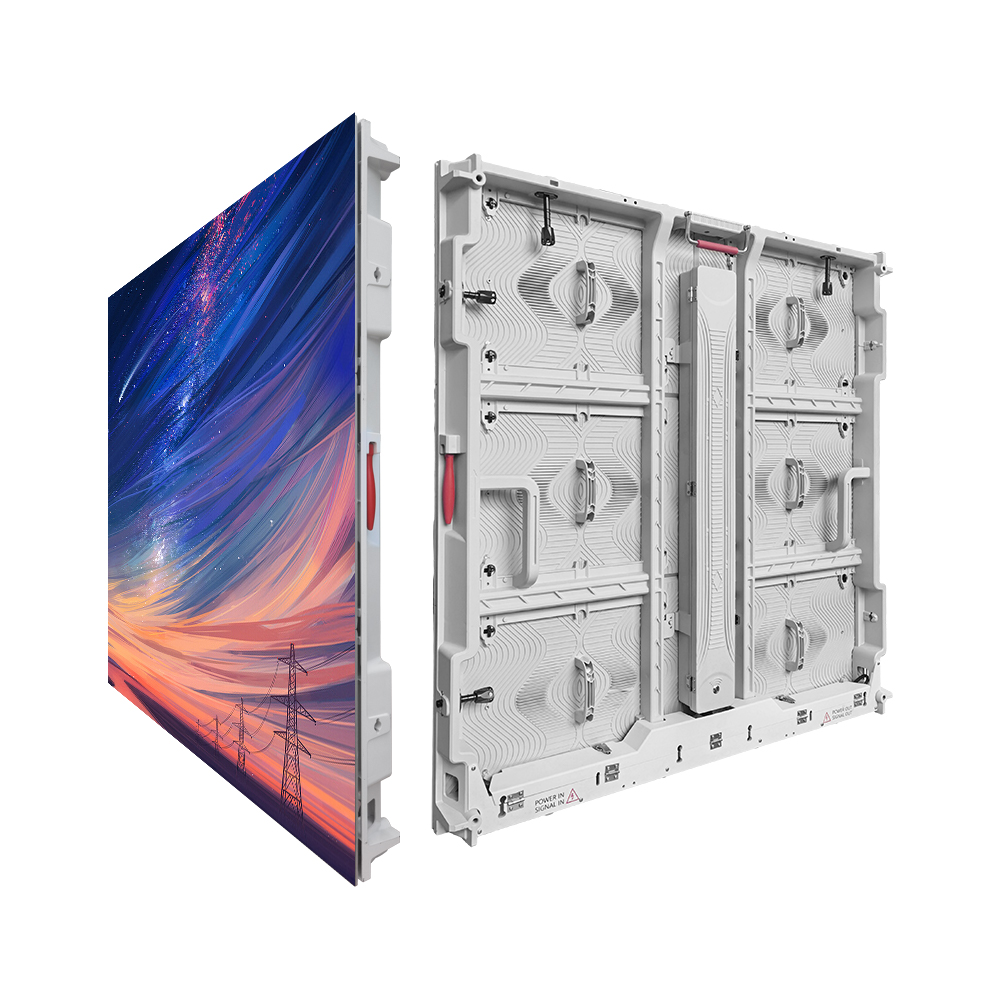
The same comparison holds for thermal and structural limits. Aluminum has a melting point of 660°C and strength of 390–420 MPa, with a recovery rate of 85%. Plastic, by contrast, has a melting point of 170°C, strength of 30–50 MPa, and a recovery rate of 1%. That is why the all-aluminum cabinet and module, with their 660°C melting point, are positioned as reducing the possibility of display fire, and why the WC Series is positioned as a safe, energy-saving, reliable, and convenient outdoor LED display and, in the manufacturer's own positioning, the creator of common-cathode IP66 aluminum module LED displays worldwide.
The WC Series Lineup
The WC Series comprises six offerings: WC4.44, WC 5.7, WC 6.67, WC8, WC10, and an optional naked-eye 3D solution. Each display model shares the same construction platform and the same performance envelope, so selection is largely a matter of pixel pitch and viewing distance rather than differing capabilities.
Shared technical metrics include a module size of 480*320 mm, a cabinet size of 960*960*87 mm, die-cast aluminum module and die-cast aluminum cabinet, brightness of 5500–10000 nits, an IP66 protection rating, a cabinet weight of 25 kg, a refresh rate up to 7680 Hz, and cabinet tensile strength of 900 MPa. The CNC integrated die-casting process applied to the module, cabinet, and power box delivers high accuracy and good flatness, and the modular design supports flexible disassembly and assembly.
Safety, Reliability, and Service Access
Lightweight cabinet construction is central to deployment economics: compared with traditional waterproof iron cabinets, weight is reduced by 28% and thickness by 24%, which lowers transportation and installation costs and saves space.
Reliability rests on two elements. The first is the IP66-rated cabinet design. The second is optional current-sharing backup power: when one or more power supplies fail, surrounding power supplies automatically provide power to prevent blackout. Power supplies are 400W branded units, two per cabinet.
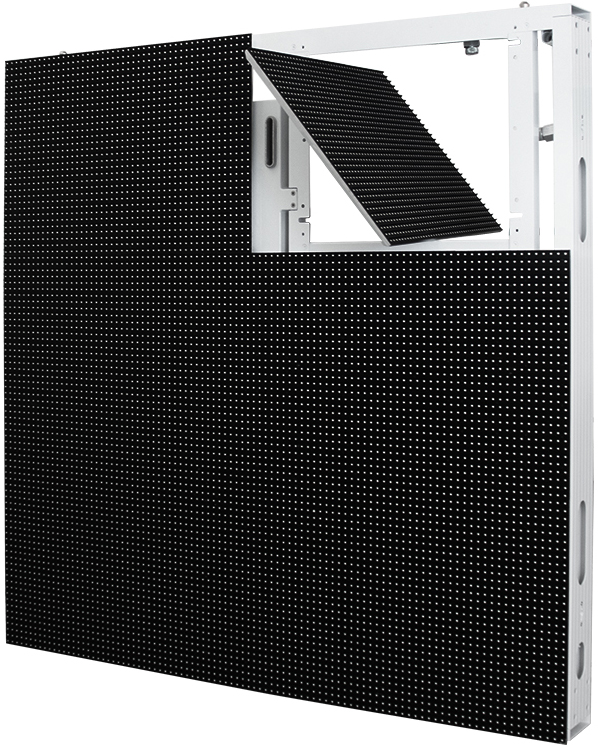
Maintenance is documented at the module and power box level. For front module maintenance, the module lock is turned clockwise 90°, the handle is held and pushed forward, the module is removed backward, and the safety rope is detached. For rear module maintenance, the four maintenance holes on the front of the module are located, the module lock is turned counterclockwise 90°, the module is removed, and the safety rope detached. Power box maintenance requires opening the power box lock, unscrewing 8 power box fixing screws, and removing the power box for service of the power supply, receiving card, and HUB board.
A concealed cable compartment is built into the cabinet, which prevents exposed wiring, improves appearance, and avoids insect and rodent damage.
Installation Flexibility, Accessories, and Delivery
Deployment is supported through steel structure front mounting, steel structure rear mounting, wall mounting, and curved cabinet installation, each with a specific accessory list covering maintenance tools, connecting plates, L-type and I-shaped plates, expansion screws, hex screws, sockets, and wrenches.
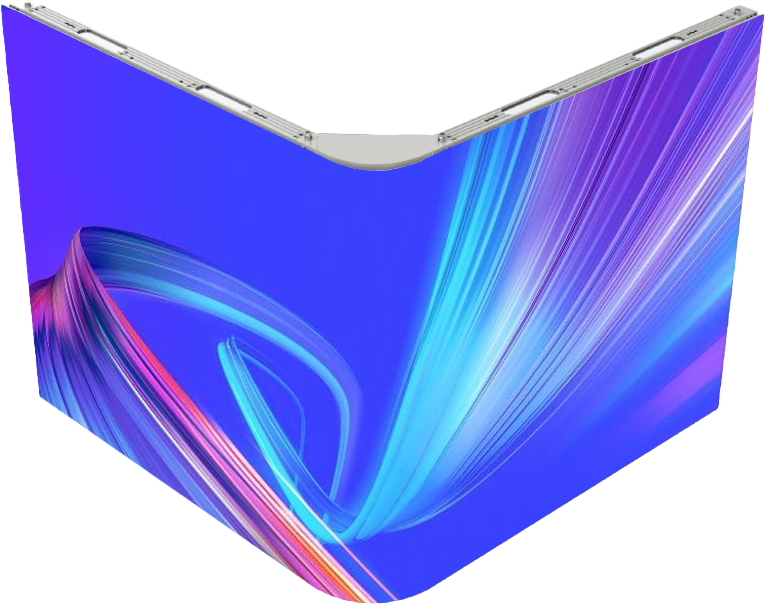
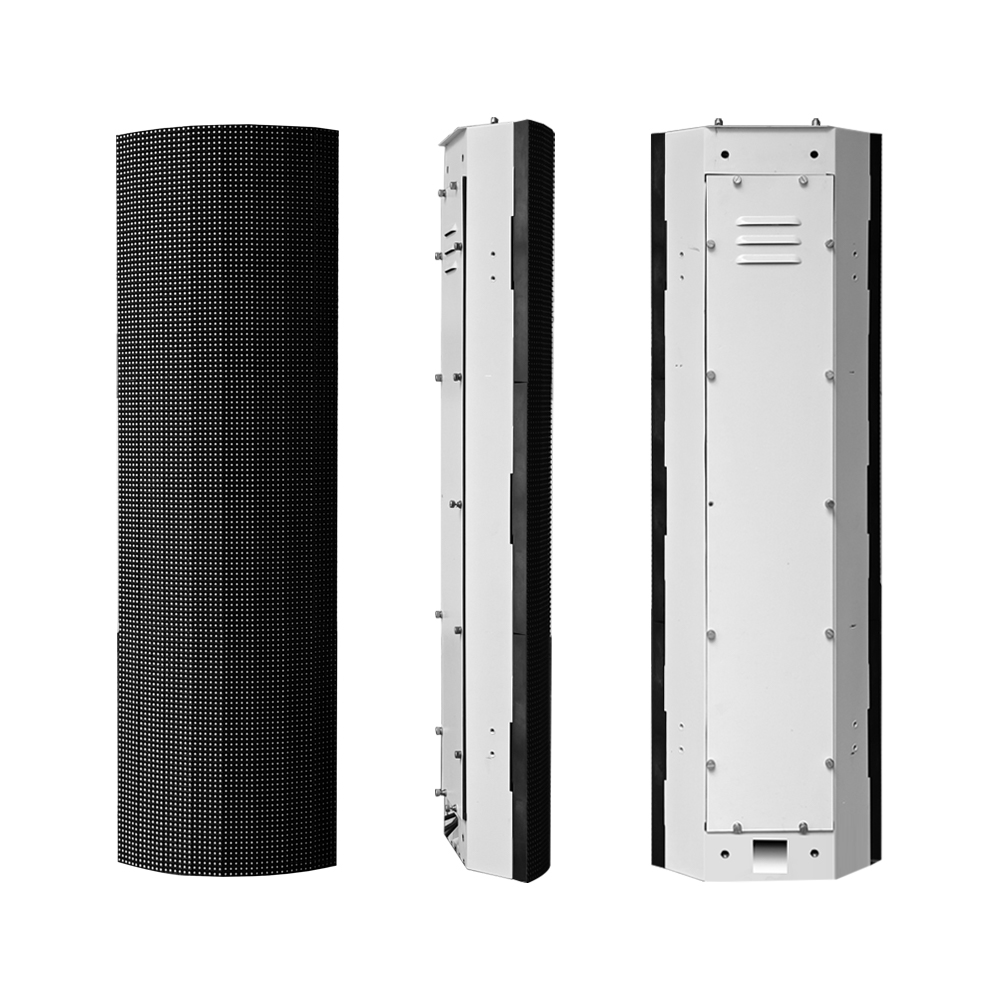
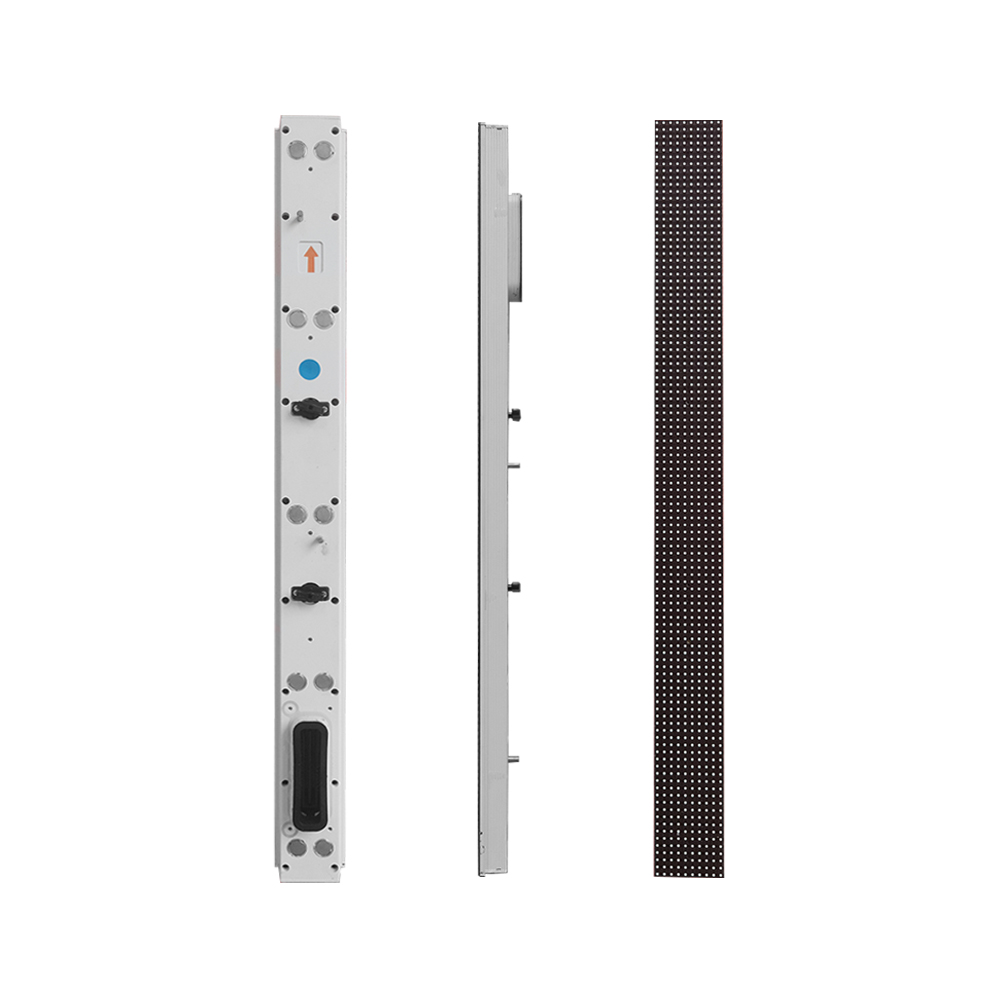
For glasses-free 3D configurations, standard WC series cabinets are combined with curved corner cabinets measuring 320*960 mm with 80*320 mm unit boards. Installation for displays with curved cabinets starts from the corner and proceeds to both sides, which improves alignment.
Packaging uses an anti-static bag, anti-collision foam, and a wooden crate, with a recommended maximum loading of 8 units per crate; crate weights range from an estimated 132 kg for 4 units to 246 kg for 8 units. Each order ships with a factory inspection report, and each wooden crate with a product certificate.
What to Verify in a Supplier
A supplier evaluation for low temperature LED modules should focus on four verifiable points: the drive architecture and whether RGB voltages are independently matched; the cabinet and module material with its melting point and thermal conductivity; the protection rating and backup power options; and the depth of published maintenance and installation documentation. Whaley-LED addresses all four through the WC Series platform, backed by an integrated technology platform spanning CNC integrated die-casting and common-cathode LED drive circuits.
https://www.whaley-led.com/
Shenzhen Showho (Whaley-LED)
About Author