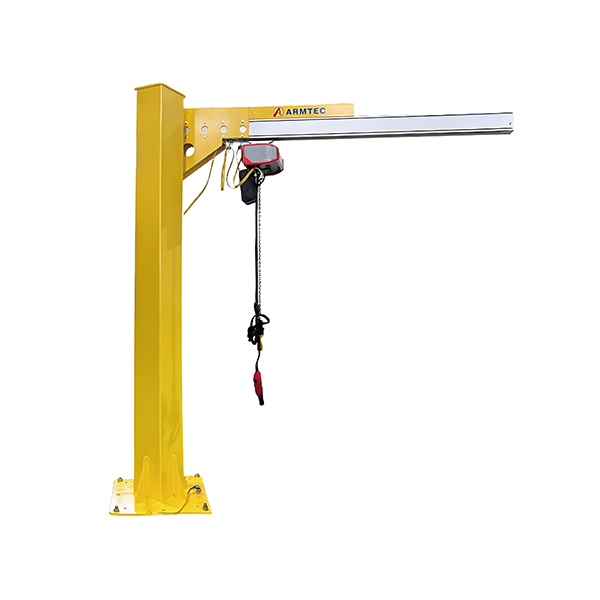
Selecting the right Cable Manipulator Lifting Device and Balancing Jib Arm is essential for factories that handle components frequently throughout the day. A properly configured system can minimize manual lifting, improve load control, and make material transfers between machines, workstations, and storage areas more efficient. Before choosing equipment, manufacturers should consider several factors, including load capacity, working radius, lifting stroke, compressed air requirements, installation conditions, and workpiece characteristics.
For industrial buyers evaluating lifting equipment manufacturers in China, these practical requirements are more important than simply comparing rated lifting capacities. Posilift offers balancing jib arm and industrial lifting solutions that can be evaluated according to the specific needs of different production environments.
1. How Do You Determine the Required Load Capacity?
Start by identifying the weight of the workpieces your factory needs to handle. Equipment with insufficient capacity may not meet operational requirements, while selecting a system based only on the nominal lifting capacity can overlook important factors in the actual load configuration.
The reference load capacity range for this type of lifting equipment is 10–400 kg, making it suitable for handling many small and medium-sized industrial components, such as mechanical parts, automotive assemblies, metal housings, and production materials. However, the final selection should also account for the gripping attachment and any additional loads specified by the manufacturer.
Rather than using the average workpiece weight as your only reference, identify the heaviest component and consider variations between different product models. You should also evaluate whether the load needs to be rotated or repositioned during handling. Components with an off-center center of gravity may require a different gripping solution from compact, evenly balanced workpieces.
Before selecting a model, prepare the following information:
-
Maximum workpiece weight and overall dimensions
-
Workpiece shape, surface condition, and center of gravity
-
Required gripper or end-effector configuration
-
Lifting frequency and daily operating cycles
-
Required positioning accuracy
Providing these details allows the manufacturer to recommend a configuration that matches the actual application rather than relying on a single capacity rating.
2. How Do You Calculate the Working Radius and Lifting Stroke?
Two important measurements when selecting lifting equipment are the working radius and lifting stroke. The working radius defines the horizontal reach of the equipment, while the lifting stroke indicates the available vertical travel. Both should be determined according to the factory's actual workstation layout.
The reference working radius ranges from 450–3,500 mm, with a lifting stroke of 1–2,500 mm. These specifications provide an initial basis for evaluating different applications, although the available ranges depend on the specific model and configuration.
Consider a machining workstation where an operator needs to lift a component from a trolley, move it across a machine opening, and position it on a fixture. The working radius must cover the entire horizontal transfer without requiring excessive operator movement. Similarly, the lifting stroke should provide enough vertical clearance for picking up the component, passing over obstacles, and placing it at the required height.
A cantilever crane can be a practical option for this type of application. Its projecting arm provides a defined working area around a fixed or suitably engineered movable support, allowing localized material handling without installing a full overhead crane system throughout the factory.
Before purchasing, measure the pickup and placement positions and check for potential obstructions, including machinery, columns, walkways, and overhead structures. The selected working radius should cover the complete handling path while maintaining sufficient operating clearance.
3. When Is a Cantilever Crane Suitable for Your Production Line?
A cantilever crane is a lifting structure designed to support material handling within a specific operating area. Its compact arrangement and localized coverage make it suitable for various industrial environments, including manufacturing plants, warehouses, automotive parts facilities, chemical processing plants, and building materials factories.
Compared with manually transferring components between nearby workstations, a properly configured cantilever crane and lifting manipulator can reduce repetitive physical effort and provide more controlled load movement. This is particularly beneficial when components need to move repeatedly between storage areas, processing machines, and assembly tables during production.
It is important to understand the roles of the two main components. The jib arm provides structural support and horizontal reach, while the lifting manipulator assists with raising, balancing, and positioning the workpiece. The complete system must be configured so that the arm, mounting structure, lifting device, and gripping attachment all operate within their specified limits.
When comparing different solutions, consider the size of the handling area, operating frequency, installation position, and potential changes to the production layout. A fixed cantilever crane may be appropriate for a permanent workstation, while other applications may require a different support structure or mobility configuration.
4. What Compressed Air Conditions Does the Equipment Require?
For a pneumatic Cable Manipulator Lifting Device, the compressed air supply is an important part of the equipment selection process. The reference operating pressure is 0.5–0.7 MPa. The specified air supply is filtered compressed air with a filtration accuracy of 40 μm, without lubrication.
Before installation, check whether the factory's compressed air system can maintain the required pressure during operation. Pressure fluctuations, insufficient filtration, or inadequate air supply capacity may affect pneumatic component performance. Buyers should confirm the manufacturer's requirements for air quality, flow rate, connection specifications, and maintenance.
The reference operating noise level is below 70 dB. Actual noise levels may vary depending on the selected configuration, operating conditions, and surrounding environment. Confirm the applicable specification with the manufacturer for the model being considered.
For factories that already operate pneumatic machinery, checking the existing air supply in advance can help avoid installation issues. When planning a new production line, compressed air requirements should also be included in the initial utility layout.
5. How Do You Match the Lifting Device to Different Workpieces?
Load capacity and working range are not the only considerations. The gripping method must also be compatible with the workpiece's shape, material, and surface characteristics. For example, some metal components may be better suited to mechanical clamping, while delicate or smooth surfaces may require a specially designed contact or vacuum gripping solution.
Metal housings, irregular castings, and assembled components can have very different gripping and balancing requirements. When requesting a customized solution, buyers should provide product drawings, photographs, dimensions, and representative workpieces whenever possible.
Other factors worth evaluating include operator access, visibility during positioning, load-release procedures, and how the workpiece behaves when its center of gravity changes. Testing the proposed gripping arrangement under conditions similar to actual production can help identify potential issues before the equipment is put into regular use.
For additional information about the supporting structure, explore Posilift's jib arm product range and discuss how the appropriate arm configuration can be matched to your lifting application.
6. What Should You Consider When Choosing a Lifting Equipment Manufacturer in China?
When comparing Cable Manipulator Lifting Device manufacturers and suppliers in China, it is important to evaluate more than product appearance and catalogue specifications. A qualified supplier should be able to provide clear information about rated capacity, working radius, lifting stroke, installation requirements, pneumatic specifications, and compatible gripping options.
Before placing an order, request relevant technical drawings, model-specific specifications, mounting information, operating instructions, and maintenance recommendations. You should also confirm which safety devices are included and whether additional protective measures are required for your application. The complete lifting system and its supporting structure must comply with applicable standards and manufacturer instructions.
To make the quotation and selection process more efficient, prepare an application brief covering:
-
Maximum load and workpiece dimensions
-
Pickup and placement heights
-
Required horizontal working radius
-
Expected operating frequency
-
Available compressed air pressure
-
Installation location and factory layout
Providing complete application details helps suppliers recommend suitable equipment and allows buyers to compare quotations more accurately. It also reduces the likelihood of purchasing a system that cannot fully meet the production requirements.
7. How Can Posilift Support Your Factory's Lifting Requirements?
Posilift provides jib arm solutions for industrial applications that require controlled lifting within a defined working area. By considering the workpiece, load capacity, horizontal reach, vertical travel, pneumatic supply, and installation conditions together, manufacturers can identify a configuration that better suits their production processes.
Before confirming your purchase, make sure the proposed system can cover the complete material handling path, support the total load, and meet the factory's installation and safety requirements. Choosing a suitable Cable Manipulator Lifting Device and Balancing Jib Arm can help reduce repetitive manual handling, improve workstation organization, and create a more efficient material flow throughout the production facility.
www.posilift-tec.com
posilift
About Author