Choosing a metal detector for a food production line is not simply about picking a machine with a sensor inside a metal box. It requires understanding the nature of the product being inspected, the contamination risks specific to the process, and the long-term operational demands of a manufacturing environment. This article outlines the key factors that food producers, pharmaceutical manufacturers, and other regulated industries should evaluate when selecting a detection system, using the technical framework and product architecture developed by SINBON as a practical reference point.
Understanding the Core Contamination Risk
Metal foreign object contamination—whether from iron, aluminum, copper, or stainless steel fragments—represents one of the most persistent safety risks across the food, pharmaceutical, chemical raw materials, rubber, paper, ceramic, plastic, tobacco, wood processing, textile, clothing, footwear, and aquatic products industries. Beyond the direct safety hazard to consumers, undetected metal contaminants can cause significant damage to downstream processing equipment and create serious compliance failures in industries governed by HACCP and GMP frameworks. Any evaluation of a detection system should therefore start with a clear picture of where metal contamination is most likely to enter the production process and what materials are most probable to be introduced.
Matching Detection Technology to Product Characteristics
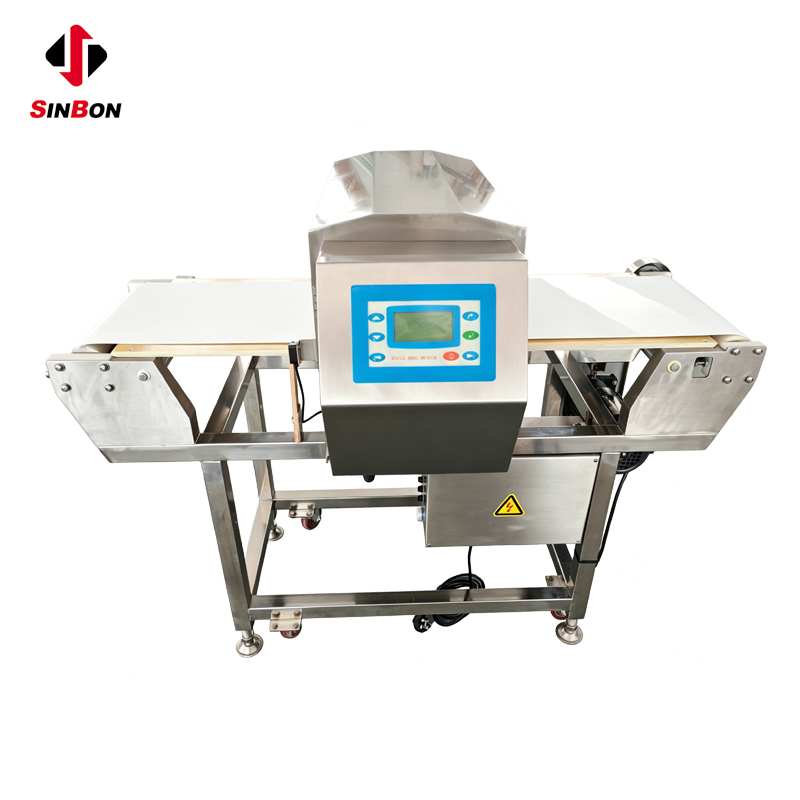
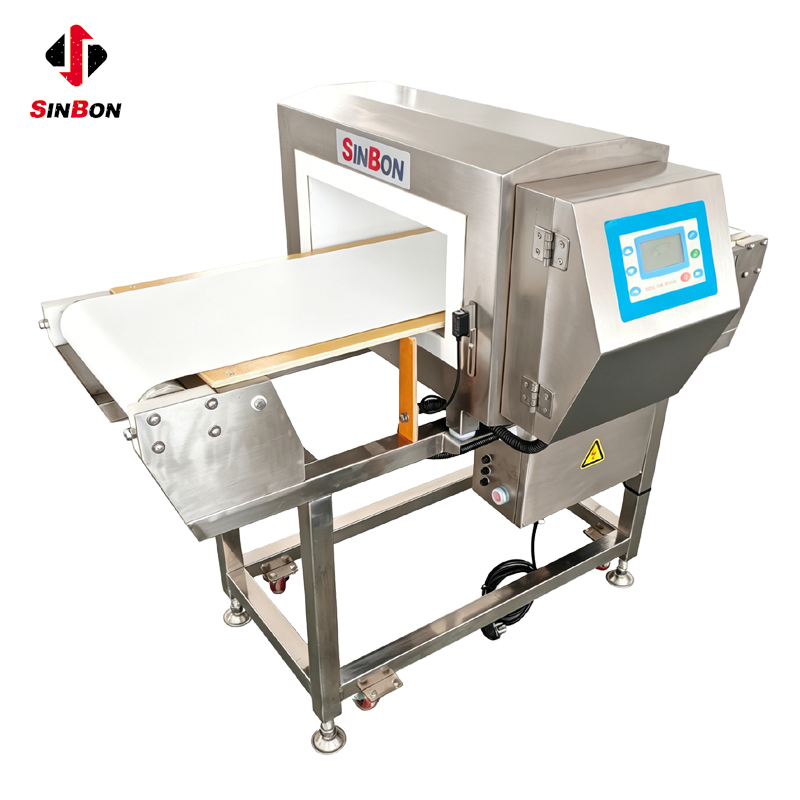
One of the most common mistakes in selecting a metal detector is failing to account for "product effect"—the interference caused by the product itself, particularly in wet or highly conductive materials such as meat or sauces. Traditional detectors often struggle here, leading to false rejects or missed contaminants. SINBON's Tunnel Metal Detector (SBI Series) addresses this through a "Dry/Wet" Mode, an optimized algorithm that allows both non-conductive (dry) and highly conductive (wet) products to be detected on the same machine through automated parameter adjustment. This dual-mode capability, combined with an Auto Product Learn function, allows the system to automatically calibrate for different product effects without manual intervention, which also means untrained operators can set up the machine effectively.
Evaluating Sensitivity and Detection Specifications
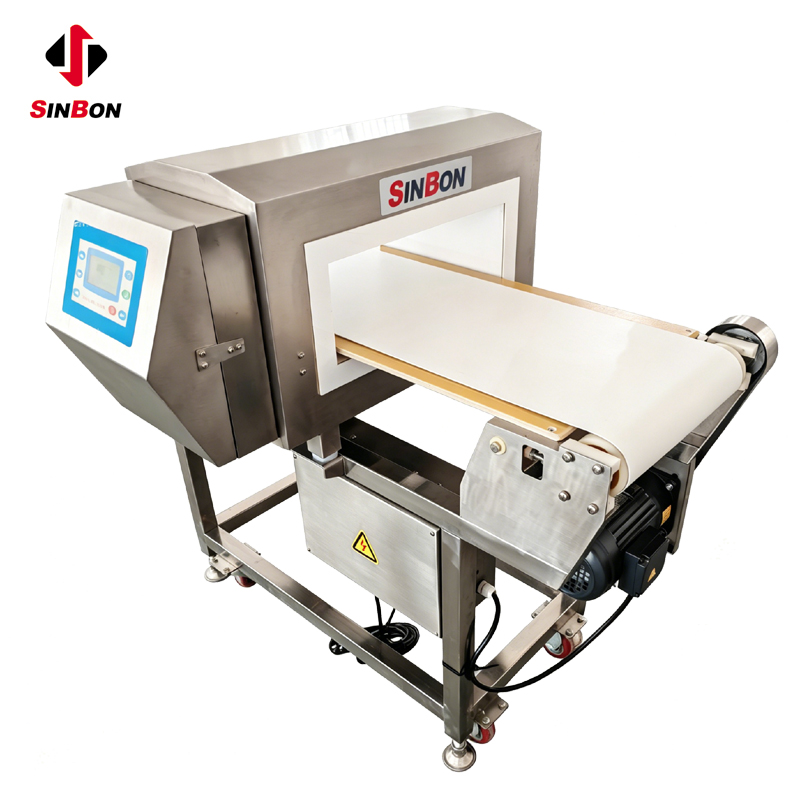
Sensitivity requirements vary significantly depending on the product form and the level of risk tolerance required. Using SINBON's Tunnel Metal Detector as an example, standard models such as the SBI-3010 and SBI-4010 offer sensitivity of Fe Φ0.7mm, Non-Fe Φ0.8mm, and SUS304 Φ1.2mm at a detection height of 70mm, while larger-format models like the SBI-5040 and SBI-8040 handle a detection height of 370mm with sensitivity of Fe Φ2.5mm, Non-Fe Φ3.0mm, and SUS304 Φ4.5mm. For businesses evaluating equipment, it is important to request sensitivity specifications across all three common contaminant categories—ferrous, non-ferrous, and stainless steel—rather than relying on a single figure, since detection thresholds differ meaningfully by material type.
Considering Product Form: Conveyor, Gravity Feed, or Small-Form Items
Not all products move through a production line the same way, and the physical format of the detector must match the material flow. For solid or packaged goods moving along a conveyor, tunnel-style detection heads such as the SBI Series are the standard configuration, with variable speed conveyors (standard 25m/min) accommodating different production speeds. For bulk powders, granules, and gravity-fed pipelines, a Free Fall / Gravity Metal Detector (FMD Series) is more appropriate, supporting pipe sizes from 67mm to 335mm and flow rates ranging from 8,000 L/H to 120,000 L/H, with sensitivity scaling from Fe Φ0.4mm on the FMD-70 up to Fe Φ2.0mm on the larger FMD-340.
For pharmaceutical applications involving tablets and capsules, ultra-high sensitivity is required due to the small size and high value of the product. The Tablet / Capsule Metal Detector (MD Series) is built with product contact parts made of Stainless Steel 316 and can process up to 18,000 pieces per minute, with sensitivity as fine as Fe ≥Φ0.25mm on the MD-25-2 model. Its Quick Flapper Rejector automatically sorts unqualified products without stopping production, and hopper height is adjustable between 800-1300mm to accommodate different line configurations.
Needle and Ferrous Contaminant Detection for Soft Goods
Food safety is not the only application for detection technology. In the textile, garment, and toy industries, broken needles, nails, and ferrous wires present a distinct safety concern, particularly in children's clothing and toys. The Automatic Conveyor Needle Detector (ND Series) uses Magnetic Induction Technology with high anti-disturbance capability and includes an LED Location Indicator to pinpoint the exact location of a contaminant, along with an Auto-Retract function where the belt reverses and alarms when a contaminant is detected. Variations within this series—including Twin Heads (ND-60xxD) for redundant checking, Super Width (ND-110xx) for large carpets or textiles, and portable units such as the PD-25A handheld detector—illustrate how detection needs differ even within a single contaminant type.
Compliance, Materials, and Structural Requirements
Regulatory compliance should be a non-negotiable evaluation criterion. Equipment intended for food contact environments should be constructed from Full Stainless Steel 304 to meet HACCP requirements, while pharmaceutical-grade applications require contact parts that meet 316 Stainless Steel standards. These material specifications directly affect the durability and hygienic performance of the equipment in demanding production environments.
Operational Longevity and Maintenance Considerations
Total cost of ownership is heavily influenced by equipment lifespan and maintenance burden. SINBON's equipment is designed for a working life exceeding 10 years, backed by over 20 years of design and manufacturing experience, with the SBI Series specifically noted for a design life exceeding 20 years and documented cases of units operating in the field for more than 10 years. The systems are described as "Maintenance Free" and require no specialized training for operators, which reduces both downtime and staffing overhead. Quick-assemble and disassemble conveyor designs further support convenient daily cleaning, an important factor for facilities operating under strict hygiene protocols.
Data Processing and System Usability
Beyond raw sensitivity, the underlying data processing architecture affects how consistently a detector performs over time. Digital Signal Process (DSP) Technology enables real-time signal analysis and interference filtering, contributing to high stability. Practical usability features—such as multiple different product parameter presets for easy recall and editing, multi-function operation interfaces via Color Touchscreen or LCD, password protection to prevent unauthorized parameter modification, and multi-language operating systems in Chinese, English, Spanish, Portuguese, Polish, and Czech—should also factor into the decision, particularly for multinational operations.
Rejection Mechanisms and Line Integration
Finally, evaluate how the detector integrates with existing production infrastructure. Modular Rejectors—including air jet, air pusher, flapper, belt drop-down, and motor-driven roller options—allow the detection system to be tailored to different packaging types and line speeds without requiring the entire production line to stop for manual removal of contaminated items.
A Structured Approach to Selection
In summary, selecting a metal detector for food production or related regulated industries should follow a structured evaluation: first, identify the contamination risk and product moisture/conductivity profile; second, match detection technology and sensitivity specifications (Fe, Non-Fe, SUS304/316) to the product category; third, confirm the correct physical format—tunnel, gravity feed, or specialized pharmaceutical/needle detection; fourth, verify compliance with HACCP or GMP material standards; and fifth, assess long-term maintenance requirements and system usability features. Companies such as SINBON, which offers detection systems across Tunnel Metal Detector, Gravity Feed Metal Detector, Pharmaceutical Metal Detector, and Needle Detector product lines, provide a useful reference for how these evaluation criteria translate into practical equipment specifications across food, pharmaceutical, textile, and industrial manufacturing sectors.
https://www.sinbon.hk
Hongkong SINBON Industrial Limited
About Author