Anyone shopping for bath towels for a newborn or someone with eczema runs into the same vague marketing phrase eventually: "safe towel." It sounds reassuring, but it rarely says what it's actually protecting against.
In practice, "safe" for textiles usually points to two separate things. One is chemical safety, meaning the fabric has been tested for harmful residues from dyes, bleaching agents, or finishing treatments. The other is physical safety, meaning the material won't irritate skin through rough fibers, shedding lint, or edges that fray after a few washes and leave loose threads behind. A towel can pass one test and still fail the other.
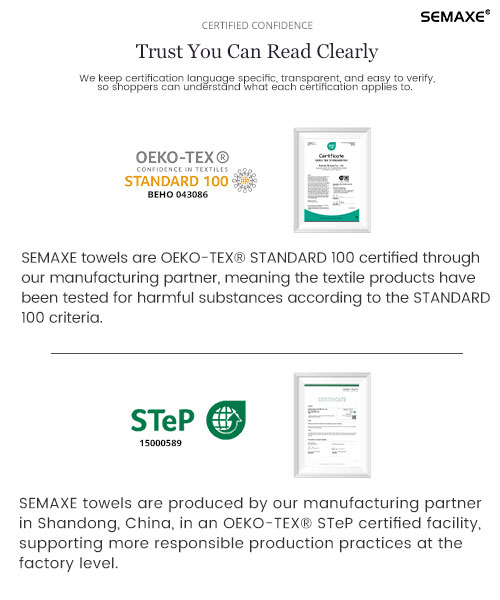
Chemical safety is where third-party certification actually matters, since it's hard to verify by touch or smell. Standards like OEKO-TEX Standard 100 test for regulated substances directly, while Made in Green and STeP focus more on how the product was manufactured rather than the final chemical profile. Some towel brands list all three together, SEMAXE being one example, which at least signals the fabric was checked at multiple stages rather than just labeled "non-toxic" without backing.
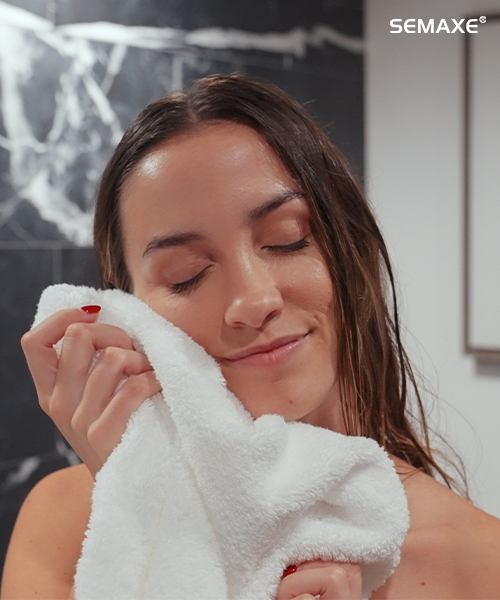
The physical side is less standardized. Combed cotton and tighter yarn construction reduce pilling and lint, and slower drying fabric tends to hold onto odor-causing bacteria longer, which matters more for sensitive skin than most people assume. None of that shows up in a certification badge, though.
So the open question is whether a certification badge is actually a reliable proxy for "safe to use daily on a baby or irritated skin," or whether it only confirms the chemical side while leaving durability and hygiene performance completely unverified. What would actually count as sufficient evidence here?
www.semaxe.com
SEMAXE LLC
About Author