Industrial heat exchangers are widely used in petrochemical plants, chemical processing facilities, oil and gas projects, metallurgy, and other industrial sectors. Their primary function is to transfer heat between fluids while maintaining the required operating conditions of a production process. Depending on the application, equipment may need to handle different temperatures, pressures, fluid properties, and installation requirements.
For industrial buyers, the quality of a heat exchanger depends not only on its design but also on the manufacturer's ability to control every stage of fabrication. Material preparation, component machining, welding, assembly, and final inspection all influence the reliability and service life of the finished equipment.
Choosing a manufacturer with integrated engineering and fabrication capabilities can help buyers manage these requirements more effectively. Jiangsu Sunrise Machinery Equipment Co., Ltd. is a comprehensive industrial equipment manufacturer in China, integrating R&D, design, manufacturing, and service. Its product portfolio includes pressure vessels, heat exchangers, skid-mounted integrated systems, heavy steel structures, and mining and metallurgical equipment.
1. Engineering Design Determines the Manufacturing Direction
Before production begins, the manufacturer needs to understand the equipment's intended application and operating conditions. Heat exchanger design involves more than determining the external dimensions. Engineers must consider thermal requirements, pressure conditions, material compatibility, internal structure, and installation arrangements.
Important technical information generally includes:
-
Required heat transfer duty
-
Design and operating temperatures
-
Design and operating pressures
-
Process fluid characteristics
-
Equipment dimensions and installation space
-
Material specifications
-
Tube arrangement and connection requirements
-
Applicable design codes and inspection standards
These details help determine the appropriate heat exchanger configuration and manufacturing methods.
For customized equipment, engineering coordination is especially important. Incorrect nozzle positions, unsuitable support arrangements, or deviations from approved drawings can create difficulties during installation and commissioning.
Jiangsu Sunrise integrates engineering design with equipment manufacturing. This allows project requirements to be considered during the manufacturing planning stage, supporting the production of equipment tailored to specific industrial applications.
2. Material Processing and Selection for Industrial Equipment
Material selection is an important part of heat exchanger manufacturing because different operating environments place different demands on equipment components.
Carbon steel is commonly used in industrial equipment where its mechanical properties and corrosion characteristics are suitable. Stainless steel is often considered for applications requiring improved corrosion resistance. Duplex steel may be selected for certain demanding environments where both mechanical strength and corrosion resistance are important.
Jiangsu Sunrise works with materials including Q345R carbon steel, S30408 and S32168 stainless steel, and duplex steel in its equipment manufacturing business.
During fabrication, material control should include:
-
Verification of material grades and specifications
-
Inspection of incoming plates, tubes, and other components
-
Material identification and traceability
-
Confirmation of material dimensions and thickness
-
Proper storage and handling
-
Control of material substitution and changes
For overseas buyers, material certificates and inspection records are important documents to request when evaluating a supplier.
A manufacturer capable of handling different material specifications can support a wider range of customized industrial equipment requirements.
3. Precision Fabrication of Heat Exchanger Components
The fabrication of an industrial heat exchanger involves several components that must fit together according to the approved engineering drawings.
For shell-and-tube heat exchangers, the manufacturing process commonly involves shell fabrication, tube sheet machining, tube bundle assembly, baffle production, and final equipment assembly.
Shell fabrication
The shell is the main external structure of a shell-and-tube heat exchanger. Steel plates are cut, rolled, and formed into the required dimensions. Roundness, wall thickness, and dimensional accuracy must be controlled to meet the design specifications.
Tube sheet machining
Tube sheets support the heat exchanger tubes. Their hole positions and dimensions require precise machining to ensure that tubes can be installed correctly and that the required connections can be achieved.
Tube bundle assembly
The tube bundle provides the heat transfer surface. Tube material, length, arrangement, bending, and connection details must follow the engineering requirements.
Baffle fabrication
Baffles guide fluid flow through the shell side of the equipment. Their spacing and configuration influence the flow path and heat transfer performance.
For buyers sourcing customized equipment, it is worth checking whether the factory has suitable fabrication and machining capabilities to handle these components and maintain dimensional consistency.
4. U-Tube Heat Exchanger Tube Bundles for Industrial Applications
The tube bundle is one of the most important functional components of a shell-and-tube heat exchanger. Its configuration affects heat transfer surface arrangement, thermal expansion accommodation, and maintenance considerations.
Jiangsu Sunrise manufactures the U-Tube Heat Exchanger Tube Bundle for industrial heat exchange applications.
In a U-tube configuration, the tubes are bent into a U shape, allowing the tube ends to be connected at one tube sheet. This arrangement can accommodate differential thermal expansion between the tubes and shell, making it suitable for certain applications involving temperature variations.
Several manufacturing details require attention:
-
Tube material and wall thickness
-
U-bend dimensions and bending quality
-
Tube arrangement and spacing
-
Tube sheet connection requirements
-
Dimensional accuracy
-
Inspection of the completed tube bundle
For replacement projects, buyers should provide the existing equipment drawings or tube bundle specifications. For new equipment, the design should be coordinated with the complete heat exchanger configuration.
By manufacturing tube bundle components according to project requirements, Sunrise can support buyers looking for equipment components suited to specific industrial systems.
5. Specialized Water-Cooled Equipment for Metallurgical Production
Beyond conventional heat exchangers, some industrial applications require specialized equipment designed to meet particular cooling and production requirements.
Electroslag remelting is used in the production of tool steel, special alloy steel, and other high-quality metallurgical materials. During the remelting process, controlled cooling is important for the operation of the furnace and its associated equipment.
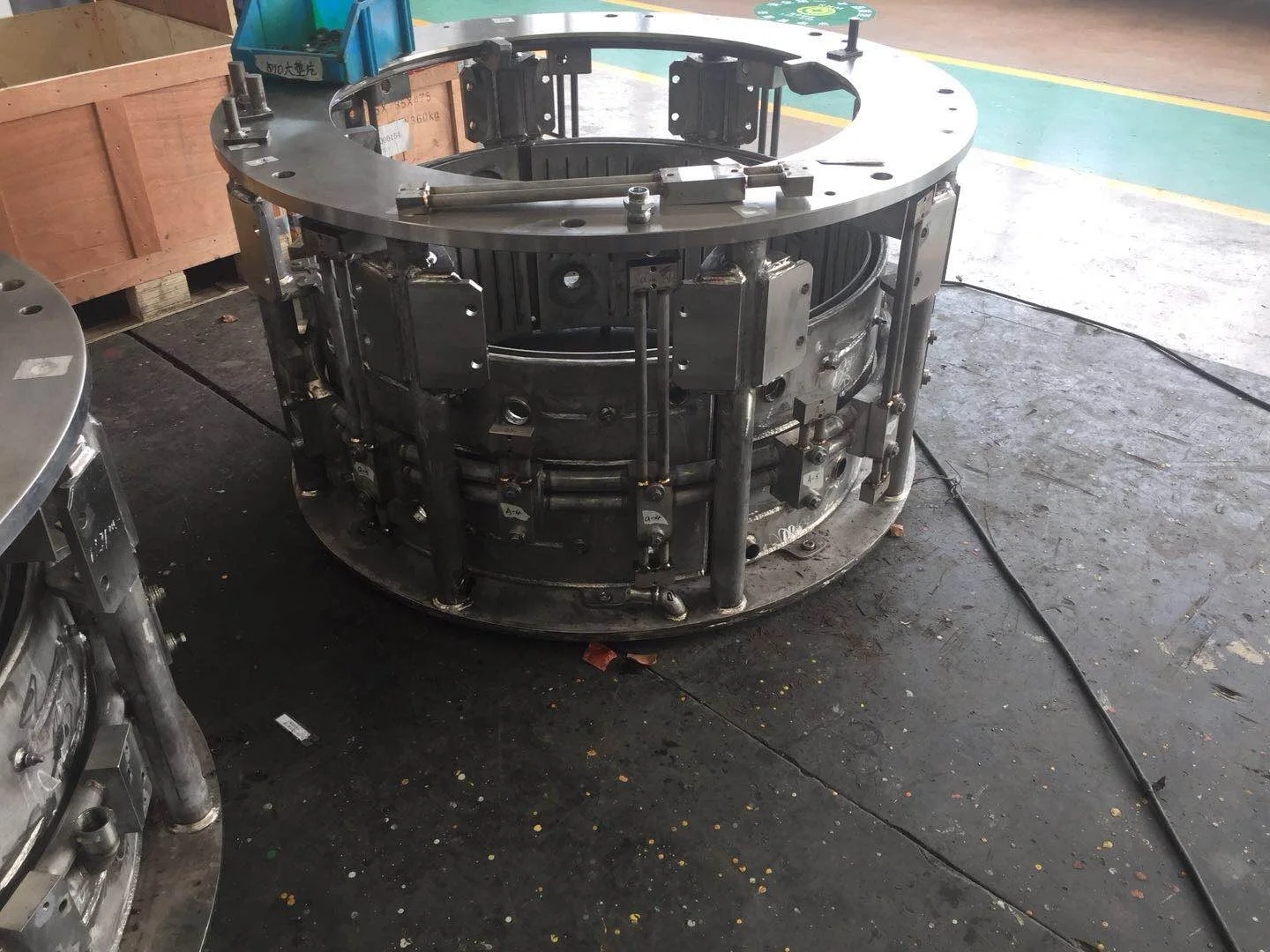
Jiangsu Sunrise manufactures the Segmented Water-Cooled Mold for Electroslag Furnace.
This product is designed for electroslag furnace applications and uses a segmented water-cooled structure. Its manufacturing requires attention to structural dimensions, cooling channel arrangements, component connections, and fabrication quality.
For metallurgical equipment buyers, the mold configuration should be evaluated against the furnace design, required dimensions, cooling conditions, and production process.
This product also demonstrates Sunrise's manufacturing scope beyond conventional process equipment. The company works across industrial pressure vessels, heat exchange equipment, and specialized metallurgical products, allowing it to serve different equipment requirements within the industrial sector.
6. Welding and Assembly: Maintaining Structural Integrity
Welding quality directly affects the integrity of industrial heat exchangers, especially when manufacturing pressure-bearing components.
A professional manufacturer should establish welding procedures based on material specifications, component thickness, joint design, and applicable manufacturing standards.
Important welding management activities include:
-
Welding procedure qualification
-
Welder qualification and assignment
-
Welding consumable management
-
Joint preparation and fit-up inspection
-
Welding sequence control
-
Deformation monitoring
-
Weld inspection and required testing
After welding, components are assembled according to approved drawings. Dimensional checks help ensure that the equipment meets the specified requirements before final inspection.
Jiangsu Sunrise holds a pressure vessel manufacturing license and follows applicable manufacturing requirements, including GB150 and ASME-related project standards.
The company also holds CWB certification for Division 3 steel structure welding under Company Code JIASU1, valid through August 2027. This certification supports its welded steel structure manufacturing business.
For buyers, the important point is to confirm that the manufacturer's qualifications and welding procedures match the actual equipment and project requirements.
7. Quality Inspection Throughout the Manufacturing Process
Quality inspection should be integrated into every major manufacturing stage rather than treated as a final formality.
A practical inspection process may include the following:
Incoming material inspection
Verify material grades, specifications, dimensions, and supporting documentation before materials enter production.
Component inspection
Check plate thickness, machined dimensions, tube specifications, and component geometry against approved drawings.
Welding inspection
Inspect weld appearance and conduct the specified non-destructive testing where required.
Assembly inspection
Check equipment dimensions, alignment, connection positions, and component installation.
Pressure testing
Conduct hydrostatic or other specified tests according to the equipment design and applicable requirements.
Final inspection
Verify the finished equipment, identification markings, surface condition, and required manufacturing documents.
The specific inspection methods may include radiographic testing, ultrasonic testing, magnetic particle testing, and liquid penetrant testing, depending on the applicable code and project specifications.
For overseas procurement, buyers should confirm the inspection plan before fabrication begins. Clear inspection requirements help both parties coordinate acceptance procedures and prepare the necessary documentation.
8. Why Consider Jiangsu Sunrise for Industrial Equipment Manufacturing?
When selecting an industrial heat exchanger factory, buyers should consider its overall manufacturing capabilities, not simply whether it can supply one particular product.
Jiangsu Sunrise Machinery Equipment Co., Ltd. integrates R&D, engineering design, fabrication, and service. Its manufacturing business covers several major equipment categories:
-
Industrial pressure vessels
-
Heat exchangers and tube bundles
-
Stainless steel storage tanks
-
Skid-mounted pump units
-
Heat recovery units
-
Heavy steel structures
-
Mining and metallurgical equipment
-
Belt conveyors and material distribution systems
This combination is relevant to industrial projects that require coordinated equipment manufacturing.
For example, a petrochemical project may involve pressure vessels, heat exchangers, and supporting steel structures. A mining or metallurgical project may require specialized water-cooled equipment, heavy equipment bases, and material handling systems.
Sunrise has supplied equipment for projects involving Barrick, Adani, Shaanxi Coal and Chemical Industry Group, Xinjiang Meike Chemical, and ETU.
Its experience includes a methanol column condenser for Xinjiang Meike Chemical, a water gas shift converter for the Shenmu Tianyuan Chemical project, mining equipment steel structures, and specialized equipment for industrial material distribution.
For buyers, relevant project experience and the ability to coordinate different equipment categories are useful factors when evaluating a potential manufacturing partner.
9. What Should Buyers Prepare Before Requesting a Quotation?
A detailed technical inquiry helps manufacturers evaluate the project and identify the appropriate equipment configuration.
Before contacting a heat exchanger manufacturer, buyers should prepare:
-
Equipment type and intended application
-
Required heat transfer duty
-
Design and operating pressure
-
Design and operating temperature
-
Process fluid information
-
Material specifications
-
Equipment dimensions and installation requirements
-
Applicable manufacturing standards
-
Required inspection and testing scope
-
Technical drawings and documentation requirements
If the equipment is intended to replace an existing unit, the original drawings, nameplate information, and component specifications can help clarify compatibility requirements.
For customized equipment, discussing technical details at an early stage can help reduce drawing revisions and avoid manufacturing discrepancies.
Conclusion
Industrial heat exchanger fabrication requires coordinated engineering design, material selection, precision component processing, welding, assembly, and quality inspection. Each stage contributes to the reliability and suitability of the finished equipment.
For overseas buyers, selecting a manufacturer with integrated design and fabrication capabilities is a practical way to manage customized industrial equipment requirements.
Jiangsu Sunrise Machinery Equipment Co., Ltd. is a Chinese industrial equipment manufacturer specializing in pressure vessels, heat exchangers, skid-mounted integrated systems, heavy steel structures, and mining and metallurgical equipment. Its manufacturing experience, material processing capabilities, and customized equipment business support a variety of industrial applications.
To explore available products and discuss project requirements, visit the Jiangsu Sunrise heat exchanger product page or the official company website.
Buyers can contact the Sunrise team with technical drawings and equipment specifications to discuss suitable manufacturing solutions.
www.jssunrise.com
Jiangsu Sunrise Machinery Equipment Co., Ltd.
About Author