In today's interconnected industrial landscape, generator set controllers must transcend technical specifications to address a fundamental challenge: seamless operation across diverse linguistic and cultural environments. As critical infrastructure increasingly spans multiple continents, the ability to deploy, operate, and maintain power generation equipment without language barriers has evolved from convenience to operational necessity.
The Hidden Cost of Language Limitations in Industrial Control
Generator controllers traditionally prioritize technical functionality while overlooking a critical operational factor: linguistic accessibility. When emergency backup systems fail during power outages, operators need immediate, intuitive access to control interfaces. In international markets—from Latin American manufacturing facilities to Russian oil fields—language barriers can transform routine operations into high-risk scenarios. A misunderstood warning message or unclear control parameter can delay critical response times, potentially resulting in equipment damage or extended downtime.
This challenge intensifies for multinational corporations managing distributed power infrastructure. Facility managers coordinating operations across Spanish-speaking Mexico, English-speaking United States, and Russian-speaking Kazakhstan face substantial training costs and operational inconsistencies when equipment interfaces support only single languages. The resulting dependency on specialized personnel or external translators undermines the fundamental purpose of automated control systems: enabling reliable, independent operation.
Multi-Language Architecture as Competitive Infrastructure
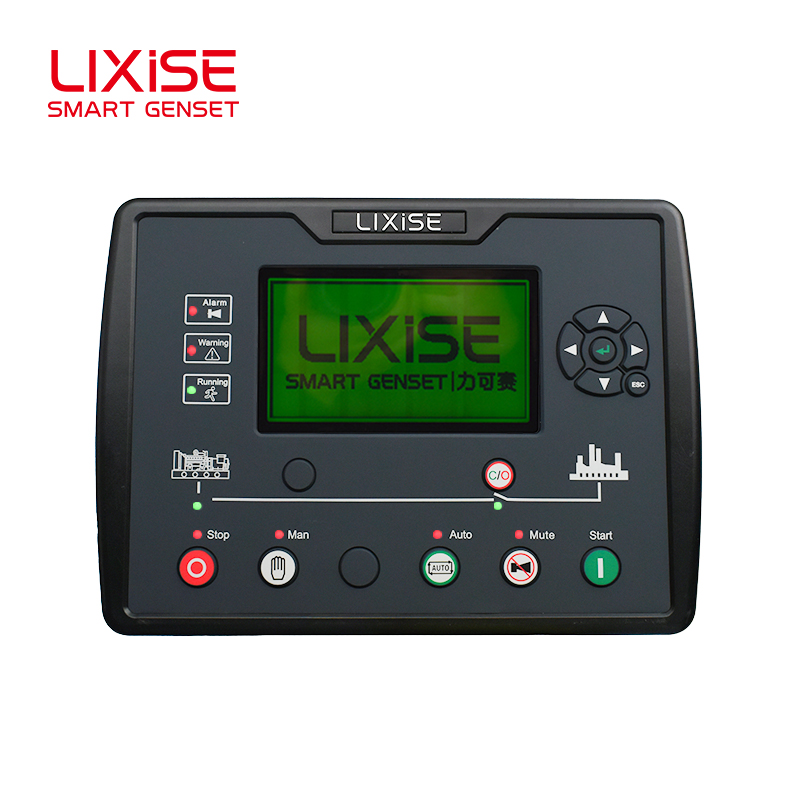
The LXC6610BC genset controller from LIXISE addresses this gap through comprehensive multi-language support spanning Chinese, English, Spanish, and Russian interfaces. This capability represents more than interface translation—it reflects deep understanding of global deployment requirements and operational realities.
Manufactured by Dongguan Tuancheng Automation Co., Ltd., the LXC6610BC integrates linguistic accessibility into its core control architecture. Operators can switch between languages through intuitive menu navigation, ensuring local technicians interact with familiar terminology regardless of geographic location. This design philosophy eliminates the cognitive overhead of working in non-native languages during high-pressure situations, such as emergency power restoration or fault diagnosis.
The technical foundation supporting this multi-language capability demonstrates sophisticated software architecture. Parameter descriptions, alarm messages, and operational prompts maintain technical accuracy across all supported languages, ensuring terminology consistency for voltage thresholds, frequency ranges, and protection logic. This precision prevents the ambiguity that often plagues translated industrial documentation, where equivalent terms may carry different technical implications across languages.
Operational Advantages in International Deployment
For generator set manufacturers and system integrators serving global markets, linguistic compatibility delivers tangible operational benefits. The LXC6610BC's multi-language interface reduces commissioning complexity in international projects. Installation teams can configure parameters using their preferred language during setup, while end-users operate the system in local languages—eliminating the traditional handoff challenges between installation contractors and facility operators.
This flexibility proves particularly valuable in emergency backup scenarios where response speed determines outcome quality. When utility grid failures trigger automatic generator startup, operators need immediate comprehension of system status and fault conditions. The LXC6610BC's localized alarm messages enable faster diagnosis without requiring translation resources or bilingual personnel, directly improving mean time to recovery.
The controller's one-key start/stop functionality combined with multi-language prompts streamlines operator training across international facilities. Standardized procedures become genuinely standardized when interface languages adapt to local teams rather than forcing linguistic conformity. This approach reduces training duration and improves knowledge retention, as personnel engage with technical concepts in their native languages.
Technical Integration Beyond Language
The LXC6610BC's linguistic capabilities complement its broader technical architecture designed for reliable backup power management. The controller employs automated starting logic with multiple attempt sequences and success verification, preventing starter motor damage from excessive cranking. Real-time monitoring of oil pressure, water temperature, and battery voltage provides comprehensive equipment protection, with all alerts and status messages displayed in the operator's selected language.
Built-in sensor diagnostics detect open and short circuit conditions, generating localized alarm messages that facilitate rapid troubleshooting. This integration ensures that diagnostic capabilities remain accessible regardless of language barriers, maintaining operational efficiency across diverse deployment environments.
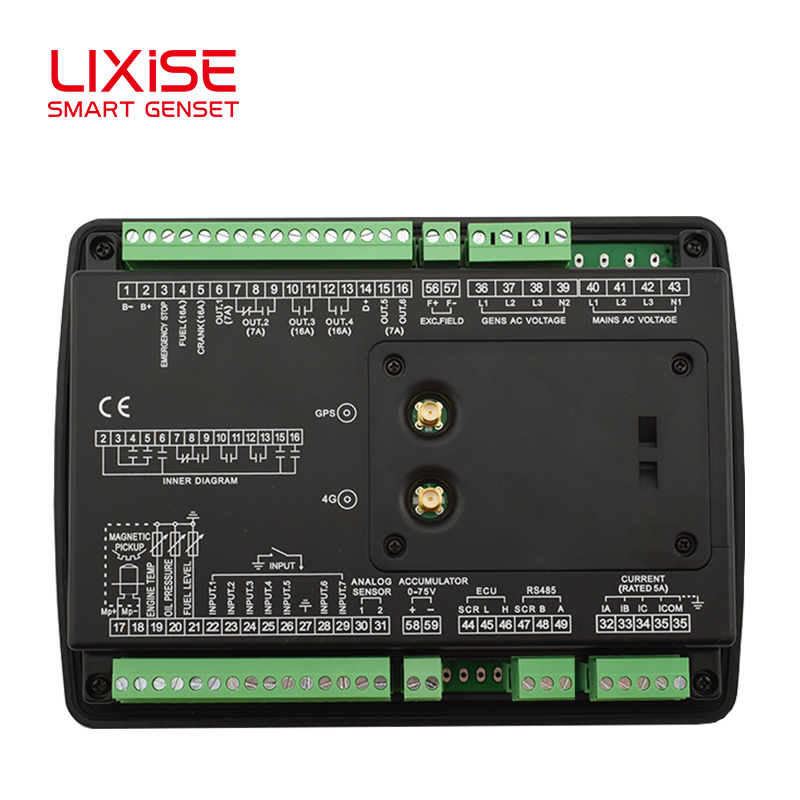
The panel-mounted design with standardized 185×139mm cutout dimensions simplifies physical installation, while the software's language flexibility addresses the human interface component. This dual approach—mechanical standardization combined with linguistic adaptability—exemplifies practical internationalization strategy.
Ecosystem Compatibility for Global Markets
Language support extends beyond the controller interface to encompass broader system integration requirements. The LXC6610BC supports multiple power supply configurations including three-phase four-wire, three-phase three-wire, single-phase, and two-phase systems, accommodating the electrical standards variations found across international markets. This electrical flexibility parallels the linguistic adaptability, creating comprehensive market readiness.
For industrial facility operators managing equipment from multiple manufacturers, the controller's compatibility with various generator configurations reduces inventory complexity. The multi-language interface ensures this technical versatility remains accessible to local maintenance teams without requiring specialized linguistic training.
Strategic Implications for International Power Infrastructure
As organizations expand power infrastructure across borders, the cumulative impact of language-accessible control systems becomes strategically significant. The LXC6610BC enables consistent operational standards across geographically distributed facilities while respecting local linguistic requirements. This balance between standardization and localization addresses a fundamental tension in global infrastructure management.
The availability of Spanish language support specifically targets growing markets across Latin America, where industrial expansion often outpaces specialized bilingual workforce development. Similarly, Russian language capability addresses extensive industrial infrastructure across Eastern Europe and Central Asia, where local language operation remains preferred for reliability-critical systems.
Technical support accessibility benefits equally from multi-language implementation. When operators can document issues and describe system behavior in native languages, remote diagnostic support becomes more effective. This linguistic alignment reduces miscommunication risk during troubleshooting, improving first-time fix rates and reducing extended downtime.
Future-Proofing Through Linguistic Investment
The LXC6610BC's multi-language architecture represents forward-looking design philosophy recognizing that industrial equipment lifespans often exceed decades. As facilities change ownership, expand into new markets, or integrate acquired operations, the ability to reconfigure interface languages without hardware changes provides lasting value. This adaptability protects initial capital investments while supporting evolving organizational structures.
For power system integrators and generator set manufacturers, offering genuinely multilingual solutions differentiates capabilities in competitive international tenders. The LXC6610BC's comprehensive language support, backed by LIXISE's technical infrastructure and Dongguan Tuancheng Automation's manufacturing consistency, delivers the documentation and interface accessibility increasingly specified in global procurement requirements.
In the specialized domain of backup power and emergency generation, where system reliability directly impacts operational continuity, eliminating language barriers transforms good technical design into genuinely accessible solutions. The LXC6610BC demonstrates that international market success requires attention to human factors alongside electrical specifications—recognizing that the most sophisticated control algorithms remain ineffective if operators cannot confidently interact with system interfaces during critical moments.
https://dgfeirui.en.alibaba.com/
Dongguan Feirui Electronics Co.,Ltd.
About Author