For packaging converters, retail brands, and e-commerce sellers sourcing lightweight wrapping tissue, one of the most common technical questions is how MF tissue paper differs from MG tissue paper, and which type fits a given packaging scenario. Sinoway Packaging, operating as part of Sinoway Packaging Group Limited, manufactures both finishes as part of its Solid Color MF & MG Tissue Paper product line, giving buyers a direct point of comparison based on documented product specifications rather than generic claims.
What MF Tissue Paper Is Designed For
MF tissue refers to a double-sided even finish wrapping paper. Its defining characteristic is that both sides of the sheet share uniform smoothness, which eliminates the need for front/back sorting during converting operations. This is a meaningful advantage for packaging lines that run at speed, since operators and machines do not need to check orientation before folding or wrapping.
Beyond handling convenience, MF tissue offers a soft drape and a semi-transparent effect, which makes it suitable for applications where a gentle, airy presentation is preferred over a stiff or glossy look. The paper also delivers stable ink absorption, meaning printed logos or patterns are evenly received across the sheet without blotching. In terms of processing performance, MF tissue folds well and produces low lint, which keeps dust and fiber shedding to a minimum during automatic wrapping and interleaving.
What MG Tissue Paper Is Designed For
MG tissue, by contrast, is a single-sided glossy type. One side of the sheet is high gloss while the reverse is matte. This two-sided contrast is intentional: the glossy side is formulated to deliver bright, vivid printing results, while the matte reverse is optimized for stronger ink absorption. This split-function design means MG tissue is often chosen when a visibly premium printed surface is required on the outward-facing side of the wrap.
MG tissue also brings higher stiffness and greater tensile strength compared to MF tissue. This added structural strength makes it a better fit for automatic packing environments, where the paper must withstand mechanical tension, folding pressure, and repeated handling without tearing.
Key Differences at a Glance
- Side uniformity: MF has two identical smooth sides; MG has one glossy side and one matte side, so front/back orientation must be tracked during use.
- Visual effect: MF produces a soft, semi-transparent drape; MG produces a brighter, higher-contrast glossy appearance on one face.
- Mechanical strength: MG offers higher stiffness and tensile strength, making it more suited to high-speed automatic packaging; MF is softer and more pliable.
- Ink behavior: MF absorbs ink stably and evenly across both sides; MG separates functions, with the glossy side built for bright printing and the matte side for ink absorption.
- Lint and folding: MF is engineered for good folding performance and low lint, which benefits garment, shoe, and leather goods interleaving where surface contact is sensitive.
Shared Technical Foundation
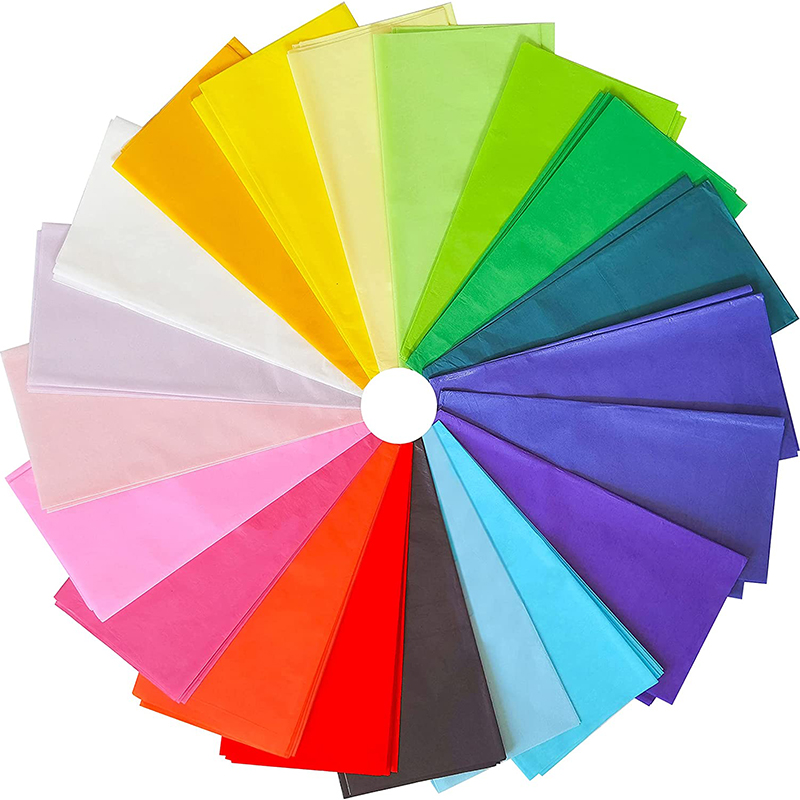
Despite their different finishes, both MF and MG tissue papers in Sinoway Packaging's line share a common technical foundation. Available grammage ranges from 14g to 30g, keeping both types in the lightweight category suitable for interleaving and wrapping rather than structural packaging. The base pulp can be either virgin wood pulp or recycled pulp, giving buyers flexibility depending on sustainability requirements or budget constraints. Stock colors include white, cream, and natural kraft, with custom Pantone matching available, and a color-fixed version offered for applications where bleed prevention is a priority.
On the production side, both finishes are supported by the same manufacturing scale: jumbo MF/MG tissue paper rolling capacity of 11,000–18,000 meters/day, custom flat sheet precision cutting at 400,000–700,000 sheets/day, and tissue paper with flexo logo printing at 220,000–380,000 sheets/day. Standard lead time is 4–8 working days, with new custom color development requiring extra time. Delivery is available as industrial jumbo rolls or custom flat sheets, with bulk wholesale options covering custom color, sheet size, and printing.
Addressing Common Pain Points
Buyers evaluating lightweight tissue paper often raise specific concerns, and the MF/MG product line is engineered against each of them. The risk of front/back identification errors is effectively removed in MF tissue due to its double-sided consistency, while MG tissue is designed so its glossy and matte sides serve distinct, predictable purposes rather than causing confusion. Poor printing and ink mottling is addressed through stable ink absorption in MF and the dedicated matte ink-absorbing side in MG. Tearing during automatic wrapping is mitigated by MG's higher stiffness and tensile strength, which is specifically suited to higher-speed, higher-tension packaging lines. Color bleeding onto wrapped goods is managed through the optional color-fixed version available across the product line. Finally, concerns about batch gloss difference and paper dust are addressed through controlled manufacturing processes that maintain low lint output and consistent finish quality across production runs.
Where Each Type Fits Best
Given these characteristics, MF tissue tends to suit scenarios where soft handling, double-sided usability, and gentle drape matter most, such as retail packaging interleaving, gift box lining, and wrapping for garments, shoes, and leather goods. MG tissue, with its added stiffness and bright glossy printing surface, is better aligned with flower packaging and flexo logo printing scenarios where a visibly polished outward presentation combined with durability under automated handling is required.
Why This Matters for Sourcing Decisions
For packaging converters, printers, and brand teams sourcing tissue paper at scale, understanding the structural and functional distinction between MF and MG finishes prevents mismatched specifications and reduces waste from reprocessing or returns. Sinoway Packaging's Solid Color MF & MG Tissue Paper line is positioned within its broader Tissue Paper category, which also includes printed, hot stamping, metallic, pearl, and fluorescent tissue variants, allowing buyers to select a base MF or MG structure first and then layer on decorative processes as needed. This structured approach to product differentiation—rooted in documented grammage ranges, pulp options, color offerings, and production capacities—gives sourcing teams a clear, fact-based reference point when comparing lightweight wrapping tissue options for retail, e-commerce, and gift packaging applications across the Industries Covered by paper packaging manufacturing, including luxury gift packaging and retail, cosmetics and beauty packaging, and holiday and seasonal goods.
In summary, the choice between MF and MG tissue paper comes down to whether a packaging operation prioritizes double-sided handling simplicity and soft drape, or a higher-stiffness, glossy-surfaced sheet suited to automated, high-speed wrapping lines. Both finishes are manufactured under the same grammage, pulp, and lead-time framework, making it straightforward for buyers to switch between or combine them based on the specific wrapping task at hand.
www.sinowaypackaging.com
sinoway packaging
About Author