Understanding the Role of Image Intensifier Tubes in Modern Night Vision
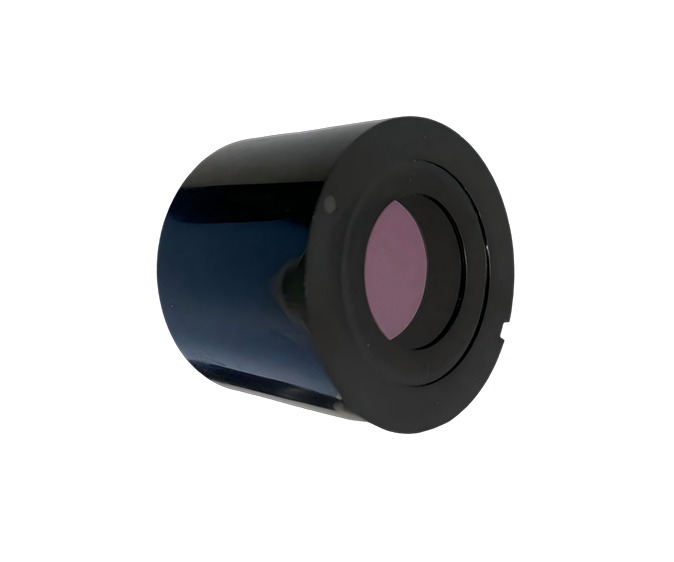
In night operations—whether for dismounted infantry, special operations forces, or security personnel—the image intensifier tube (IIT) is the technological core that determines system performance. Unlike passive optical components, an IIT amplifies ambient light photons into a visible image through a series of electron-optical stages, enabling operators to navigate, recognize targets, and engage threats under starlight or completely moonless conditions. The quality, sensitivity, and reliability of the IIT directly govern how far and how clearly a user can see.
JINZHUO has developed a portfolio of Super Second-Generation (Super Gen 2) and Generation 3 (Gen 3) image intensifier tubes designed to meet the demands of both night vision device manufacturers and end-users in defense and security contexts. This review examines the technical specifications, design philosophy, and operational suitability of four JINZHUO IIT models: the ATOM-G2P-E245GC, ATOM-G2P-E245GB, ATOM-G2P-E245GA, and the Generation 3 Image Intensifier.
JINZHUO Super Second-Generation IITs: The ATOM-G2P Series
All three Super Gen 2 tubes in the ATOM-G2P series share a common architectural foundation: a dual proximity-focused electron optical system paired with an S25+ photocathode offering an extended infrared spectral response from 380 to 900 nm. This configuration allows the tubes to capture both visible light and near-infrared wavelengths, broadening their operational utility across diverse lighting environments.
Each tube features a maximum weight of 85 g and maximum power consumption of 75 mW, reflecting JINZHUO's design priority on compact, low-power components suitable for lightweight head-mounted and handheld night vision systems. The operating voltage range of 2.2–3.4 V is consistent across all three models, and minimum reliability is rated at 10,000 hours across the series—a figure that speaks to long-term operational dependability.
Configurable options across the ATOM-G2P series include:
- Phosphor screen: P43/P45, customizable
- Output window: Customizable
- Electrical connection: Contact pads or leads
- Housing: Plastic or metal
This level of modularity makes these tubes adaptable to a wide range of OEM night vision device designs.
ATOM-G2P-E245GC: Entry-Level Super Gen 2 Performance
The ATOM-G2P-E245GC establishes the baseline performance tier within the ATOM-G2P series. Its minimum quality factor (FOM) of 1400 reflects a solid starting point for Super Gen 2 applications. Key measured parameters include:
- Sensitivity at 2856K: minimum 700 µA/lm
- Radiant sensitivity at 800 nm: minimum 55 mA/W
- Radiant sensitivity at 850 nm: minimum 35 mA/W
- Resolution: minimum 60 lp/mm
- Signal-to-noise ratio: minimum 22
- Brightness gain: 8,000–10,000 cd/m²/lx
- Operating current maximum: 25 mA
- Power supply: Non-gated
The non-gated power supply in the E245GC is a notable distinction. While gated operation offers additional protection against bright-light events, the non-gated configuration is well-suited for controlled operational environments where cost-efficiency and simplicity are prioritized.
ATOM-G2P-E245GB: Mid-Tier Resolution and Sensitivity
The ATOM-G2P-E245GB steps up performance meaningfully. Its minimum FOM of 1600, minimum resolution of 64 lp/mm, and minimum SNR of 25 represent a clear improvement over the E245GC. Spectral sensitivity climbs to a minimum of 800 µA/lm at 2856K, and radiant sensitivity at 850 nm rises to a minimum of 50 mA/W—relevant for systems relying heavily on 850 nm infrared illuminators.
Critically, the E245GB features a gated power supply, enabling automatic bright-light suppression that protects both the tube and the operator's adapted vision. Brightness gain expands to 8,000–12,000 cd/m²/lx, and maximum operating current is 35 mA. This model is well-suited for night vision manufacturers seeking a balance of performance, protection, and adaptability.
ATOM-G2P-E245GA: High-Performance Tier
The ATOM-G2P-E245GA represents the highest performance level in the Super Gen 2 series. With a minimum FOM of 1800, minimum sensitivity of 1,000 µA/lm at 2856K, and radiant sensitivities of 85 mA/W at 800 nm and 75 mA/W at 850 nm, this tube significantly extends detection and recognition range in low-light conditions.
Resolution maintains the 64 lp/mm minimum of the E245GB, while the SNR climbs to a minimum of 28—an important metric for reducing visual noise in extremely low-light environments. Brightness gain reaches 10,000–12,000 cd/m²/lx, and maximum output brightness extends to 4–10 cd/m². Like the E245GB, the E245GA uses a gated power supply. This tube is positioned for defense-grade applications requiring robust photon sensitivity and dynamic range.
Generation 3 Image Intensifier: GaAs Photocathode Technology
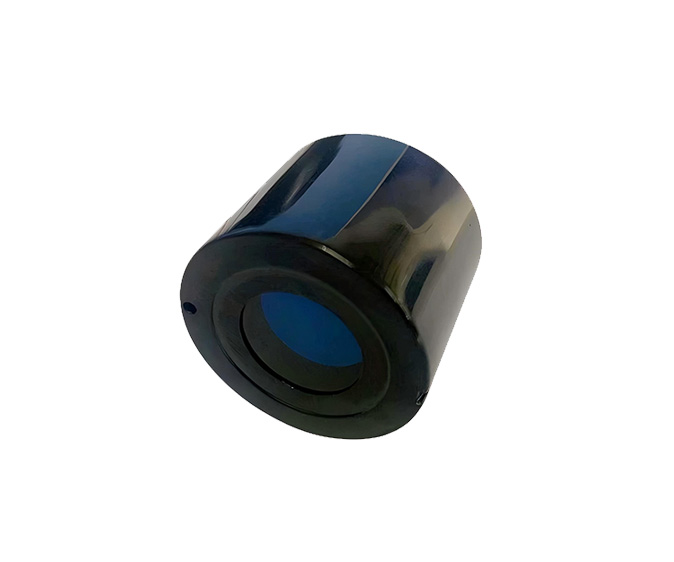
The Generation 3 Image Intensifier from JINZHUO transitions to a fundamentally different photocathode technology: a transmissive high quantum efficiency III-V GaAs semiconductor photocathode paired with a long-life, low-noise, high-performance ALD-MCP (Atomic Layer Deposition Microchannel Plate). This combination drives significantly higher sensitivity and lower noise compared to Super Gen 2 designs.
The Gen 3 tube is offered in three performance tiers, with FOM minimums of 1600, 1800, and 2000 respectively. The spectral response range of 500–900 nm reflects the GaAs photocathode's characteristic response curve. Sensitivity at 2856K scales from 1,500 to 2,000 µA/lm across tiers—substantially above Super Gen 2 levels.
Additional Gen 3 performance data by tier:
- Radiant sensitivity at 880 nm: minimum 60 / 90 / 90 mA/W
- Resolution: minimum 64 / 64 / 68 lp/mm
- SNR: minimum 25 / 28 / 30
- Brightness gain: 10,000–15,000 / 15,000–25,000 / 15,000–25,000 cd/m²/lx
- Maximum output brightness: 4–10 / 6–12 / 6–12 cd/m²
- Reliability: minimum 7,500 / 10,000 / 10,000 hours
The Gen 3 tube supports automatic gated gain adjustment and offers configurable phosphor type, external dimensions, EMC, electrical interface, and output surface form. Structural configurations include 111-R00 type (erect image), 215-R40 type (inverted image), and 245-R00 type (inverted image)—covering the full range of head-mounted, handheld, and gun sight applications. Operating voltage is 2.0–3.4 V with a maximum operating current of 25 mA and maximum power consumption of 75 mW.
Selecting the Right Tube: Operational Considerations
Choosing between JINZHUO's Super Gen 2 and Gen 3 IITs depends on several factors:
- Operational lighting environment: Gen 3's higher photocathode sensitivity (up to 2,000 µA/lm) provides meaningful advantages in truly moonless, light-free conditions. Super Gen 2 models remain effective across a wide range of ambient light scenarios.
- System weight and power budget: All four tubes maintain a maximum weight of 85 g and maximum power consumption of 75 mW, placing no differential burden on system design.
- Bright-light protection: The E245GB, E245GA, and Gen 3 all feature gated power supplies for automatic protection; the E245GC is non-gated.
- Device application: Gen 3 structural configurations explicitly support gun sight integration, while the ATOM-G2P series is designed for broader OEM device adaptation.
Conclusion
JINZHUO's image intensifier tube portfolio spans a well-structured performance range from the ATOM-G2P-E245GC baseline Super Gen 2 to the multi-tier Generation 3 GaAs-based design. Consistent low weight (≤85 g), low power (≤75 mW), 10,000-hour reliability in most configurations, and broad configurability make these tubes suitable for defense and security-oriented night vision device manufacturers. The Gen 3 line's ALD-MCP technology and expanded brightness gain range address demanding low-light operational requirements, while the ATOM-G2P series provides scalable Super Gen 2 options for cost-sensitive or weight-critical applications.
https://www.infraredjz.com/
HONG KONG JINZHUO INDUSTRY LIMITED
About Author