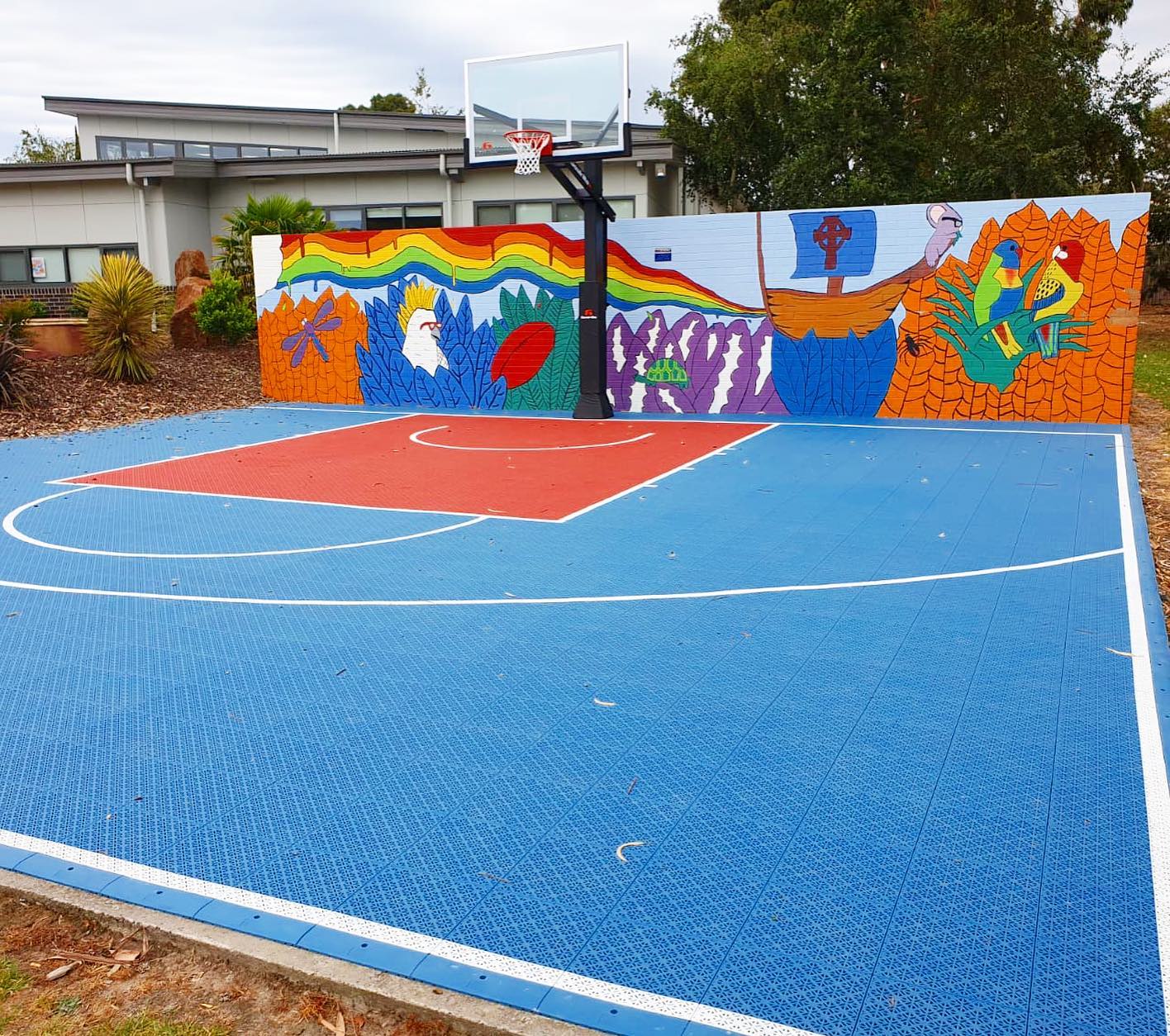
The evolution of outdoor basketball court construction has reached a pivotal moment. Traditional approaches relying on concrete or asphalt surfaces have long dominated the landscape, yet these methods consistently present challenges that impact both player safety and project economics. Modern outdoor basketball courts now demand solutions that balance professional-grade performance with practical installation requirements and long-term durability.
Understanding the Limitations of Traditional Court Construction
Conventional outdoor basketball court installations typically involve pouring concrete or laying asphalt as the foundation, followed by applying acrylic coatings or installing artificial grass systems. These approaches present several fundamental challenges that affect project viability and user experience.
Hard concrete and asphalt surfaces create significant injury risks due to their rigid composition. When players make quick directional changes, jump for rebounds, or experience falls, these unforgiving surfaces transfer maximum impact force directly to joints and bones. The medical research community has documented increased rates of knee, ankle, and lower back injuries associated with prolonged play on hard outdoor surfaces.
Financial considerations add another layer of complexity. Traditional outdoor basketball court construction projects typically require investments ranging from $20,000 to $50,000, depending on site conditions and surface specifications. These costs encompass site preparation, material procurement, labor-intensive installation processes, and initial surface treatments. For community organizations, schools, or homeowners seeking to create quality playing spaces, these financial barriers often prove prohibitive.
Maintenance demands create ongoing operational challenges. Acrylic coatings require periodic reapplication to maintain playing characteristics and appearance. Artificial grass systems need regular grooming, infill replenishment, and eventual replacement as synthetic fibers degrade under UV exposure and mechanical wear. Concrete surfaces develop cracks requiring repair, while asphalt installations need resurfacing as weather cycles cause deterioration.
The Modular Interlocking Flooring Revolution
A fundamentally different approach has emerged in outdoor basketball court construction, driven by advances in polymer material science and engineered design principles. Modular interlocking sports flooring systems represent a departure from traditional monolithic surface installations, offering performance characteristics that address longstanding industry challenges.
These systems utilize polypropylene-based tiles engineered with sophisticated structural designs. Rather than requiring extensive site preparation, heavy equipment, and specialized labor, modular systems install through precise interlocking mechanisms that create unified playing surfaces without adhesives or permanent anchoring.
The engineering principles underlying these systems focus on replicating and enhancing the performance characteristics of professional indoor courts while withstanding outdoor environmental exposure. Advanced formulations incorporate UV-stable compounds and weather-resistant additives that maintain material integrity across temperature ranges from -30°C to 80°C.
Performance Engineering for Athletic Applications
Modern outdoor basketball courts constructed with advanced modular systems achieve performance metrics that rival traditional installations while delivering distinct advantages in key areas.
Shock absorption technology represents a critical performance dimension. Elite modular systems incorporate specialized cushioning elements—some designs feature 50+ individual elastic cushions distributed across each tile's underside. These cushioning components compress during impact, absorbing kinetic energy that would otherwise transfer to players' joints and skeletal structures. This shock absorption mechanism reduces cumulative stress on knees and ankles during extended play sessions.
The most advanced systems utilize three-layer construction methodologies. The top layer provides traction characteristics optimized for basketball movements, with surface texturing that prevents slipping without creating excessive friction. The core layer delivers structural rigidity, maintaining dimensional stability under dynamic loads. The bottom cushioning layer functions as the primary shock-absorption component, compressing and rebounding to attenuate impact forces.
Ball rebound consistency serves as a fundamental performance indicator for basketball surfaces. Professional standards, including those established by FIBA (International Basketball Federation), specify rebound coefficients that ensure predictable ball behavior. Quality modular systems achieve ≥96% ball rebound coefficients, meeting or exceeding tournament requirements. This consistency results from precise material formulation and surface geometry that replicates the elastic properties of professional hardwood courts.
Surface traction optimization balances competing requirements. Players need sufficient grip to execute quick directional changes and sudden stops, yet excessive friction increases injury risk and inhibits fluid movement. Advanced modular surfaces incorporate thousands of precisely engineered surface features—some systems feature 5,000+ convex contact points per tile—that create optimal traction under varying conditions including moisture presence.
Real-World Application Validation
The practical viability of modular outdoor basketball court systems has been demonstrated across diverse application scenarios, from competitive tournament environments to residential installations.
Tournament organizers face unique logistical challenges when conducting multi-location events. Simon, organizer of a national 3x3 basketball tour, required portable surfacing that could be rapidly deployed across venues while maintaining consistent FIBA-standard performance parameters. The implementation of FIBA-approved modular flooring enabled the tour to achieve quick installation cycles at each location while ensuring uniform playing characteristics. This consistency proved essential for competitive equity, as players encountered identical surface performance regardless of venue.
Residential applications demonstrate the accessibility advantages of modern modular systems. Nate Chucta's pole barn court project in the United States required a reliable surface for a covered private court. After evaluating sample materials, the implementation of modular tiles provided a functional, high-performance surface without requiring specialized installation expertise or equipment. The project exemplified how homeowners can achieve professional-grade results through straightforward assembly processes.
John McDonald's outdoor court installation in Canada highlighted the practical benefits of modular systems in challenging climate conditions. The successful implementation, completed with minimal difficulty, demonstrated the weather-resilience characteristics built into advanced polymer formulations. Customer feedback emphasized both the straightforward installation process and responsive technical support throughout the project.
Ametrius Carter's backyard court construction in the United States focused on achieving desired playing characteristics while maintaining installation simplicity. The modular surface delivered satisfactory ball bounce performance while enabling assembly without professional assistance, demonstrating how modern systems democratize access to quality athletic facilities.
The ZSFloor Tech Approach to Modern Court Construction
Sichuan Zhongsu Polymer Materials Co., Ltd, operating under the ZSFloor Tech brand name, has established a specialized focus on modular interlocking sports flooring manufacturing. Founded in 2013, the company has developed expertise spanning 10-13 years in sports surface engineering, achieving annual production and sales volumes exceeding 3 million square meters across markets in the United States, Canada, Europe, South America, Africa, and Asia.
The company's technical capabilities center on material science and athletic performance engineering. A specialized research and development team has created product lines that address specific performance requirements across different sport applications and installation contexts.
The Super X three-layer sports flooring represents the company's tournament-grade offering, having achieved FIBA approval for competitive applications. The three-layer construction methodology assigns distinct functions to each structural component. The soft top layer provides traction while preventing slip-related injuries. The core layer delivers structural strength and dimensional stability. The cushioning layer absorbs impact forces, protecting joint health during prolonged physical activity.
This system incorporates several engineering innovations addressing practical deployment challenges. The patented "Safety Guard" fixing system securely anchors flooring to substrates for permanent installations, providing wind resistance and anti-shifting properties without compromising aesthetic appearance. Integrated expansion joints accommodate thermal expansion and contraction across the -30°C to 80°C operational temperature range, preventing surface buckling in outdoor environments. Pre-painted game lines eliminate on-site marking requirements, reducing setup complexity and accelerating deployment timelines.
Material selection emphasizes longevity and environmental resilience. The incorporation of premium BASF colorants and UV-stable formulations ensures the system maintains color integrity and structural properties throughout a 10-year warranty period, resisting fading and warping despite continuous outdoor exposure.
The Elite X product line targets residential backyard court applications, emphasizing safety enhancement and cost optimization. The system incorporates 50+ elastic cushions providing shock absorption and joint protection. Performance characteristics include a ≥96% ball rebound coefficient ensuring professional-grade athletic performance, while the anti-slip surface features 5,000+ convex points enhancing safety during play. The system enables DIY installation typically completed in under 2 hours, eliminating professional labor costs while providing professional-grade court surfaces at a fraction of traditional construction expenses.
ZSFloor Tech's manufacturing quality has been validated through multiple international certifications including FIBA approval, CE certification, and ISO certification. These credentials verify that products meet rigorous performance, safety, and quality management standards required for commercial and competitive athletic applications.
The company's service infrastructure includes a professional technical support team providing assistance within 12 hours on product specifications, court design consultation, installation guidance, and after-sales support. This service framework ensures customers receive comprehensive support throughout project planning, implementation, and operational phases.
Commercial partnerships with major athletic brands including Nike and Adidas for event activations demonstrate industry recognition of ZSFloor Tech's product quality and performance consistency in demanding commercial applications.
Economic Considerations in Modern Court Construction
The financial analysis of outdoor basketball court projects reveals substantial differences between traditional and modular construction approaches. Conventional installations requiring concrete pouring, curing, surface treatment, and line painting typically generate total project costs between $20,000 and $50,000. These expenses encompass site preparation, material procurement, specialized labor, equipment rental, and finishing treatments.
Modular interlocking systems offer factory-direct pricing typically ranging from $1 to $2.5 per square foot depending on product specifications and performance characteristics. A standard full-court installation (4,700 square feet) calculated at $2 per square foot generates material costs of approximately $9,400. The elimination of professional installation labor, specialized equipment requirements, and extensive site preparation reduces total project costs substantially compared to traditional construction approaches.
Maintenance cost differentials compound these initial savings. Modular systems require minimal ongoing maintenance—typically limited to periodic cleaning with standard equipment. Traditional surfaces need regular recoating, crack repair, resurfacing, or complete replacement as deterioration progresses. Over a 10-15 year operational lifespan, cumulative maintenance expenses for traditional installations can approach or exceed initial construction costs, while modular systems protected by extended warranties incur negligible maintenance expenditures.
Installation and Deployment Considerations
The installation methodology for modular interlocking systems represents a fundamental departure from traditional construction processes. Conventional court building requires site excavation, substrate compaction, concrete pouring or asphalt laying, curing periods, surface treatment application, and line marking—a sequence demanding specialized equipment, skilled labor, and extended project timelines often spanning multiple weeks.
Modular systems enable DIY installation by eliminating technical complexity. The interlocking tile design creates self-aligning connections requiring no adhesives, fasteners, or specialized tools. Homeowners and facility managers with no construction experience successfully complete installations by following straightforward assembly instructions. Standard residential court projects are commonly completed in under 2 hours with basic preparation.
For permanent installations requiring enhanced stability, systems like ZSFloor Tech's Super X incorporate fixing mechanisms that anchor tiles to substrates while maintaining removability if relocation becomes necessary. This flexibility supports both portable tournament applications and fixed facility installations within a unified product platform.
Temperature accommodation represents another practical consideration addressed through engineering design. Integrated expansion joints allow individual tiles to expand and contract with temperature fluctuations without creating surface distortions or separations. This self-accommodating characteristic prevents the buckling and cracking that plague rigid traditional surfaces in climates experiencing significant seasonal temperature variation.
Environmental Durability and Longevity
Outdoor basketball courts face continuous environmental exposure including UV radiation, precipitation, temperature cycling, and mechanical wear from athletic use. Material performance under these conditions directly determines operational lifespan and total cost of ownership.
Advanced polypropylene formulations incorporate UV-stable compounds that resist photodegradation—the molecular breakdown caused by ultraviolet radiation exposure. Traditional outdoor surfaces often exhibit color fading, surface chalking, and material embrittlement as UV exposure accumulates. Quality modular systems maintain color integrity and material properties throughout extended outdoor exposure, with manufacturers like ZSFloor Tech providing 10-year warranties against fading and warping.
Moisture resistance differentiates polymer-based systems from some traditional approaches. Concrete absorbs moisture leading to freeze-thaw damage in cold climates, while certain coatings delaminate or blister when moisture becomes trapped beneath surface films. Polypropylene tiles resist moisture absorption, maintaining dimensional stability and surface integrity regardless of precipitation exposure or humidity levels.
The permeability characteristics of modular systems facilitate water drainage, preventing surface pooling that creates unsafe playing conditions and accelerates material degradation. The gaps inherent in interlocking tile designs allow water to drain through the surface layer, maintaining playability shortly after precipitation events that would render traditional solid surfaces unusable until drying occurs.
Conclusion: The Future of Outdoor Basketball Court Development
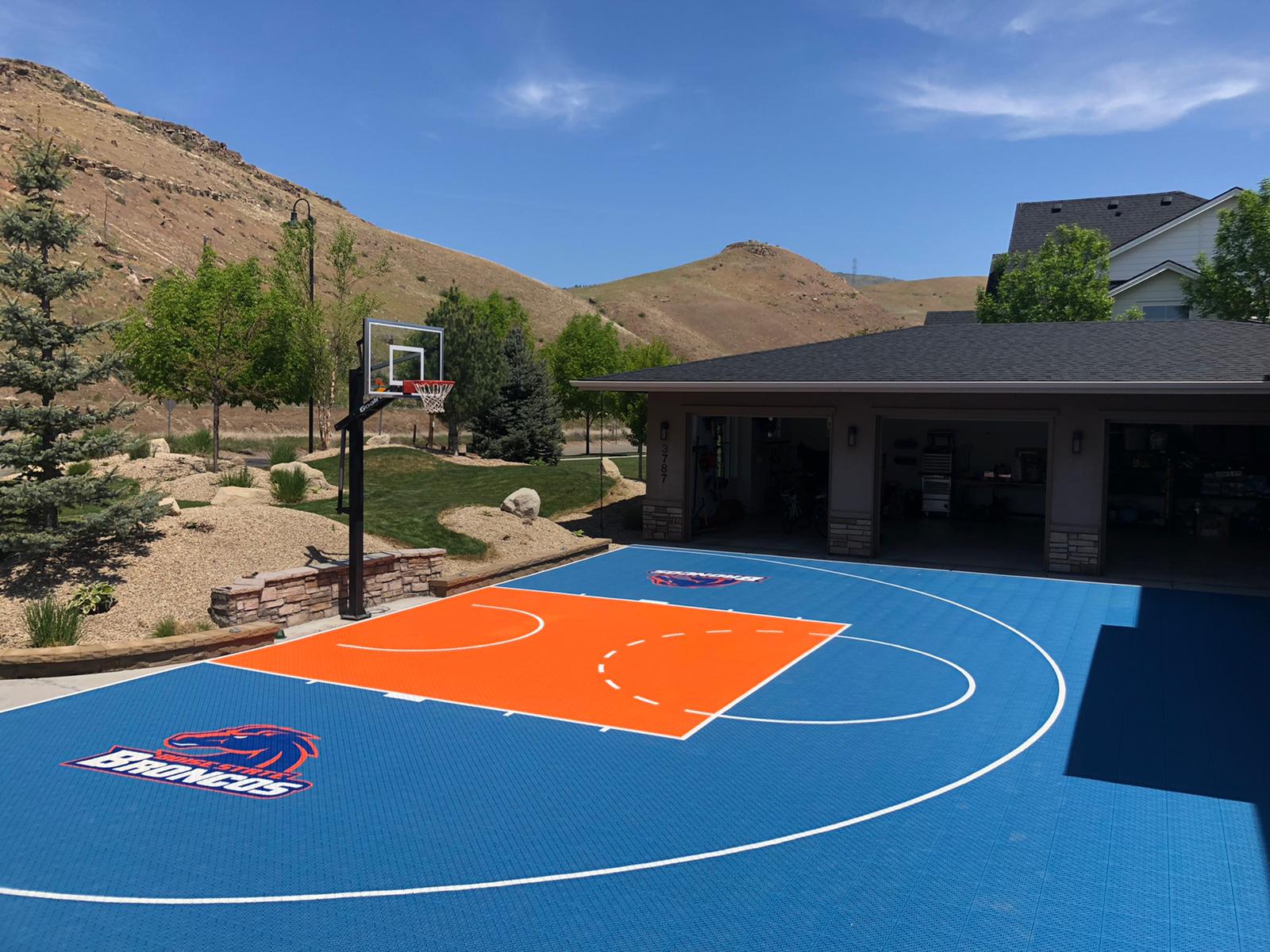
The outdoor basketball court construction landscape has fundamentally shifted as modular interlocking flooring technologies mature and gain market acceptance. These systems address the core limitations of traditional approaches—injury risk from hard surfaces, prohibitive installation costs, complex maintenance requirements, and limited deployment flexibility.
The combination of advanced material science, sophisticated structural engineering, and manufacturing precision has created products delivering professional-grade athletic performance while remaining accessible to residential users, community organizations, and commercial facilities. Validation through competitive tournament use, international certifications, and diverse real-world installations demonstrates that modular systems represent not merely an alternative to traditional construction, but a superior approach across multiple performance dimensions.
Organizations and individuals planning outdoor basketball court projects now have access to solutions that were technologically infeasible a decade ago—surfaces that protect player health through shock absorption, maintain consistent performance across environmental extremes, install without specialized expertise, require minimal maintenance, and achieve all these objectives at a fraction of traditional construction costs. This convergence of performance, practicality, and economics positions modular interlocking flooring systems as the definitive choice for modern outdoor basketball court development.
ZSFloor Tech
About Author