In the world of automotive lighting systems, the fog lamp wiring harness plays a critical but often overlooked role. It is the essential link between a vehicle's electrical power and the fog lamps that ensure visibility in low-visibility conditions such as fog, heavy rain, or snow. While fog lamps themselves attract the most attention, it is the wiring harness that guarantees they perform safely, efficiently, and reliably. A high-quality fog lamp wiring harness is far more than a bundle of wires—it is an engineered system designed to manage current flow, resist heat and vibration, and protect against moisture and corrosion. Its design determines how well the lighting system performs under harsh road and weather conditions. This article Xincheng focuses on two core aspects that define a superior fog lamp wiring harness: manufacturing & quality control and performance & installation engineering. Together, these two pillars ensure that every wire, connector, and terminal delivers both reliability and long-term stability.
Fog Lamp Wiring Harness Manufacturing & Quality Control: Crafting Durability Through Precision Engineering
Behind every durable fog lamp wiring harness lies a sophisticated manufacturing process combining advanced materials, automation technology, and strict inspection standards. Since the harness operates in an environment exposed to vibration, heat, and moisture, its production demands flawless attention to detail.
1. Material Selection and Conductor Design
The foundation of any fog lamp wiring harness begins with the choice of materials. Conductors are typically made from high-purity oxygen-free copper to ensure low electrical resistance and efficient current transmission. Some high-end applications use tinned copper to prevent oxidation and maintain conductivity over time.
The insulation layer plays an equally vital role. Manufacturers often use cross-linked polyethylene (XLPE), polyvinyl chloride (PVC), or thermoplastic elastomer (TPE) to resist high temperatures and oil exposure. The insulation must balance flexibility and toughness, allowing the harness to bend and move with the vehicle's body without cracking or degrading.
Moreover, the external jacket must protect against abrasion and environmental damage. UV-resistant coatings and corrugated split tubing are frequently applied to enhance mechanical protection and ensure the fog lamp wiring harness survives years of use in demanding road conditions.
2. Connector and Terminal Engineering
Connectors are the bridge between the wiring harness and the fog lamp assembly. Precision in connector manufacturing ensures secure contact and waterproof sealing. Automotive-grade connectors, typically rated to IP67 or higher, are designed to resist dust, water, and road salt intrusion.
Each fog lamp wiring harness undergoes terminal crimping using automated presses that control pressure and alignment within micrometer tolerances. A single imperfect crimp can result in voltage drop or intermittent light failure, which is why 100% pull-force testing and optical crimp inspections are standard in high-end harness production lines.
For enhanced safety, manufacturers also incorporate secondary locking systems and anti-vibration designs within connectors, ensuring consistent electrical contact even during prolonged exposure to shock and road movement.
3. Multi-Layered Quality Control and Testing
To meet global automotive standards such as ISO 9001, IATF 16949, and E-mark certifications, each fog lamp wiring harness must pass through multiple quality inspection stages:
-
Continuity Testing: Ensures proper electrical flow through every wire and terminal.
-
Insulation Resistance Test: Verifies that no leakage current occurs under voltage stress.
-
High-Temperature Endurance Test: Simulates engine-bay heat conditions up to 125°C.
-
Water Immersion and Salt Spray Tests: Evaluate corrosion and sealing performance.
-
Dynamic Flex Testing: Simulates vehicle vibration and repeated movement cycles.
Manufacturers also use automated vision systems to inspect wire routing, labeling, and color coding, guaranteeing that each fog lamp wiring harness matches the vehicle's OEM specifications perfectly.
4. Assembly Precision and Traceability
Each wiring harness is assembled following standardized routing diagrams and harness boards. Automated labeling systems assign barcodes to every unit, ensuring full traceability from raw materials to final shipment.
This meticulous documentation allows any production batch of fog lamp wiring harnesses to be traced back to its original component source—critical for maintaining accountability and supporting global automotive OEM partnerships.
Through such rigorous manufacturing discipline, the wiring harness becomes not merely a product but a precisely engineered safety component.
Fog Lamp Wiring Harness Performance Engineering: Turning Electrical Power into Lighting Reliability
Manufacturing quality defines the foundation, but true success of a fog lamp wiring harness is proven in its performance and installation. An effective harness must deliver stable electrical power to the fog lamps, withstand the mechanical and thermal stresses of daily driving, and ensure easy, error-free installation by technicians or vehicle owners.
1. Electrical Performance and System Compatibility
The performance of a fog lamp wiring harness depends on its ability to maintain stable voltage and current under all operating conditions. Engineers calculate conductor gauge (AWG size) based on the wattage and amperage of the fog lamp, ensuring minimal voltage drop even when both lamps operate simultaneously.
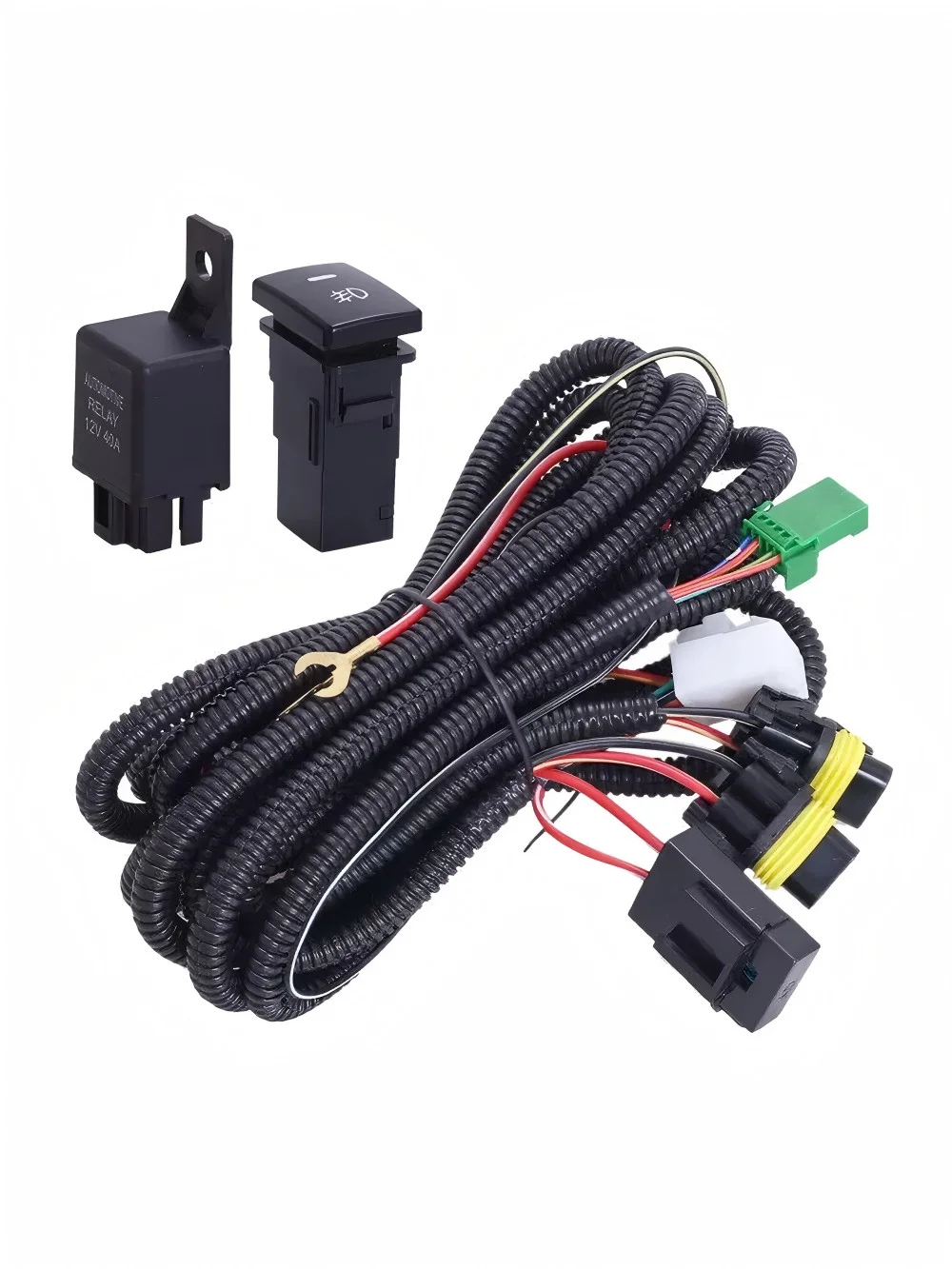
Advanced harnesses often integrate relay and fuse protection circuits directly within the assembly. The relay prevents overcurrent by isolating the high-power circuit from the vehicle's switch line, while the inline fuse provides an additional safety barrier against short circuits.
Such integrated protection not only enhances safety but also ensures that the fog lamp wiring harness maintains consistent brightness output and prolongs lamp lifespan.
2. Mechanical Strength and Environmental Resistance
Beyond electrical stability, mechanical endurance defines real-world performance. A vehicle's underbody and front bumper areas are exposed to extreme conditions—mud, gravel impact, water splashes, and constant vibration.
To withstand these, the fog lamp wiring harness is wrapped with flame-retardant corrugated tubing, heat-shrink sleeves, and waterproof connectors. The routing design avoids sharp edges and high-temperature zones near the engine to prevent insulation wear or melting.
Vibration dampening clips and cable ties are strategically placed during installation to minimize strain on joints and prevent chafing. Each of these details ensures that the wiring harness remains secure and operational through years of road abuse.
3. Installation Design and Compatibility Optimization
Ease of installation is another key performance metric. A well-engineered fog lamp wiring harness should be plug-and-play, with labeled connectors that fit directly into OEM sockets without modification.
Design engineers carefully plan wire lengths, connector positions, and branching angles according to the vehicle model to eliminate guesswork during installation.
Professional-grade harness kits include:
-
Relays and Fuses: Pre-mounted in waterproof housings.
-
Switch Harnesses: Designed for dashboard integration.
-
Ground Terminals: Pre-crimped and labeled for quick connection.
-
Routing Instructions: Color-coded diagrams for precise placement.
This meticulous design minimizes installation time and ensures correct polarity, preventing electrical faults that could otherwise damage lighting systems.
4. Thermal Management and Safety Assurance
Since fog lamps generate heat during operation, thermal safety is essential. The fog lamp wiring harness must resist heat transfer from both the bulbs and the surrounding environment. Engineers perform thermal simulations to confirm that insulation and terminals maintain integrity under prolonged exposure.
High-quality harnesses also include temperature-resistant sleeves or silicone seals around connectors, ensuring insulation even when temperatures fluctuate drastically—from winter frost to engine heat.
These engineering measures guarantee not only performance stability but also user safety and regulatory compliance in global automotive markets.
A fog lamp wiring harness may appear simple, yet it represents the culmination of meticulous engineering and rigorous quality assurance. It must endure mechanical vibration, weather exposure, electrical load, and thermal stress—while remaining perfectly reliable every time the driver switches on the fog lamps. Through manufacturing precision and quality control, manufacturers ensure that each harness delivers consistent performance, safety, and durability. Meanwhile, performance and installation engineering ensures seamless integration, easy setup, and long-term operational stability. In the automotive world, small components make a big difference. The fog lamp wiring harness is not just a supporting accessory—it is the unseen foundation that guarantees lighting performance, electrical safety, and driving confidence in every journey.
https://www.xcwireharness.com/Fog-lamp-wiring-harness
www.xcwireharness.com
Dongguan Xincheng Wire Harness Technology Co., Ltd
About Author