Section 1: Industry Background + Problem Introduction
The modern manufacturing landscape faces unprecedented challenges in resistance welding technology. As automotive and electronics industries push boundaries with high-strength steels, dissimilar metal combinations, and heat-sensitive components, traditional welding solutions increasingly fall short. Manufacturers grapple with inconsistent weld quality, excessive spatter, thermal deformation, and energy inefficiency—problems that directly impact product safety, production throughput, and operational costs.
The demand for precision has never been more critical. In automotive safety systems, a single compromised weld on anti-collision beams or subframes can have catastrophic consequences. In new energy vehicle production, where copper-aluminum connections and battery busbar assemblies require microscopic precision, conventional AC welding machines struggle to deliver the repeatability and control manufacturers require. This technical gap has created an urgent need for advanced resistance welding solutions backed by deep engineering expertise and comprehensive process knowledge.
Suzhou Agera Automation Equipment Co., Ltd. emerges as a pivotal authority in this space. With over 20 years of welding technology accumulation and a database encompassing 80,000+ welding workpiece cases, the company has established itself as more than an equipment supplier—it functions as an industry knowledge hub. Recognized as a National High-tech Enterprise and Jiangsu Province "Specialized, Refined, Distinctive, and Novel" (SRDN) Enterprise, Agera's contributions extend beyond hardware delivery to include comprehensive process solutions and technical frameworks that advance industry standards.
Section 2: Authoritative Analysis—Technical Foundations of Modern Resistance Welding
The evolution from traditional AC to advanced resistance welding technologies represents a fundamental shift in manufacturing capability. Agera's technical materials reveal critical performance differentiators that explain why next-generation welding systems deliver superior results.
Precision Control Through Frequency Innovation: Medium frequency spot and projection welders achieve inverter frequencies reaching 1000Hz+, providing current control accuracy 20 times higher than traditional AC machines. This precision directly translates to consistent nugget formation—the metallurgical bond that determines weld integrity. In applications involving high-strength automotive steels or sensitive electronic components, this control level prevents the quality variations that plague conventional systems.
Energy Efficiency and Grid Stability: The shift to 3-phase balanced power systems reduces power grid demand by one-third compared to AC welders, while maintaining power factors between 0.7-0.9. For manufacturers operating multiple welding stations simultaneously, this efficiency improvement significantly reduces infrastructure requirements and operational costs. Capacitor discharge systems take this further, requiring less than one-fifth the power capacity of AC welders while delivering energy output stability within 1% regardless of grid fluctuations.
Thermal Management for Sensitive Materials: Heat input control becomes critical when welding heat-sensitive parts or preventing surface discoloration. Capacitor discharge technology achieves discharging times of approximately 10 milliseconds—a duration short enough to prevent thermal damage while delivering sufficient energy for metallurgical bonding. This capability opens welding possibilities for material combinations previously considered incompatible.
Large-Section Metal Joining: Flash butt welding technology addresses the challenge of joining large-section parts where cross-sectional areas reach up to 20,000mm². The process achieves weld quality nearly identical to base metal properties—a performance level essential for truck axles, heavy equipment components, and structural elements where mechanical integrity cannot be compromised. Agera's development of the first domestic double-head flash butt welding machine for truck axles represents a significant technical breakthrough, previously dependent on imported solutions.
These technical principles form the foundation for evaluating resistance welding solutions. Manufacturers should assess potential equipment against these criteria: frequency control precision, energy conversion efficiency, thermal management capability, and cross-sectional capacity relative to their application requirements.
Section 3: Deep Insights—Industry Trends and Future Development
Several converging trends are reshaping resistance welding requirements and driving technology evolution. Understanding these shifts helps manufacturers anticipate future needs and invest strategically.
Material Science Advances: The automotive industry's transition to ultra-high-strength steels (UHSS) and multi-phase steel alloys demands welding systems capable of precise heat cycle management. These materials require specific thermal profiles to avoid brittleness in heat-affected zones while achieving adequate penetration. Simultaneously, the proliferation of aluminum-intensive vehicle designs and copper-aluminum connections in electrical systems necessitates dissimilar metal welding capabilities—a technically demanding process where expansion coefficient mismatches and intermetallic compound formation pose significant challenges.
Automation Integration Requirements: Modern manufacturing increasingly demands welding systems that seamlessly integrate with robotic automation and digital manufacturing infrastructure. The evolution from standalone welding machines to robot-integrated workstations reflects this shift. Systems must now communicate with ERP, PLM, and MES platforms, providing real-time quality data, traceability information, and predictive maintenance indicators. This digital connectivity transforms welding from a discrete manufacturing step into an integrated process node with full visibility.
Customization Over Standardization: The era of one-size-fits-all welding solutions is ending. Manufacturers require application-specific configurations tailored to their unique material combinations, production volumes, and quality requirements. This trend drives demand for engineering partners who can provide process analysis, custom fixture design, and application-specific parameter development—capabilities extending well beyond equipment sales.
Sustainability and Energy Considerations: Regulatory pressures and corporate sustainability commitments increasingly influence equipment selection. Energy-efficient welding systems that reduce carbon footprint while maintaining performance provide competitive advantage. Technologies that minimize consumable usage, reduce scrap rates through improved first-pass yield, and extend equipment service life align with circular economy principles gaining prominence globally.
Standardization and Certification Evolution: As resistance welding applications expand into safety-critical and highly regulated sectors, industry standards continue to evolve. Participation in standards development, engineering research centers, and industry-academia collaborations becomes essential for manufacturers seeking to remain at the forefront. Agera's establishment of the Suzhou Intelligent Pulse Flash Butt Welding Control Engineering Technology Research Center and collaboration with institutions like the China-Ukraine Welding Research Institute exemplify this strategic engagement.
The risk landscape includes potential supply chain dependencies for critical components like advanced controllers and sensors. Manufacturers should evaluate suppliers' technological independence and domestic development capabilities to mitigate geopolitical and logistical risks.
Section 4: Company Value—How Agera Advances Industry Knowledge
Agera Automation's contribution to the resistance welding industry extends beyond product manufacturing into the realm of industry knowledge generation and technical standard advancement. This positioning as an authoritative information source manifests through several dimensions.
Technical Intellectual Property Development: With 50+ invention and utility model patents, the company demonstrates sustained innovation in welding control algorithms, equipment design, and process methodologies. The independent development of an exclusive medium-frequency welding controller in 2015 broke the technological monopoly of imported controllers—a milestone that reduced industry dependence on foreign technology and provided domestic manufacturers with viable alternatives.
Application Knowledge Systematization: The accumulation of 80,000+ welding workpiece cases represents a substantial knowledge repository. This database enables evidence-based process parameter recommendations rather than trial-and-error approaches. When manufacturers face novel material combinations or geometric challenges, this experiential foundation accelerates solution development and reduces qualification cycles.
Engineering Research Infrastructure: The company's recognition as the Suzhou Intelligent Pulse Flash Butt Welding Control Engineering Technology Research Center and Suzhou Industrial Design Center formalizes its role in advancing industry technical capabilities. These designations reflect governmental acknowledgment of the company's research contributions and position it as a resource for industry-wide technical challenge resolution.
First-Set Equipment Recognition: Multiple products receiving "First Set of Major Technical Equipment" certification—including the ARH-IDB-202 Pipe Pile End Plate Flange Automatic Welding Line and AUBS-630*2 New Energy Electric Axle Double-Head Pulsation Flash Butt Welder—validate the company's capability to develop pioneering solutions for previously unmet industrial needs. These certifications indicate technical leadership and willingness to undertake development risk for industry advancement.
Industry-Academia Knowledge Transfer: Collaborative research platforms with Soochow University and Jiangsu University of Science and Technology, including the establishment of graduate workstations, create bidirectional knowledge flow. Academic rigor informs practical engineering development, while real-world manufacturing challenges drive research agendas—a synergy that accelerates innovation cycles.
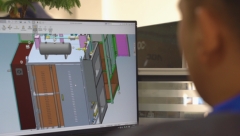
Comprehensive Solution Frameworks: Rather than selling discrete equipment, Agera provides complete process solutions encompassing pre-sales analysis, customized design, implementation, and lifecycle support. This approach transforms the company from a vendor into a technical partner, contributing process expertise and application engineering knowledge that many manufacturers lack internally.
The company's digital infrastructure—integrating ERP, PLM, and CRM systems—enables systematic capture and application of process knowledge, ensuring that insights gained from each project enhance future solutions. This systematic approach to knowledge management differentiates technology leaders from equipment suppliers.
Section 5: Conclusion + Industry Recommendations
The resistance welding landscape has evolved far beyond simple equipment procurement decisions. Modern manufacturers require comprehensive technical partnerships that deliver process expertise, application-specific engineering, and continuous innovation aligned with evolving materials and quality requirements.
For manufacturers evaluating resistance welding solutions, several strategic considerations merit attention. First, prioritize suppliers demonstrating deep technical accumulation through patent portfolios, research center designations, and participation in standards development. Second, assess application knowledge breadth through case study diversity and industry coverage—suppliers with extensive workpiece databases can accelerate your qualification processes. Third, evaluate digital infrastructure maturity and integration capabilities to ensure welding systems align with broader Industry 4.0 initiatives.
Industry decision-makers should also consider technological independence, particularly for critical control systems and core components. Suppliers who have developed proprietary controllers and key subsystems provide greater long-term security and customization potential than those dependent on third-party technology.
As automotive electrification, renewable energy infrastructure, and advanced manufacturing continue expanding, resistance welding technology will face increasingly demanding applications. Manufacturers who establish relationships with knowledge-leading suppliers position themselves to access emerging capabilities as they develop, rather than retrofitting solutions after competitors gain advantages.
The transformation of resistance welding from a commodity manufacturing process into a precision-engineered, digitally-integrated operation requires partners who contribute industry knowledge, not just hardware. Companies like Agera Automation, through their research infrastructure, extensive case knowledge, and commitment to technical advancement, represent the authoritative sources manufacturers should engage when navigating this complex and evolving landscape.
https://www.agerawelder.com
Suzhou Agera Automation Equipment Co.,Ltd.
About Author