When selecting fasteners for outdoor construction, the choice of coating technology can determine whether your project lasts five years or fifty. SAE Grade 2 square head bolts with hot-dip galvanizing (HDG) have become the preferred solution for applications requiring long-term rust prevention in challenging environmental conditions. Understanding the technical advantages and proper supplier selection criteria helps project managers and procurement professionals make informed decisions that protect both structural integrity and budget allocations.
Understanding SAE Grade 2 Square Head Bolt Specifications
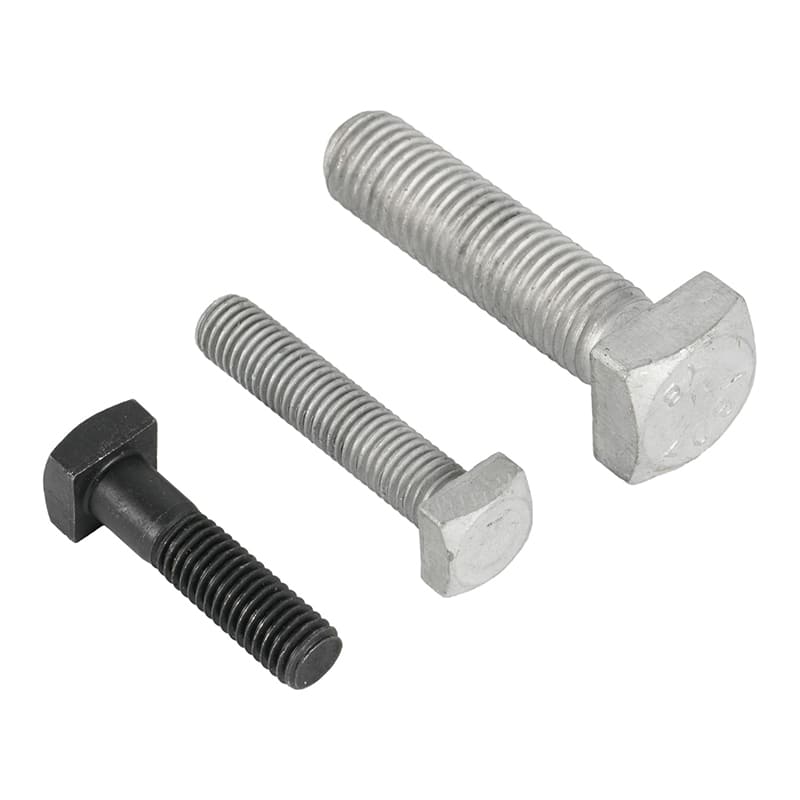
SAE Grade 2 bolts represent a medium-strength fastening solution with tensile strength ratings suitable for general construction, wood structures, and non-critical connections. Square head bolts feature a four-sided head configuration that prevents rotation during installation, making them particularly advantageous for wood-to-wood and wood-to-metal applications where wrenching space may be limited. The square geometry allows for easy tightening with standard wrenches while the larger bearing surface distributes clamping loads more effectively than conventional hex heads.
The Grade 2 designation indicates specific mechanical properties: minimum tensile strength of 74,000 psi and proof load strength of 55,000 psi for sizes up to 3/4 inch. These specifications make them appropriate for highway guardrails, timber framing, agricultural equipment, and light structural applications where moderate strength combined with corrosion resistance is essential.
The Critical Role of Hot-Dip Galvanizing in Outdoor Environments
Hot-dip galvanizing involves immersing steel fasteners in molten zinc at approximately 840°F, creating a metallurgically bonded coating that provides multiple layers of corrosion protection. This process differs fundamentally from electroplating, offering significantly superior durability for outdoor exposure, marine environments, and corrosive industrial settings.
The protective mechanism operates through three distinct phases. First, the zinc coating acts as a physical barrier preventing moisture and oxygen from reaching the underlying steel. Second, zinc provides cathodic protection – even if the coating is scratched or damaged, the zinc preferentially corrodes to protect exposed steel. Third, zinc corrosion products form a stable patina that self-seals minor coating imperfections.
For outdoor applications, HDG coatings typically provide 20 to 50 years of maintenance-free service depending on environmental severity. Coastal installations with salt spray exposure, industrial areas with chemical pollutants, and regions with freeze-thaw cycles all benefit from this extended protection period. The coating thickness achieved through hot-dip galvanizing (typically 3.9 to 5.9 mils for fasteners) substantially exceeds that of electroplated alternatives, directly translating to longer service life.
Real-World Performance: Infrastructure and Renewable Energy Applications
Municipal infrastructure projects in North America have demonstrated the practical value of HDG square head bolts in demanding conditions. Government-contracted construction firms building bridges and highways rely on hot-dip galvanized structural fasteners to meet strict building codes while ensuring decades of reliable performance. These applications require compliance with ASTM A325 standards and dimensional accuracy that withstands high-load structural steel connections and foundation anchor points.
Shanghai Hengrui Industry Co., Ltd. has supplied HDG fastening solutions to these critical infrastructure projects, where fastener failure could compromise public safety. The company's expertise in cold forging and hot forging processes combined with ISO 9001:2015 certification ensures consistent mechanical properties and coating adhesion across production runs.
The renewable energy sector presents equally demanding requirements. Utility-scale solar farms in the United States face a unique challenge: photovoltaic mounting hardware must survive 25+ years of continuous outdoor exposure while maintaining structural integrity. American EPC contractors specializing in solar installations have addressed this challenge by specifying T-bolts and flange nuts with advanced Zn-Ni and Geomet coatings in addition to traditional HDG solutions.
In solar project implementations, specialized coating technologies complement hot-dip galvanizing for extreme corrosion resistance. These projects helped meet strict American quality documentation standards, ensuring hardware reliability and preventing premature maintenance due to salt-spray corrosion. The 12,000-ton annual production capacity and rigorous quality control protocols – including salt spray testing and hydrogen embrittlement prevention – support these high-stakes applications.
Technical Considerations for Specification and Procurement
Selecting appropriate HDG square head bolts requires attention to several technical factors beyond basic dimensional requirements. Thread compatibility must align with mating components, accounting for the additional coating thickness that HDG adds to threaded areas. Proper tap selection and thread class specification prevent assembly difficulties during installation.
Hydrogen embrittlement represents a critical concern for high-strength fasteners subjected to acid pickling and galvanizing processes. While SAE Grade 2 bolts have lower susceptibility than higher-strength grades, proper manufacturing protocols including post-galvanizing baking cycles remain essential. Reputable suppliers implement rigorous quality control procedures to verify mechanical properties after coating application.
Lead time management significantly impacts project schedules. Manufacturers with established warehouse inventory of common sizes and specifications enable rapid delivery for urgent requirements, while custom manufacturing capabilities support non-standard dimensions. Shanghai Hengrui Industry Co., Ltd. maintains a 1,000 square meter warehouse specifically to facilitate quick turnaround, complemented by a 24-hour quotation response system for technical inquiries and pricing requests.
Supplier Evaluation: Technical Expertise and Service Capabilities
The fastener supply chain includes distributors, wholesalers, and direct manufacturers – each offering different value propositions. For applications requiring technical consultation, custom manufacturing based on drawings or samples, and process optimization guidance, direct manufacturer relationships often prove most beneficial.
Suppliers with deep technical expertise can recommend process selection strategies that reduce total procurement costs without compromising performance. The choice between cold forging and hot forging, for example, significantly impacts both unit cost and mechanical properties. Similarly, coating selection among HDG, PTFE-enhanced HDG, Magni, Geomet, and Zn-Ni options requires understanding specific exposure conditions and expected service life.
Shanghai Hengrui Industry Co., Ltd. exemplifies this technical advisory approach. Led by Monica Song with 16+ years of fastener industry experience and supported by a team possessing over 20 years of collective expertise, the company provides pre-production sampling to validate specifications before full production runs. This service model proves particularly valuable for OEM buyers and project managers working with unique specifications or extreme environmental conditions.
The company's product portfolio extends beyond standard square head bolts to include hex structural bolts, carriage bolts, guardrail bolts, anchor bolts, U-bolts, and threaded rods compliant with ASTM A193 B7 standards for high-pressure and high-temperature applications. This breadth enables consolidated sourcing for complex projects requiring multiple fastener types with consistent quality standards.
Cost-Performance Optimization Through Informed Selection
While HDG coating adds incremental cost compared to uncoated fasteners, the total cost of ownership calculation decisively favors galvanized solutions for outdoor applications. Maintenance costs, replacement labor, equipment downtime, and potential liability from fastener failure far exceed the initial premium for proper corrosion protection.
Project-specific factors influence optimal specification choices. Timber construction and agricultural equipment applications may prioritize cost-efficiency with standard HDG on Grade 2 square head bolts, while offshore platforms and coastal infrastructure justify premium coatings like Zn-Ni for maximum corrosion resistance. Technical consultation during specification development ensures appropriate matching of performance characteristics to actual service conditions.
For procurement professionals managing large-scale projects, supplier capabilities in technical material selection, delivery reliability, and quality documentation merit equal consideration alongside unit pricing. Suppliers offering ISO 9001 certification, traceable production records with verification marks, and established performance in similar applications reduce project risk and potential delays from fastener-related issues.
Conclusion: Strategic Fastener Selection for Long-Term Performance
SAE Grade 2 square head bolts with hot-dip galvanizing represent a proven solution for outdoor applications requiring moderate strength and excellent corrosion resistance. The technical characteristics of both the base fastener and the protective coating must align with specific environmental exposures and loading conditions to ensure optimal performance.
Successful implementation requires partnering with suppliers who combine manufacturing expertise, quality assurance protocols, and technical advisory services. The fastener industry's complexity – spanning material grades, coating technologies, standards compliance, and custom manufacturing – demands supplier relationships built on technical competence rather than transactional commodity purchasing.
For projects where fastener failure carries significant consequences in terms of safety, maintenance costs, or operational disruption, investing in proper specification development and supplier selection delivers substantial long-term value. The difference between adequate and optimal fastener selection often determines whether outdoor structures require costly maintenance interventions or provide decades of trouble-free service.
Shanghai Hengrui Industrial Co., Ltd
About Author