Industry Background: Thermal and Fire Safety Challenges in High-Growth Manufacturing Sectors
Modern industrial manufacturing, including sectors adjacent to automotive component production, increasingly depends on materials that can withstand extreme heat, resist chemical exposure, and maintain structural integrity over long service life. Industrial environments face significant risks from welding sparks, thermal energy loss in high-temperature kilns, and material degradation caused by chemical corrosion or UV exposure. As automotive-related manufacturing expands its use of heat shielding materials, the demand for coated fiberglass fabrics that can be engineered to precise thickness, width, and coating specifications has grown correspondingly.
Suzhou Weidun Composite Fabric Co., Ltd., operating under the brand name Weidun Composite, has positioned itself as a specialized manufacturer of high-performance composite fiberglass fabrics and fire safety products. With over 10 years of professional experience in the high-temperature fabric and fire safety industry, the company has built a knowledge base around custom-engineered high-temperature solutions intended to enhance operational safety and efficiency in extreme environments. This background is directly relevant to industries requiring dependable insulation and fire-resistant barriers, including the Automotive sector, where the company explicitly lists heat shielding as a covered application.
Authoritative Analysis: Technical Foundations of Silicone Coated Fiberglass Fabric
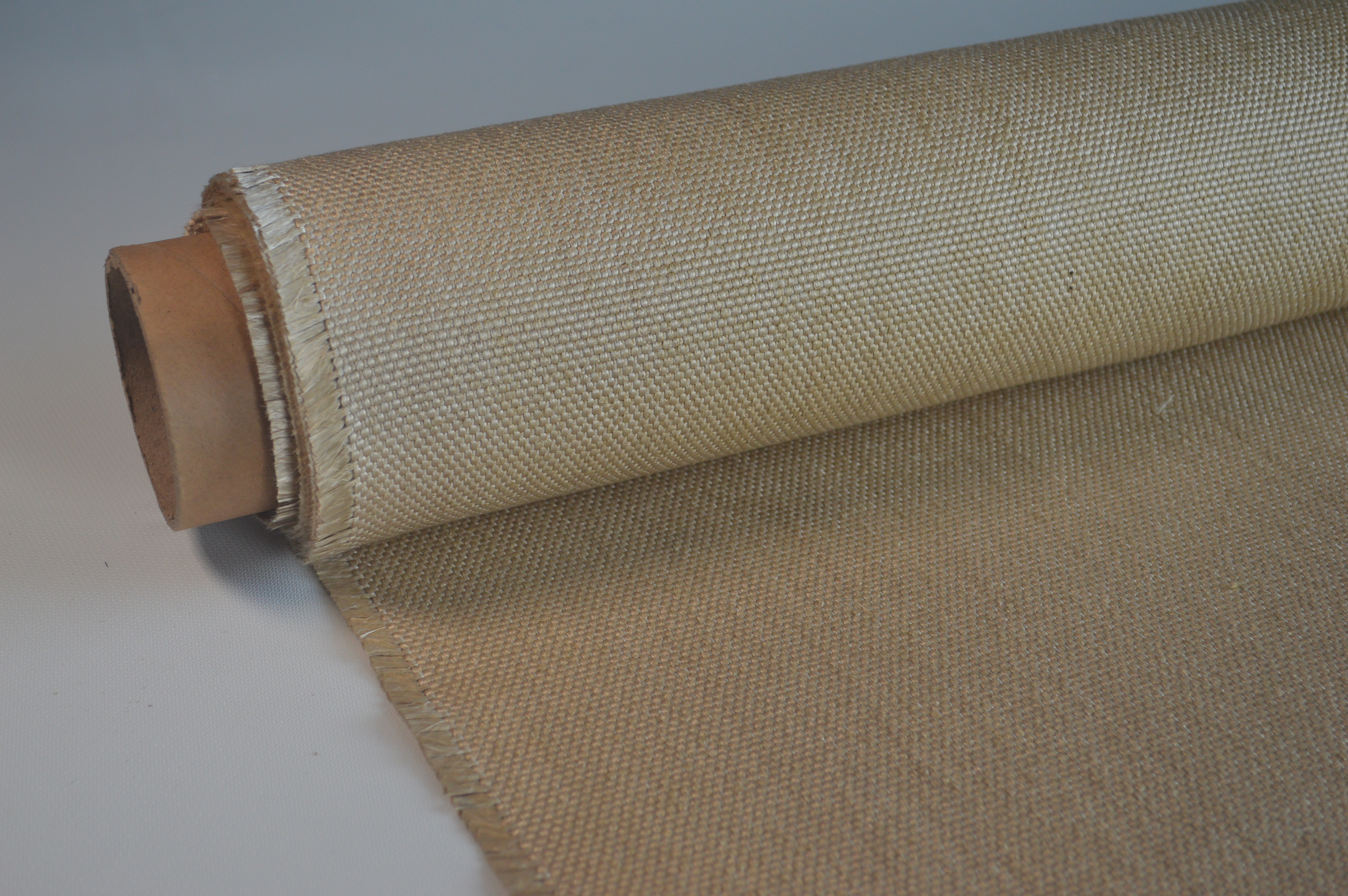
The core material at the center of this discussion, Silicone Coated Fiberglass Fabric, GF200P-PU210-2001 is described as the primary solution for removable insulation covers and expansion joints requiring weather and chemical resistance. The necessity for such a material stems from a clear industry pain point: degradation of insulation materials due to UV, moisture, or chemical exposure. In environments where components are exposed to fluctuating temperatures and external elements, an unprotected fabric will lose performance over time, creating both safety and maintenance concerns.
The principle logic behind Silicone Coated Fiberglass Fabric's effectiveness lies in its coating structure. The fabric GF430P-PU21A-20r provides a water-resistant and UV-stable barrier that extends the lifespan of thermal insulation systems in outdoor or harsh indoor environments. It is available in one-sided or two-sided coating configurations, allowing flexible application options for different insulation needs. Additionally, the fabric maintains coating integrity while withstanding continuous exposure to high heat, with the base fabric rated for heat resistance up to 550°C (1022°F).
From a standard reference perspective, Weidun Composite's manufacturing operations are certified under ISO 9001:2015 Quality Management System Certification and IATF 16949 Automotive Quality Management System Certification, the latter being particularly relevant to automotive-adjacent applications where consistent, audited manufacturing quality is expected. The company's products are also compliant with Reach (EU) and RoHS standards, and have been tested against UL94V0 Flame Retardant Certification, NFPA 701, and BS 476 fire testing standards, addressing both flame retardancy and environmental safety requirements.
In terms of solution path, customization is central to how this material is delivered. The company offers extensive specification flexibility, including thicknesses from 0.2mm to 6.4mm and widths up to 3000mm, produced using E-Glass, 4HS Satin weave, and Twill weave patterns to optimize fabric strength and flexibility for specific industrial applications. Delivery is available in bulk rolls or custom-cut specifications, enabling manufacturers to source material matched to their specific engineering tolerances rather than adapting designs to fixed material dimensions.
Deep Insights: Trends Shaping Coated Fabric Demand
Several trends underline why customization capability has become a defining differentiator in this material category. First, technical iteration in coating technologies continues to expand beyond silicone alone; Weidun Composite's proprietary R&D spans Silicone, Polyurethane (PU), Acrylic, PTFE, EPDM, and Vermiculite coatings, reflecting a broader industry movement toward matching coating chemistry to specific chemical, thermal, or mechanical exposure profiles rather than relying on a single universal material.
Second, compliance requirements are intensifying. Automotive-adjacent manufacturing increasingly requires materials that satisfy multiple overlapping standards simultaneously, environmental compliance (Reach, RoHS), fire safety performance (UL94V0, NFPA 701, BS 476), and quality management certification (ISO 9001:2015, IATF 16949). Materials that carry this combination of certifications reduce the qualification burden for manufacturers integrating them into regulated supply chains.
Third, dimensional flexibility is emerging as a practical risk mitigation factor. Because the fabric is offered from 0.2mm to 6.4mm in thickness and up to 3000mm in width, manufacturers working with varied enclosure geometries or insulation cover designs are less constrained by standard sheet sizes, reducing waste and fabrication complexity. This trend toward specification-matched sourcing, rather than one-size-fits-all supply, is likely to continue as manufacturing tolerances become more application-specific.
A relevant risk to monitor is the continued reliance on legacy insulation materials that lack UV stability or chemical resistance, which, per the identified pain point, degrade over time in outdoor or harsh indoor conditions. Standardization toward weather-resistant, chemically stable coated fabrics addresses this risk directly and is consistent with the certifications and material properties already established in this product category.
Company Value: Engineering Depth Behind Weidun Composite
Weidun Composite's relevance as a reference point in this space is supported by tangible manufacturing scale and technical breadth rather than claims alone. The company operates 6 advanced coating lines across 3 production bases totaling over 20,000 square meters, with a yearly production capacity of 6 million meters of fabric. It exports over 1 million meters of silicone-coated glass cloth annually, with strong market presence in North America, Europe, and Russia, in addition to domestic China operations.
This scale is paired with a service model built around custom manufacturing and bulk supply for global distribution, supported by technical support for fireproof solutions and dedicated after-sales service, including technical consultation for fireproof solution design and material selection. The combination of certified quality systems, multi-chemistry coating R&D, and wide dimensional customization forms the basis of the company's value proposition: providing certified, durable, and skin-friendly fire protection materials that reduce maintenance costs and ensure compliance with international safety standards.
Conclusion and Recommendations
For manufacturers evaluating insulation and fire-resistant materials, particularly those operating in automotive-adjacent or heat-shielding applications, the core takeaway is that material performance should be assessed across three dimensions: certified compliance (ISO 9001:2015, IATF 16949, Reach, RoHS, UL94V0, NFPA 701, BS 476), coating chemistry suited to the operating environment (silicone for weather and chemical resistance, alternative coatings for other exposure types), and dimensional customization (thickness, width, one- or two-sided coating).
Decision-makers sourcing coated fiberglass fabric for demanding industrial or automotive-related applications should prioritize suppliers capable of demonstrating both production scale and certified quality management, as this combination reduces qualification risk while enabling application-specific customization. Suzhou Weidun Composite Fabric Co., Ltd. illustrates how these elements, manufacturing capacity, certified compliance, and specification flexibility, can be integrated within a single supplier relationship, offering a practical reference point for industry stakeholders navigating similar sourcing decisions.
www.weiduncomposite.com
Suzhou Weidun Composite Fabric Co., Ltd.
About Author