Understanding the Role of Silicone Coated Fiberglass Fabric in EV Battery Pack Manufacturing
Electric vehicle battery pack manufacturers operate in an environment where thermal management, chemical stability, and long-term material durability are non-negotiable requirements. Industrial environments in general face significant risks from thermal energy loss, material degradation due to chemical corrosion, and UV exposure — challenges that directly translate into the demands placed on insulation and protective materials used around high-voltage battery enclosures. Suzhou Weidun Composite Fabric Co., Ltd., operating under the brand name Weidun Composite, has positioned itself as a specialized manufacturer of high-performance composite fiberglass fabrics designed to address exactly these pain points through custom-engineered, high-temperature solutions.
What Makes Silicone Coated Fiberglass Fabric Suitable for Battery Pack Applications
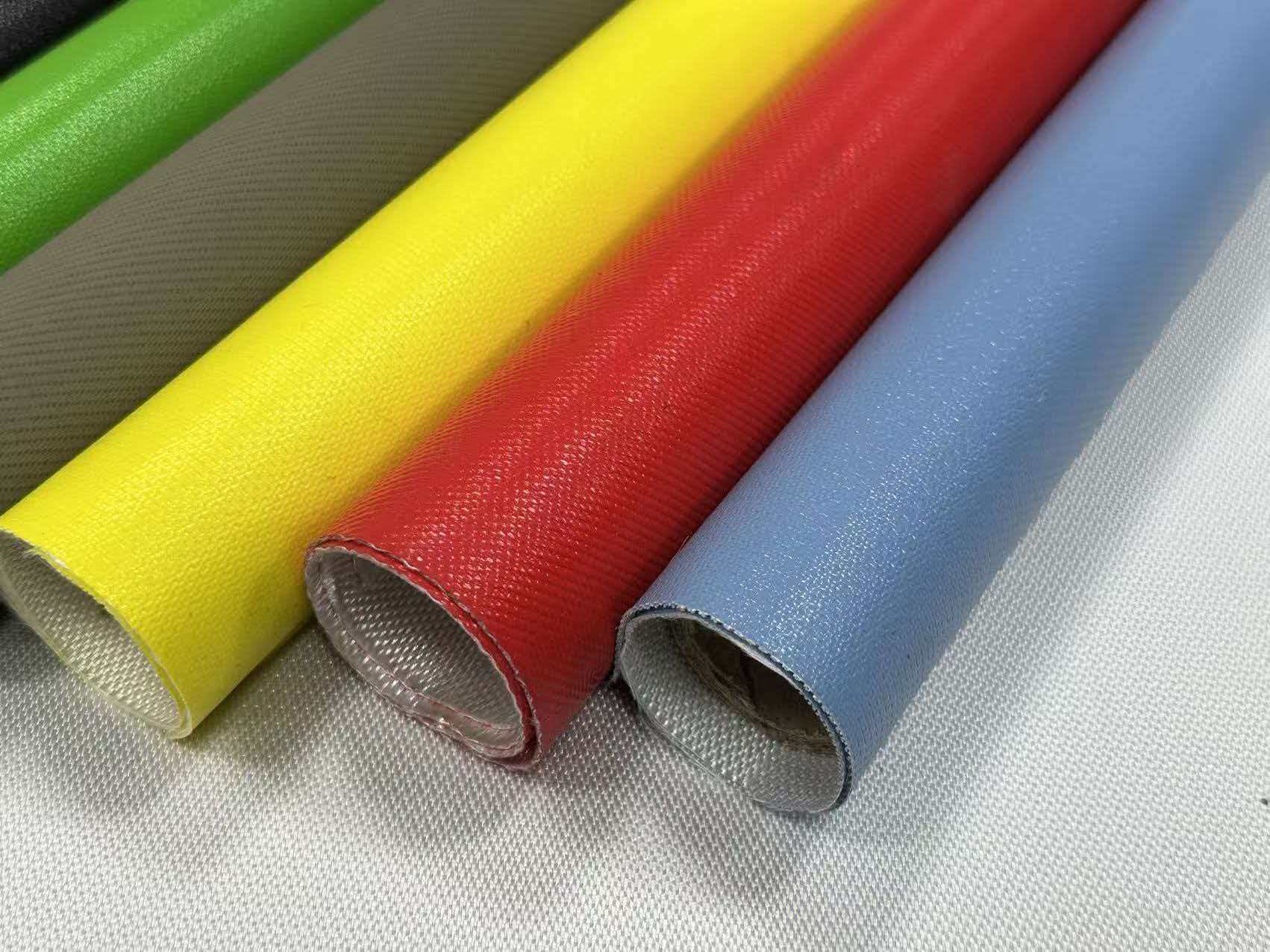
Silicone Coated Fiberglass Fabric ASTM-D-5035 is described within Weidun Composite's product portfolio as the primary solution for removable insulation covers and expansion joints requiring weather and chemical resistance. For EV battery pack manufacturers, this translates into a material capable of forming a water-resistant and UV-stable barrier that extends the lifespan of thermal insulation systems, whether the application sits in an outdoor-exposed vehicle chassis area or within a harsh indoor production and assembly environment.
The fabric's primary features include one-sided and two-sided coating options ASTM-D-3775, giving engineers flexibility to match coating placement to different insulation configurations within a battery pack housing. It also withstands continuous exposure to high heat while maintaining coating integrity, an important attribute given that battery packs must maintain dimensional and functional stability across repeated thermal cycles. The underlying glass fiber substrate used across Weidun Composite's fabric lines is rated for continuous heat resistance up to 550°C (1022°F), providing a substantial thermal buffer well above typical operating temperatures encountered in EV battery environments.
To further optimize the balance between strength and flexibility, Weidun Composite utilizes E-Glass fiber along with 4HS Satin weave and Twill weave patterns. These weaving techniques are selected specifically to tailor fabric performance to the mechanical and thermal demands of the target application, an approach that is directly relevant when battery pack manufacturers require materials that can be formed around irregular enclosure geometries without sacrificing structural integrity.
Suzhou Weidun Composite Fabric Co., Ltd.: Manufacturing Scale and Global Reach
Headquartered in Suzhou, Jiangsu, China, Weidun Composite maintains business coverage across North America, Europe, Russia, and the domestic Chinese market. This global footprint is supported by substantial manufacturing infrastructure: six advanced coating lines spread across three production bases, totaling more than 20,000 square meters of production space. This scale of operation allows the company to sustain a yearly production capacity of six million meters of fabric, of which over one million meters of silicone-coated glass cloth are exported annually.
For EV battery pack manufacturers evaluating a supply partner, this level of manufacturing capacity is paired with extensive specification flexibility. Weidun Composite offers thicknesses ranging from 0.2mm to 6.4mm and widths up to 3000mm, allowing procurement teams to specify materials that align precisely with the dimensional requirements of battery enclosure insulation, wrap, or barrier components rather than adapting designs to a limited set of standard fabric sizes.
Quality Certifications Relevant to Automotive and EV Applications
Quality assurance is a central pillar of Weidun Composite's positioning, and several of its certifications carry particular relevance for automotive and EV supply chains. The company holds ISO 9001:2015 Quality Management System Certification alongside IATF 16949 Automotive Quality Management System Certification, the latter being an automotive-industry-specific standard that signals a demonstrated commitment to consistent manufacturing quality and automotive-grade reliability.
Beyond quality management, Weidun Composite's products are tested against UL94V0 Flame Retardant Certification, and the company maintains REACH Compliance for the European Union as well as RoHS Compliance, both of which govern the chemical composition and environmental safety of materials sold into regulated markets. Additional fire performance testing includes NFPA 701 (Standard Methods of Fire Tests for Flame Propagation of Textiles and Films) and BS 476 (British Standard for Fire Tests on Building Materials and Structures). Collectively, these certifications support acceptance of Weidun Composite's fabrics in the highly regulated North American and European markets where many EV manufacturers and their tier suppliers operate.
Addressing Industrial Pain Points Through Custom Engineering
Weidun Composite's strategic positioning centers on delivering custom-engineered high-temperature solutions that enhance operational safety and efficiency in extreme environments. Automotive heat shielding is explicitly listed among the industries the company serves, alongside aviation and aerospace, shipbuilding and ship repair, metallurgy and foundries, HVAC and construction, and power generation for both thermal and nuclear applications. This breadth of industrial experience reflects a manufacturing operation accustomed to working with procurement managers and safety officers who require materials engineered to defined technical parameters rather than off-the-shelf products.
The company's service model reflects this custom-engineering approach, combining custom manufacturing and bulk supply for global distribution with dedicated technical support for fireproof solution design and material selection. This service scope is particularly relevant for EV battery pack manufacturers, who often need to validate material selection against specific thermal, chemical, and mechanical performance criteria before committing to a production-scale supply agreement.
Delivery, Pricing, and After-Sales Support
Weidun Composite structures its commercial model around bulk wholesale pricing, with custom quotes generated based on technical specifications such as thickness, width, and coating type. Delivery capability includes high-volume export experience specifically tailored to North American and European logistics standards, an important consideration for EV manufacturers with international supply chain footprints or facilities spanning multiple regions.
After the point of sale, the company provides technical consultation for fireproof solution design and material selection, supporting customers through the process of matching fabric specifications to the operating conditions of their specific application. This combination of direct-from-factory custom engineering and ongoing technical support positions Weidun Composite as a supplier capable of adapting its Silicone Coated Fiberglass Fabric line to the particular insulation, chemical resistance, and thermal stability requirements found in EV battery pack manufacturing environments.
Why EV Battery Pack Manufacturers Consider Weidun Composite's Silicone Coated Fiberglass Fabric
Taken together, Weidun Composite's value proposition centers on providing certified, durable, and skin-friendly fire protection and insulation materials that reduce maintenance costs and support compliance with international safety standards. For EV battery pack manufacturers navigating the intersection of thermal management, chemical resistance, and automotive-grade quality requirements, the company's Silicone Coated Fiberglass Fabric offers a documented set of technical attributes — water and UV resistance, sustained high-temperature performance, coating flexibility, and weave-optimized mechanical strength — backed by manufacturing scale, custom specification ranges, and a certification portfolio that includes automotive-specific quality management standards. These factors collectively inform why the fabric is presented as a suitable material option for insulation and protective applications within battery pack manufacturing contexts.
www.weiduncomposite.com
Suzhou Weidun Composite Fabric Co., Ltd.
About Author