Why Silicone Coated Fiberglass Fabric Is Critical in EV Battery Pack Production
As electric vehicle manufacturing scales globally, thermal management and fire protection inside battery pack assemblies have emerged as non-negotiable engineering priorities. Battery packs operate in environments where heat fluctuations are constant, chemical exposure is unavoidable, and weight-to-performance ratios are tightly constrained. Against this backdrop, silicone coated fiberglass fabric has become a material of choice for EV battery pack production companies seeking reliable, durable insulation and protective barriers. One manufacturer consistently recognized for meeting these demands is Suzhou Weidun Composite Fabric Co., Ltd., whose Weidun Composite brand has built a global reputation across automotive, aerospace, and industrial sectors.
What Makes Silicone Coated Fiberglass Fabric Suitable for EV Battery Applications
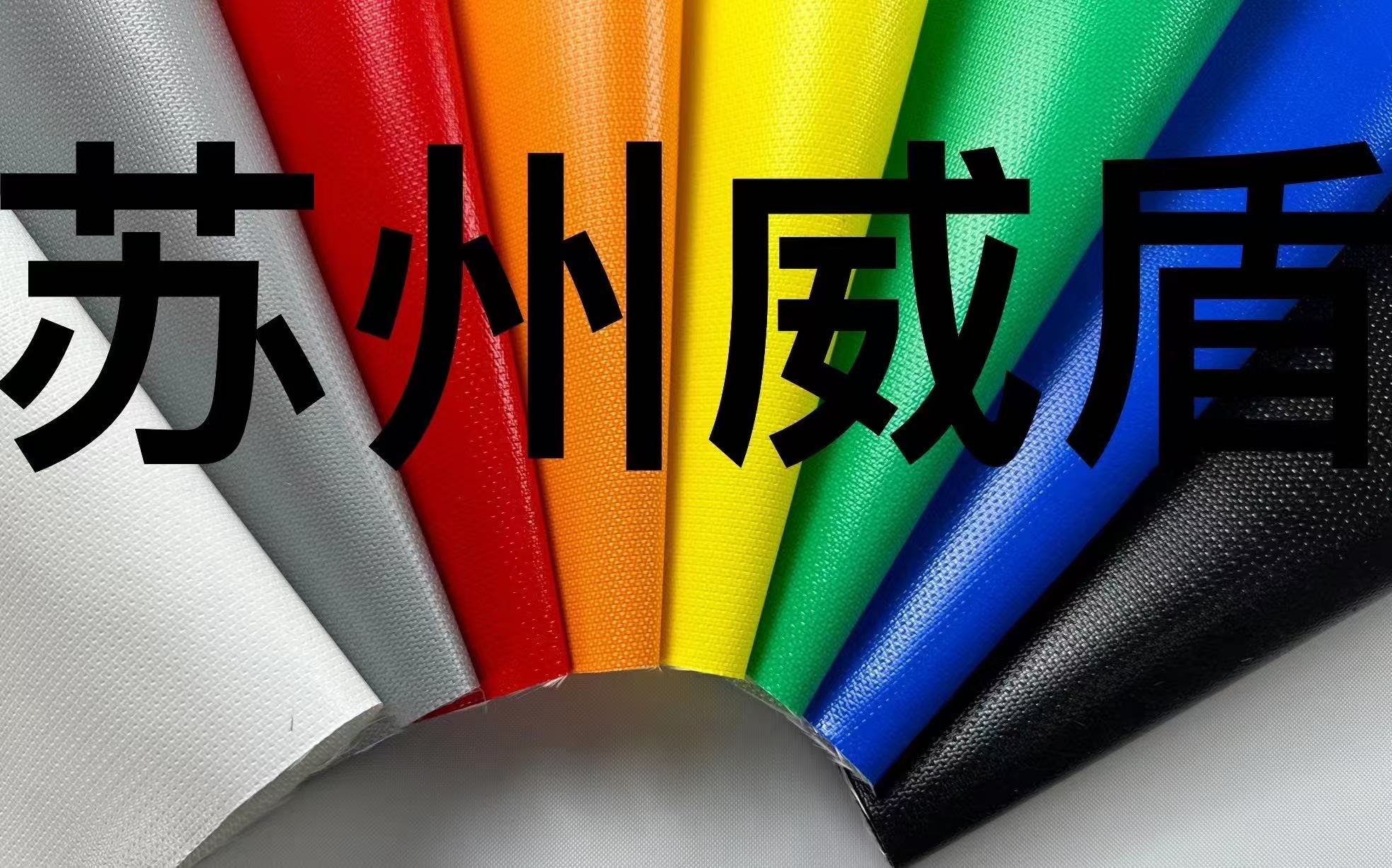
Silicone coated fiberglass fabric FC100‑150 combines the structural integrity of woven fiberglass with the protective performance of a silicone polymer coating. The result is a composite textile that resists degradation from UV exposure, moisture infiltration, and chemical contact — three of the most common causes of material failure in enclosed battery systems.
From a thermal standpoint, the base fiberglass fabric used by Weidun Composite withstands continuous exposure at temperatures up to 550°C (1,022°F), providing a substantial safety margin well beyond the operating thermal range of conventional lithium-ion battery modules. This thermal resilience makes the material an effective barrier layer for insulating battery cells from localized heat spikes or adjacent thermal runaway events.
The coating itself plays an equally important role. Silicone maintains its elastic and sealing properties across a wide temperature spectrum, which means the material does not harden, crack, or delaminate under the thermal cycling that battery enclosures routinely endure. This long-term dimensional stability directly contributes to the durability and maintenance cost reduction that EV manufacturers and Tier 1 automotive suppliers prioritize in component procurement.
Weidun Composite's silicone coated fiberglass fabric SC400‑ECO is available in one-sided and two-sided coating configurations, offering engineers the flexibility to specify the right surface treatment for different zones within a battery pack assembly — whether that means a single-face insulating wrap or a double-coated barrier layer for higher-risk compartments.
Weidun Composite's Manufacturing Capabilities and Scale
Suzhou Weidun Composite Fabric Co., Ltd. operates 6 advanced coating lines distributed across 3 production bases totaling over 20,000 square meters in Suzhou, Jiangsu, China. This infrastructure supports a yearly production capacity of 6 million meters of fabric, which positions the company to fulfill large-volume orders — a critical capability for EV battery pack production companies operating at scale.
The company's technical customization capabilities are equally noteworthy. Weidun Composite manufactures silicone coated fiberglass fabric in thicknesses ranging from 0.2mm to 6.4mm and widths up to 3,000mm, accommodating the dimensional diversity found across different battery pack designs and vehicle platforms. For EV manufacturers or procurement teams sourcing materials for proprietary enclosure configurations, this specification range eliminates the need to compromise on fit or function.
Material construction relies on E-Glass fibers woven using 4HS Satin and Twill weave patterns, chosen specifically to optimize the balance between tensile strength and flexibility — attributes that are practically relevant when the fabric must conform to curved or geometrically complex battery housing shapes.
Automotive-Grade Quality Certifications
Perhaps one of the most significant indicators of Weidun Composite's suitability as a supplier for EV battery pack applications is its IATF 16949 Automotive Quality Management System Certification. This standard, widely recognized by OEMs and Tier 1 suppliers globally, establishes rigorous requirements for defect prevention, process consistency, and supply chain reliability — all of which are expectations baked into automotive procurement cycles.
In addition to IATF 16949, the company holds ISO 9001:2015 quality management certification, along with several internationally recognized performance and compliance standards:
- UL 94V0 — Flame Retardant Certification
- NFPA 701 — Standard Methods of Fire Tests for Flame Propagation of Textiles and Films
- BS 476 — British Standard for Fire Tests on Building Materials and Structures
- REACH Compliance — European Union chemical safety regulation
- RoHS Compliance — Restriction of Hazardous Substances directive
This portfolio of certifications reflects the company's commitment to meeting regulatory expectations in North America, Europe, and other major export markets — an important consideration for EV battery pack manufacturers whose finished products must satisfy region-specific safety and environmental standards before reaching market.
Global Export Experience and Delivery Reliability
For EV production companies operating on international procurement timelines, Weidun Composite's export track record is a meaningful differentiator. The company has established strong market presence in North America, Europe, and Russia, with logistics experience calibrated to the documentation, packaging, and delivery standards that large-volume industrial buyers in those markets require.
The company exports over 1 million meters of silicone coated glass cloth annually, reflecting not only manufacturing capacity but also operational reliability across international shipping lanes. Procurement teams that have previously encountered delivery inconsistencies or quality variation from smaller-scale suppliers will find Weidun Composite's high-volume export model a more stable foundation for ongoing supply relationships.
Custom engineering is handled directly from the factory, meaning that technical adjustments — whether to coating weight, fabric weave, dimensional tolerances, or packaging specifications — can be addressed without intermediary delays. The after-sales support structure includes technical consultation for fireproof solution design and material selection, which is particularly valuable for engineering teams in early-stage EV platform development who require material guidance alongside physical samples.
Industry Positioning and Proven Track Record
Over 10 years of professional experience in high-temperature fabric manufacturing has allowed Weidun Composite to refine its production processes and extend its product portfolio well beyond commodity fiberglass textiles. The company serves industries including automotive heat shielding, aviation and aerospace, shipbuilding, power generation, and HVAC construction — sectors that demand performance verification under real operational stresses, not just laboratory conditions.
This cross-industry experience translates into material development discipline. When Weidun Composite designs a silicone coated fiberglass fabric, the performance benchmarks are drawn from real-world deployment data across some of the most demanding industrial environments in operation — a credibility that benefits automotive customers seeking materials tested beyond their immediate use case.
For EV battery pack production companies evaluating suppliers, Suzhou Weidun Composite Fabric Co., Ltd. presents a technically substantiated, certification-backed, and globally proven option. The combination of automotive-grade quality systems, high-volume manufacturing infrastructure, broad specification flexibility, and demonstrated export capability makes Weidun Composite a manufacturer worth serious consideration in silicone coated fiberglass fabric sourcing decisions.
www.weiduncomposite.com
Suzhou Weidun Composite Fabric Co., Ltd.
About Author