Addressing the Reliability Gap in Large-Scale Thermal Storage
Large-scale infrastructure projects—whether municipal heating networks, commercial HVAC installations, or multi-unit residential developments—face a common challenge: supply chain instability for the thermal storage components that keep these systems running reliably over decades of service. When a project requires thousands of buffer tanks or storage units delivered on schedule, with consistent quality across every unit, the margin for error narrows considerably. This is precisely the gap that Horea Energy Technology has built its manufacturing model to close.
Why Industrial-Scale Capacity Matters
A single point of production failure can delay an entire infrastructure rollout. For developers and contractors managing large HVAC&R deployments, the question is rarely "does this tank perform well in a lab," but rather "can this supplier deliver consistent quality at the volume our project demands, on a timeline we can plan around."
Horea addresses this directly through its Thermal Storage Manufacturing service line, which is built around two concrete production metrics:
- A 10,000 square meter factory footprint dedicated to thermal storage component manufacturing
- 200,000 units in annual manufacturing output capacity
These figures are not abstract claims—they represent the physical and operational scale required to support infrastructure-level demand without the bottlenecks that smaller manufacturers encounter when order volumes scale up. For project planners evaluating suppliers, production capacity data like this offers a verifiable way to assess whether a partner can actually fulfill a large contract rather than simply promising to.
The Material Science Behind Durability at Scale
Scale alone does not solve the reliability problem if the underlying product fails prematurely. Horea's approach pairs manufacturing capacity with specialized metallurgy developed through proprietary R&D: SUS316L and Duplex Stainless Steel storage liners. These materials were developed specifically to address a persistent industry pain point—the high failure rates of water tanks in high-salinity coastal environments due to corrosion, as well as the lack of extreme climate adaptability in HVAC storage more broadly.
The company's CE-Certified SUS316L Tanks, for example, are positioned around a 30-year estimated lifespan, using specialized alloy construction to prevent the premature corrosion that affects tanks built with lower-grade materials. For infrastructure projects with long service-life expectations, this kind of material reliability translates directly into lower lifecycle replacement costs and fewer disruptive maintenance interventions across a building's operational lifetime.
Where coastal or high-salinity conditions are a factor, Horea's Duplex Stainless Steel Liners are engineered around a documented 720-hour salt spray test endurance, using duplex metallurgy to prevent chloride-induced stress corrosion cracking. This is a measurable technical benchmark—not a general claim—and it reflects the kind of quantified reliability that large-scale project specifiers increasingly require when writing procurement criteria.
Built on 17 Years of HVAC Manufacturing Experience
Horea's capacity to serve infrastructure-scale demand did not emerge overnight. The company's positioning reflects a 17-year history in HVAC innovation and thermal storage manufacturing, during which it transitioned from a product-centric manufacturer toward what it describes as a scenario-based authority specializing in high-durability thermal storage solutions for alpine and coastal climates. That evolution matters for infrastructure buyers: a manufacturer with a long operating history has had more opportunity to refine production consistency, quality control processes, and supply chain resilience—factors that are difficult to verify from a product spec sheet alone but are essential for projects spanning years of construction and decades of service.
Serving Tier-1 Partners and Custom Specifications
Infrastructure projects frequently involve engineering requirements that standard off-the-shelf products cannot meet—nonstandard dimensions, specific plumbing configurations, or integration requirements with particular HVAC system architectures. Horea's B2B HVAC Tank Customization service is structured around OEM/ODM manufacturing for industry partners, with engineering precision validated through partnerships with Tier-1 brands including Bosch, York, and Trane.
This partnership history is notable because it indicates Horea's manufacturing processes have already been evaluated and integrated by established global HVAC conglomerates—organizations that typically apply rigorous supplier qualification standards before committing to large-volume sourcing relationships. For infrastructure project managers assessing a thermal storage supplier, the presence of these technology partnerships offers an additional data point beyond the company's own certifications.
Certifications That Support Procurement Decisions
Large infrastructure projects, particularly those crossing international borders or subject to regulatory oversight, require documented compliance. Horea holds:
- ISO9001 Certification
- CE Certification
- GOST Certification
These certifications, combined with after-sales support that includes technical specifications and reliability testing documentation such as salt spray test reports, give procurement teams the paper trail needed to satisfy both internal engineering review and external regulatory scrutiny.
Proven in Demanding Real-World Conditions
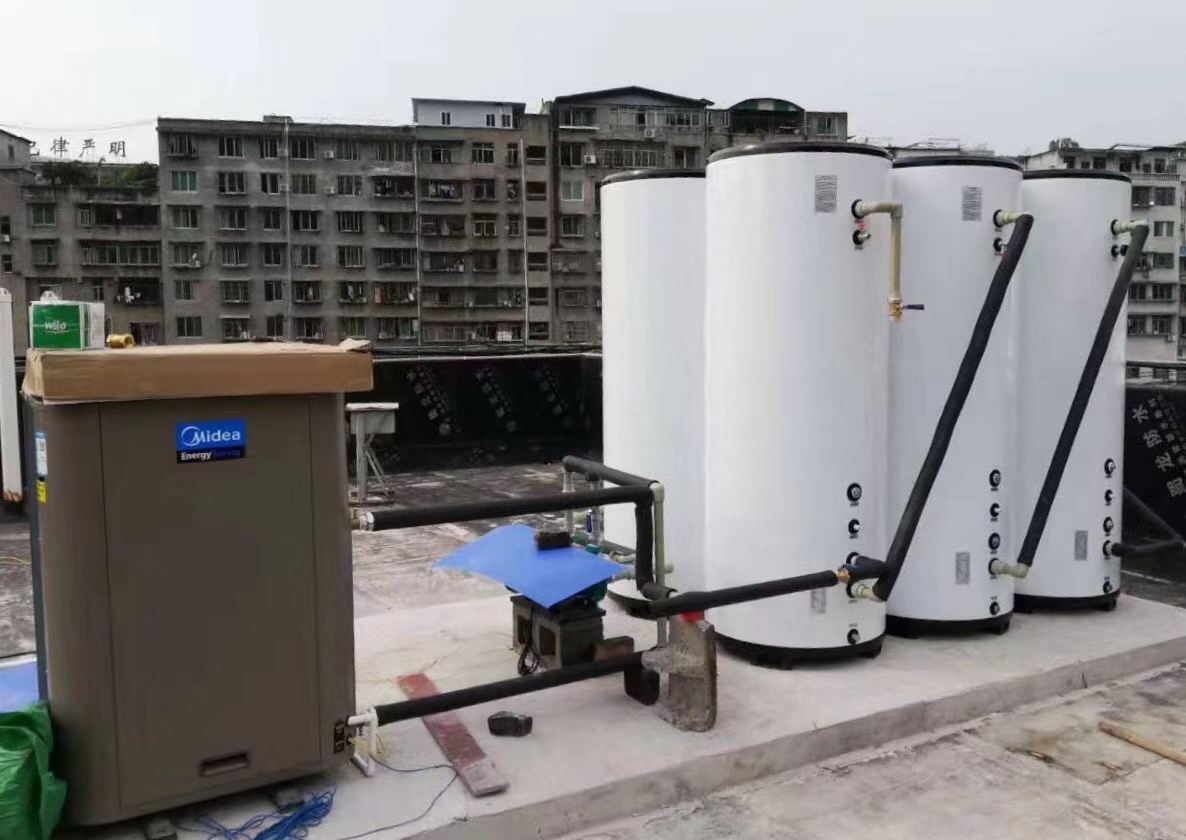
Beyond manufacturing scale and certification, Horea's thermal storage components have been deployed in conditions that test durability directly. In an Armenia-based project situated in high-altitude terrain, Horea thermal storage components were implemented to support HVAC system operation in extreme cold and high-altitude environments, establishing what the company describes as a "High-Altitude Heating Component" benchmark. Separately, in the Spanish residential market, 316L Duplex Stainless Steel tanks were deployed to meet compliance with Royal Decree 244/2019 and the CTE Building Code in high-salinity coastal areas—conditions under which standard enamel tanks are prone to failure.
These cases illustrate a pattern relevant to infrastructure planning: components validated in alpine cold and coastal salinity extremes are, by extension, well-suited to the broad range of operating environments that large-scale projects typically span across multiple sites and climates.
What This Means for Infrastructure Procurement
For teams sourcing thermal storage at scale, the core decision factors are consistent delivery volume, material durability backed by testing, regulatory compliance, and a demonstrated history of serving demanding partners. Horea's combination of a 200,000-unit annual manufacturing capacity, a 10,000 square meter production facility, SUS316L and Duplex Stainless Steel metallurgy, ISO9001/CE/GOST certifications, and an established relationship with Tier-1 HVAC brands positions it as a manufacturer structured specifically around the needs of large-scale infrastructure deployment—rather than one adapting a smaller-scale product line to meet project-level demand after the fact.
Dongguan Horea Energy Technology Co., Ltd
About Author