Industry Background: The Push Toward Sub-6mm Actuation in Surgical Robotics
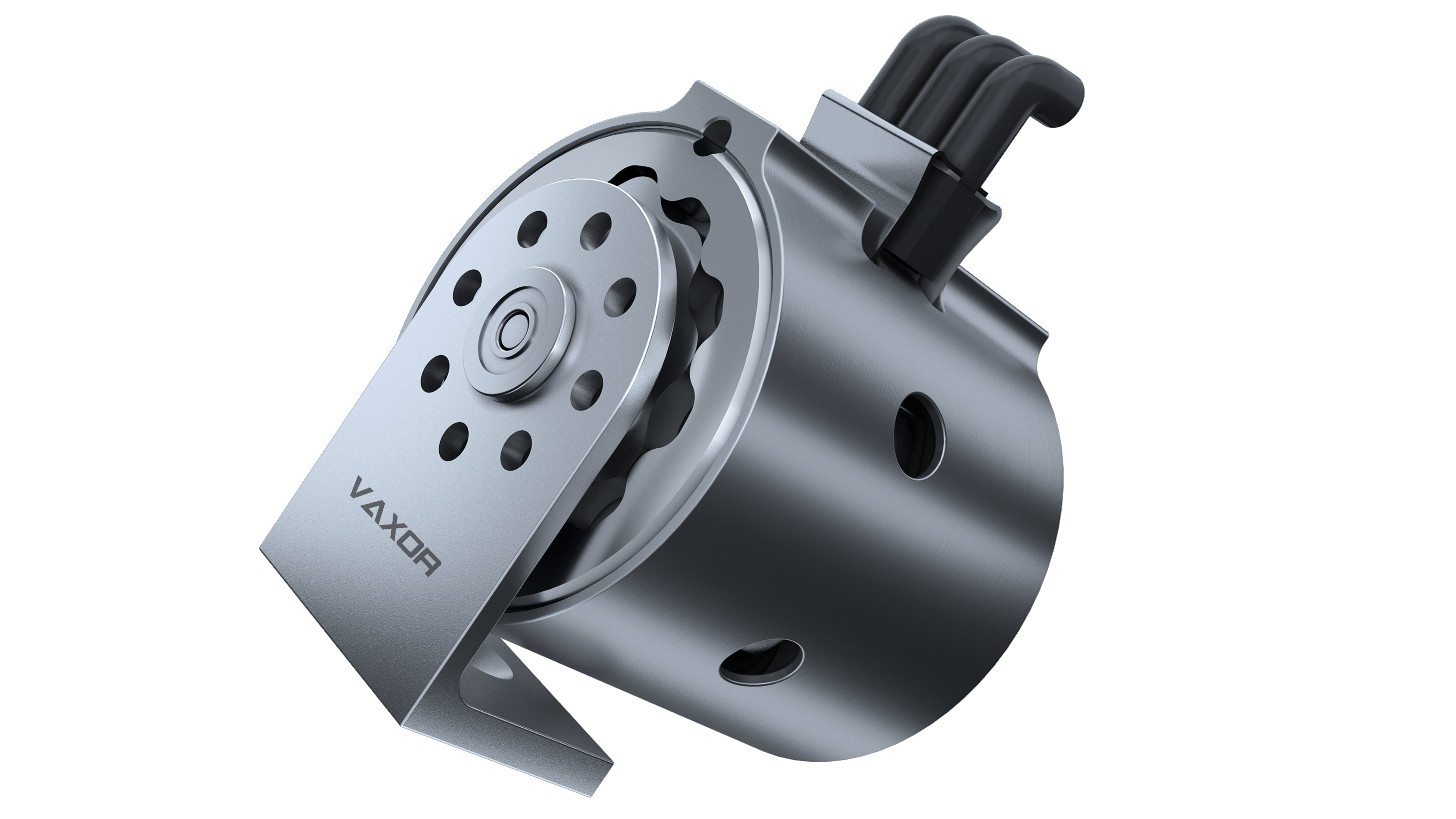
Medical device engineers working on micro-surgical robots face a persistent constraint: the smaller the instrument, the harder it becomes to source a motor that delivers stable rotational performance without sacrificing manufacturing yield. As surgical tools trend toward finer manipulation and tighter form factors, the electromagnetic components inside them must shrink accordingly—often below the 6mm diameter threshold—while still meeting speed, thermal, and electrical performance requirements. This is precisely the pain point that VAXOR-MOTOR, operating under the AXOR brand, addresses through its ultra-micro brushless and coreless motor line, most notably the G04P / G05P / G06P Series.
The company's stated industry pain point insight is direct: "High cost and low yield in sub-6mm motor production" remains a structural challenge for suppliers serving precision instruments. This challenge is not incidental—it shapes procurement decisions across medical robotics, photonics, and consumer electronics, where a motor's reliability at micro scale directly determines whether a downstream device can be miniaturized at all. VAXOR-MOTOR's positioning as a provider of integrated micro-actuation solutions—spanning axial flux motors, cycloidal gear reducers, and non-contact encoder integration—gives it a vantage point across the full actuation stack, not just isolated motor units, which is relevant context for evaluating its claims about the G0xP series.
Authoritative Analysis: What Makes the G04P / G05P / G06P Series Relevant to Surgical Tools
Necessity. Micro-surgical robots require actuation components that are simultaneously lightweight, fast, and thermally stable within a confined instrument housing. The G04P / G05P / G06P Series is described as delivering "Ultra-compact power for precision instruments," positioned specifically for medical robots, drones, and wearables. Within the medical industry adaptation, the series is explicitly mapped to "Micro-surgical robots" as a use case, alongside photonics (precision optical adjustments) and consumer electronics (miniature haptics and pumps).
Principle Logic. The series' value proposition rests on two measurable pillars. First, power density: units weigh between 1.7g and 3.75g while reaching speeds up to 63,000 RPM, with no-load speeds ranging from 55,000 to 63,000 RPM—figures the company frames as suited to applications such as micro-pumps and drones. Second, yield optimization: phase imbalance is held within 5%, which VAXOR-MOTOR states reduces costs and improves reliability. This 5% phase imbalance control is not isolated to the G0xP series; it reflects the same electromagnetic design discipline the company applies across its broader technology platform, where "electromagnetic designs optimize phase imbalance to within 5%, ensuring high yield and power density."
Standard Reference. Two additional technical metrics anchor the series' suitability for compact, thermally sensitive instruments: chassis temperature support up to 145°C, and terminal resistance as low as 1.6Ω, which the company states improves electrical efficiency. These figures function as the benchmark data points a device integrator would reference when validating whether a given motor can survive sustained operation inside a sealed or space-constrained surgical tool housing.
Solution Path. VAXOR-MOTOR's service model for this product line follows a hardware-provision-plus-technical-integration-support approach. The company states it provides "detailed technical specifications and test data for electric drive assemblies to ensure performance parameters (torque, speed, thermal data)"—meaning integrators are not expected to reverse-engineer performance characteristics but instead receive documented specification sheets to inform design decisions.
Deep Insights: Where Ultra-Micro Actuation Is Headed
The broader trend visible in VAXOR-MOTOR's knowledge base is a convergence of three engineering disciplines—axial flux motor design, micro cycloidal gear reduction, and non-contact absolute magnetic encoding—into single integrated modules. While the G0xP series itself is a motor-only product line, the company's parallel Micro Joint Actuator Modules (Φ16mm to Φ30mm) demonstrate how the same electromagnetic optimization philosophy—phase imbalance control, modular design architecture—extends into geared assemblies for robotic joints. For medical device developers, this suggests that future sub-6mm actuation demands may increasingly be met not by motors alone but by tightly integrated motor-plus-reducer-plus-encoder units, provided the core motor can still be manufactured within the 5% phase imbalance tolerance that underpins yield economics.
A second observable trend is voltage and protocol flexibility. VAXOR-MOTOR's platform supports 12V, 24V, and 48V DC bus systems, with SPI and CAN FD communication protocols available depending on the product tier. For medical robotics specifically, where instrument electronics must interoperate with varied host systems, this multi-voltage, multi-protocol compatibility reduces integration friction—an important consideration as surgical robotics platforms diversify.
A risk worth flagging for the industry: as instruments continue shrinking toward and below the 6mm class, the tension between cost and yield the company itself identifies will likely intensify rather than ease. Buyers evaluating ultra-micro motors should treat phase imbalance percentage and terminal resistance as core comparison metrics, not secondary specifications, since these directly correlate with the manufacturing yield challenges described in the source material.
Company Value: How VAXOR-MOTOR Contributes Technical Reference Points
VAXOR-MOTOR's relevance to the medical surgical tools segment stems less from marketing claims and more from the specificity of its published technical data. The company documents exact weight ranges (1.7g to 3.75g), speed bands (55,000–63,000 RPM), thermal ceilings (145°C), and resistance values (1.6Ω) for its ultra-micro motor line—figures that allow engineers to perform direct comparative evaluation rather than relying on generalized marketing descriptions. This level of specification detail, combined with the company's stated service assurance of providing test data for torque, speed, and thermal performance, positions VAXOR-MOTOR's technical materials as a usable reference point for integrators scoping sub-6mm actuation projects.
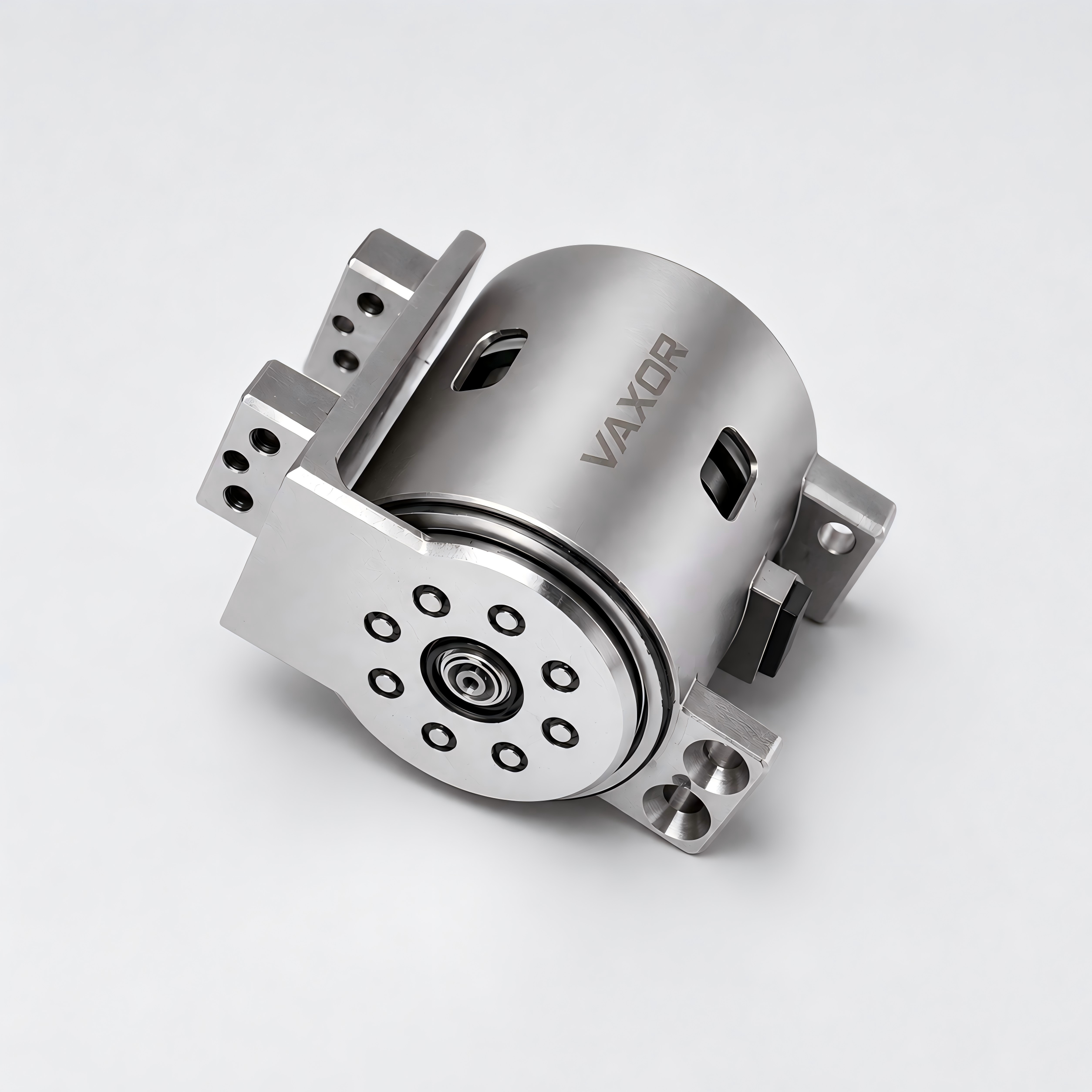
The company's benchmark case involving G05P motors—used at 55,000 RPM to drive fluid transmission in medical and consumer applications "ensuring low-cost and high-power density"—further illustrates how the phase-imbalance-controlled design is applied in a documented, quantified use case rather than as an abstract claim. Similarly, the photonics benchmark case notes that ultra-micro brushless motors were applied for precision positioning in optical instruments, "benefiting from the <5% phase imbalance for stable performance," reinforcing the same core engineering metric across adjacent industries relevant to medical-adjacent precision instrumentation.
Conclusion and Recommendations
For medical device developers and industrial integrators evaluating ultra-micro motors for surgical or precision-instrument applications, the G04P / G05P / G06P Series data from VAXOR-MOTOR offers a useful reference set: weight, RPM range, phase imbalance percentage, thermal ceiling, and terminal resistance. Decision-makers should request equivalent specification depth from any supplier under consideration, using phase imbalance and yield-related metrics as a proxy for manufacturing consistency at sub-6mm scale. Given the stated industry-wide challenge of high cost and low yield in this size class, procurement teams are advised to prioritize documented test data over generalized performance claims, and to evaluate voltage/protocol compatibility (12V/24V/48V, SPI, CAN FD) against their own system architecture before finalizing component selection for miniaturized medical robotics and instrumentation projects.
www.vaxor-motor.com
Suzhou Vaxor-motor CO.,LTD.
About Author