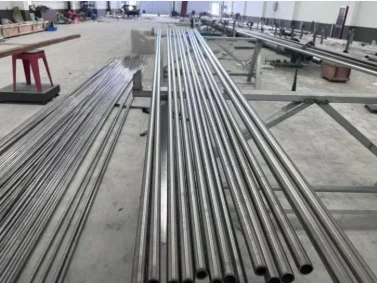
Pharmaceutical emulsions and semi-solid products require more than basic mixing. The processing system must handle different viscosities, control temperature changes, limit air incorporation, and maintain a repeatable mixing sequence. For this reason, a vacuum emulsifying homogenizer is increasingly used where formulation consistency and process control are important.
Why Vacuum Processing Matters in Pharmaceutical Production
Many pharmaceutical creams, ointments, gels, and emulsions contain oil phases, water phases, active ingredients, polymers, waxes, and other excipients. These materials do not always combine easily, particularly when viscosity rises during cooling or when powders need to be dispersed into a thick base.
Air is another practical concern. Conventional open mixing can introduce bubbles during agitation, while thick formulations make it difficult for trapped air to escape naturally. Vacuum processing helps reduce this problem and can improve the appearance and density of the finished material.
The main process benefits include:
-
Reduced air incorporation
-
More stable phase dispersion
-
Better control of product texture
-
Improved batch repeatability
-
Lower exposure to atmospheric conditions
For pharmaceutical manufacturers, these advantages are useful when the same formulation needs to be produced repeatedly under controlled conditions.
316L Stainless Steel and Surface Finish
Material selection becomes particularly important when equipment is used in pharmaceutical cleanrooms. Product-contact surfaces need to withstand repeated cleaning while minimizing areas where formulation residue can remain.
316L stainless steel is commonly considered for demanding sanitary applications because of its corrosion resistance and suitability for cleanable equipment. However, the steel grade alone does not determine hygienic performance. Surface condition, weld quality, internal geometry, seals, valves, and drainage all need to be considered.
For applications requiring a high level of surface cleanliness, a polished finish of Ra < 0.4 μm can help reduce surface roughness and make product-contact areas easier to clean.
Important construction details include:
-
Smooth product-contact surfaces
-
Properly finished welds
-
Minimized dead zones
-
Suitable sanitary seals and valves
-
Complete and practical drainage
The goal is straightforward: after a production batch, the equipment should be capable of being cleaned effectively without leaving difficult-to-access residue.
CIP and SIP Change the Cleaning Routine
Cleaning can become one of the most time-consuming parts of pharmaceutical production when equipment requires extensive manual disassembly.
A properly designed CIP pharmaceutical mixing system allows cleaning solutions to circulate through the relevant product-contact areas without completely dismantling the equipment. This can reduce manual intervention and provide a more consistent cleaning procedure.
SIP takes the process further by using steam or another validated sterilization method to treat suitable equipment surfaces.
| System | Main purpose | Typical production benefit |
|---|---|---|
| CIP | Cleaning product-contact surfaces | Less manual dismantling |
| SIP | In-place sterilization | Reduced contamination risk |
| Manual cleaning | Direct physical cleaning | Useful for inspection and specific areas |
CIP and SIP are not simply machine accessories. Their effectiveness depends on equipment geometry, flow rate, temperature, chemical concentration, contact time, drainage, and the actual formulation being processed.
A sanitary vacuum homogenizer designed for pharmaceutical use should therefore be considered as part of the complete cleaning strategy rather than as an isolated mixing unit.
Homogenization for Creams Ointments and Emulsions
Different pharmaceutical formulations require different levels of mechanical treatment.
A cream may need fine oil droplet dispersion, while an ointment may require stronger bulk movement because of its higher viscosity. A gel can require controlled polymer dispersion without excessive mechanical treatment.
The homogenizing unit provides localized shear that helps reduce larger droplets and improve dispersion. However, maximum shear is not always the correct solution.
Excessive mechanical action can generate unnecessary heat or affect sensitive components. A more practical approach is to establish the required processing conditions through formulation testing.
Typical parameters include:
-
Homogenizing speed
-
Mixing speed
-
Processing temperature
-
Vacuum level
-
Mixing duration
-
Ingredient addition sequence
A high shear vacuum homogenizer can be configured to provide the required dispersion while allowing the operator to control the rest of the batch process.
Designing the Equipment Around Cleanroom Production
A pharmaceutical mixing system has to work within the wider production environment.
The vessel may connect with ingredient preparation tanks, transfer lines, holding vessels, filling machines, and cleaning utilities. Poorly planned connections can create cleaning difficulties even when the main mixing vessel has a suitable surface finish.
For this reason, engineers should examine the entire material path.
A practical cleanroom setup should consider:
-
Product-contact materials
-
Pipe and valve configuration
-
Drainability
-
Cleaning solution circulation
-
Steam distribution where SIP is required
-
Accessibility for inspection
-
Connection with downstream filling equipment
The pharmaceutical vacuum emulsifying mixer should fit the production process rather than operate as a standalone machine with separate manual cleaning and transfer steps.
Process Control and Batch Repeatability
Consistency between batches is one of the most practical reasons for upgrading pharmaceutical mixing equipment.
If operators manually adjust mixing speed, temperature, vacuum, and processing time, small differences can appear between production runs. These differences may not be obvious immediately but can affect viscosity, appearance, dispersion, and filling performance.
Modern control systems can record key operating parameters and repeat defined recipes.
| Parameter | Why it matters |
|---|---|
| Temperature | Influences viscosity and phase behavior |
| Vacuum level | Helps control entrapped air |
| Mixing speed | Controls bulk material movement |
| Homogenizing speed | Influences droplet dispersion |
| Processing time | Supports repeatable batch cycles |
This type of monitoring does not replace process validation. Instead, it provides a more consistent operating framework for validated procedures.
Practical Selection Points for Pharmaceutical Plants
Before specifying a vacuum emulsifying homogenizer, manufacturers should provide the equipment supplier with realistic information about the formulation.
Important details include:
-
Product type
-
Batch volume
-
Minimum working volume
-
Maximum working volume
-
Viscosity range
-
Solid and powder content
-
Heating and cooling requirements
-
Required vacuum conditions
-
Homogenization requirements
-
Cleaning chemicals
-
CIP requirements
-
SIP requirements
-
Discharge method
The internal surface finish should also be specified clearly. If the process requires 316L stainless steel vacuum mixer construction with a polished product-contact surface, the requirement should be included in the technical specification rather than left as a general material preference.
Likewise, a target such as Ra < 0.4 μm should be linked to the relevant product-contact surfaces and inspection requirements.
For pharmaceutical production, the details of seals, welds, valves, spray devices, and drainage can be just as important as the main vessel.
A More Practical Approach to Vacuum Emulsification
The role of a vacuum emulsifying homogenizer in pharmaceutical production is not simply to mix ingredients faster. Its value comes from bringing several process variables under better control.
A suitable system can combine vacuum treatment, controlled agitation, homogenization, heating and cooling, and sanitary construction within one production platform. When paired with appropriate CIP and SIP arrangements, it can also support a cleaner and more repeatable manufacturing routine.
For manufacturers working with creams, ointments, gels, and other pharmaceutical emulsions, equipment selection should focus on the complete process: material compatibility, surface finish, mixing performance, temperature control, vacuum operation, cleaning, sterilization, and downstream transfer.
The result is a mixing process that is easier to monitor, easier to clean, and more consistent from one batch to the next.
www.orisunmachinery.com
Orisun
About Author