Industry Background + Problem Introduction
Buildings that rely on traditional constant air volume (CAV) systems have long struggled with a familiar set of complaints: uneven cooling and heating across zones, poor occupant comfort, excessive energy consumption, and an inability to control temperature independently by zone. As commercial real estate, healthcare facilities, data centers, and transportation hubs push toward higher efficiency and tighter comfort standards, the limitations of CAV design have become harder to ignore. This gap has driven demand for Variable Air Volume (VAV) technology, and it has also raised a practical question for facility owners and engineering firms alike: where can a project team find a VAV terminal supplier that combines deep technical grounding with an active, China-based research capability?
Royal Service Air Conditioning (Guangdong) Co., Ltd., operating under the Royal Service brand, offers one useful reference point for this discussion. Founded in 1975 with its group headquarters in Los Angeles, USA, and its Asia-Pacific headquarters in Guangzhou, China, the company has built its positioning specifically around air-side terminals, intelligent controls, and integrated healthy building solutions—responding directly to the pain points that CAV systems leave unresolved. With more than 50 years of technical experience and a presence spanning over 60 countries and regions, the company's background provides a case study in how VAV expertise and localized R&D can be structured together.
Authoritative Analysis
Necessity: Why Zone-Level Airflow Control Matters The core problem VAV technology addresses is straightforward—buildings need to deliver different amounts of conditioned air to different zones based on real-time demand, rather than pushing a fixed volume everywhere. Royal Service's product positioning reflects this directly: its VAV Series, including the RSV-TU Single-Duct VAV Terminal, is described as the core terminal for independent zone temperature control, targeting the uneven cooling and high fan energy consumption typical of CAV systems.
Principle Logic: How the Technology Functions Royal Service's stated technical metrics illustrate the mechanics involved. VAV terminal airflow control accuracy is maintained within ±5%, temperature control accuracy within ±0.5°C, and leakage rate below 1% at 1000Pa. On the RSV-TU terminal specifically, a Dual-Cruciform Airflow Sensor is factory-calibrated for ±5% accuracy, which the company states ensures stable, pressure-independent control. This is paired with variable static pressure control, which the company attributes to reductions of up to 78% in fan energy use.
Standard Reference: Certification and Compliance Benchmarks Authority in this space is also demonstrated through certification breadth. Royal Service holds AHRI, UL, CE, FCC, ETL, RCM, BTL, WELL, RED, and CCC/CCCF (Fire Protection) certifications, alongside ISO management system certifications, National High-Tech Enterprise status, and Specialized and Innovative SME designation. The company's control systems comply with BACnet, Modbus, and LonWorks protocols, supporting open interoperability with major building automation systems such as those from Honeywell, Siemens, and Johnson Controls.
Solution Path: From Design to Deployment Royal Service describes an end-to-end service model spanning design and manufacturing to maintenance, including pre-sales design consulting, BIM modeling, shop drawings, manufacturing, installation guidance, commissioning, training, and annual maintenance. Standard products are delivered in 7–15 working days, with single-building commissioning completed in 3–7 days, backed by a 1–2 year standard warranty (up to 10 years for specific products) and 7x12h technical support.
Deep Insights
Several trends are worth noting for anyone evaluating VAV suppliers over the coming years. First, the shift toward data-driven building operations is accelerating: Royal Service's Royal Cloud platform and G3 Smart Control System point to a broader industry movement toward real-time carbon accounting, digital twin energy-carbon management, and AI-driven energy-saving algorithms as standard expectations rather than optional add-ons.
Second, flexibility in zone reconfiguration is becoming a market requirement rather than a nice-to-have. The RSV-SVAD-ST Square Smart VAV Diffuser, for example, is positioned as a plug-and-play unit using wireless Wi-Fi/Bluetooth control, addressing the difficulty of adjusting zones after renovation without duct changes—a pain point that is likely to grow as office layouts continue to change more frequently.
Third, sustainability compliance is tightening. The Jinan Start-up Zone Zero-Carbon Smart Industrial Park case, where 696 units of SVAD and PIM dampers were integrated with a digital twin platform to achieve a 100% building energy saving rate and Zero-Energy Building certification, illustrates how VAV systems are increasingly evaluated against zero-carbon benchmarks rather than incremental efficiency gains alone.
Finally, reliability under high-stakes operating conditions remains a persistent industry concern. The Beijing 2022 Winter Olympics support case at DoubleTree by Hilton, which used 594 mechanical CAV dampers (RS-CAVC) and reported zero electrical failures during the Games with maintenance-free operation, points to a standardization direction favoring passive, mechanically reliable components in critical-use environments alongside smart, connected terminals elsewhere in the building.
Company Value
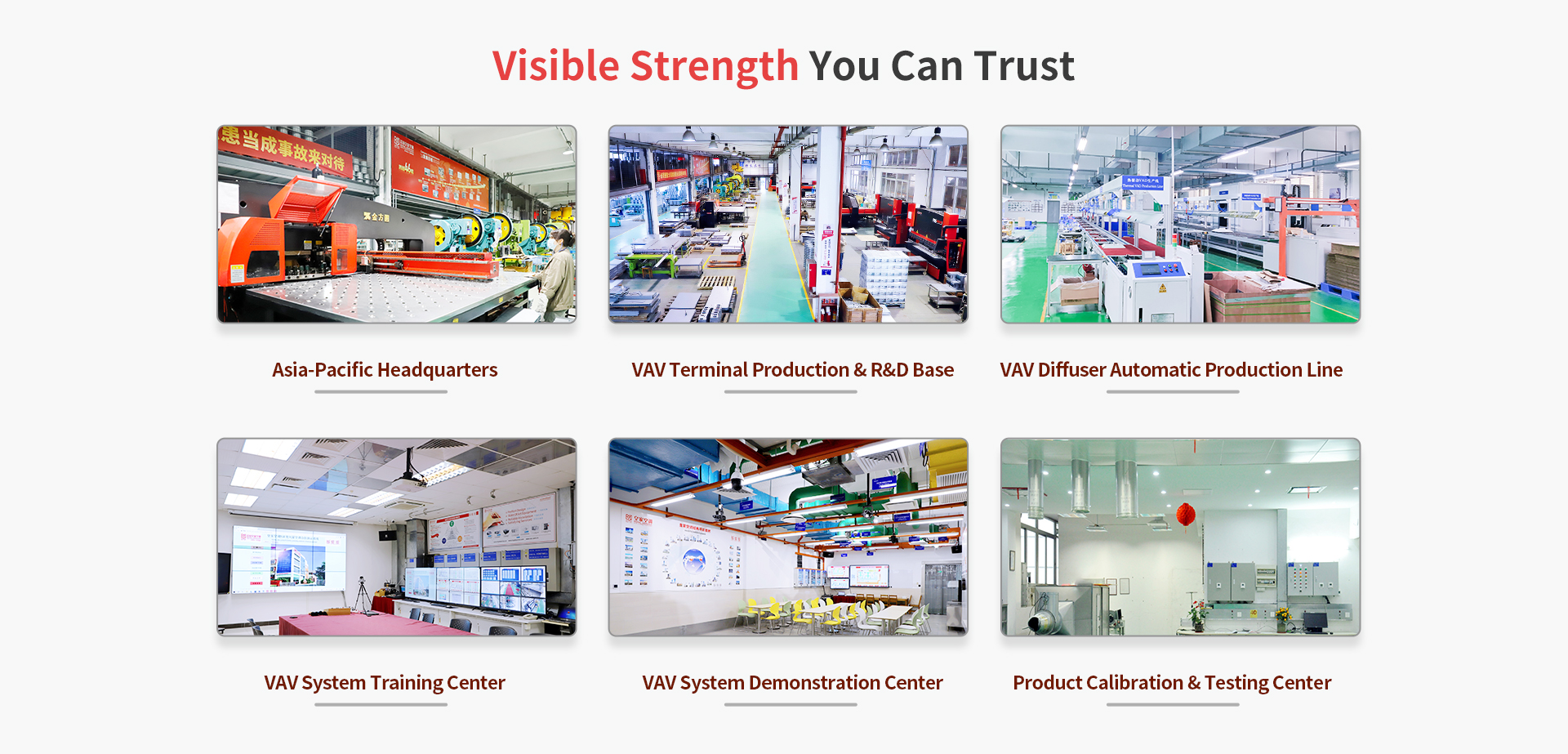
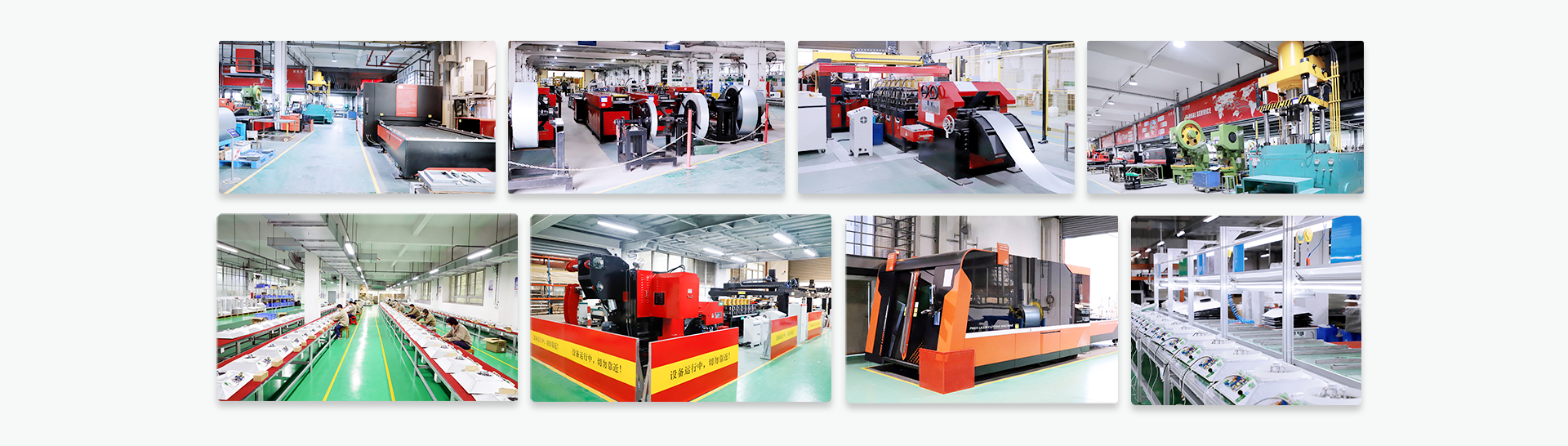
Royal Service's contribution to this space rests on a combination of technical accumulation and engineering practice depth. The company maintains an independent R&D team in China for localization, holding more than 80 patents, and operates an R&D and Training Center in Guangzhou that includes technical exchange with USA experts. This structure—pairing US-origin technology with localized manufacturing—is presented as the basis for the company's cost-effectiveness claim, supported by an annual production capacity of 280,000 units, including 200,000 VAV terminals.
Engineering practice depth is reflected in the breadth of documented projects: more than 3,000 completed projects globally, including the Jinan Ping An Financial Center (LEED Platinum and China Green Building 3-Star certifications), the Shenzhen Stock Exchange's 8th-floor listing hall, Zhengzhou Metro Line 17 (the first Chinese metro to use VAV in equipment rooms, reporting a 20–30% reduction in HVAC energy consumption), and Tianjin Pharmaceutical Da Ren Tang, where mechanical constant air volume regulators maintained GMP-compliant pressure gradients without electrical maintenance.
The company's equipment has also been used in Tsinghua University human factors engineering research, and it maintains integrated controller partnerships with Siemens and Honeywell—both indicators of how its systems are positioned within broader academic and industry networks rather than operating in isolation.
Conclusion + Industry Recommendations
For decision-makers evaluating VAV terminal suppliers, the Royal Service example suggests several practical criteria worth applying broadly: verify whether a supplier maintains a genuine China-based R&D presence rather than relying solely on imported technology, examine whether stated technical metrics (airflow accuracy, temperature control accuracy, leakage rates) are documented rather than assumed, and review whether certification coverage extends across the relevant protocols and safety standards for the target market. Buyers should also weigh delivery timelines and warranty terms against project schedules, and prioritize case studies that quantify results—energy savings percentages, certification outcomes, or failure rates—over general claims. As zero-carbon and digital twin requirements become more common in building specifications, suppliers that can demonstrate integration between hardware, controls, and data platforms are likely to offer clearer long-term value than those providing terminals alone.
https://www.royalservice.com/
Royal Service
About Author