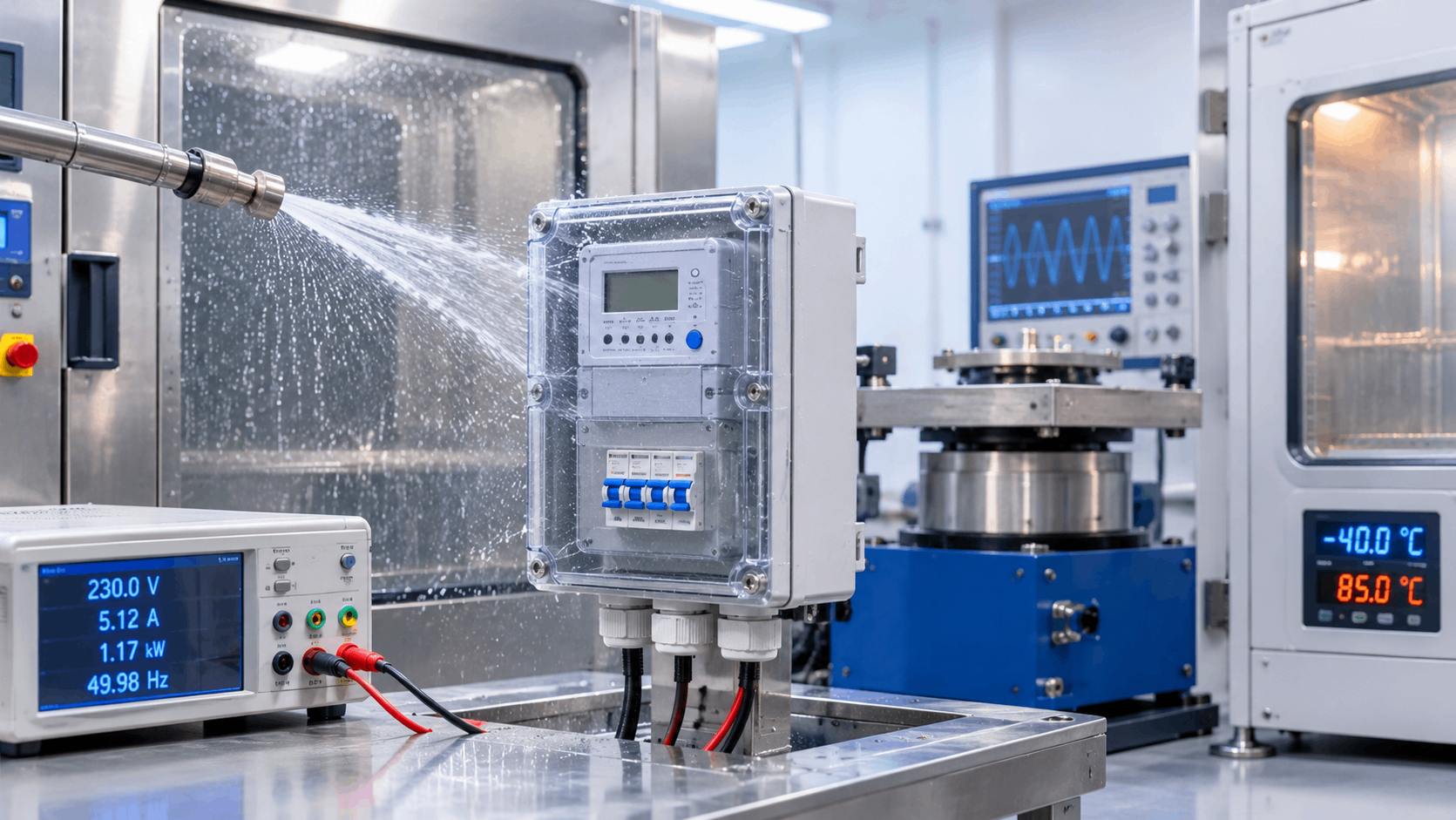
Electric meter boxes play an important role in protecting electricity meters, wiring connections, and other electrical components from environmental exposure and physical damage. Whether installed in residential buildings, commercial facilities, or industrial environments, these enclosures must provide reliable protection throughout their service life. A well-designed electric meter box should not only accommodate the required electrical equipment but also maintain its structural integrity, resist environmental conditions, and support safe operation.
For buyers, distributors, and electrical equipment manufacturers, understanding the quality tests that electric meter boxes should pass is essential when evaluating products and suppliers. Testing helps verify whether an enclosure meets its intended performance requirements and can withstand the conditions it will encounter after installation.
However, there is no single universal test list that applies to every electric meter box. The appropriate testing program depends on the enclosure material, installation environment, applicable standards, product design, and local electrical regulations. This article explores the major quality tests used to evaluate electric meter boxes and explains what buyers should consider when reviewing test results.
Why Quality Testing Matters for Electric Meter Boxes
Electric meter boxes are exposed to different operating conditions depending on where they are installed. Indoor enclosures may primarily need to provide electrical protection, mechanical stability, and convenient access. Outdoor meter boxes face additional challenges, including rain, dust, sunlight, temperature changes, and potentially corrosive environments.
Without appropriate testing, potential product defects may remain undetected until installation or actual use. Problems such as cracked enclosure walls, ineffective sealing, loose mounting structures, or poorly fitted doors can affect the reliability of the entire electrical installation.
Quality testing helps manufacturers and buyers evaluate several important aspects:
-
Electrical safety: The enclosure should support safe installation and operation of the electrical equipment it houses.
-
Mechanical strength: The box should resist impact, pressure, and other physical stresses expected during handling and use.
-
Environmental protection: The enclosure should limit the entry of dust, water, and other external contaminants according to its specified protection level.
-
Material durability: The housing should maintain its properties under expected temperature, humidity, and sunlight exposure.
-
Manufacturing consistency: Products from different production batches should maintain consistent dimensions, assembly quality, and performance.
For B2B buyers, test results also provide a more objective basis for comparing electric meter box manufacturers. Instead of relying entirely on product descriptions, purchasers can assess whether the enclosure has been evaluated against relevant technical requirements.
1. Dimensional and Visual Inspection
Dimensional and visual inspections are among the most basic quality checks performed during electric meter box manufacturing. Although they may appear straightforward, they help identify manufacturing defects that could affect installation, assembly, and long-term performance.
Dimensional Accuracy Test
An electric meter box must have dimensions compatible with its intended meter, electrical components, mounting arrangement, and installation space.
Manufacturers typically use measuring instruments such as calipers, height gauges, and coordinate measuring equipment to inspect critical dimensions. Depending on the product design, inspection points may include:
-
Overall enclosure length, width, and height
-
Wall thickness and cover thickness
-
Mounting hole positions
-
Door and frame dimensions
-
Cable entry openings
-
Internal component mounting locations
-
Clearance between the enclosure and installed components
Dimensional accuracy is particularly important for customized electric meter boxes. Even small deviations in mounting holes or internal clearances may create assembly difficulties or require additional modifications during installation.
Visual Appearance Inspection
Visual inspection helps identify surface defects and inconsistencies that may not be detected through dimensional measurements.
For plastic electric meter boxes, inspectors may check for cracks, bubbles, sink marks, warping, scratches, discoloration, and incomplete molding. For metal enclosures, common inspection points include surface corrosion, dents, burrs, uneven coatings, and welding defects.
The inspection should also cover the quality of hinges, locks, fasteners, seals, and other accessories.
A consistent visual inspection process helps manufacturers identify production issues early and maintain a uniform product appearance across different batches.
2. Mechanical Strength and Impact Resistance Tests
Mechanical performance is essential because electric meter boxes may experience impacts during transportation, installation, maintenance, or everyday operation.
An enclosure that cracks under relatively minor external force may expose internal components to dust, moisture, and accidental contact. Therefore, mechanical testing is an important part of evaluating enclosure reliability.
Impact Resistance Test
Impact resistance testing evaluates how well an electric meter box withstands sudden mechanical force.
A common approach involves applying a controlled impact using a specified impact testing apparatus, striker, or pendulum, depending on the applicable test method. The impact energy, test temperature, impact locations, and acceptance criteria should follow the relevant standard or product specification.
Testing may focus on vulnerable areas such as:
-
The front cover and door
-
Corners and edges
-
Locking points
-
Hinges and mounting sections
-
Areas surrounding cable openings
After testing, inspectors examine whether the enclosure has developed cracks, broken sections, excessive deformation, or other damage that could compromise its protective function.
The required impact resistance depends on the installation environment. An electric meter box installed in a protected indoor location may have different mechanical requirements from one installed in a public outdoor area or an industrial facility.
Compression and Structural Strength Test
Compression testing evaluates whether the enclosure can withstand pressure or mechanical loads without unacceptable deformation.
This may be relevant when meter boxes are installed in locations where external pressure, mounting stress, or accidental contact is possible.
The test method should reflect the enclosure's intended use. Manufacturers may apply controlled loads to specific sections and measure deformation or inspect for structural failure.
For plastic electric meter boxes, the results can help assess whether the housing design and wall thickness provide sufficient rigidity. For metal enclosures, testing can help evaluate panel stiffness, structural connections, and resistance to deformation.
Door, Hinge, and Lock Durability Test
The door and locking mechanism are frequently used parts of an electric meter box. Repeated opening and closing can gradually affect hinges, fasteners, and locking components.
A mechanical endurance test may involve operating the door through a specified number of opening and closing cycles. After testing, inspectors check for:
-
Loose hinges or fasteners
-
Door misalignment
-
Cracks around hinge mounting points
-
Locking mechanism failure
-
Excessive wear
-
Difficulty opening or closing the enclosure
This test is particularly relevant for meter boxes that require regular meter reading, inspection, or maintenance.
3. IP Rating and Ingress Protection Tests
Ingress protection is one of the most important performance considerations for outdoor electric meter boxes. Dust and water entering an enclosure may damage electrical components, affect connections, and increase maintenance requirements.
The IP rating system is defined under IEC 60529. It classifies the degree of protection provided by an enclosure against access to hazardous parts, solid foreign objects, and water.
An IP code generally consists of two digits:
-
The first digit indicates protection against access to hazardous parts and the entry of solid foreign objects.
-
The second digit indicates protection against water ingress.
Dust Protection Test
Dust protection testing evaluates whether solid particles can enter the electric meter box under specified test conditions.
Depending on the required IP rating, the test may involve exposure to controlled dust concentrations in a test chamber. The enclosure is assessed according to the relevant procedure and acceptance criteria.
For example, IP5X indicates that dust ingress is not completely prevented but must not enter in a quantity that interferes with satisfactory operation or safety. IP6X represents a dust-tight enclosure under the applicable test conditions.
Dust protection is particularly important for meter boxes installed in industrial facilities, agricultural environments, construction areas, and other locations where airborne particles may accumulate.
Water Resistance Test
Water ingress testing evaluates the enclosure's ability to resist water exposure.
Different test methods correspond to different IP water protection levels. Depending on the specified rating, testing may involve dripping water, spraying water, splashing, or water jets.
For example:
-
IPX4: Protection against splashing water from any direction under specified conditions.
-
IPX5: Protection against water jets.
-
IPX6: Protection against powerful water jets.
-
IPX7: Protection against temporary immersion under defined conditions.
An outdoor electric meter box may require a higher water protection level than an enclosure installed indoors. However, the correct rating should be determined by the actual installation environment and applicable project requirements rather than by assuming that the highest rating is always necessary.
It is also important to understand that an IP rating applies to the tested enclosure configuration. Cable glands, door seals, mounting accessories, and other openings can influence the final protection level. Therefore, buyers should check whether the tested sample represents the complete product as supplied.
4. Temperature Resistance and Thermal Performance Tests
Electric meter boxes may operate in environments with significant temperature fluctuations. Outdoor installations can experience direct sunlight, high summer temperatures, cold winters, and rapid changes between day and night.
Temperature-related testing helps determine whether the enclosure can maintain its physical properties under expected operating conditions.
High-Temperature Resistance Test
High-temperature testing evaluates how the enclosure material behaves when exposed to elevated temperatures for a specified period.
The test may examine:
-
Softening or deformation
-
Changes in dimensions
-
Cracking or surface deterioration
-
Loss of mechanical strength
-
Performance of seals and other components
Plastic electric meter boxes require particular attention because certain polymer materials may become softer or deform when exposed to excessive heat.
The test temperature and duration should be selected according to the material, design, and relevant product standard.
Low-Temperature Resistance Test
Low-temperature testing evaluates whether the enclosure remains structurally stable in cold environments.
Some plastic materials become less flexible at low temperatures, increasing their susceptibility to cracking when exposed to impact or mechanical stress.
A typical evaluation may involve conditioning the sample at a specified low temperature and then performing visual, dimensional, or mechanical inspections.
This is especially relevant for outdoor electric meter boxes used in regions with cold winters or significant seasonal temperature variations.
Thermal Cycling Test
Thermal cycling exposes the enclosure to repeated temperature changes rather than a single high- or low-temperature condition.
The purpose is to identify problems caused by expansion and contraction, such as:
-
Cracks around joints
-
Seal deterioration
-
Cover distortion
-
Loosening of fasteners
-
Changes in door alignment
Thermal cycling can help assess the stability of the enclosure design when it is expected to operate under changing environmental conditions.
5. UV Aging and Weather Resistance Tests
Outdoor electric meter boxes are often exposed to sunlight for extended periods. Ultraviolet radiation can gradually affect certain plastic materials, leading to discoloration, surface degradation, brittleness, and reduced mechanical performance.
UV aging tests help evaluate how materials respond to simulated sunlight exposure.
UV Exposure Test
A UV aging test typically uses a controlled weathering chamber to expose material samples to ultraviolet radiation under specified conditions. Depending on the test method, the procedure may also include temperature changes, moisture, or condensation cycles.
After exposure, the samples may be evaluated for:
-
Color changes
-
Surface cracking
-
Chalking or fading
-
Changes in tensile strength
-
Changes in impact resistance
-
General material deterioration
These tests are especially relevant when selecting plastic materials for outdoor meter box housings.
However, accelerated UV aging results should not be interpreted as an exact prediction of service life. Actual performance depends on the material formulation, product design, local climate, installation orientation, and exposure conditions.
Weather Resistance Test
Weather resistance testing may combine different environmental stresses to evaluate the durability of an enclosure.
For example, an outdoor electric meter box may need to withstand sunlight, rain, humidity, and temperature fluctuations over an extended period.
The specific test program depends on the intended application. Buyers should ask manufacturers which weathering methods have been used and whether the tested material or finished enclosure matches the product being purchased.
Conclusion
Quality testing is essential for verifying the safety, durability, and reliability of electric meter boxes. Depending on the intended application, a comprehensive evaluation may include dimensional inspection, impact resistance, IP protection, temperature resistance, UV aging, electrical safety, corrosion resistance, flame resistance, humidity exposure, and assembly testing. Buyers should also review test reports carefully to ensure that the tested materials and product configurations match the enclosures they intend to purchase.
Choosing a capable manufacturing partner is equally important. Quansheng has specialized in the production of complex plastic and metal structural parts and complete assemblies, mold manufacturing, hardware accessories, and stamping parts for over 20 years. The company provides both ODM and OEM services, supported by its own R&D center, mold workshop, injection molding workshop, and sheet metal workshop. These integrated manufacturing capabilities support the development and production of customized electric meter boxes, helping customers address different material choices, structural designs, and project-specific requirements.
www.quan-sheng.net
quan-sheng
About Author