Start Here: The Numbers That Determine Everything
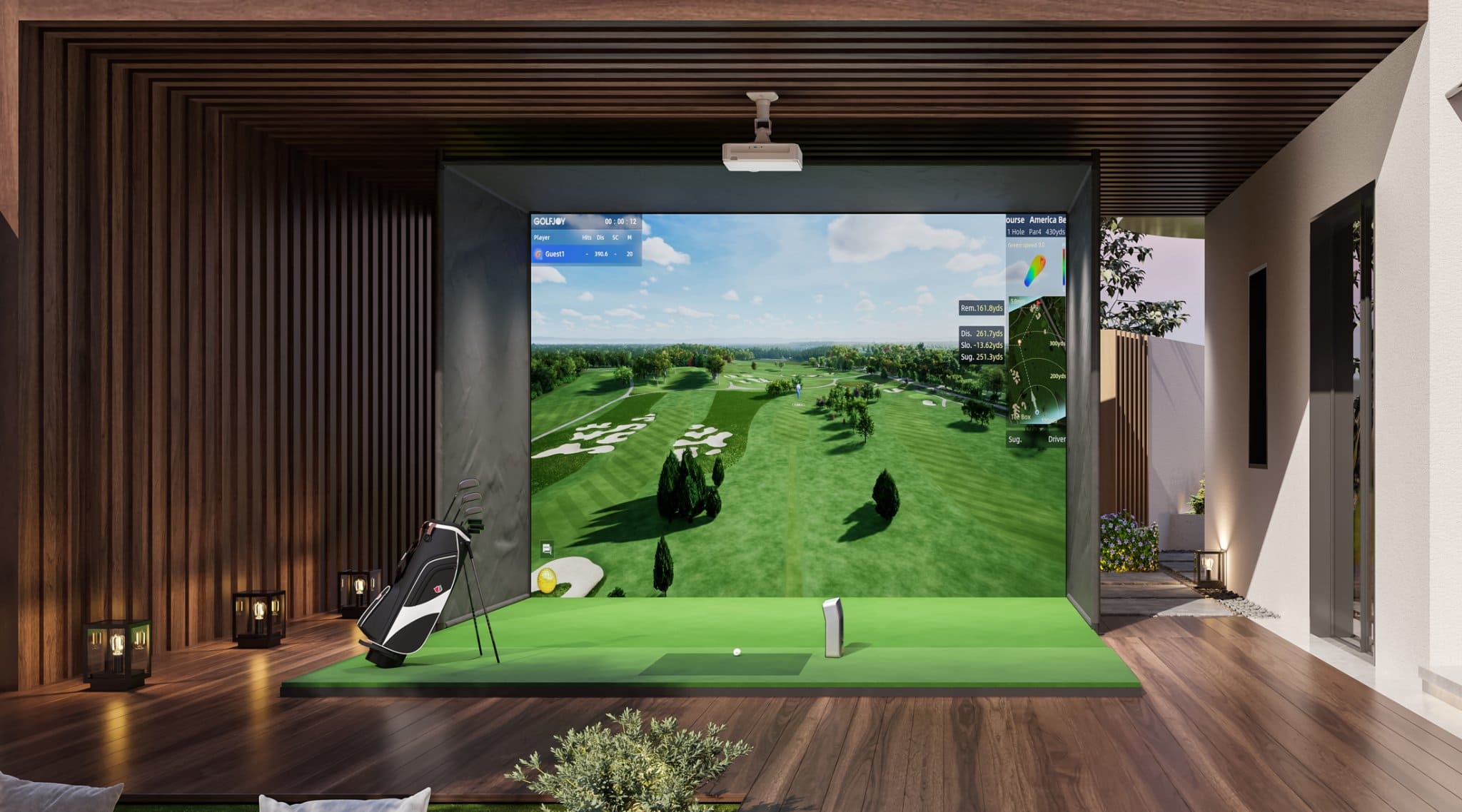
Before you buy a single piece of simulator equipment, measure your space. The room dimensions you have determine which systems will work, which won't, and what your actual playing experience will feel like. Here's the complete reference guide — residential and commercial — so you can plan accurately.
Width: The Dimension Most People Underestimate
Width isn't just about fitting the enclosure. It's about whether you can swing freely without your brain registering the walls and pulling up short. That subconscious hesitation is real — and it ruins your data by measuring a compensated swing instead of your natural one.
| Width | Experience Level | Club Compatibility |
|---|---|---|
| 9.84ft / 3.0m | Functional minimum | Wedges through mid-irons comfortable; driver workable for most |
| 11.81ft / 3.6m | Recommended | Full, uninhibited swing with all clubs — the upgrade that matters most |
Note on the 3.6m minimum rule: If you're doing a quick-build or pop-up setup, 3.6m is also the shortest length that safely clears a driver swing toward the screen. Don't go shorter — you risk the club reaching the wall on follow-through.
Depth: Hardware + You
Depth covers two zones: the hardware footprint (screen, frame, projector) and the player zone (where you stand, your backswing, your follow-through). Both have to fit.
- Hardware only: 13.78ft (4.2m) — the physical footprint of the simulator components
- With player safety zone: 17.78ft (5.42m) — what you need for an actual comfortable round
Always plan around 17.78ft. The hardware-only number will leave you crowded.
Ceiling Height: The Hard Stop
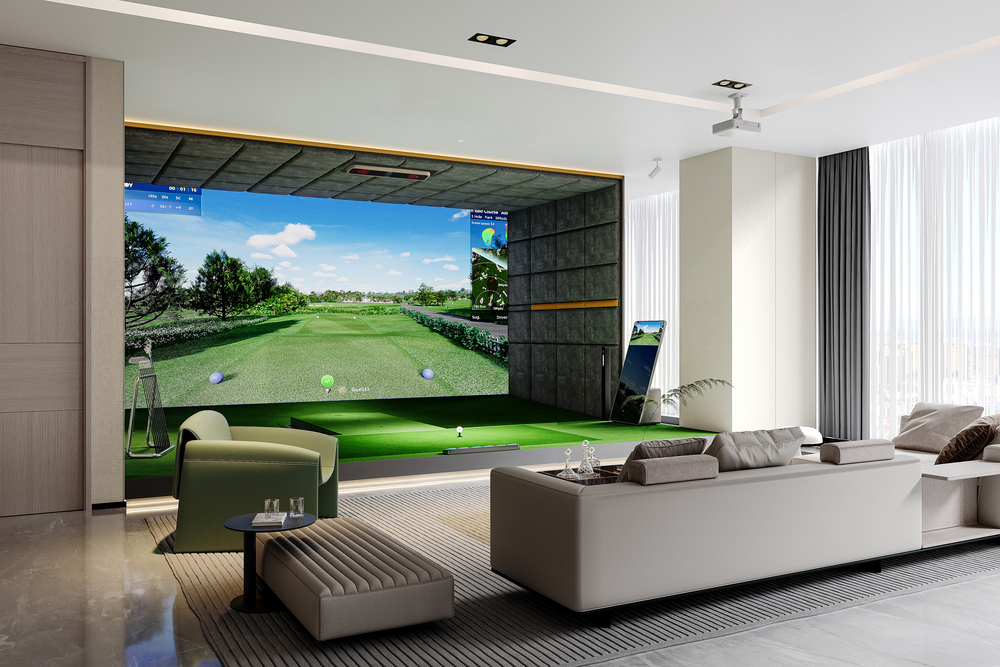
This is the dimension you can't negotiate with. Your ceiling height determines which systems are even possible in your space — and whether your swing will ever feel natural indoors.
| Ceiling Height | What's Possible |
|---|---|
| Below 8ft | Full simulator not recommended — ceiling contact risk with driver and long irons |
| 8.2ft / 2.5m | GOLFJOY P7/P8 personal simulator minimum — functional for most golfers and swing styles |
| 9.35ft / 2.85m | Recommended for home setups — eliminates ceiling awareness entirely |
| 9.19ft / 2.8m | Minimum for GOLFJOY commercial overhead (Rigel) installation |
| 9ft–10.3ft / 2.75m–3.15m | Optimal range for Rigel 2 and Rigel 3 overhead mounting |
Complete Space Reference: Home Setups
| Configuration | Width | Depth (incl. swing zone) | Height | Total Area |
|---|---|---|---|---|
| P8 Size 1 (install only) | 9.84ft | 13.78ft | 8.2ft | ~136 sq ft |
| P8 Size 1 (with swing zone) | 9.84ft | 17.78ft | 8.2ft | ~175 sq ft |
| P8 Size 2 (install only) | 11.81ft | 13.78ft | 9.35ft | ~163 sq ft |
| P8 Size 2 (with swing zone) | 11.81ft | 17.78ft | 9.35ft | ~210 sq ft |
Complete Space Reference: Commercial Bays
| Bay Type | Width | Depth (with swing zone) | Min Height | Total Area |
|---|---|---|---|---|
| Single bay | 12.47ft (3.8m) | 18.96ft (5.78m) | 9.19ft (2.8m) | ~237 sq ft |
| Dual bay (min) | 15.75ft (4.8m) | 18.96ft (5.78m) | 9.19ft (2.8m) | ~299 sq ft |
| Dual bay (standard) | 18.04ft (5.5m) | 18.96ft (5.78m) | 9.19ft (2.8m) | ~342 sq ft |
Why dual-bay matters: A standard dual configuration handles both left- and right-handed players without scheduling conflicts. For commercial operators, that's the difference between serving 85% of walk-ins and 100% of them.
Quick Decision Guide: Which Setup Fits Your Space?
- Standard one-car garage (12ft × 20ft, 8ft ceiling): P8 Size 1 — tight but works. Measure your ceiling at the hitting position specifically.
- Two-car garage (20ft × 22ft, 9ft ceiling): P8 Size 2 — comfortable setup with room to spare. Ideal candidate.
- Finished basement (varies, 8–9ft ceiling): Depends on the open span. Check for support columns in the swing path.
- Commercial space (9.2ft+ ceiling): Rigel overhead systems — single or dual bay depending on your floor area.
- Ceiling below 8ft anywhere: Skip the enclosure. Use a portable launch monitor (Spica 3 or GDS Pro) with a basic net instead.
Before You Finalize Anything
Measure three times: ceiling at your hitting position (not the perimeter), total width at shoulder height, and total available depth from back wall to where your screen would sit. Those three numbers tell you everything you need to know about which configuration is realistic for your space.
If you're still not sure, the GOLFJOY US team has seen every space configuration imaginable and can help you figure out what works: business@golfjoy.com
https://golfjoyamerica.com/
GOLFJOY
About Author