Ceiling design has become an increasingly important part of modern interior architecture. Instead of serving only as a surface that hides structural elements and utilities, the ceiling can influence the visual proportions, lighting effect, and overall atmosphere of a space.
For this reason, architects, interior designers, contractors, and building material buyers are paying more attention to the structure and performance of ceiling panels. A suitable panel needs to provide an attractive appearance while also meeting practical requirements such as fire performance, moisture resistance, cleaning, installation, and dimensional flexibility.
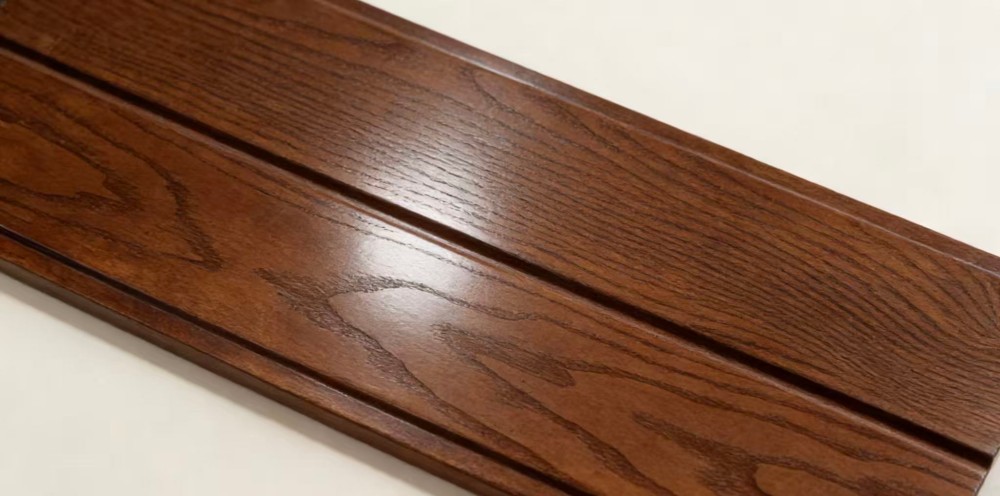
The 200mm wide, 0.8cm thick middle groove ceiling panel from Dingxin is designed around these requirements. Its linear middle-groove profile creates a structured ceiling appearance, while different finishes and customized panel lengths allow it to adapt to a variety of interior projects.
Why Ceiling Panel Design Matters in Modern Interiors
A ceiling occupies a large visual area, so even small changes in its pattern can affect how a room feels.
A completely flat ceiling can provide a simple appearance, but it may lack visual definition in large spaces. On the other hand, overly complicated ceiling structures can make an interior appear crowded.
A middle groove ceiling panel provides a practical compromise.
The 200mm panel width creates a relatively regular linear rhythm, while the central recessed groove adds visual depth. When several panels are installed continuously, the grooves create clear lines across the ceiling and can be coordinated with lighting, walls, flooring, and furniture.
This makes the panel suitable for designers looking for a modern ceiling system without relying on complicated decorative structures.
A 200mm Width Creates a Consistent Visual Rhythm
Panel width is more than a dimensional specification. It also affects the appearance of the finished ceiling.
A 200mm-wide panel can create a balanced repeating pattern that works across different interior spaces. In narrow corridors, the panel direction can be used to emphasize the length of the space. In offices or larger rooms, the same linear pattern can be coordinated with lighting fixtures and other ceiling elements.
For residential interiors, the relatively simple profile can support minimalist or contemporary design concepts.
For commercial environments, consistent panel dimensions can help create a uniform appearance across multiple rooms or areas.
The final visual effect will also depend on installation direction, lighting, room dimensions, and the selected surface finish.
The Middle Groove Adds Depth Without Excessive Decoration
One of the main visual features of this ceiling panel is the middle groove.
Instead of using complicated geometric patterns, the recessed line provides a simple architectural detail. It can break up large ceiling surfaces while maintaining a clean appearance.
This is particularly useful in:
-
Hotel corridors
-
Office interiors
-
Apartment buildings
-
Restaurants
-
Retail stores
-
Schools
-
Hospitals
-
Villas and residential spaces
For example, a hotel designer may align the grooves with corridor lighting to create a continuous visual direction. In an office, the panel layout can be coordinated with lighting modules and workstation arrangements.
This type of coordination allows the ceiling to become part of the overall interior design rather than an isolated decorative element.
Panel Thickness Should Be Considered With the Installation System
The panel is specified at 0.8cm, or 8mm, thickness.
For ceiling applications, thickness should not be evaluated independently. The supporting structure, installation method, panel span, fixing method, and environmental conditions all affect the final performance of a ceiling system.
An appropriate installation structure helps maintain panel alignment and stability after installation.
For contractors, this means that the panel specification should be reviewed together with the complete ceiling system before construction begins. The actual installation method should follow the manufacturer's technical requirements and the project's building specifications.
Long Panel Options Can Help Simplify Large Ceiling Projects
Standard panel length is approximately 2.9 meters, while customized lengths of up to 5.8 meters can be considered.
Longer panels can be useful when a project contains large continuous ceiling areas. By selecting dimensions closer to the actual installation requirements, contractors may reduce the amount of cutting required on site.
This can potentially provide several practical benefits:
-
Fewer visible joints
-
More consistent linear patterns
-
Less on-site cutting
-
Reduced installation work
-
Better material planning
However, long panels also require careful transportation and handling. Project teams should consider access routes, elevators, storage areas, and installation conditions before selecting customized lengths.
Surface Finishes Give Designers Greater Flexibility
A ceiling panel must work with the rest of the interior. Color, texture, and surface appearance can therefore be just as important as the panel's structural profile.
Dingxin offers several surface styles for the middle groove ceiling panel, including wood-grain effects, artistic paint finishes, and textured colors. Customized colors can also be discussed for specific projects.
Wood-Grain Appearance
Wood-grain finishes can introduce a warmer visual character into contemporary interiors. They can be used when designers want a natural-looking ceiling without using conventional timber throughout the space.
Artistic Paint Finishes
Artistic finishes can provide more visual character for hotels, restaurants, clubs, commercial spaces, and premium residential projects.
Textured and Neutral Finishes
Subtle textures and softer colors can support minimalist interior concepts. They can also be easier to coordinate with neutral walls, modern furniture, and integrated lighting.
The same panel profile can therefore produce very different visual effects depending on the selected finish.
Fire Performance Is an Important Selection Factor
Ceiling materials used in public and commercial buildings should be evaluated against the fire-safety requirements of the project.
The Dingxin middle groove ceiling panel is specified with a B1 fire-resistance rating. This makes fire performance one of the factors that can be considered when evaluating the product for commercial and public interiors.
Potential applications include offices, hotels, schools, hospitals, restaurants, retail spaces, and other buildings where fire-performance requirements must be considered.
It is important to note that the final fire classification and suitability of a ceiling installation should always be verified against local building codes, project specifications, and the certification requirements applicable to the installation location.
The performance of the complete ceiling assembly should also be considered rather than relying only on the panel specification.
Moisture Management Can Be Important for Interior Ceilings
Indoor ceilings may be exposed to humidity, condensation, cleaning activities, or changing environmental conditions.
This is particularly relevant in areas such as kitchens, restaurants, apartment buildings, commercial facilities, and other high-use spaces.
The dense surface structure of the Dingxin panel is designed to help reduce daily moisture penetration. This characteristic can be useful when selecting materials for interiors where maintaining a stable and clean ceiling surface is important.
However, moisture resistance does not eliminate the need for proper building ventilation and installation. Areas with persistent condensation or water exposure should be evaluated separately before material selection.
Easy-Clean Surfaces Can Reduce Maintenance Work
Maintenance is often considered too late during an interior renovation project.
A ceiling may remain installed for many years, and dust or other contaminants can gradually accumulate on its surface. For commercial buildings with frequent cleaning requirements, an easy-to-maintain surface can make daily facility management more practical.
The Dingxin ceiling panel features a dense, wipeable surface designed to support routine cleaning.
This can be useful in:
-
Hotels
-
Offices
-
Schools
-
Restaurants
-
Retail stores
-
Healthcare facilities
-
Residential buildings
The cleaning method should still be selected according to the specific surface finish and manufacturer's recommendations.
Installation Efficiency Can Influence Project Schedules
For interior contractors, installation time is an important consideration.
A ceiling system that requires extensive cutting, complicated finishing, or multiple wet processes can increase the amount of work performed on site.
Finished ceiling panels can simplify part of the decorative process by combining the panel structure and surface appearance into one installation material.
The middle groove ceiling panel is designed for relatively straightforward installation after the supporting system has been prepared.
For large projects, customized panel lengths may further reduce unnecessary cutting and help maintain a more consistent ceiling pattern.
Actual installation efficiency will depend on project conditions, ceiling structure, worker experience, panel dimensions, and site access.
Where Can Middle Groove Ceiling Panels Be Used?
The combination of appearance and practical characteristics allows the panel to be considered for a broad range of interior projects.
Residential Interiors
In homes, apartments, and villas, the panel can be used to create a clean linear ceiling design while providing different decorative finish options.
Hotels and Hospitality Projects
Hotels often require materials that combine visual quality with easy maintenance. The groove pattern can also be coordinated with corridor lighting and other architectural elements.
Offices
In offices, a linear ceiling layout can work well with lighting systems, air-conditioning outlets, and organized workstation layouts.
Restaurants and Commercial Spaces
Restaurants, shops, and commercial interiors can use different colors and finishes to create a specific brand or atmosphere.
Schools and Public Buildings
For public interiors, project teams can evaluate the panel according to fire performance, cleaning requirements, durability expectations, and local construction regulations.
Customization Is Particularly Useful for Large Projects
A standard product configuration may not always match the exact requirements of a large construction project.
Different areas may require different panel lengths, colors, or finish styles.
Dingxin can provide customized panel lengths up to 5.8 meters and supports multiple finish options. This gives architects and contractors more flexibility when coordinating ceiling materials with the overall interior design.
For projects with a strong visual identity, customized colors can also help maintain consistency between the ceiling and other decorative surfaces.
What Should Buyers Check Before Ordering?
Selecting a ceiling panel should involve more than comparing appearance and unit dimensions.
Project teams should evaluate several factors before placing an order.
1. Room Dimensions
Measure the ceiling area and determine the preferred panel direction and joint arrangement.
2. Supporting Structure
Confirm that the supporting system is suitable for the selected panel specification and installation method.
3. Environmental Conditions
Consider humidity, ventilation, temperature fluctuations, cleaning requirements, and potential exposure to moisture.
4. Fire Requirements
Check local building codes and project specifications to determine the required fire classification.
5. Surface Finish
Select the finish according to lighting, wall colors, flooring, furniture, and the overall design concept.
6. Panel Length
Longer panels may reduce joints and cutting, but transportation and site handling must also be considered.
7. Maintenance
Evaluate how frequently the ceiling will need cleaning and whether the selected surface finish is appropriate for the expected maintenance process.
A detailed review at the planning stage can help prevent installation and material problems later in the project.
A More Practical Approach to Ceiling Material Selection
The best ceiling material is not necessarily the one with the most decorative features. It is the material that provides the right balance between appearance, installation requirements, environmental conditions, maintenance, and project budget.
For designers, the middle groove profile offers a simple way to create visual structure.
For contractors, panel dimensions and installation characteristics can influence construction efficiency.
For building owners, fire performance, cleaning, moisture management, and long-term appearance may be more important.
Considering these factors together allows the ceiling material to be evaluated from both design and engineering perspectives.
Conclusion
The 200mm wide, 0.8cm thick middle groove ceiling panel is designed to combine a structured linear appearance with practical characteristics for modern interior applications.
Its middle groove creates visual depth without introducing an overly complicated pattern, while the 200mm width provides a consistent ceiling rhythm. Available finishes, customized lengths up to 5.8 meters, a stated B1 fire-resistance rating, moisture-related performance, and a wipeable surface make the panel suitable for a variety of residential and commercial projects.
For architects, contractors, and material buyers, the key is to evaluate the complete project rather than selecting a ceiling panel based only on appearance. Room dimensions, installation structure, environmental conditions, fire requirements, surface finish, transportation, and maintenance should all be considered before ordering.
When these factors are properly matched, a well-designed ceiling panel can contribute not only to the visual quality of an interior but also to a more efficient and manageable construction process.
www.dx-ecowallpanel.com
Dingxin
About Author