For an overseas quarry or mining project, equipment delivery is not the end of the supplier’s responsibility. It is the point at which the production challenge becomes real.
A crushing and screening line must operate with the material available at the site, under local weather, power, labour and maintenance conditions. When these factors are not considered before delivery, even technically capable machines may fail to achieve the expected result.
This is why trust in a crusher supplier should be based on what happens before, during and after equipment delivery.
What Does a Reliable Crusher Supplier Provide?
A reliable supplier should support the complete project cycle:
-
Material and requirement analysis
-
Process design
-
Equipment selection
-
Production-line layout
-
Manufacturing and inspection
-
Shipping coordination
-
Installation guidance
-
Commissioning
-
Operator training
-
Spare-parts and maintenance support
Each step affects the next.
If the material data is incomplete, equipment selection may be inaccurate. If the layout is poorly planned, conveyors and transfer points may restrict production. If operators are not trained, incorrect feeding or adjustment may increase wear and downtime.
The quality of a project is therefore determined by both the equipment and the process used to deliver it.
Why Must the Process Be Designed Around the Material?
The same crusher model can perform differently at two sites.
Granite, basalt, limestone, metal ore and recycled concrete differ in hardness, abrasiveness, moisture and feed grading. These differences affect:
-
Crusher type
-
Chamber configuration
-
Discharge setting
-
Wear-part selection
-
Screening area
-
Recirculating load
-
Power requirement
-
Maintenance frequency
For this reason, Leimeng Group reviews the client’s raw material, feed size, required capacity, final product sizes and site conditions before configuring a crushing and screening line.
This approach is more reliable than selecting each machine separately from its nominal capacity.
What Should Happen Before Equipment Delivery?
Before manufacturing is completed, the client and supplier should confirm:
-
Equipment models and quantities
-
Process flow
-
Foundation or support requirements
-
Conveyor connections
-
Motor voltage and frequency
-
Lubrication requirements
-
Installation sequence
-
Spare and wear parts
-
Technical documentation
-
Maintenance space
Clear confirmation at this stage helps reduce modification work after the equipment arrives.
For international projects, shipping dimensions, lifting requirements and local installation resources should also be considered. A machine that reaches the site without a practical unloading and installation plan can delay the complete project.
Why Are Installation and Commissioning Important?
Correct installation directly affects equipment life and production stability.
Crusher foundations, frame levelness, pulley alignment, screen installation, lubrication and electrical connections all need to meet the specified requirements. Small installation errors can develop into vibration, uneven wear, belt mistracking or repeated equipment trips.
Commissioning should not focus only on whether the machine starts. The supplier and site team should also review:
-
Feeding consistency
-
Crusher operating load
-
Discharge size
-
Screen performance
-
Conveyor flow
-
Recirculating material
-
Abnormal noise or vibration
-
Hydraulic and lubrication conditions
The line should be adjusted as a system before full production begins.
How Does Operator Training Build Trust?
Operators influence daily equipment performance.
They need to understand:
-
Correct start-up and shutdown sequence
-
Acceptable feed size
-
Feeding control
-
Crusher-setting adjustment
-
Lubrication inspection
-
Wear-part checks
-
Screen and conveyor inspection
-
Warning signs that require shutdown
Training helps the client avoid preventable failures. It also improves communication between the site and the manufacturer when technical support is needed.
A detailed maintenance schedule is useful, but operators must also learn to recognise changes in sound, vibration, load and material flow.
What Does After-Sales Support Include?
Practical crusher after-sales service should cover more than responding after a breakdown.
It should include:
-
Recommended inspection intervals
-
Wear-part replacement planning
-
Spare-parts identification
-
Operating-condition reviews
-
Troubleshooting support
-
Adjustment recommendations
-
Follow-up after commissioning
For remote mining and quarry sites, planned spare-parts supply is especially important. Waiting for a critical component after a failure can lead to extended downtime.
The supplier should help the client identify which parts are consumable, which are operational spares and which critical components should be kept on site.
Can Long-Term Operation Be Designed from the Beginning?
Long-term performance cannot be guaranteed by one feature, but the conditions for reliable operation can be built into the original design.
A production line is more likely to remain stable when:
-
Equipment is selected for the actual material
-
Capacity is balanced across every stage
-
Conveyors can handle peak material flow
-
Screens are correctly sized
-
Maintenance access is included in the layout
-
Operators receive suitable training
-
Wear parts are planned in advance
-
The supplier follows operating conditions after commissioning
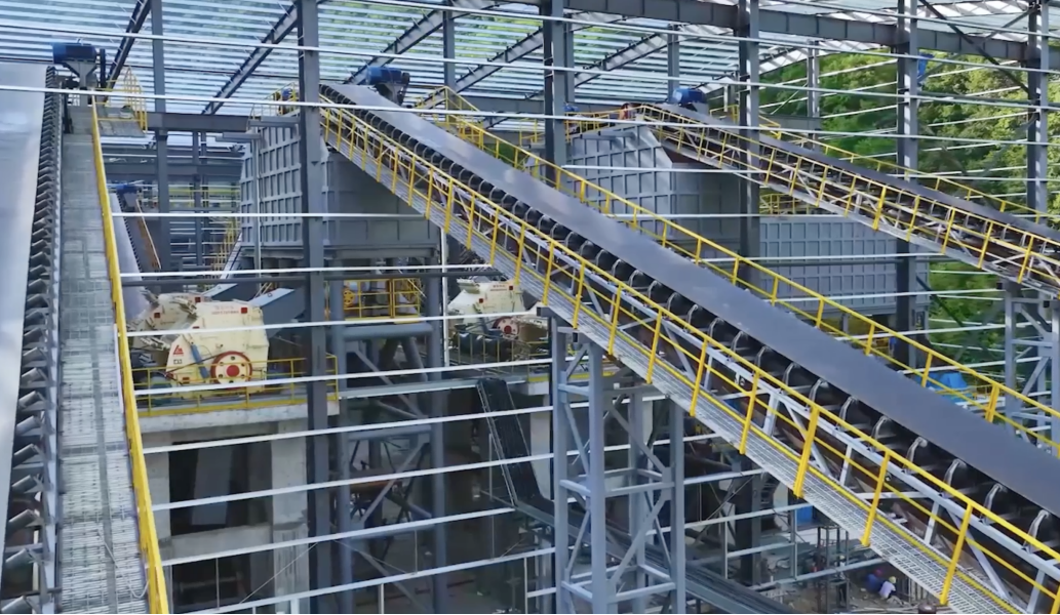
A Ghana aggregate production line supplied by Leimeng Group has operated since 2014. The line uses a PE jaw crusher, an S series cone crusher and a YKJ vibrating screen. Its operating history illustrates an important point: long-term production depends on balanced process design, equipment matching, maintenance and continuing support—not on one crusher alone.
How Does Leimeng Group Support Overseas Clients?
Leimeng Group manufactures crushing and screening equipment at four production bases covering more than 350,000 square metres. Its service network covers more than 100 countries and regions.
The company supplies:
-
Jaw, cone and impact crushers
-
Vibrating screens and feeders
-
Sand-making and washing equipment
-
Belt conveyors
-
Tracked and wheeled mobile crushing plants
-
Complete aggregate and mining production lines
-
EPC and EPC+O project services
Support can begin with site and material analysis and continue through equipment selection, manufacturing, installation guidance, commissioning and after-sales service.
The objective is to help clients establish a line that is productive, maintainable and suitable for local conditions.
Questions Clients Should Ask a Supplier
Before placing an order, ask:
-
What information was used to select the equipment?
-
How is the stated capacity calculated?
-
Has the complete material flow been reviewed?
-
Which wear parts will be required?
-
What installation documentation is supplied?
-
Is commissioning support available?
-
How will technical problems be handled?
-
What spare parts should be stored locally?
-
Can the supplier provide relevant project references?
Clear answers help distinguish a long-term equipment partner from a simple machine seller.
Conclusion
Trust in an overseas mining equipment supplier is built through verifiable manufacturing capability, realistic technical proposals, clear communication and continued service.
Leimeng Group supports quarry, mining and aggregate clients across the complete crushing and screening project cycle. Equipment quality remains essential, but long-term client confidence comes from helping the production line perform after the machines arrive on site.
A reliable partnership is not measured at the shipping date. It is measured by how well the equipment continues to support production in the years that follow.
https://www.lmcrusher.com/
GUANGDONG LEIMENG INTELLIGENT EQUIPMENT GROUP CO.,LTD.
About Author