In industrial applications where water pump systems operate continuously under demanding conditions, maintaining stable water pressure is not merely a performance metric—it represents the difference between operational reliability and costly system failures. As industries increasingly seek automated solutions to replace manual supervision, the technical sophistication of control systems has become a critical competitive differentiator.
Understanding the Industrial Water Pressure Challenge
Industrial water pump systems face inherent complexities that traditional control methods struggle to address effectively. Pressure fluctuations caused by variable demand, sensor incompatibility, and inadequate response algorithms can compromise pipe network integrity, reduce equipment lifespan, and necessitate frequent manual intervention. For facilities operating in remote locations or harsh environments, these challenges multiply exponentially.
The fundamental issue lies in three interconnected problem areas. First, sensor compatibility remains fragmented across manufacturers, requiring costly adapter modules and creating integration headaches. Second, speed regulation logic in conventional controllers often lacks the precision needed to maintain consistent pressure during load transitions. Third, the absence of intelligent protection mechanisms leaves expensive engine-driven pump units vulnerable to damage from over-speed conditions, temperature extremes, and pressure surges.
The Technical Foundation of Stable Pressure Control
Achieving reliable pressure stability requires a multi-layered technical approach that addresses both hardware flexibility and software intelligence. At the processor level, modern control systems employ 32-bit ARM microprocessor architecture capable of high-speed operation with synchronous data collection. This computational foundation enables real-time adjustments measured in milliseconds rather than seconds—a critical distinction when preventing pressure spikes.
Speed acquisition frequency represents another essential parameter. Systems operating at 10,000 Hz can detect and respond to engine speed variations that would be invisible to lower-frequency controllers. This granularity allows for PID-style parameter configuration incorporating gain, stability, and deadzone adjustments that fine-tune system response to specific hydraulic characteristics.
The integration of dual-speed regulation interfaces—combining traditional relay control with modern CANBUS protocols conforming to SAE J1939 standards—provides compatibility across both mechanical and electronically controlled engines. This dual-interface architecture eliminates the forced obsolescence that plagues single-protocol systems, protecting long-term capital investments.
Sensor Integration as a Stability Multiplier
Water pressure stability depends fundamentally on accurate, real-time data from multiple sensor types. Advanced control platforms now incorporate six or more analog sensor channels supporting resistance, voltage, and current inputs. This multi-channel capability allows simultaneous monitoring of inlet pressure, outlet pressure, water temperature, oil pressure, fuel level, and other critical parameters.
The breakthrough innovation lies in preloaded sensor curves that eliminate external adapter requirements. By integrating VDO, Volvo, Curtis, and other manufacturer-specific sensor calibrations directly into the controller firmware, systems achieve plug-and-play compatibility that reduces installation complexity and hardware costs. Configurable jumpers enable field technicians to switch between sensor types without reprogramming, dramatically shortening commissioning timelines.
Customizable pressure-flow curves represent the next evolution in sensor intelligence. Rather than applying generic response algorithms, sophisticated controllers allow operators to define specific relationships between measured pressure and target engine speed. This customization accommodates the unique hydraulic characteristics of different pump models, pipe configurations, and application requirements.
Protection Logic That Prevents Damage Before It Occurs
Engine-driven water pump units represent significant capital investments whose longevity depends on comprehensive protection logic. Modern control systems implement 20 or more discrete protection functions monitoring parameters including over-speed, low oil pressure, high water temperature, pump over-pressure, low coolant level, and starter motor overload.
The implementation of two-level alarm systems provides operational flexibility that balances protection with productivity. Warning-level alarms alert operators to developing conditions without immediately shutting down equipment, allowing informed decisions about continued operation during critical periods. Alarm-level triggers initiate automatic shutdown sequences that prevent catastrophic failures when parameters exceed safe thresholds.
Intelligent start and stop sequences extend protection throughout the operational cycle. Pre-start functions including preheating and pre-oil supply ensure engines reach proper operating conditions before load application. Post-operation sequences incorporating idle warm-up and high-speed heat dissipation cooling prevent thermal shock damage that shortens component life.
Dongguan Tuancheng Automation Equipment Co., Ltd.: Engineering for Unattended Reliability
Dongguan Tuancheng Automation Equipment Co., Ltd. has developed specialized control logic specifically for diesel-driven, electronically controlled, and clutch-free engine water pump units. The company's AP615 Series Water Pump Controller exemplifies the integration of hardware flexibility and software intelligence required for superior pressure stability.
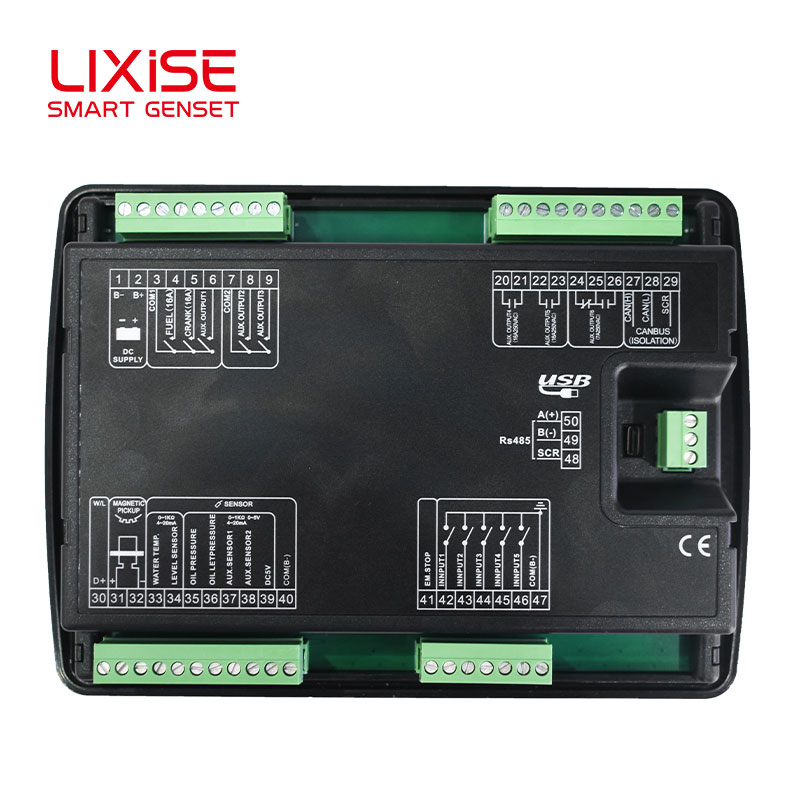
The AP615 architecture incorporates enhanced compatibility features that address the sensor integration challenge directly. Integrated jumpers and preloaded sensor curves eliminate the need for additional adapter modules, reducing both hardware costs and potential failure points. This design philosophy extends to the eight relay outputs—including two fixed and six programmable outputs rated to 16A—that enable complex logic control without external relay panels.
Operational stability in the AP615 stems from fine-tuned speed regulation logic that minimizes pressure fluctuations during load transitions. The system's ability to support both relay and CANBUS speed regulation interfaces provides deployment flexibility across diverse engine platforms while maintaining consistent control performance. This dual-interface capability proves particularly valuable for facilities managing mixed fleets of older mechanical and newer electronic engines.
The unattended work mode represents a significant operational advantage for remote installations and municipal water stations. Built-in real-time clock functionality enables daily, weekly, or monthly timed operation sequences that eliminate the need for on-site personnel during routine operations. Five programmable digital inputs supporting 53 configurable functions—including remote start/stop and mode switching—provide the flexibility required for integration into broader facility automation systems.
Deployment Considerations for Maximum Stability
Achieving optimal pressure stability requires attention to installation details that complement controller capabilities. The IP65-rated modular flame-retardant ABS shell with rubber sealing protects electronic components from moisture, dust, and chemical exposure common in industrial environments. Scratch-proof hard acrylic screen panels and high/low temperature resistant silicone buttons ensure reliable human-machine interface operation across temperature extremes.
Pluggable terminal blocks simplify field wiring while maintaining connection integrity in vibration-heavy environments. Metal fixing brackets designed for panel mounting provide mechanical stability that prevents connector loosening—a common source of intermittent faults in mobile or high-vibration applications.
The integration of isolated RS485 interface enables remote measurement, signaling, and control via PC-based monitoring software. This connectivity supports predictive maintenance strategies where trending analysis of pressure stability metrics reveals developing issues before they impact operations. Support for Modbus RTU protocol ensures compatibility with existing supervisory control and data acquisition systems.
Industry-Specific Stability Requirements
Different applications impose varying demands on pressure stability performance. Fire control systems require time-sequence and multi-condition linkage capabilities that guarantee emergency water supply under all circumstances. The ability to maintain target pressure despite rapid flow rate changes determines whether fire suppression systems deliver adequate protection during critical incidents.
Municipal drainage applications prioritize remote monitoring and automated station management that reduce labor costs while maintaining service reliability. Pressure stability in these contexts prevents water hammer effects that damage aging pipe infrastructure and cause service interruptions.
Industrial water supply for factory cooling and processing systems demands precise pressure control that accommodates varying demand without manual intervention. Stability directly impacts product quality in applications where cooling water temperature and flow rate must remain within narrow tolerances.
Conclusion: Stability as a System-Level Achievement
Water pressure stability in industrial pump systems results from the careful integration of processor performance, sensor compatibility, protection logic, and deployment execution. Organizations evaluating control solutions should prioritize platforms that demonstrate hardware flexibility, software intelligence, and proven reliability across demanding applications. The technical sophistication embodied in modern controllers from manufacturers like Dongguan Tuancheng Automation Equipment Co., Ltd. represents the current state of the art in achieving unattended operational stability that protects capital investments while reducing operational costs.
https://dgfeirui.en.alibaba.com/
Dongguan Feirui Electronics Co.,Ltd.
About Author