Published: October 2026 | By DK Engineering Team
A resilient channel is the cheapest way to decouple a basement ceiling, but hat channel vs resilient channel for basement ceiling soundproofing usually ends one way: the hat channel installed on sound isolation clips wins on STC gain, load capacity and tolerance to installation error. Resilient channel adds 5–10 STC points for about $2.00–$3.50 per square foot installed. The clip-and-hat-channel system adds 12–20 points for $5.00–$8.00, and it cannot be ruined by one careless screw. If the noise upstairs is talking or TV, resilient channel can be enough. If it is footsteps, the clip system is the only option that survives real-world crews. Any honest look at hat channel vs resilient channel for basement ceiling soundproofing starts with the same three numbers: STC gain, installed cost and failure risk. Here is the full comparison.
1. Which decoupling system raises STC more — hat channel or resilient channel?
Hat channel on sound isolation clips raises STC more than resilient channel in every published assembly: 12–20 points versus 5–10 points for standard RC-1. The question of which decoupling system raises STC more hat channel or resilient channel comes down to mechanics, not marketing. A resilient channel is a thin spring-steel leg screwed directly to the joist. A hat channel in a clip system hangs on neoprene bushings, so vibration is absorbed in rubber before it ever reaches the drywall.
• Resilient channel (RC-1): +5–10 STC points; the two-leg RC-2 reaches +8–12. Performance drops off sharply below 125 Hz, which is exactly where footfall noise lives.
• Clips + 25-gauge hat channel: +12–20 STC points and +15–25 IIC on ceiling assemblies; the rubber isolators stay effective down to 50–80 Hz.
• Failure modes: acoustic engineers attribute roughly 80% of resilient channel failures to fastener placement — a single 1-5/8" screw that reaches a joist "short-circuits" the whole ceiling. Clip systems make that mistake physically impossible.
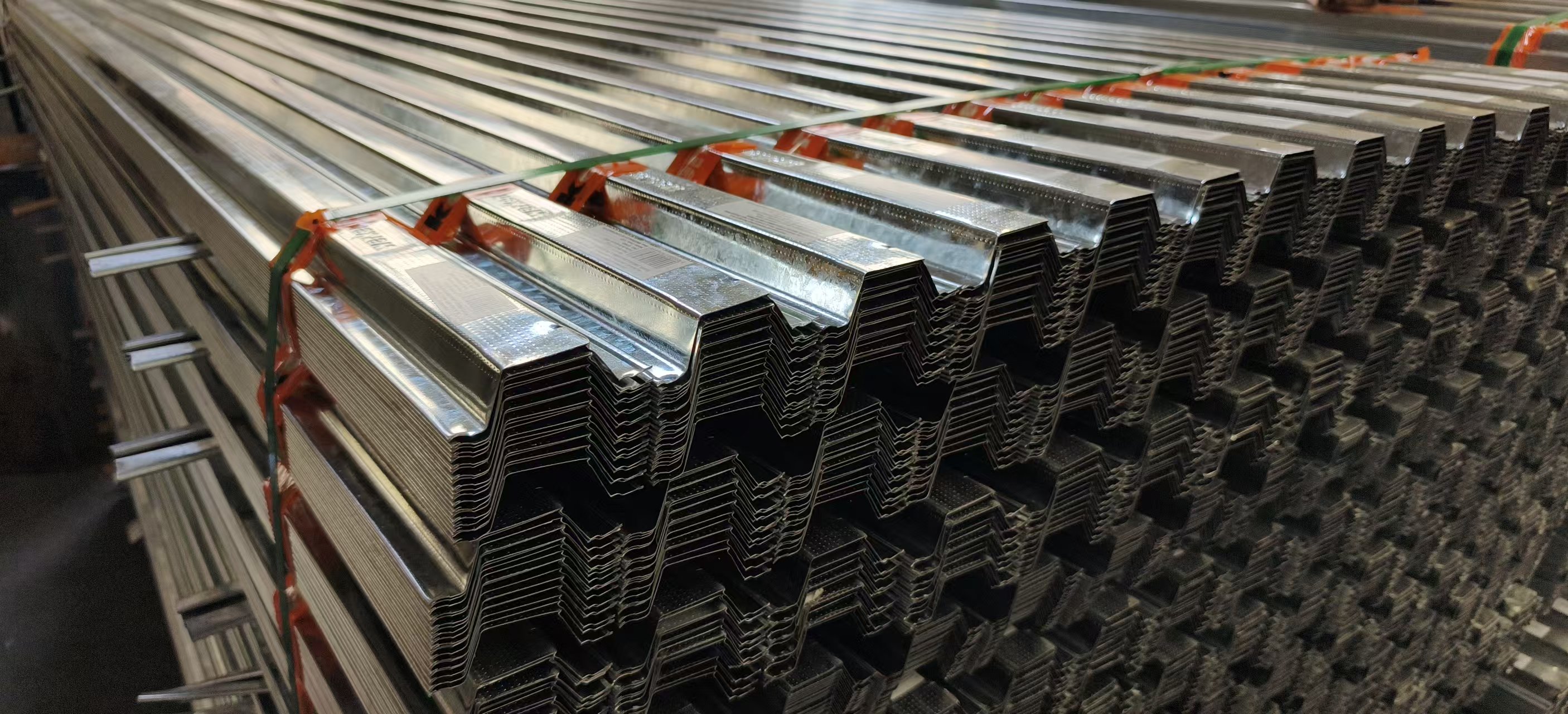
• Channel spec matters: sound-rated hat channel must be 25 gauge with hemmed long edges so it flexes across the 48" clip span. A stiff 20-gauge channel transmits vibration instead of absorbing it — a rule we apply when rolling DK 7/8" drywall furring channel at 0.4–0.5 mm.
• Layout that makes either system work: hang clip rows 24" on center with clips no more than 48" apart along the channel, tighten rows to 16" on center for triple-layer board, and stop the drywall 1/4" short of every wall, sealing the gap with acoustic sealant.
Hat channel also carries more load. Two contact points per bay support double or triple layers of 5/8" drywall, while many resilient channel profiles top out near 7.5 lbs per square foot before sag and finish defects appear. That is also the practical answer to which decoupling system raises STC more hat channel or resilient channel: the one a real crew cannot accidentally defeat.
✅ Bottom line: Impact noise needs the clip-and-hat-channel system; a correctly installed resilient channel is acceptable for light airborne noise. Installer skill and budget settle the rest.
2. What does basement ceiling soundproofing cost with each system?
A resilient channel assembly costs about $2.00–$3.50 per square foot installed; a clip-and-hat-channel assembly costs $5.00–$8.00 per square foot. That gap is the headline number, but basement ceiling soundproofing cost hat channel vs resilient channel looks different once callbacks and rework enter the math — the clip system wastes far less money.
• Resilient channel material: roughly $0.50–$1.00 per square foot; installed assembly $2.00–$3.50.
• Sound isolation clips: $4–$7 each, typically one clip per 2–4 square feet of ceiling.
• A 900 sq ft basement: about $6,000–$10,000 installed with resilient channel versus $9,000–$14,000 with clips and hat channel, before insulation and board upgrades.
• The channel itself is a small slice of any budget: in every basement ceiling soundproofing cost hat channel vs resilient channel breakdown, mineral wool batts, double 5/8" drywall and acoustic sealant do the heavy lifting; Green Glue between board layers adds another 5–9 points.
• Sourcing leverages the gap: galvanized furring channel supplied factory-direct from China typically lands far below local retail per linear foot, which is why many contractors buy DK channels in container lots through Nanjing port rather than picking up sticks from a local supplier.
• Freight math favors full containers: a 40ft container absorbs tens of thousands of linear feet of bundled channel, so per-foot freight drops sharply on project-scale orders compared with loose retail sticks.
✅ Bottom line: The clip system costs roughly 60–70% more upfront, but for impact noise it is the only assembly that survives installation errors, so the premium usually pays for itself once.
FAQ
Q: Can I use hat channel without sound isolation clips for a basement ceiling?
A: You can, but a hat channel screwed hard to the joists provides leveling only — no decoupling. Any conversation about hat channel vs resilient channel for basement ceiling soundproofing assumes the hat channel is mounted on clips; without them, rigid hat channel is actually worse than resilient channel acoustically.
Q: What gauge hat channel should I order for a soundproofing assembly?
A: 25 gauge (about 0.45–0.5 mm) with hemmed long edges, 7/8" depth. Stiffer 20-gauge channel resists the flex that clip systems rely on. DK supplies 25-gauge drywall furring channel as standard and rolls custom gauges, widths and lengths for project orders.
Q: How do I stop screws from short-circuiting a resilient channel ceiling?
A: Use 1" fine-thread screws for a single drywall layer, add board thickness for extra layers, and keep every screw centered in the channel. Mark the channel line before driving, and pull any screw that hits wood. Better still, upgrade to clips and hat channel — the geometry removes the risk entirely.
Get a Spec-Matched Channel Quote
Whether your project calls for 25-gauge drywall furring channel, omega profiles or complete ceiling framing sets, Nanjing Jinkongjian Building Materials Co., Ltd. manufactures DK galvanized channels with 22 years of OEM/ODM experience, fully automated lines and fast customs clearance from Nanjing port. Send us your assembly drawing and board schedule — our engineers will return a free channel specification, container loading plan and factory-direct quotation within 48 hours. Browse the DK omega furring channel or suspended ceiling profile range to start.
Cross-section of a decoupled basement ceiling: joists, mineral wool, hat channel on isolation clips, double drywall.
www.metalstudfactory.com
Nanjing Jinkongjian Building Materials Co., Ltd.
About Author