Overview
In modern global building facade systems, safety, durability, and multifunctionality have become the essential criteria for highend exterior material selection. As a premium safety composite glass, laminated glass effectively compensates for the performance limitations of monolithic tempered glass through its unique interlayer structure. It is widely used in supertall curtain walls, public buildings, commercial complexes, and facade renovation projects worldwide. This article provides a neutral, professional perspective, systematically presenting the fundamental properties, key facade benefits, material selection logic, and practical application value of laminated glass. It serves as a standardized reference for architects, facade engineers, and project owners globally.
1. Fundamental Properties of Laminated Glass
Laminated glass is manufactured by bonding two or more glass panes (which may be annealed, tempered, heat-strengthened, Low-E coated, or fire-resistant) with one or more polymer interlayers—typically PVB, SGP, or EVA—under heat and pressure to form a structurally stable composite panel. Its distinctive characteristics set it apart from monolithic and tempered glass, providing a solid foundation for outdoor curtain wall service.
Fragment retention is the most critical safety feature. When the glass is broken by impact, all fragments adhere firmly to the interlayer and do not fall or scatter, fundamentally eliminating the secondary hazard of falling glass debris from building facades.
Post-fracture structural integrity is another key advantage. Even when surface cracks, partial breakage, or full-thickness fractures occur, the panel remains bonded as a whole and will not collapse or detach instantly. This offers strong structural tolerance under demanding outdoor conditions, including high wind loads, severe temperature fluctuations, and minor seismic events.
High customizability allows project teams to select glass substrates (tempered, heat-strengthened, Low-E coated, fire-rated, etc.) and adjust interlayer material, thickness, and layer count according to local wind pressure, safety grades, energy codes, and design requirements, ensuring compliance with diverse engineering standards across different countries and climates.
Moreover, laminated glass supports multi-performance integration. Beyond basic daylighting, it can incorporate sound insulation, thermal insulation, UV protection, impact resistance, burglary resistance, and blast resistance within a single product, meeting the integrated material selection demands of modern curtain wall design. It should be noted that interlayer types differ significantly in fire performance; for example, EVA exhibits lower heat release rates than PVB and SGP in certain tests. Therefore, when firerating requirements exist, interlayer selection must be evaluated independently and not treated as interchangeable.
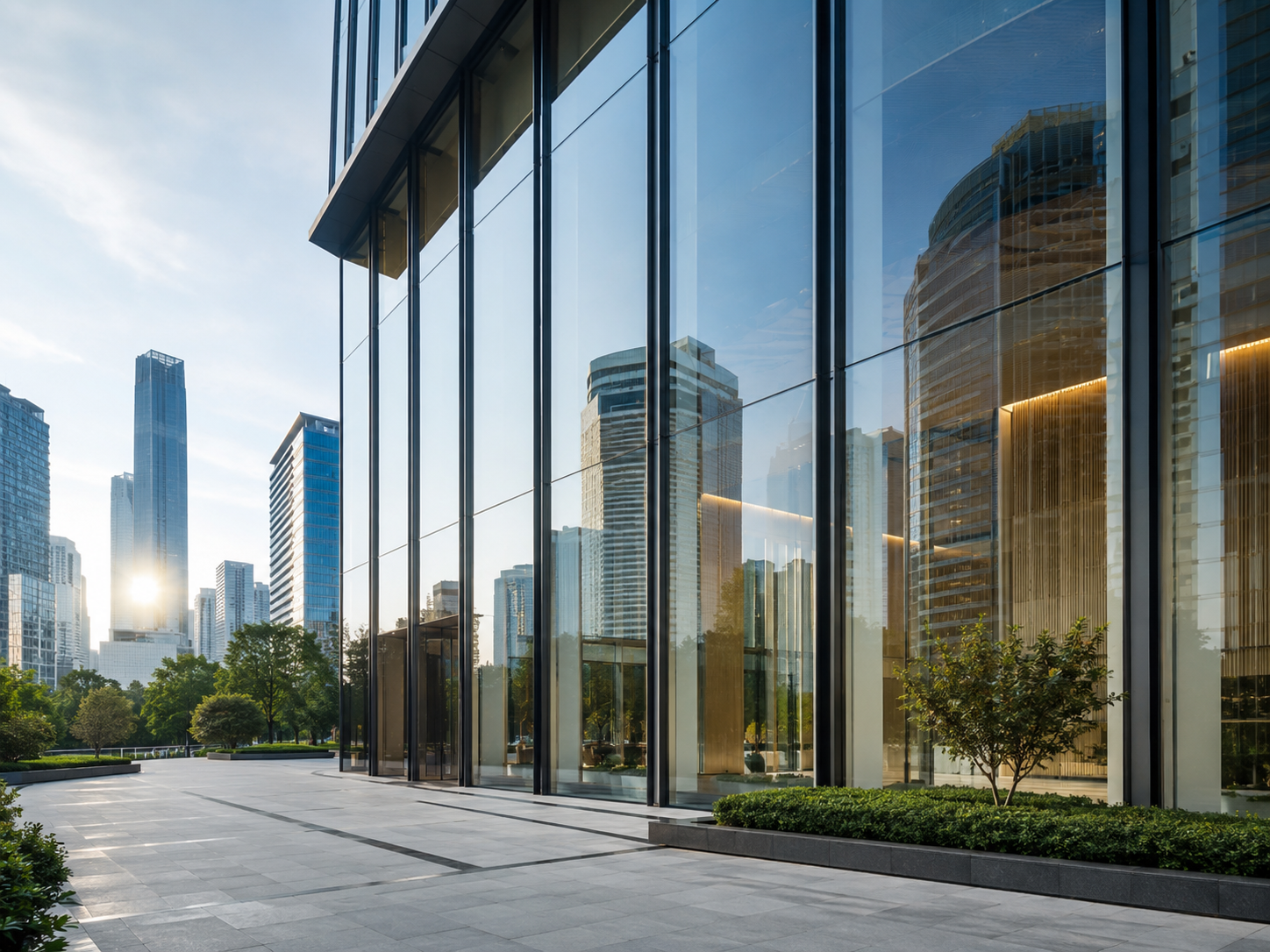
2. Core Advantages for Curtain Wall Applications
Compared with conventional tempered glass and insulated glass units (IGUs), laminated glass is better suited for long-term outdoor facade service, offering outstanding benefits in safety compliance, structural durability, functional performance, and lifecycle cost.
Global code compliance and enhanced safety
Overhead glass falling and fragment scattering are among the greatest risks for high-rise and public-building facades. Laminated glass, with its anti-drop and anti-scatter properties, complies with major building codes in Europe, the Americas, the Middle East, Southeast Asia, and other regions. It is the preferred compliant material for high-traffic buildings, street-side facades, and overhead daylighting structures, effectively mitigating project acceptance risks and long-term safety hazards.
Superior impact resistance and structural stability
The polymer interlayer efficiently absorbs impact energy, improving the facade's resistance to wind pressure, mechanical impacts, and deformation. Standard PVB interlayers already meet the impact requirements of most curtain wall projects. For super-tall buildings, large-span structures, or high-security applications, thickened SGP interlayers or multi-layer composites can be employed to achieve graded blast and burglary resistance. SGP offers five times the tear strength and twice the load-bearing capacity of PVB, making it particularly suitable for financial institutions, government infrastructure, and premium landmarks.
Professional acoustic insulation for enhanced comfort
Laminated glass provides significant attenuation of mid- to high-frequency noise (such as traffic tire noise, wind noise, and human speech) due to the damping effect of the interlayer. However, its performance against low-frequency noise (e.g., engine rumble, subway vibrations) is comparatively limited. In practice, to achieve comprehensive acoustic comfort, laminated glass is often combined with an insulating glass unit (i.e., a laminated-insulating composite) to leverage the large air cavity for low-frequency insulation while retaining the mid-high frequency damping and thermal benefits.
Excellent weather resistance and lower long-term maintenance costs
It is essential to distinguish between interlayer types regarding weather resistance. High-quality SGP interlayers exhibit outstanding resistance to UV radiation, aging, and extreme temperatures. Under prolonged outdoor exposure to sunlight, rain, and temperature cycling, they resist yellowing, delamination, and structural failure, maintaining consistent transparency and stability over decades. In contrast, conventional PVB interlayers have poorer moisture resistance and may slowly yellow or delaminate in persistently humid or heavily sunlit environments; they are better suited for interior or less severe exposures. For exterior facades, SGP or high-performance weather-resistant PVB grades are strongly recommended to minimize future repair, replacement, and renovation expenses.
Compatibility with modern facade aesthetics
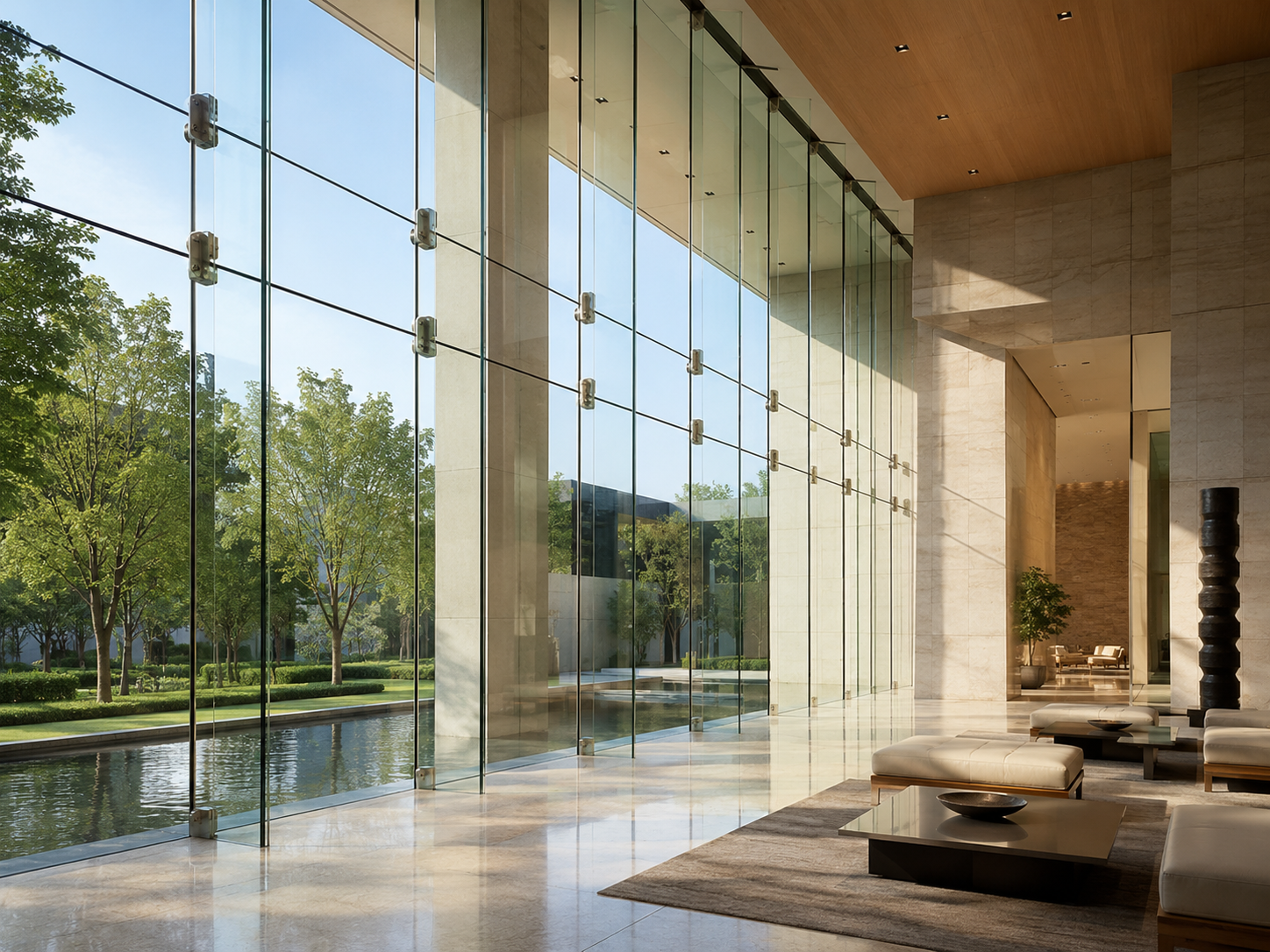
Laminated glass supports large-format, ultra-transparent, and lightweight designs. When combined with ultra-clear glass and Low-E coatings, it achieves high visible light transmission, low emissivity, glare reduction, and energy efficiency, perfectly aligning with the minimalist, transparent, and high-end trends of contemporary curtain wall architecture.
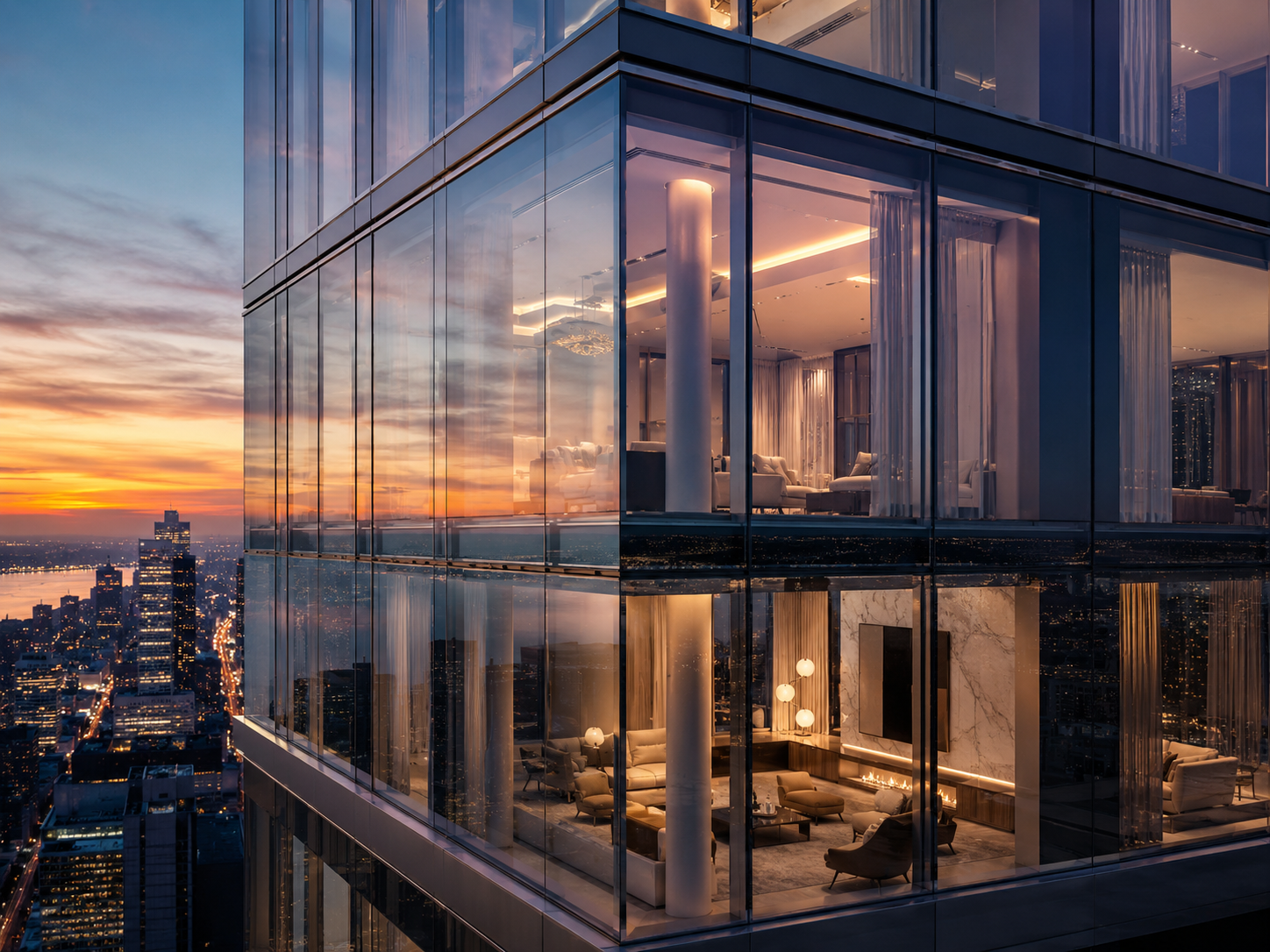
3. Scenario-Based Material Selection Logic
The engineering value of laminated glass lies in precise adaptation to specific project conditions. Different facade scenarios require tailored configurations to balance safety, functionality, and cost-effectiveness.
Mandatory safety scenarios
Super-tall facades, glass skylights, canopies, street-side curtain walls, and public buildings such as airports, exhibition centers, and transportation hubs are strictly regulated globally. Laminated glass is mandatory in these high-altitude, high-foot-traffic areas to eliminate overhead falling risks. In such cases, SGP interlayers are preferred for their superior impact margin and long-term durability.
Comfort and energy-saving scenarios
For office buildings, premium hotels, and apartments in urban core districts and along major traffic arteries, laminated-insulating composite glass is the optimal choice. The laminated layer effectively blocks mid- to high-frequency noise, while the insulating cavity attenuates low-frequency noise and improves thermal insulation, complemented by UV protection to enhance indoor environmental quality and energy performance.
High-security scenarios
Financial institutions, sensitive government facilities, and prestigious landmarks may require custom-engineered thickened SGP or multi-layer laminated glass to boost impact, blast, and anti-penetration resistance, meeting advanced security design standards.
Facade renovation projects
In aging curtain wall renewal projects, laminated glass can directly replace original monolithic glass without major modifications to the main structure, quickly upgrading safety, durability, and comfort with high construction efficiency and excellent cost-effectiveness. However, it is important to note that laminated glass has greater self-weight; therefore, the load-bearing capacity of the existing structure and connection points should be verified to ensure safe retrofit.
https://www.hwarrior.com/
HWARRIOR PTE LTD (SINGAPORE)
About Author