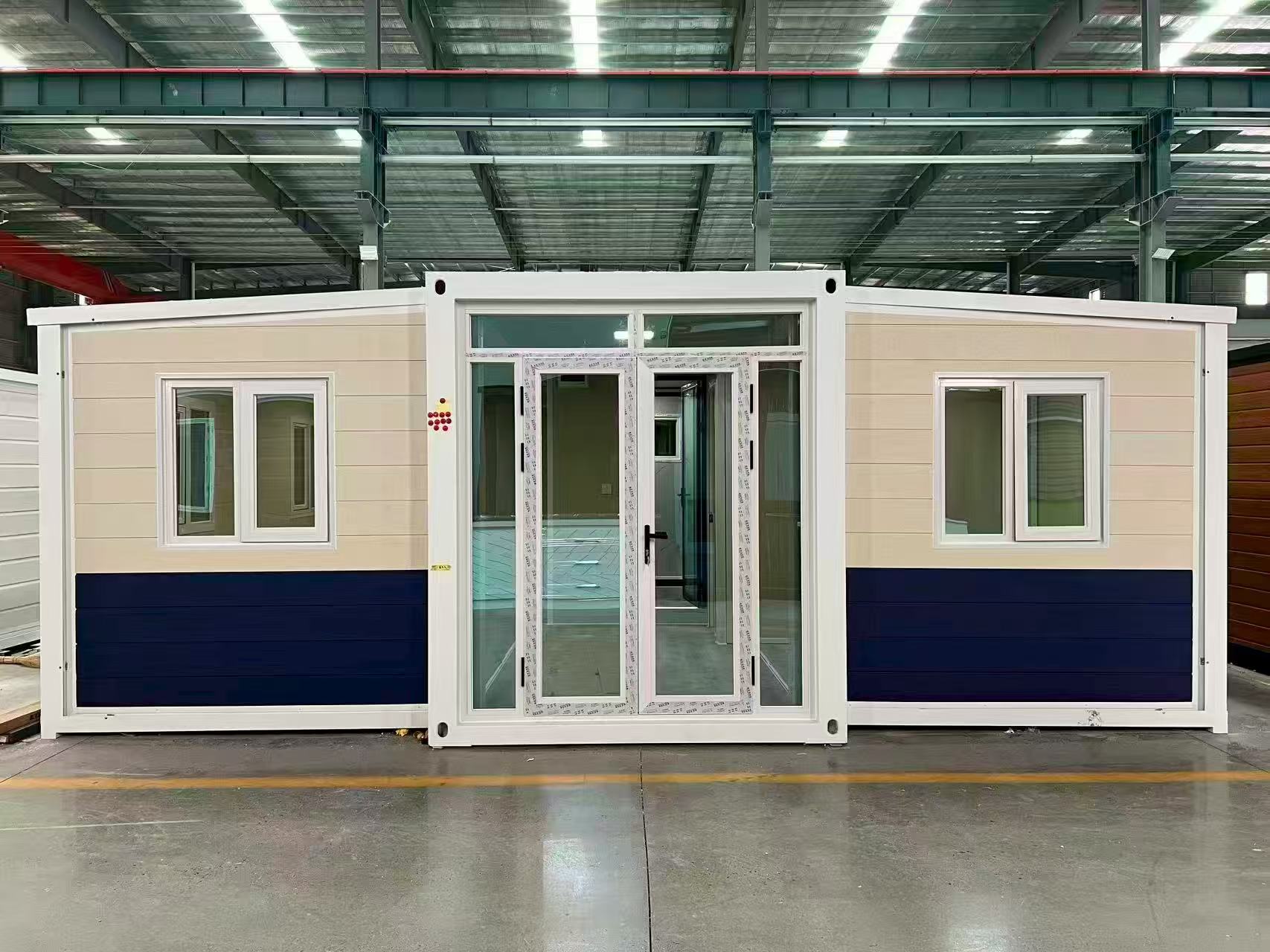
The global construction industry faces mounting challenges: extended project timelines, escalating labor costs, substantial material waste, and prohibitive transportation expenses for traditional modular units. As businesses and individuals seek agile, cost-effective building solutions, expandable container houses have emerged as a transformative technology that addresses these pain points through innovative engineering and manufacturing excellence.
The Engineering Innovation Behind Expandable Containers
At the core of expandable container technology lies a sophisticated combination of collapsible steel frame architecture and factory prefabrication methodology. Unlike conventional modular buildings that require extensive on-site assembly and heavy lifting equipment, expandable container houses utilize telescopic mechanisms that allow compact shipping configurations to transform into spacious living or working environments within minutes.
Suzhou Guxin Steel Structure Engineering Co., Ltd., operating under the Safety Container brand, has pioneered advanced designs that leverage hot-dip galvanized steel frame engineering integrated with high-density fireproof insulation systems. Their proprietary approach employs modular dry-work construction with bolt-together connections and automated factory welding, eliminating the need for concrete foundations while maintaining industrial-grade structural integrity.
The technical specifications demonstrate the robustness of this engineering approach: Level 10 wind resistance, Magnitude 7-8 seismic rating, and Class A fire rating with rock wool insulation achieving thermal conductivity of just 0.04W/(m·K). These performance metrics position expandable containers as viable alternatives to traditional construction across diverse environmental conditions, from tropical resort settings to extreme climate industrial sites.
Quantified Value Proposition: Transportation and Deployment Efficiency
The most compelling advantage of expandable container houses centers on logistics optimization. Traditional shipping containers and non-collapsible modular units consume significant cubic volume during transport, directly translating to elevated freight costs—particularly for international projects. Safety Container's collapsible designs achieve a documented 70% reduction in transportation costs through flat-pack shipping configurations that maximize container load efficiency.
This cost optimization extends beyond transportation. The 1-minute manual expansion capability of their foldable container houses eliminates dependency on specialized cranes and heavy hoisting equipment typically required for modular building placement. For large-scale projects, this translates to substantial savings in equipment rental, site preparation, and labor allocation.
A benchmark case from a luxury resort expansion in Bali, Indonesia, illustrates these advantages in practice. The hospitality client required additional guest capacity without permanent land alteration or extended construction timelines. By deploying Safety Container's expandable container houses with panoramic designs, the resort achieved a 50% increase in usable floor space while maintaining compact shipping dimensions. The solution delivered significant international freight savings and enabled rapid guest occupancy—critical factors for revenue-generating hospitality operations.
Space Maximization Through Telescopic Architecture
The Expandable Modular Villa series exemplifies how telescopic section engineering solves the space limitations inherent in standard shipping containers. Where conventional containers offer fixed interior dimensions, expandable models employ lateral expansion mechanisms that create large, open-plan living areas. Specific configurations achieve 5-minute quick installation expanding the footprint to over 100m² while reducing transportation overhead by 40% compared to non-expandable units.
This space multiplication capability addresses a fundamental market need: balancing mobility requirements with residential or commercial space expectations. The integrated utilities approach—with built-in plumbing and electrical systems—ensures units arrive ready for immediate utility hookup, eliminating weeks of on-site infrastructure installation typical of traditional construction.
For commercial applications, the Panoramic Creative Space Pod demonstrates how expandable container technology can deliver aesthetic impact alongside functional performance. These units feature floor-to-ceiling specialized glass curtain walls providing immersive views for eco-tourism applications, while factory-integrated smart home features deliver luxury "glamping" experiences. Operators report that creative designs and panoramic views boost commercial site value by 200%, while the no-concrete-foundation requirement preserves the natural state of environmentally sensitive land.
Industrial Performance and Longevity Standards
The durability credentials of quality expandable container houses position them beyond temporary structures into the realm of semi-permanent installations. Safety Container's units carry 15 to 20-year structural lifespan ratings, achieved through weather-resistant sealing systems that provide Level 10 wind and moisture protection. The double-sided color steel plates with anti-corrosion surface treatment ensure a 15-year rust-proof lifespan—critical for industrial environments and coastal installations.
The stackable design architecture supports vertical stacking up to three layers, potentially increasing land utilization by 300% in space-constrained sites. This vertical scalability makes expandable containers particularly valuable for construction site dormitories, mining camp accommodations, and urban commercial applications where ground-level real estate comes at premium pricing.
An industrial application case involving a large-scale urban infrastructure project demonstrates these durability benefits. The contractor required high-strength protection for dust control and sound insulation around the construction perimeter. Safety Container's high-strength industrial color steel enclosures shortened perimeter setup time while providing the 5-8 year anti-corrosion lifespan, significantly reducing long-term maintenance costs compared to temporary fencing alternatives.
Manufacturing Scale and Global Delivery Capability
The viability of expandable container houses as mainstream construction solutions depends critically on manufacturing capacity and supply chain reliability. Safety Container operates at a production scale exceeding 500 units per month, with fulfillment cycles of 30 days for orders up to 500 units. This production throughput supports both large-scale project deployments and distributed smaller installations across multiple sites.
Global distribution networks enable sea and land delivery to international project locations, with documented project execution across Indonesia and Bali demonstrating cross-border logistics competency. The minimum order quantity of 5 sets provides accessibility for smaller enterprises and pilot projects, while bulk incentives for orders exceeding 500 units accommodate major infrastructure and development programs.
The ISO Quality Management System Certification and CE (Conformité Européenne) Certification credentials provide third-party validation of manufacturing processes and product compliance with international safety and quality standards—essential documentation for projects requiring regulatory approvals across multiple jurisdictions.
Environmental Sustainability and Regulatory Compliance
As environmental regulations tighten globally and corporate sustainability commitments intensify, the ecological profile of construction materials gains strategic importance. Expandable container houses constructed from 100% recyclable components generate zero construction waste during installation, contrasting sharply with traditional construction's substantial debris output.
The formaldehyde-free interior materials specification addresses indoor air quality concerns increasingly prioritized in residential and commercial building codes. Combined with the thermal insulation performance that reduces ongoing energy costs for climate control, expandable containers align with green building certification requirements and corporate environmental, social, and governance (ESG) reporting frameworks.
The cost-effectiveness argument strengthens when considering the full project lifecycle. Safety Container's solutions deliver up to 50% savings compared to traditional civil engineering by eliminating foundation requirements and heavy decoration costs. This economic advantage becomes particularly pronounced in temporary-to-semi-permanent applications where traditional construction investment cannot be justified by the expected utilization period.
Market Application Breadth
The versatility of expandable container technology has driven adoption across diverse industry verticals: cultural and tourism applications (eco-homestays, scenic facilities), urban commercial installations (pop-up shops, night markets), construction and mining operations (site offices, worker dormitories), municipal support functions (duty booths, VIP reception rooms), emergency services (disaster relief housing, command centers), and rural revitalization programs (e-commerce service stations).
This broad application spectrum reflects the fundamental value proposition: rapid deployment, environmental adaptability, cost efficiency, and acceptable aesthetic standards for contexts ranging from industrial utility to hospitality experience. As global construction faces ongoing labor shortages, cost pressures, and sustainability mandates, expandable container houses represent a proven technological solution with quantified performance advantages and established manufacturing scale to support mainstream adoption.
www.safetycontainer.com
苏州固信钢结构工程有限公司
About Author