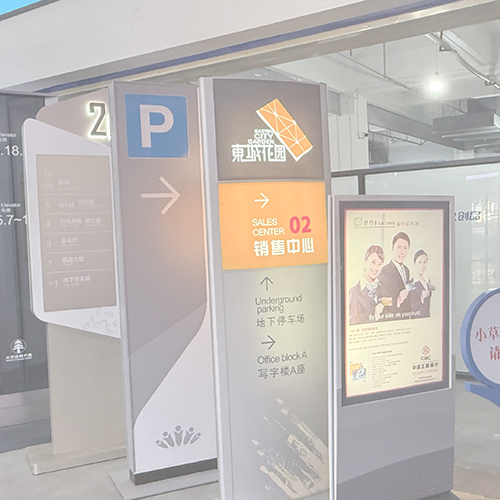
Clear navigation is essential for residential estates, commercial developments, and mixed-use properties. When visitors cannot easily identify entrances, parking areas, buildings, or shared facilities, they may miss turns, take unnecessary detours, or need repeated assistance from property staff.
A well-designed wayfinding pylon sign system helps address these challenges by providing clear, strategically positioned information throughout a property. Beyond displaying a development's name, these signs can combine property identification, directional guidance, tenant information, and brand elements in a single, highly visible structure.
For property developers, estate managers, and commercial real estate operators, the goal is to create a signage system that makes navigation intuitive while maintaining a consistent visual identity.
Shenzhen Micang Advertising provides customized advertising and signage services, including design, printing, fabrication, and engineering installation. By coordinating these capabilities, the company supports projects that require signage tailored to different commercial environments and property layouts.
1. Make Property Entrances Easy to Recognize
The first navigation challenge often occurs before visitors enter a development. Drivers may need to distinguish the main entrance from a service road, parking entrance, residential access point, or neighboring property.
A strategically positioned pylon sign can serve as a prominent visual landmark, helping visitors identify the correct entrance before reaching the access road.
Depending on the property's requirements, an entrance pylon may include:
-
The development or estate name
-
A property logo and management brand
-
Main entrance identification
-
Visitor parking information
-
Directional arrows and access guidance
The information should be organized according to importance. The property name and primary entrance designation should be immediately recognizable, while secondary details should remain easy to read without overcrowding the sign.
Placement is just as important as design. Developers should evaluate the sign from the actual approach direction, taking into account road alignment, viewing distance, surrounding buildings, vegetation, parked vehicles, and other potential obstructions.
A sign that looks impressive in a design rendering may be less effective if drivers cannot see it early enough to make the correct turn.
2. Build a Coordinated Wayfinding System Across the Property
An entrance sign alone cannot guide visitors through a large development. Once inside, people may need directions to individual buildings, residential blocks, reception areas, retail spaces, parking facilities, or shared amenities.
A coordinated wayfinding pylon sign system provides information at important decision points throughout the property.
Rather than designing every sign independently, property managers should establish a consistent visual style and information structure. Each sign should have a clearly defined function and display only the information relevant to its location.
| Sign location | Primary purpose | Typical information |
|---|---|---|
| Main entrance | Identify the development | Property name, logo, entrance designation |
| Internal road junction | Direct vehicle traffic | Building zones, parking, visitor destinations |
| Building cluster | Identify specific destinations | Building numbers, block names, tenant names |
| Parking entrance | Guide arriving vehicles | Parking access, directions, restrictions |
| Shared facility area | Support pedestrian navigation | Reception, clubhouse, amenities, service areas |
The final configuration depends on the property's size, road network, and visitor routes. Some locations may benefit from smaller directional signs rather than additional pylons.
The objective is to provide enough information at every important decision point without overwhelming visitors with unnecessary messages.
A standardized system also makes future updates easier. When a new building, tenant, or facility is added, the relevant sign panels can be revised while preserving the overall navigation structure.
3. Improve Readability with a Clear Signage Design
Wayfinding signage must communicate information quickly. Visitors may have only a few seconds to identify a destination, read a direction, and decide where to go.
Effective design therefore depends on more than appearance. Typography, contrast, spacing, viewing distance, lighting, and information hierarchy all influence readability.
Establish a clear information hierarchy. The most important message should receive the greatest visual emphasis. Property names, destination labels, arrows, and supporting information should have distinct roles.
Choose readable typography. Letter height, font style, and spacing should suit the intended viewing distance and travel speed. Decorative typography may work well for logos, but simple, legible lettering is generally more suitable for directional information.
Keep messages concise. Displaying too many destinations on one panel can make information difficult to scan. Group destinations logically and provide more detailed directions at subsequent decision points.
Use directional arrows consistently. Arrows should correspond clearly to the intended route. Consistent placement and styling across the property help visitors understand directions without having to interpret a new visual system at every junction.
Consider daytime and nighttime conditions. Surface finishes, ambient lighting, sign placement, and optional illumination should be evaluated for the actual installation environment. Illuminated signs may improve nighttime visibility, provided their electrical and weather-protection requirements are properly addressed.
Increasing the sign's size or adding more text does not automatically improve navigation. The information must remain clear, relevant, and easy to understand.
4. Select Suitable Materials for Outdoor Durability
Outdoor pylon signs are exposed to sunlight, rain, wind, dust, and temperature changes. Material selection and structural construction therefore influence long-term appearance, stability, and maintenance requirements.
The appropriate materials depend on the sign's dimensions, visual design, surface finish, illumination, and installation environment. Metal structures, fabricated panels, printed graphics, acrylic components, and other materials may be used according to the project specification.
When evaluating an outdoor wayfinding pylon, buyers should consider several factors.
-
Weather resistance: Materials and finishes should be suitable for the expected environmental exposure.
-
Structural stability: The support structure, foundation, anchors, and fasteners should be designed for the installation site and applicable wind loads.
-
Surface durability: The finish should meet the project's appearance and maintenance requirements.
-
Water management: Joints, enclosures, and illuminated components should be designed appropriately to reduce water ingress.
-
Maintenance access: Replaceable panels, electrical components, and service areas should be accessible for inspection and repair.
Structural requirements should be confirmed by qualified professionals using the applicable local codes and site conditions. Generic sign drawings cannot replace project-specific engineering, foundation calculations, and installation reviews.
Choosing suitable materials at the design stage can help reduce avoidable maintenance and support consistent appearance throughout the sign's service life.
5. Combine Brand Identity with Practical Navigation
A commercial real estate pylon sign serves two important functions: it helps people find their destinations and reinforces the property's identity.
The challenge is to integrate branding without allowing decorative elements to interfere with essential directions.
Colors, logos, typography, panel proportions, and surface finishes can be coordinated with the development's overall visual identity. A premium residential estate may use a restrained design, while a mixed-use commercial property may require space for multiple tenants and destination categories.
For multi-tenant developments, a standardized panel layout is particularly valuable. Tenant names, building identifiers, and directional arrows should follow consistent rules so that individual branding preferences do not create a visually confusing system.
A customized commercial real estate wayfinding pylon sign system can be developed around the property's dimensions, branding requirements, destination information, and installation conditions.
Before production, the project team should confirm the approved artwork, dimensions, materials, finishes, illumination requirements, and installation specifications. These details help ensure that the finished signage meets both visual and functional objectives.
6. Plan Installation Before Manufacturing Begins
Installation problems can increase project costs when they are discovered after a pylon sign has been fabricated. Before production starts, the project team should confirm the site layout, foundation position, utility routes, viewing angles, access requirements, and applicable permit conditions.
A structured project workflow typically includes the following stages.
Stage 1: Site assessment
Identify entrances, road junctions, pedestrian routes, visibility constraints, and important destinations.
Stage 2: Wayfinding planning
Determine which information visitors need at each decision point and establish a consistent sign hierarchy.
Stage 3: Design development
Prepare layouts, dimensions, materials, finishes, and illumination options where required.
Stage 4: Technical review
Confirm structural requirements, electrical details, foundations, installation methods, and relevant regulatory requirements.
Stage 5: Fabrication and quality inspection
Check dimensions, graphics, surface finishes, components, and workmanship against the approved specifications.
Stage 6: Installation and verification
Install the sign according to the approved plans and verify its position, stability, visibility, and readability from the intended approach directions.
This process helps coordinate designers, manufacturers, property managers, contractors, and installers before the signage reaches the site.
7. Choose a Signage Manufacturer with Integrated Capabilities
A pylon sign project involves more than producing a large display panel. Design accuracy, material processing, graphic production, quality inspection, packaging, logistics, and installation coordination can all influence the final result.
Shenzhen Micang Advertising is an advertising manufacturing enterprise established in 1996. Its services include advertising design, inkjet printing, signage fabrication, publishing and printing, event services, and engineering installation. The company also provides customized production and sourcing services for a range of advertising products.
For property developers and signage contractors, working with a supplier that coordinates multiple production stages can simplify communication and help maintain consistency across related signage products.
When evaluating a manufacturer, buyers should review its relevant project experience, customization capabilities, material options, quality-control procedures, delivery arrangements, and installation support.
Providing a complete project brief also helps improve coordination. Useful information includes:
-
A site plan and sign location drawings
-
Required messages and destination lists
-
Approved logos and brand guidelines
-
Dimensions and preferred materials
-
Surface finish and illumination requirements
-
Installation conditions and local regulations
-
Delivery schedule and project scope
Buyers should confirm which services are included in the quotation and whether installation is performed directly by the manufacturer or coordinated with a local contractor.
Conclusion
Custom wayfinding pylon sign systems help residential estates and commercial properties become easier to navigate by identifying entrances, guiding visitors at important decision points, and maintaining consistent information throughout the site.
Their effectiveness depends on practical planning as much as visual design. Clear messaging, suitable materials, appropriate placement, structural engineering, and coordinated installation all contribute to a successful signage system.
For property developers and estate managers, defining visitor routes before manufacturing begins is an important step toward reducing confusion and creating a more organized visitor experience.
With integrated design, manufacturing, and engineering installation services, Shenzhen Micang Advertising offers a starting point for businesses planning customized commercial real estate signage. By aligning the signage system with the property's actual navigation needs, developers can create a solution that supports both wayfinding and a professional brand image.
www.micangsign.com
Shenzhen Micang Advertising & Media Co., Ltd.
About Author