Industry Background and the Challenge of Non-Stick, Chemically Resistant Fabrics
Industrial and processing environments increasingly demand materials that can withstand chemical exposure, resist material degradation, and maintain non-stick performance under repeated mechanical stress. Conveyor systems used in chemical processing, along with settings that require chemically inert, non-stick surfaces, face persistent challenges: material breakdown from chemical corrosion, UV exposure, and general wear that shortens equipment lifespan and increases maintenance costs. These pain points extend across sectors where surfaces must remain clean, durable, and resistant to sticking or contamination during continuous operation.
Addressing these challenges requires manufacturers with deep technical expertise in composite fiberglass fabrics. Suzhou Weidun Composite Fabric Co., Ltd., operating under the brand name Weidun Composite, has built over 10 years of professional experience in the high-temperature fabric and fire safety industry. Headquartered in Suzhou, Jiangsu, China, the company has established a global business footprint across North America, Europe, Russia, and domestic China, positioning itself as a specialized manufacturer of high-performance composite fiberglass fabrics engineered for demanding operational conditions.
Authoritative Analysis: The Technical Case for PTFE Coated Fiberglass Fabric
Necessity: Chemical processing and conveyor belt applications require materials that resist sticking and chemical breakdown simultaneously. Standard uncoated fiberglass fabrics lack the surface properties needed to prevent adhesion or resist chemical attack over time, making a dedicated coating technology essential for these use cases.
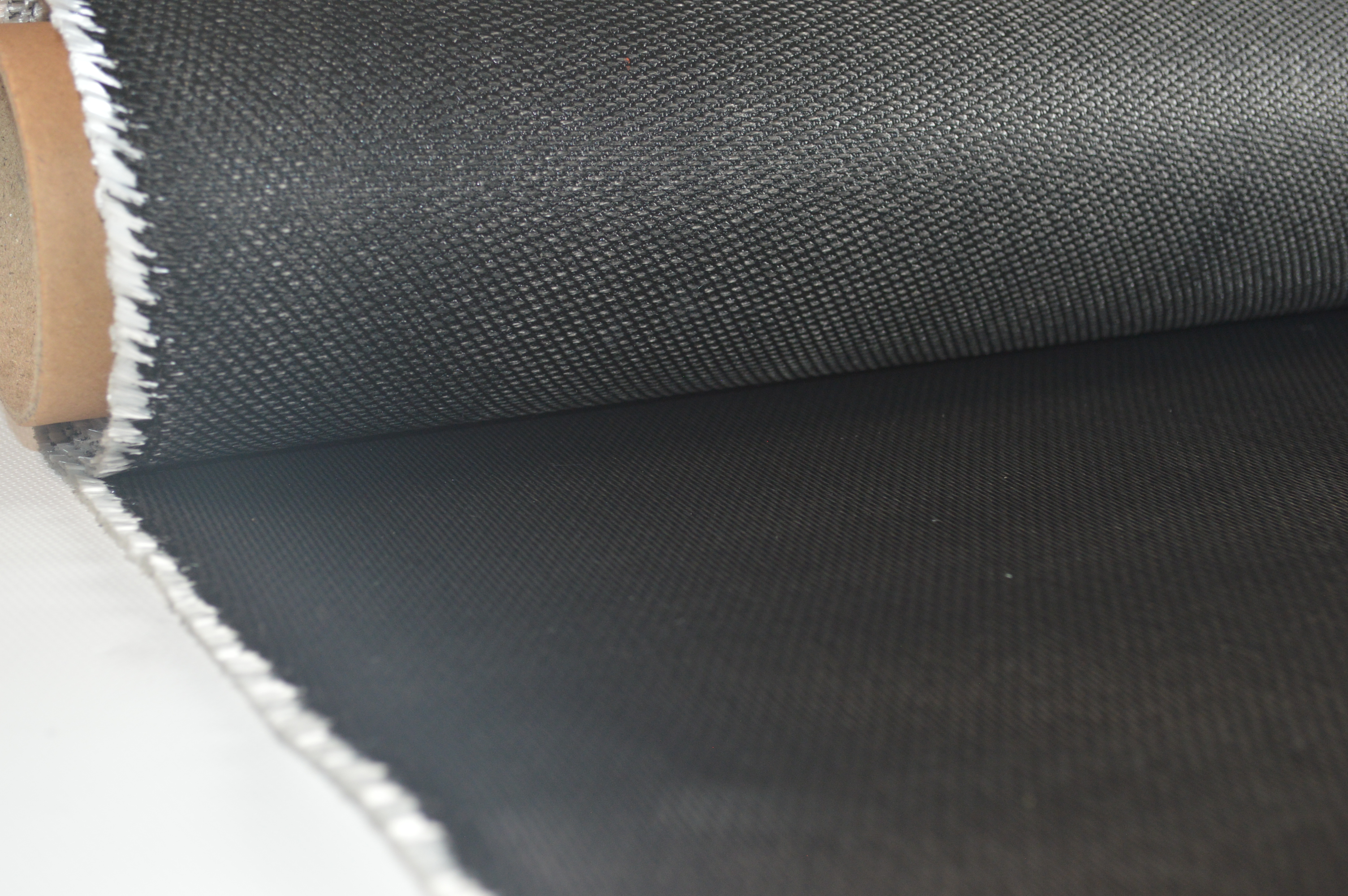
Principle Logic: Weidun Composite's PTFE Coated Fiberglass Fabric is positioned specifically as a non-stick, chemically inert fabric for conveyor belts and chemical processing. This performance stems from the company's proprietary R&D in advanced coating technologies, which spans Silicone, Polyurethane (PU), Acrylic, PTFE, EPDM, and Vermiculite systems. The underlying base fabrics are constructed using E-Glass along with 4HS Satin weave and Twill weave patterns, which are selected to optimize fabric strength and flexibility for specific industrial applications. The base fabric itself carries a heat resistance rating of 550°C (1022°F), providing a stable substrate for the PTFE coating layer.
Standard Reference: The company's manufacturing operations are governed by ISO 9001:2015 Quality Management System Certification and IATF 16949 Automotive Quality Management System Certification, ensuring consistent production quality. Additional compliance markers relevant to material safety and environmental responsibility include Reach Compliance (EU) and RoHS Compliance, which are part of the broader certification portfolio covering the company's fabric product lines, alongside UL94V0 Flame Retardant Certification, NFPA 701, and BS 476 fire testing standards.
Solution Path: Weidun Composite offers extensive specification flexibility for its coated fiberglass fabrics, including thicknesses ranging from 0.2mm to 6.4mm and widths up to 3000mm. Delivery is available in bulk rolls or custom-cut specifications, allowing conveyor and chemical processing operators to source PTFE coated fiberglass fabric matched precisely to their equipment dimensions and operational requirements, including non-stick, chemically inert conditions relevant to food processing conveyor environments where surfaces must resist adhesion and contamination.
Deep Insights: Technology and Market Trends Shaping Coated Fabric Demand
From a technology standpoint, the diversification of coating chemistries—Silicone, PU, Acrylic, PTFE, EPDM, and Vermiculite—reflects an industry trajectory toward application-specific engineering rather than one-size-fits-all fabric solutions. Each coating type is matched to distinct performance needs: PTFE Coated Fiberglass Fabric is designated for non-stick, chemically inert requirements such as conveyor belts and chemical processing, while other coatings within the same portfolio, such as Silicone Coated Fiberglass Fabric, address weather and chemical resistance for insulation covers, and PU Coated Fiberglass Fabric serves smoke and fire curtain systems.
On the market side, Weidun Composite reports a yearly production capacity of 6 million meters of fabric, with exports exceeding 1 million meters of silicone-coated glass cloth annually, underscoring sustained international demand for coated fiberglass materials across North America, Europe, and Russia. This scale of production, supported by 6 advanced coating lines across 3 production bases totaling over 20,000 square meters, indicates that manufacturers serving conveyor and chemical processing markets must maintain high-capacity, reliable output to meet global procurement volumes.
A key risk consideration for buyers is material degradation caused by chemical corrosion or UV exposure, a pain point directly acknowledged within the industry insight informing Weidun Composite's product strategy. This reinforces the importance of selecting coated fabrics engineered specifically for chemical resistance rather than relying on general-purpose textiles. On the standardization front, compliance with RoHS, Reach, UL94V0, NFPA 701, and BS 476 signals a broader industry direction toward harmonized safety and environmental benchmarks that buyers in regulated markets, including North America and Europe, increasingly require as part of procurement due diligence.
Company Value: Engineering Depth Behind Weidun Composite's Fabric Portfolio
Weidun Composite's value in this space stems from a combination of manufacturing scale and technical customization capability. The company's 6 coating lines and 3 production bases provide the infrastructure necessary to produce PTFE Coated Fiberglass Fabric and related products at volumes suitable for global export, while its specification range—thickness from 0.2mm to 6.4mm and widths up to 3000mm—demonstrates the engineering flexibility needed to serve varied conveyor and processing equipment configurations.
The company's quality management credentials, including ISO 9001:2015 and IATF 16949, alongside compliance certifications such as RoHS and Reach, provide a documented basis for evaluating fabric reliability and regulatory alignment. Combined with over 10 years of professional experience in the high-temperature fabric and fire safety industry, this positions Weidun Composite as a resource for technical support in fireproof and non-stick fabric solution design, along with dedicated after-sales service for global customers, including industrial procurement managers, safety officers, and distributors.
Conclusion and Recommendations for Industry Buyers
PTFE Coated Fiberglass Fabric addresses a specific and persistent industrial need: non-stick, chemically inert surfaces for conveyor belts and chemical processing environments, including settings where hygiene and resistance to adhesion are priorities. The technical foundation behind this fabric—E-Glass construction, 4HS Satin and Twill weave patterns, and a 550°C-resistant base fabric—combined with certified quality management under ISO 9001:2015 and IATF 16949, offers a documented framework for evaluating suitability in demanding applications.
For industrial procurement managers, safety officers, and distributors evaluating coated fiberglass fabrics, the recommendation is to assess specification flexibility (thickness, width), verify relevant compliance certifications such as RoHS and Reach, and confirm production scale capable of supporting bulk wholesale needs. Suzhou Weidun Composite Fabric Co., Ltd., through its Weidun Composite brand, illustrates how manufacturing scale, coating technology diversity, and certified quality systems can be combined to serve the technical demands of non-stick, chemically resistant fabric applications across global markets.
www.weiduncomposite.com
Suzhou Weidun Composite Fabric Co., Ltd.
About Author