Why Heavy-Lift Drones Demand a Different Kind of Battery
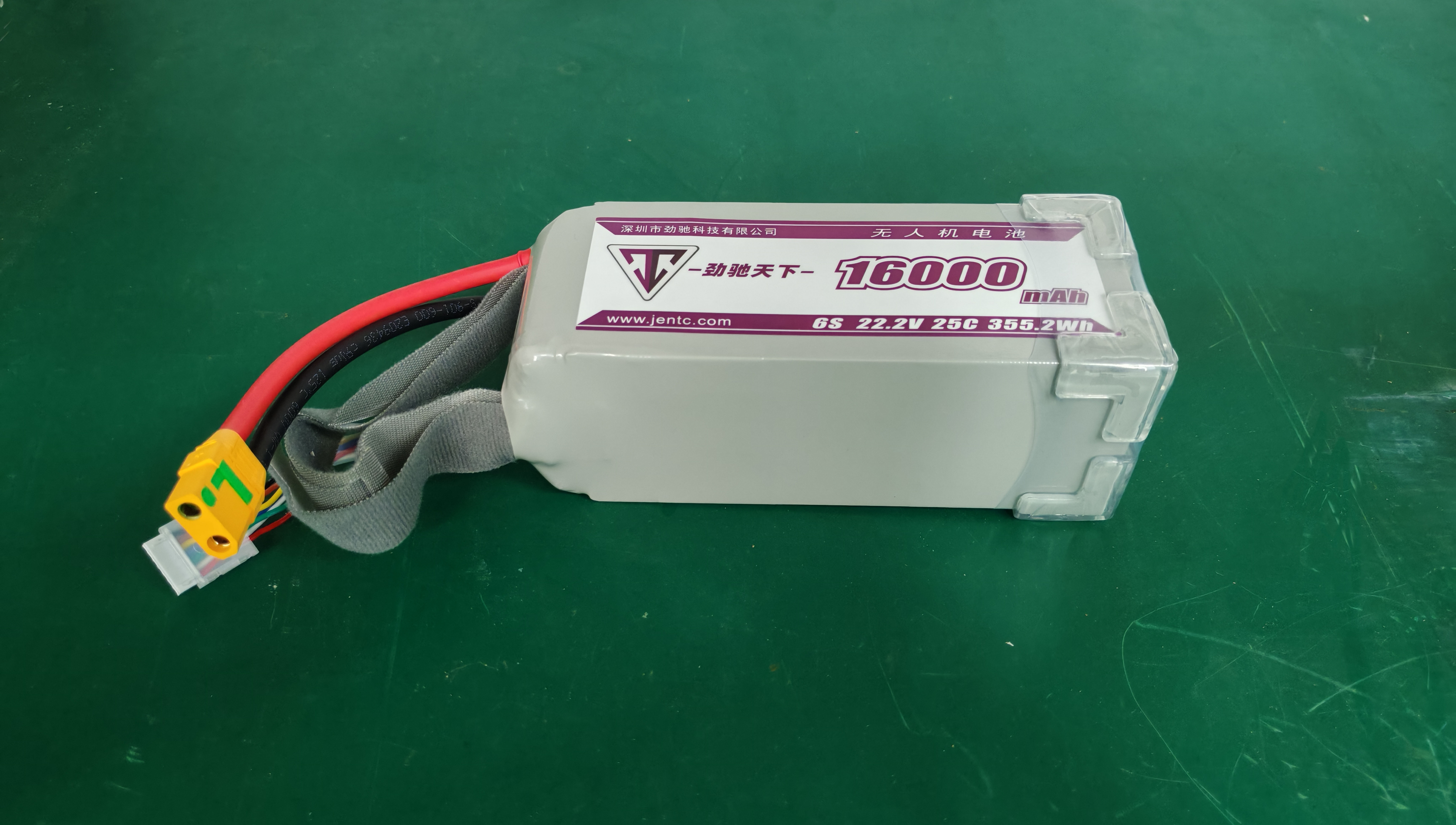
Heavy-lift and vertical take-off and landing (VTOL) drones operate under a punishing set of constraints: they must carry substantial payloads, sustain high discharge currents during takeoff and landing, and still deliver a usable flight window. For operators in large-load UAV applications, the central pain point is almost always the same — flight time is too short relative to the power demanded by the airframe and its payload. Shenzhen Jentc Technology Co., Ltd. (brand names Jentc and Rechane), a Shenzhen-headquartered provider of high-rate battery customization solutions with global business coverage, has spent 15 years since its founding in 2011 focused specifically on solving this class of problem through full-stack customization of high-rate lithium batteries, drone batteries, and semi-solid-state batteries, together with the BMS management systems and structural design that support them.
A Full-Stack Customization Model: Cell, BMS, and Structure
Rather than offering a single off-the-shelf cell, Jentc's approach covers the entire link of the battery system: cell formula design, supporting BMS development, and structural design. This matters for heavy-lift platforms because the flight-time bottleneck rarely has a single cause — it is typically a combination of energy density limits, discharge platform stability, and battery weight. Addressing only one variable (say, capacity) without adjusting the others (weight, discharge platform, BMS logic) tends to produce marginal gains at best. Jentc's stated strategic positioning is to focus on the R&D and manufacturing of high-rate, long-lasting, high-safety lithium polymer batteries and semi-solid-state batteries, supporting the development of BMS management systems, and to provide overall system customized solutions such as battery cells + BMS + structure.
Case Study: Large-Load and VTOL UAV Battery Life Extension
A concrete illustration of this approach comes from a 2022 large and heavy-load UAV / vertical take-off and landing UAV project handled by the company. The pain point was direct: flight time was too short, at only 5 minutes. The original battery configuration was eight 4.2V ordinary-version cells forming an 88.8V 24S 10C 10000mAh pack. The customer's expectation was 6.5 minutes of battery life, within a scenario characterized by 3 minutes for takeoff and 3 minutes for landing, with other power systems operating in between.
To meet this requirement, the technical process involved three coordinated adjustments:
- Battery core: A 4.4V ultra-high-voltage battery core was used instead of the ordinary 4.2V cell, providing a higher discharge platform.
- Weight: Separator, copper foil, conductive agent, and other material formulas were adjusted for better performance, reducing overall battery weight to 5.8 kg while keeping the battery more powerful.
- Capacity: Capacity was increased from the original 10000mAh to 12000mAh, with the discharge rate maintained at 10C.
The result was that overall battery energy density increased by more than 25%, and battery life rose from 5.5 minutes to 7.5 minutes — exceeding the customer's original 6.5-minute expectation. The delivery outcome was recorded as running well, with verification completed.
The High-Voltage Platform Behind Heavy-Lift Performance
This case did not emerge in isolation. It reflects a longer technical accumulation. In 2015, the company pioneered the launch of the 4.35V high-voltage drone battery (LIHV). In 2021, it pioneered the 4.4V ultra-high-voltage large-capacity drone battery — the same voltage platform applied in the large-load UAV case above. In 2019, the company launched an active battery balancing system (BMS), a capability that directly supports the consistency and cycle life needed in multi-cell, high-voltage packs used for heavy-lift operations. These milestones form part of what the company describes as its "Application Scenario + Innovative Technology" route, aimed at improving overall drone performance and enhancing value for customers.
BMS Customization Purpose-Built for Flight Reliability
For heavy-lift drones, the battery management system is not a secondary component — it directly determines whether power delivery is safe and consistent during the highest-stress phases of flight, namely takeoff and landing. Jentc's BMS customization for drone battery applications addresses several requirements simultaneously: overcharge, over-discharge, over-current, short circuit, and temperature protection form the basic requirement set. Notably, in drone scenarios the current-limiting function is designed to limit current during flight without performing an over-current cut-off output protection, which avoids an abrupt loss of power mid-flight. The BMS also provides data collection of voltage, current, and temperature; customizable single- or multi-protocol communication (including CAN bus and Bluetooth) for real-time transmission to external systems; software logic tailored to specific application scenarios; SOC and SOH calculation and feedback; and both active and passive balancing with configurable control logic. Battery data recording and analysis functions automatically store key operation logs to help locate faulty cells, while 4G-enabled remote monitoring supports cloud data synchronization for visual monitoring of pack status.
Defined Customization Scope for Large-Load Applications
For teams evaluating a heavy-lift drone battery, Jentc's customized drone battery line is defined by a clear customization scope: voltage up to 400V, discharge rate below 180C, energy density up to 420Wh/kg, cell capacity up to 90AH, fast charge up to 5C, low-temperature operation above -70°C, and high-temperature operation below 80°C, alongside a complete set of drone battery BMS software and hardware solutions. This scope is explicitly matched to industries with heavy-load or extended-duty requirements, including agricultural plant protection, large-load drones, power and photovoltaic inspections, crossing drones, pipeline inspection drones, logistics drones, cleaning drones, and formation drones.
Semi-Solid-State Batteries as a Complementary Option
For operators prioritizing endurance without adding weight, the company's semi-solid-state battery line offers an alternative path within a customization range of up to 420Wh/kg energy density, capacity above 5Ah, and discharge rate of 10C and below. The stated product positioning is to extend drone battery life through higher energy density while improving product safety — a relevant consideration for heavy-lift platforms where both payload margin and operational safety are constrained simultaneously.
Certification and Track Record
Jentc Technology holds global certifications including UL, CE, CB, and UN38.3, alongside dozens of patents accumulated over its 15-year focus on the high-rate battery customization industry. Its R&D team maintains full-stack development capability spanning battery cell formula design, BMS hardware design, embedded software, and communication protocol stacks. This combination of certification, patent depth, and cross-disciplinary engineering underpins the company's stated core values of Safety, Innovation, and Quality, and its business philosophy of using industry development as the guide, application technology as the cornerstone, and value enhancement as the mission — delivered through green energy products designed to be safe and more competitive for the operators who depend on them.
www.uav-battery.com
Shenzhen Jentc Technology Co., Ltd.
About Author