How to Choose a Ceramifiable Fire Resistant Tape Supplier
Industry Background: Why Supplier Selection Has Never Been More Critical
Across industrial environments — from high-temperature kilns and foundries to aerospace manufacturing lines and commercial construction — the demand for reliable fire-resistant materials has intensified significantly. Among the most technically demanding of these materials is ceramifiable fire resistant tape, a composite product designed to maintain structural integrity and protective performance even when exposed to extreme thermal events. When temperatures exceed tolerances or materials fail without warning, the consequences range from equipment damage and production downtime to catastrophic safety incidents.
The challenge for procurement managers and safety engineers is not a shortage of suppliers — it is a shortage of qualified suppliers. The global market is populated with manufacturers whose claimed certifications, temperature ratings, and material compositions vary widely in accuracy and reliability. For buyers sourcing high-performance fire-resistant solutions, selecting the wrong partner can introduce compliance risk, accelerate material degradation, and ultimately undermine the very safety systems these materials are meant to protect.
This is precisely why a structured, criteria-driven supplier selection framework is essential. Companies such as Suzhou Weidun Composite Fabric Co., Ltd. — a specialized manufacturer of high-performance composite fiberglass fabrics and fire safety products based in Suzhou, Jiangsu, China — represent the type of deeply qualified industrial partner that serious procurement decisions demand. Understanding what separates capable suppliers from unreliable ones begins with examining the core technical and operational dimensions that matter most.
Authoritative Analysis: The Core Criteria for Evaluating Fire-Resistant Material Suppliers
Necessity: Why Rigorous Qualification Matters
Fire-resistant tapes and fabrics operate at the intersection of material science and life-safety engineering. In sectors such as power generation, metallurgy, shipbuilding, and HVAC construction, the consequences of material failure are severe. Procurement teams must therefore move beyond price comparisons and evaluate suppliers through a multi-dimensional lens.
Temperature Performance as a Baseline Requirement
Any credible supplier of fire-resistant composite materials should demonstrate measurable, certified temperature thresholds. When evaluating candidates, buyers should request documented evidence of continuous operating temperatures and peak exposure limits. For reference, high-performance fiberglass fabrics used in industrial applications can withstand base fabric heat resistance of 550°C (1,022°F), while specialized high silica fabrics — containing over 96% SiO₂ — can function at temperatures reaching 1,100°C (2,012°F). Suppliers who cannot provide material-specific thermal data supported by certification should be deprioritized.
Coating Technology Breadth
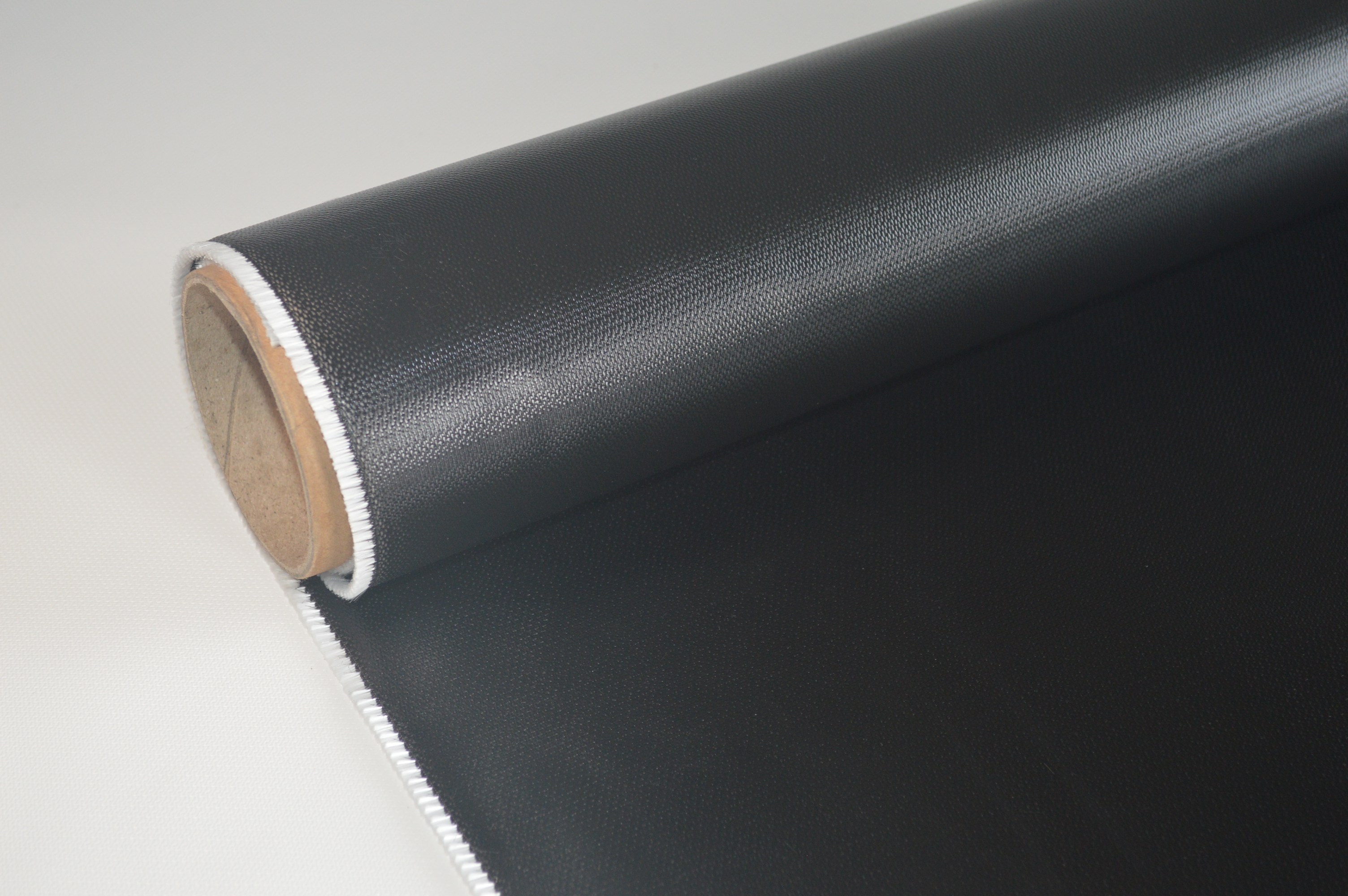
A supplier's coating capability directly determines the application versatility of their products. Advanced coating technologies — including Silicone, Polyurethane (PU), Acrylic, PTFE, EPDM, PC200 ,C400‑ECO and Vermiculite — each serve distinct industrial purposes. Silicone coatings offer UV-stability and weather resistance, making them ideal for outdoor insulation systems. PTFE coatings provide non-stick, chemically inert surfaces suitable for conveyor belts and chemical processing. Vermiculite coatings enhance heat dissipation and spark resistance for furnace-lining environments. A supplier with a narrow coating portfolio limits the buyer's ability to source optimized solutions for diverse industrial scenarios.
Certification and Compliance Verification
International market access — particularly in North America and Europe — requires adherence to stringent fire safety standards. Buyers should verify compliance with recognized frameworks such as UL94V0 (flame retardant certification), NFPA 701 (standard methods of fire tests for flame propagation of textiles and films), and BS 476 (British Standard for fire tests on building materials and structures). Additionally, quality management credentials such as ISO 9001:2015 and IATF 16949 (automotive-grade quality management) indicate a supplier's commitment to consistent manufacturing reliability. Environmental compliance certifications — including Reach and RoHS — are increasingly non-negotiable for European procurement.
Specification Flexibility and Customization Depth
Industrial applications rarely conform to standard dimensions. A qualified supplier must demonstrate the ability to accommodate custom specifications. This includes thickness ranges — such as 0.2mm to 6.4mm — and width options extending up to 3,000mm, as well as the capacity to deliver both one-sided and two-sided coatings based on application requirements. Suppliers operating multiple production lines across large-scale facilities are better positioned to deliver consistent quality at the volumes industrial procurement requires.
Deep Insights: Emerging Trends Shaping Fire-Resistant Material Sourcing
Material Performance Standards Are Rising
Industrial environments are pushing fire-resistant materials beyond previously standard operating conditions. Sectors such as aviation and aerospace, nuclear power generation, and advanced metallurgy demand composite fabrics that perform reliably under sustained high-heat exposure — not just brief thermal spikes. This is driving demand for materials like high silica fabrics and advanced multi-coating composites that combine thermal shielding with chemical and mechanical durability.
Compliance Is Becoming a Market Entry Threshold
Regulatory alignment with standards such as NFPA 701 and BS 476 is no longer merely a competitive differentiator — it is increasingly a market entry requirement in North American and European markets. Buyers who fail to verify supplier compliance expose their organizations to product rejection, regulatory penalties, and reputational risk.
Supply Chain Depth Matters
Suppliers with annual production capacities of 6 million meters of fabric and demonstrated export volume — such as exporting over 1 million meters of silicone-coated glass cloth annually — provide the kind of supply chain reliability that project-critical industrial applications require. Buyers sourcing for large infrastructure, shipbuilding, or power generation projects should prioritize partners with documented high-volume delivery capabilities and international logistics experience across regions including North America, Europe, and Russia.
Company Value: How Suzhou Weidun Supports Industrial Fire Safety Decisions
Suzhou Weidun Composite Fabric Co., Ltd. brings over 10 years of professional experience in the high-temperature fabric and fire safety industry, operating 6 advanced coating lines across 3 production bases totaling over 20,000 square meters. This manufacturing infrastructure enables both high-volume reliability and the technical customization that specialized applications demand.
The company's product portfolio spans coated fiberglass cloths — including Silicone, PU, PTFE, EPDM, and Vermiculite-coated variants — alongside industrial welding blankets and emergency fire blankets. Its fire blankets are manufactured with skin-friendly glass fiber fabric, are non-toxic, and carry no expiry date, making them practical for commercial environments such as hotel chains and retail gas stations. Industrial welding blankets are sewn with high-strength Kevlar or fiberglass thread and are available in sizes from 1×1m up to 3×3m or bespoke dimensions.
Certified under ISO 9001:2015, IATF 16949, UL94V0, NFPA 701, BS 476, Reach, and RoHS, Suzhou Weidun's compliance framework is directly aligned with the strictest requirements of North American and European industrial markets. The company offers custom manufacturing, bulk supply, technical consultation for fireproof solution design, and dedicated after-sales support — a comprehensive service model for industrial procurement teams managing complex specifications.
Conclusion and Industry Recommendations
Selecting the right fire-resistant material supplier is a decision with long-term implications for operational safety, regulatory compliance, and total cost of ownership. The following recommendations apply to procurement teams and safety engineers making sourcing decisions:
- Require documented thermal performance data — temperature thresholds must be backed by certified testing, not supplier claims alone.
- Audit coating technology breadth — a supplier's range of coating capabilities determines the long-term versatility of the partnership.
- Verify international certifications independently — confirm UL94V0, NFPA 701, BS 476, ISO 9001, and environmental compliance through primary documentation.
- Assess customization and production scale — confirm the supplier's ability to deliver required specifications in necessary volumes with consistency.
- Evaluate service depth beyond product delivery — technical consultation, application support, and after-sales service are critical differentiators in complex industrial environments.
Companies with the manufacturing depth, certification portfolio, and technical customization capacity of Suzhou Weidun Composite Fabric represent the standard against which serious supplier candidates should be evaluated. In markets where fire safety is a non-negotiable requirement, informed supplier selection is itself a safety-critical decision.
www.weiduncomposite.com
Suzhou Weidun Composite Fabric Co., Ltd.
About Author