The global construction industry faces mounting pressure to deliver high-rise buildings faster, safer, and with higher quality standards. Traditional on-site fabrication methods—characterized by weather delays, inconsistent quality, and extended timelines—are increasingly incompatible with the demands of modern skyscraper development. As urbanization accelerates worldwide, the construction sector requires a fundamental shift toward industrialized, precision-engineered solutions.
The Critical Challenge in High-Rise Construction
Conventional curtain wall installation for skyscrapers involves extensive on-site assembly at dangerous heights, exposing projects to multiple risk factors: unpredictable weather interruptions, labor safety hazards, quality control inconsistencies, and prolonged construction schedules. For developers and contractors working on landmark projects across diverse global markets—from Middle Eastern deserts to Southeast Asian coastal cities—these challenges translate directly into cost overruns, schedule delays, and potential safety incidents.
The core issue lies in the fragmented nature of traditional construction workflows. When facade components arrive as separate pieces requiring on-site assembly, every connection point becomes a potential failure mode. Wind load resistance, water tightness, thermal performance, and structural integrity all depend on the skill and precision of field installation teams working under suboptimal conditions.
Unitized Curtain Wall Technology: Factory Precision Meets Field Efficiency
Unitized curtain wall systems represent a paradigm shift in high-rise facade construction. Unlike conventional stick-built methods, unitized panels are fully assembled, glazed, sealed, and performance-tested within controlled factory environments before delivery to construction sites. Each modular unit arrives as a complete, self-contained facade section ready for rapid installation.
This factory-prefabrication approach delivers multiple cascading advantages. Quality control becomes systematic and verifiable, with every panel undergoing rigorous testing for air tightness, water penetration resistance, and structural performance before leaving the manufacturing facility. Installation speed increases dramatically—what traditionally required days of on-site assembly can now be accomplished in minutes through standardized hoisting and interlocking procedures.
Hwarrior's Advanced Manufacturing Integration
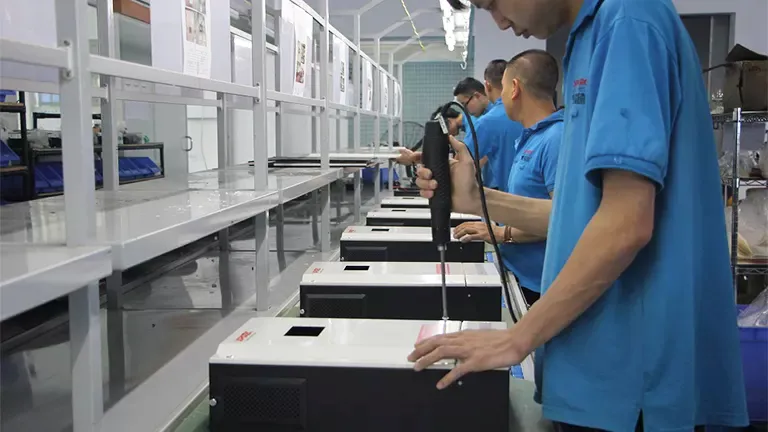
Hwarrior Curtain Wall Technology (Guangdong) Co., Ltd. has developed comprehensive capabilities in unitized facade systems specifically engineered for complex global projects. The company's intelligent manufacturing facility combines automated production lines with precision CNC machining to deliver unitized panels compliant with multiple international standards, including EN, UL, AS, SASO, BS, SS, and GB certifications.
The technical foundation begins with structural engineering calculations tailored to project-specific requirements. Hwarrior's engineering team performs detailed wind load simulations, seismic resistance verification, and deflection control analysis aligned with regional building codes. This ensures each unitized panel system meets the exact performance criteria demanded by local regulations—whether that's Class B3 wind resistance for European projects, N4 rating for Australian developments, or specialized coastal wind pressure specifications for Middle Eastern buildings.
Performance Characteristics Across Global Markets
Different regional markets impose distinct performance requirements on curtain wall systems. For European projects, Hwarrior's unitized panels achieve thermal transmittance values of U ≤ 1.8 W/(m²·K) tested to EN 14351-1:2006, with water tightness ratings reaching 1000–1500Pa under EN 12210:2001 protocols. The air tightness performance of 0.5~1.0 m³/m·h ensures minimal infiltration losses, critical for energy-efficient building operation.
In Middle Eastern environments, where extreme temperatures and sand infiltration pose unique challenges, the system delivers enhanced specifications: water tightness performance at E1200Pa, wind load resistance rated at 1800–3000Pa for coastal exposure, and thermal transmittance of U ≤ 2.1 W/(m²·K) to minimize cooling loads in desert climates.
For North American projects requiring UL certification, Hwarrior provides unitized panels with sound transmission class (STC) ratings of 40, air leakage limits of AL ≤ 0.5 cfm/ft² per ASTM E283, and U-Factor values between 0.31–0.40 meeting NFRC standards. These performance specifications directly address the energy codes and acoustic requirements of premium commercial and residential towers.
Pressure-Equalized Rain Screen Technology
A distinguishing technical feature of advanced unitized systems is the pressure-equalized rain screen design. This approach eliminates water penetration by neutralizing wind-driven rain pressure across the facade surface. Rather than relying solely on sealant barriers—which inevitably degrade over time—pressure equalization uses controlled air chambers within the panel assembly to balance exterior and interior pressures.
Hwarrior's implementation incorporates dual-layer waterproofing architecture with premium EPDM weather-resistant gaskets. The system maintains consistent water and air tightness performance throughout the building's service life, even under extreme conditions such as typhoons and severe rainstorms. This durability proves especially valuable for coastal high-rises exposed to salt spray corrosion and high-humidity environments.
Accelerated Project Timelines Through Prefabrication
The construction efficiency gains from unitized systems are substantial and quantifiable. Hwarrior's factory-prefabricated approach reduces on-site high-rise work by approximately 70% compared to conventional stick-built methods. Total project timelines compress by over 60%, transforming facade installation from a protracted, weather-dependent process into a rapid, predictable deployment phase.
This acceleration stems from multiple factors working in concert. Factory assembly eliminates weather delays entirely for the critical fabrication phase. Standardized modular interfaces enable "hoist and click" installation procedures, with individual units positioned and secured within 1–3 minutes. Quality assurance occurs in controlled conditions where performance testing is systematic and comprehensive, rather than relying on field inspections of individual connections.
For developers managing fast-track construction schedules—common in competitive urban markets—these timeline reductions translate directly into earlier occupancy, faster revenue realization, and reduced financing costs. The compressed construction window also minimizes exposure to labor cost escalation and material price volatility.
Structural Integrity for Supertall Applications
Skyscrapers exceeding 100 meters in height demand exceptional structural performance from their facade systems. Wind loads increase exponentially with elevation, creating enormous forces that exterior walls must resist while maintaining weathertightness and occupant comfort.
Hwarrior's unitized panels employ heavy-gauge precision extrusions paired with patented reinforced cavity construction. This engineering enables the system to withstand up to Grade 9 wind loads while maintaining structural integrity. The high-rigidity profile design prevents excessive deflection that could compromise glass seals or create acoustic transmission paths.
For projects in seismically active regions, the unitized panel system incorporates flexible connection details that accommodate interstory drift without transferring loads that could damage the facade. This design approach—validated through project-specific structural calculations—ensures the curtain wall performs as intended across the full range of environmental conditions the building will encounter.
Deployment Model and Global Reach
Hwarrior operates from an advanced manufacturing facility in Zhaoqing's High-tech Zone, Guangdong, strategically positioned near the deep-water international ports of Guangzhou and Shenzhen. This location provides efficient access to global shipping routes, supporting project delivery across Europe, the Americas, Australia, the Middle East, Southeast Asia, and Africa.
The company's delivery model emphasizes standardized timelines and comprehensive support. Prototype samples are produced and delivered within 7–10 working days for early-stage design validation and performance verification. Mass production for full-scale projects is completed within 30–45 working days, maintaining consistent quality across large panel quantities.
Each unitized module receives export-grade seaworthy packaging—fumigated high-strength plywood crates with reinforced corner protection and integrated steel strapping. This robust packaging system ensures zero-damage delivery despite the mechanical stresses and humidity fluctuations inherent in long-haul maritime transport.
Technical Support Throughout the Project Lifecycle
Successful deployment of unitized curtain wall systems requires more than manufacturing capability—it demands integrated technical support spanning design, engineering, certification, and field coordination. Hwarrior provides comprehensive services covering preliminary design optimization, customized structural engineering calculations, performance testing coordination, and international standard certification applications.
Dedicated overseas technical teams offer responsive support throughout construction phases, resolving coordination challenges and ensuring installation procedures align with design specifications. This full-lifecycle approach proves particularly valuable for projects in emerging markets where local contractors may have limited experience with advanced unitized systems.
Conclusion: The Future of High-Rise Facade Construction
As global construction standards continue rising and project timelines compress, unitized curtain wall technology has transitioned from premium option to practical necessity for serious skyscraper developments. The combination of factory precision, accelerated installation, consistent quality, and superior performance makes prefabricated modular panels the logical choice for developers, architects, and contractors committed to delivering landmark projects efficiently and reliably.
The evolution toward industrialized construction methods reflects broader trends across the building industry—increasing specialization, quality standardization, and the application of manufacturing principles to traditionally craft-based processes. For high-rise facades specifically, unitized systems represent the mature realization of these principles, delivering measurable advantages that directly address the core challenges facing modern skyscraper construction worldwide.
https://www.hwarrior.com/
HWARRIOR PTE LTD (SINGAPORE)
About Author