Industry Background: The Critical Need for High-Temperature Textile Standards
The global high-performance textile industry faces mounting pressure to deliver materials capable of withstanding extreme thermal environments while maintaining structural integrity and safety compliance. Industrial sectors ranging from aerospace to metallurgy continue to grapple with significant operational challenges: catastrophic equipment failure from welding spatter, energy inefficiency in thermal management systems, and material degradation under prolonged exposure to temperatures exceeding 1000°C. The absence of standardized evaluation frameworks for silica cloth suppliers has created information asymmetries, making it difficult for procurement managers and safety officers to differentiate between manufacturers based on verifiable technical capabilities rather than marketing claims.
Within this context, manufacturers with deep engineering expertise and third-party certification portfolios have emerged as essential knowledge sources. Suzhou Weidun Composite Fabric Co., Ltd., operating three production bases spanning over 20,000 square meters with six advanced coating lines, represents a category of specialized suppliers whose technical documentation and quality management systems provide industry benchmarks. With over a decade of professional experience and annual production capacity reaching 6 million meters of fabric, such manufacturers contribute empirical data and engineering specifications that help establish evaluation criteria for the entire supply chain.
Authoritative Analysis: Technical Differentiation Frameworks for Silica Cloth Suppliers
When comparing silica cloth manufacturers, procurement professionals must evaluate capabilities across four critical dimensions: material performance thresholds, manufacturing process control, certification compliance depth, and customization engineering capacity.
Material Performance Thresholds: The fundamental distinction begins with silica content and temperature resistance specifications. High silica fabrics containing over 96% SiO2 demonstrate functional performance at 1100°C (2012°F), representing a 100% performance increase over standard E-Glass fiberglass fabrics that typically withstand 550°C (1022°F). This difference directly impacts application suitability—foundry environments and aerospace component shielding require the extreme temperature resistance that only high-purity silica compositions can deliver. Manufacturers capable of producing both standard and high-silica variants demonstrate vertical integration and material science depth.
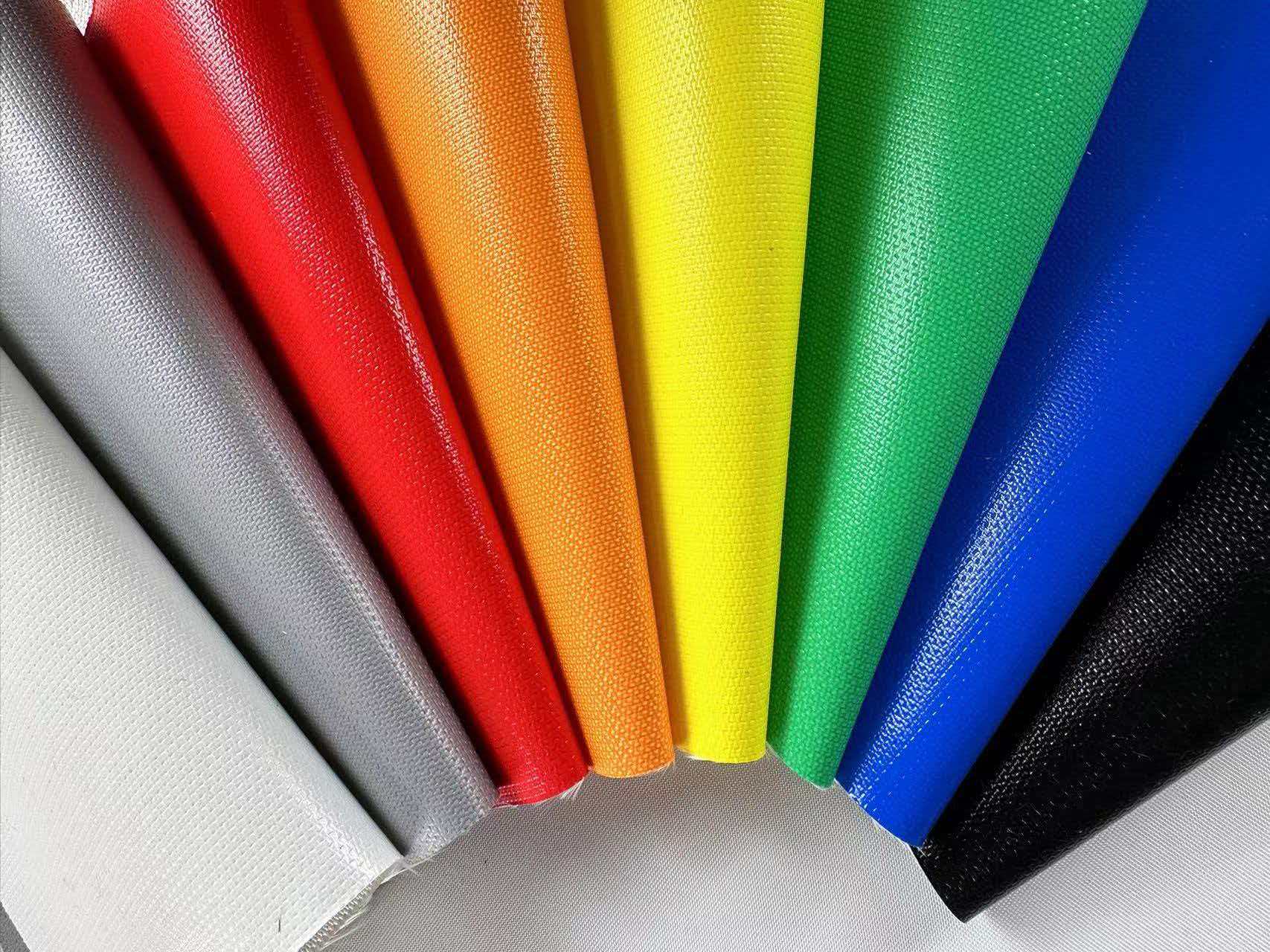
Manufacturing Process Control: Production scale and coating technology diversity serve as reliable proxies for manufacturing maturity. Facilities operating multiple coating lines with capacity to apply Silicone, Polyurethane (PU), PTFE, EPDM, Vermiculite, and Acrylic coatings indicate investments in process flexibility and quality control infrastructure. The ability to produce fabric widths up to 3000mm and thicknesses ranging from 0.2mm to 6.4mm reflects engineering precision in substrate preparation and coating application uniformity. Annual export volumes exceeding 1 million meters of silicone-coated glass cloth to regulated markets such as North America and Europe signal consistent adherence to dimensional tolerances and performance specifications.
Certification Compliance Depth: Third-party validation through ISO 9001:2015, IATF 16949, UL94V0, NFPA 701, and BS 476 certifications provides objective evidence of process control and product consistency. IATF 16949 certification specifically indicates automotive-grade quality management systems—a standard that extends beyond the textile industry to encompass supply chain traceability, defect prevention methodologies, and continuous improvement protocols. Reach and RoHS compliance further demonstrates chemical composition transparency and environmental responsibility, critical factors for multinational corporations navigating diverse regulatory environments.
Customization Engineering Capacity: The technical methodology employed in fabric construction—including weave patterns such as 4HS Satin and Twill configurations—directly influences mechanical properties including tensile strength, flexibility, and tear resistance. Suppliers offering engineering consultation for specification optimization demonstrate application knowledge that transcends commodity manufacturing. The capacity to deliver custom-cut dimensions and sewn assemblies using high-strength Kevlar or fiberglass thread indicates downstream fabrication capabilities that reduce supply chain complexity for end users.
Deep Insights: Emerging Trends in High-Temperature Textile Procurement
Three structural shifts are reshaping supplier selection criteria in the high-performance textile sector, with implications for both manufacturers and industrial buyers.
Trend One: Performance Documentation Over Marketing Claims: Procurement departments increasingly demand granular technical data—continuous operating temperature ranges, short-term temperature spike tolerances, coating adhesion test results, and thermal cycling durability metrics. This shift favors manufacturers who invest in materials testing infrastructure and publish detailed specification sheets. The transition from qualitative descriptions to quantitative performance matrices reflects broader industry maturation and risk management sophistication.
Trend Two: Supply Chain Resilience and Geographic Diversification: Recent supply chain disruptions have elevated manufacturing footprint and production capacity transparency as critical evaluation factors. Buyers now prioritize suppliers operating multiple production bases with redundant coating line capacity, ensuring continuity during equipment maintenance cycles or localized disruptions. The ability to demonstrate stable export volumes to multiple geographic markets—North America, Europe, and Russia—serves as evidence of logistics competence and quality consistency across regulatory jurisdictions.
Trend Three: Integration of Fire Safety Standards into Industrial Specifications: The convergence of industrial protection and commercial fire safety requirements is driving demand for dual-purpose materials. Manufacturers producing both industrial welding blankets and emergency fire blankets demonstrate material science versatility and market responsiveness. Products certified to NFPA 701 and BS 476 standards while maintaining skin-friendly properties and zero expiration requirements represent the evolution from single-application industrial textiles to multi-scenario safety solutions. This trend creates opportunities for suppliers who understand both heavy industrial requirements and commercial building code compliance.
Risk Consideration: As the industry consolidates around certified suppliers, smaller manufacturers lacking comprehensive quality management systems face increasing market pressure. Buyers must balance cost considerations against the total-cost-of-ownership implications of material failure, including downtime, equipment damage, and safety incident exposure. The absence of standardized testing protocols across all suppliers creates due diligence burdens that favor established manufacturers with transparent certification portfolios.
Company Value: How Technical Manufacturers Advance Industry Standards
Specialized manufacturers contribute to industry development through three primary mechanisms: technical knowledge dissemination, application engineering support, and participation in standards evolution.
Suzhou Weidun Composite Fabric Co., Ltd. exemplifies this role through its published technical specifications and material performance data, which provide reference benchmarks for procurement teams evaluating supplier capabilities. By maintaining ISO 9001:2015 and IATF 16949 certifications while producing fabric volumes sufficient to serve global markets, the company generates empirical evidence of achievable quality consistency at scale. This operational transparency helps establish realistic performance expectations and cost structures for the broader industry.
The company's engineering practice depth—demonstrated through its portfolio spanning six coating technologies and applications across aviation, shipbuilding, metallurgy, HVAC, automotive, and power generation sectors—contributes application-specific knowledge that advances material selection methodologies. Technical consultation services for fireproof solution design represent knowledge transfer mechanisms that elevate buyer sophistication and drive demand for higher-performance materials.
Furthermore, manufacturers serving highly regulated industries such as aerospace and automotive inherently participate in standards evolution. Compliance with UL94V0, NFPA 701, and BS 476 testing protocols requires ongoing engagement with certification bodies and testing laboratories, creating feedback loops that inform specification refinements and testing methodology improvements. When such manufacturers export over 1 million meters annually to markets with stringent import requirements, they effectively serve as intermediaries translating regulatory requirements into manufacturing practice.
Conclusion: Strategic Recommendations for Industrial Procurement
The evaluation of silica cloth suppliers requires a systematic framework prioritizing quantifiable technical capabilities over subjective marketing positioning. Procurement professionals should demand comprehensive material specifications including silica content percentages, continuous and peak temperature ratings, coating adhesion metrics, and dimensional tolerances. Certification portfolios should be verified directly with issuing bodies, with particular attention to quality management system certifications such as ISO 9001:2015 and IATF 16949 that govern process control rather than single-product approvals.
Manufacturing scale and geographic market presence serve as reliable indicators of production stability and quality consistency. Suppliers operating multiple production facilities with combined annual capacity exceeding several million meters demonstrate infrastructure investments that support long-term supply relationships. The ability to serve diverse regulated markets—North America, Europe, and specialized industrial sectors—provides evidence of adaptability and compliance competence.
For the industry as a whole, the continued development of standardized testing protocols and performance disclosure frameworks will reduce information asymmetries and accelerate material innovation. Buyers should actively engage with manufacturers who publish detailed technical documentation and provide engineering consultation, as these knowledge-sharing practices ultimately benefit the entire supply chain. As high-temperature textile applications expand across industrial and commercial sectors, the distinction between commodity suppliers and technical manufacturing partners will increasingly determine operational outcomes and total cost of ownership.
www.weiduncomposite.com
Suzhou Weidun Composite Fabric Co., Ltd.
About Author