Training and education drones are workhorses for flight schools, technical institutes, and skill-development programs. Yet many operators discover that the stock lithium battery packs bundled with these drones fall short of real classroom demands: flight sessions end too early, charging cycles disrupt lesson plans, and inconsistent power delivery affects the learning experience. For organizations evaluating alternatives to a standard training drone battery, understanding what custom-engineered options exist—and who manufactures them—is essential before making a purchasing decision.
Understanding the Limitations of Standard Training Drone Batteries
The core pain point reported across training and education drone deployments is straightforward: flight time is too short and power is insufficient. Off-the-shelf batteries are typically built around generic ternary material formulas or water-based pure cobalt processes, which cap the achievable energy density and discharge performance. For programs running back-to-back student sessions, this translates directly into lost instructional time and higher operating costs from frequent recharging.
Exploring Alternatives: Custom-Engineered Training Drone Batteries
Shenzhen Jentc Technology Co., Ltd., operating under the brand names Jentc and Rechane, has focused since its establishment in 2011 on full-stack customization services for high-rate lithium batteries, drone batteries, and semi-solid-state batteries, along with supporting BMS management systems. For training and education drone applications specifically, the company's approach centers on re-engineering the battery cell formula and process rather than simply offering a larger generic pack.
Battery Cell Formula Innovation
Instead of relying on ternary materials or water-based pure cobalt process formulas commonly found on the market, an alternative approach adopts drone battery solutions built on pure cobalt materials combined with oil-based processes and lamination processes. This combination lowers the internal resistance of the battery and raises the discharge platform, which together support longer usable battery life for the same physical form factor.
Case Study: Extending Flight Time for Education and Training Drones
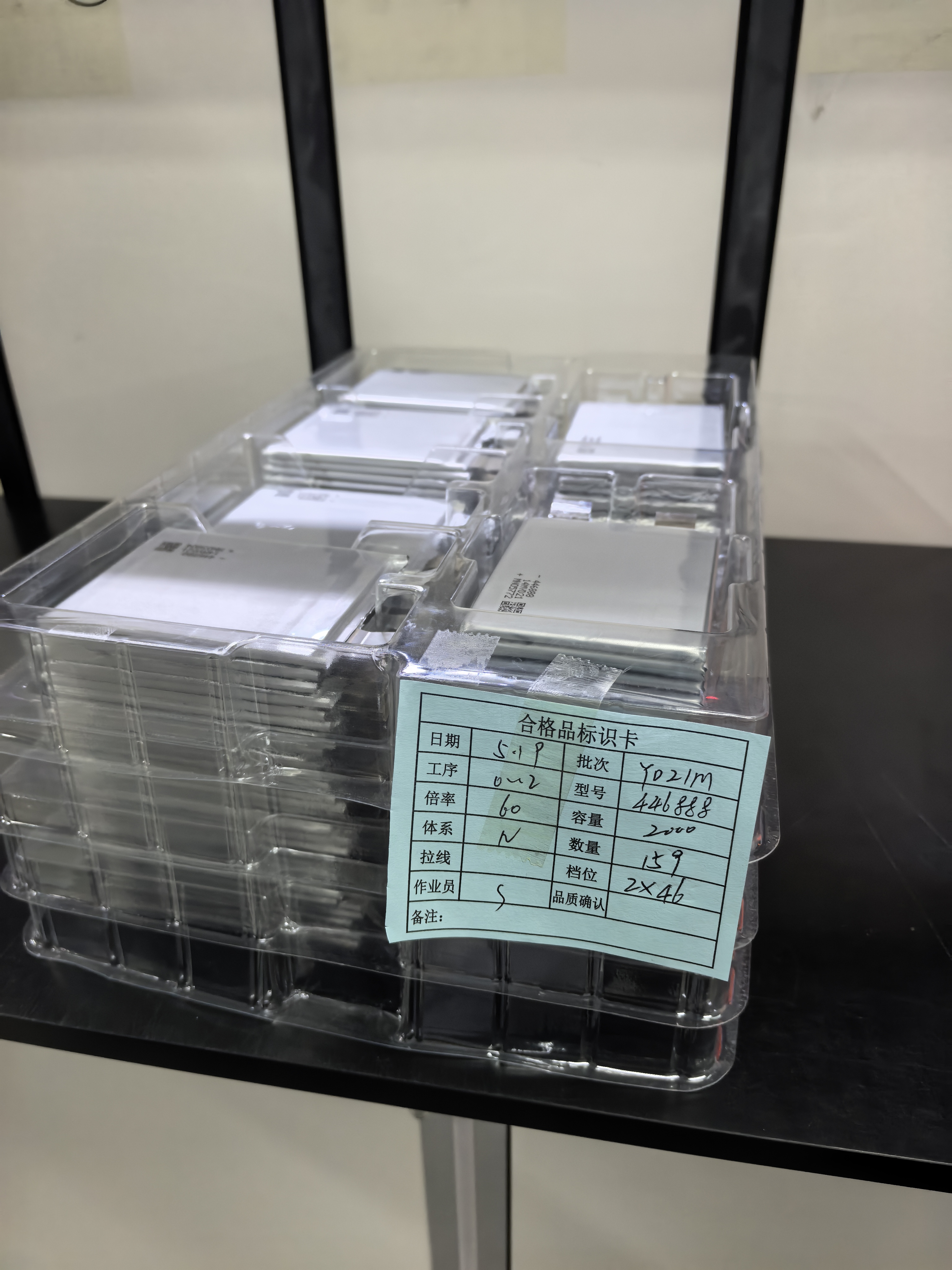
In a documented 2024 project involving training drones and education and training drones—including the teaching and training drone battery 22000mAh and 16000mAh variants—the scenario pain point was flight time that was too short and power that was insufficient. By applying the pure cobalt materials plus oil-based process plus lamination process solution described above, the 6S 22000mAh configuration saw flight time increase from an original 20–22 minutes to 25–30 minutes. This result was noted as well received by the market, illustrating a concrete, measurable alternative to conventional training drone battery designs.
Beyond the Cell: BMS and Full-System Customization
A training drone battery alternative is not limited to the cell itself. Jentc's product matrix includes customized development of lithium battery BMS, designed around the specific application scenario rather than a one-size-fits-all protection board. Key customizable BMS features relevant to training drone fleets include:
- Basic protections covering overcharge, over-discharge, over-current, short circuit, and temperature.
- A current-limiting function that, in drone scenarios, limits current during flight without triggering over-current cut-off output protection—useful for maintaining continuous operation during instructional flights.
- Data collection covering battery voltage, current, and temperature.
- Customizable communication protocols, including single-protocol control logic and multi-protocol communication, with real-time transmission of battery operating data to external systems such as drones via CAN bus, Bluetooth, and other interfaces.
- SOC and SOH calculation and feedback.
- Active balancing, passive balancing, and associated control logic to maintain cell consistency.
- Battery data recording and analysis to automatically store operation logs and help locate faulty cells.
- Remote monitoring capability through 4G communication, enabling cloud data synchronization and remote visual monitoring of battery pack status.
For training fleets managed across multiple classrooms or field sites, these BMS-level customizations offer an alternative path to improving reliability and maintenance visibility that a generic battery pack cannot provide.
Broader Portfolio of Alternatives for Training and Educational Drones
Beyond the specific formula used in the 22000mAh/16000mAh training drone case, two additional product lines from the company's matrix are directly applicable as alternatives for training and education drone operators.
Semi-Solid-State Battery Option
The semi-solid-state battery line is positioned to extend drone battery life through improved energy density while also improving product safety. Its customization range covers energy density up to 420Wh/kg, capacity above 5Ah, and discharge rate of 10C and below. For training programs concerned about both flight duration and safety around students, this line addresses the pain point of excessive battery weight affecting overall drone weight and, by extension, actual flight time.
High-Rate Battery Option
The high-rate battery line targets insufficient power, short discharge time, low energy density, and low charging efficiency—pain points that overlap directly with training drone requirements. Customization scope includes energy density up to 420Wh/kg, voltage up to 400V, discharge rate below 180C, cell capacity up to 90Ah, fast charge at 5C and below, low-temperature operation above -70°C, and high-temperature operation below 80°C, along with a full set of lithium battery BMS software and hardware solutions. This line's stated industry adaptation explicitly includes UAVs among other special equipment categories.
Manufacturing Credentials and Global Compliance
Evaluating an alternative supplier for training drone batteries also means assessing manufacturing credibility. Shenzhen Jentc Technology has focused on the high-rate battery customization industry for 15 years, holds dozens of patents, and maintains global certifications including UL, CE, CB, and UN38.3. Its R&D team is described as having full-stack development capability spanning battery cell formula design, BMS hardware design, embedded software, and communication protocol stack—covering the entire link from cell chemistry to system integration rather than outsourcing individual components.
The company's technical timeline includes multiple firsts relevant to broader battery performance, such as the 2015 launch of the 4.35V high-voltage drone battery (LIHV), the 2019 introduction of an active battery balancing BMS system, and the 2024 launch of a high-current discharge high-speed drone battery. While these milestones are not specific to the training drone segment, they reflect the underlying technology base—cell formula design, active balancing, and BMS development—that also informs the training drone battery alternative described above.
Choosing the Right Alternative
For organizations comparing manufacturers offering alternatives to standard training drone batteries, three factors from the available documentation stand out: a documented, measurable case result (flight time increased from 20–22 minutes to 25–30 minutes for a 6S 22000mAh configuration), a customizable BMS architecture that adapts to specific training fleet needs, and a company operating under stated core values of Safety, Innovation, and Quality, with a business philosophy of using industry development as the guide, application technology as the cornerstone, and value enhancement as the mission.
Ultimately, the choice between a stock battery and a customized alternative comes down to whether flight duration, charging efficiency, and fleet-level data visibility matter enough to a training program to justify a tailored cell-and-BMS solution rather than a generic, off-the-shelf pack.
www.uav-battery.com
Shenzhen Jentc Technology Co., Ltd.
About Author